
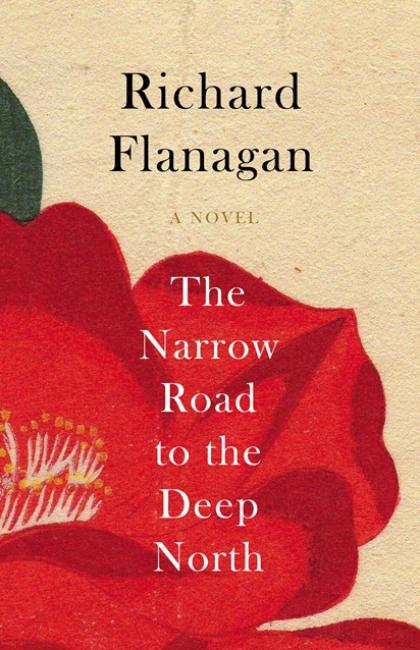
 Why this book: Selected by our reading group, at the insistence of my wife, Mary Anne. I recall her reading this book and repeatedly telling me that I had to read it. She and several of those in our reading group found this to be an extraordinary book – one of the best they’d ever read. Some reviewers are referring to it as a master piece. I agree that it is remarkable, powerful, and extremely well written book.
My impressions: This book received the Man-Booker Prize for 2014, it is a wonderfully written book, and it covers a lot of ground.
It begins while our protagonist, Dorigo Evans is a young boy in Madagascar in the 1920’s, then takes him to young adulthood in Australia, and then into the Army as a Doctor in WWII. The center of gravity of the story takes place when Dorigo Evans becomes the senior officer over several hundred Australian Prisoners of War in a Japanese camp building the infamous Burma-Thailand Death Railway – yes, to include over the River Kwai. Brutal. Beyond King Rat, beyond Unbroken, and yet, the author’s description of the men and the suffering in the camp has more depth and more humanity than either of those books.
What makes Narrow Road to the Deep North truly remarkable is how different sections of the book describe the very personal perspectives of several different characters – Australian and Japanese. Flanagan brings out the humanity in each. We in the west will most easily sympathize with the Australian prisoners, but we get to know the Japanese Camp Commandant – raised by kind and gentle parents – who did what he felt he had to do for his emperor and the glory of japan –though it was often distasteful to him. Brutality in the name of the emperor was not only acceptable, it was expected in their culture –he and the Japanese had been raised to fully believe that.
In one particularly memorable scene, during which one of the Australian prisoners was being beaten nearly to death as an example to the other prisoners, we experience the shame of the other prisoners, sick, emaciated, exhausted, as they stood by helplessly watching. Dorigo Evans, as senior officer, did what he could to stop it, but in so doing, made the beating much worse. And finally, Evans realizes that somehow this was as it had to be – the camp commandant was only doing what was demanded of him by his culture, his position, his upbringing, and the circumstances.
We see the horrific consequences of the Japanese unquestioning belief and total focus on their mission and cause, at the expense of any concern for individual suffering and dignity. And we must ask ourselves, could we ‘enlightened Americans’ ever be guilty of that?
The time in the POW camp is less than half of the novel – much of this story takes place outside of the camp – before, during, and especially after the war, how Evans and several of the characters –Australian and Japanese – dealt with the aftermath. Flanagan follows the lives of several on both sides who shared that horrific experience. For all who lived and experienced the PoW camp, it shaped who they were and how they lived thereafter. A Vietnam veteran friend of mine just gave a speech in my Toastmasters club in which he shared his own experiences of grief, guilt, and regret, concluding that those who go to war never completely get over it. That is also one of the messages of this book. I would add that the closer that experience is to the killing, the dying and horror of war, the more intense the guilt, grief, regret, and the greater the psychological impact.
Though by all accounts a hero, Dorigo Evans never saw himself as a good man. He rarely felt the impulse to do good and be courageous; he merely did what he saw as his duty, and always fought the impulse to take care of himself first. But he was remarkable in his sense of duty; I was stunned by his sacrifice and his example as the senior officer and doctor at the POW camp. Though he was renowned and revered in Australia after the war, he was unhappy, and unfulfilled. He was a flawed man, disingenuous with his friends and family, and inauthentic in much that he did. Though he was still driven by his sense of ‘duty,’ and did what was expected of him, he never followed his heart, and never did what he truly wanted to do. He lacked the courage to step out of the roles he felt he was expected to fulfill. He never felt free to be who he truly felt he was, and never expressed his true feelings. There is a very poignant unfulfilled love relationship that runs the length of the book, that was in part, a symptom of this reserve, and also an important source of his underlying sadness.
“The Narrow Road to the Deep North” is the title of the travel journal by the famous Japanese poet Basho. Through his key Japanese characters, Flanagan treats us to a number of short and beautiful Haiku throughout the book. The incongruity between the beauty and simplicity of these poems, and the brutality that they somehow inspired in the Japanese elite is one of the mysteries Flanagan leaves unresolved. As I read this remarkable book, and shared the experiences and perspectives of its many characters, Australian and Japanese, men and women, I felt the importance of accepting death as part of life, I sensed the beauty but impermanence of simple joys and happiness, that sadness and acceptance are key to understanding suffering, and that indeed our time on this earth is short…and not to be taken for granted.
Winter Ice
melts into clean water –
clear is my heart.
A world of pain –
if the cherry blossoms,
it blossoms.


 Bob's Books
Pingback: One Day in the Life of Ivan Denisovich, by Alexander Solzhenitsyn | Bob's Books