
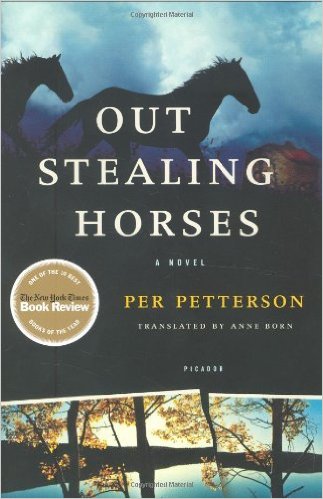
 Why this book: It was recommended to me by Michael, with whom I shared a combination great bike ride and great discussion a couple of months ago. I noticed that the book got great reviews, won a number of awards, and it’s short length (238 pages in paperback) was not too daunting to take on between novels in my reading group.
My impressions: Out Stealing Horses was originally written in Norwegian – we are reading the English translation. It is written in first person, and told by a 67 year old man who has retired and withdrawn to live out his remaining years in a rural Norwegian village. The story focuses on a series of events he recalls from when he was 15 years old, growing up in a mountain village in Norway in 1948. He tells of learning of mysterious and heroic roles that adults in his life had played in the Norwegian resistance to Nazi occupation in WW2. One of those adults was his father, who he loved and admired, and yet struggled to understand as he was coming to terms with his own budding adult-hood. His first romantic/sexual desires create a subtle but fascinating sub-theme in the confusing series of events he recounts. Ultimately there is an unexplained violation of trust that has a powerful impact on the narrator.
He is telling us his story late in middle age, but we only learn bits and pieces of what happened in his life after the events he describes from over 50 years earlier. It became clear to me that these boyhood events were somehow key to understanding the rest of his life and who he became. I sensed also, that our narrator was still trying to sort it all out – and in the end, so was I – which is an important part of why this book intrigued me.
The book leaves a lot of questions unanswered and loose ends unresolved. Though I wanted to know more, my sense is that there is a reason the author left me guessing. Whatever happened to…? or, Why did this happen…..? or How/why did this person do that? The answers to these questions may not have mattered. At the conclusion, we are left with a story of powerful and poignant events from his boyhood in the mountains of Norway, which gave clues as to why he ultimately chose to withdraw from society and become a semi-recluse.
I believe the unanswered and unresolved questions are key to what makes this book so compelling, and why it won so many awards.
The book is very well done and enjoyable to read. It is short, but not fast moving. I recommend reading it with another thoughtful reader, and after finishing the book, grab a bottle of wine and a couple of glasses and meet to discuss what Per Petterson may have been trying to say, and how this story affected you. It’ll be an interesting discussion.


 Bob's Books