
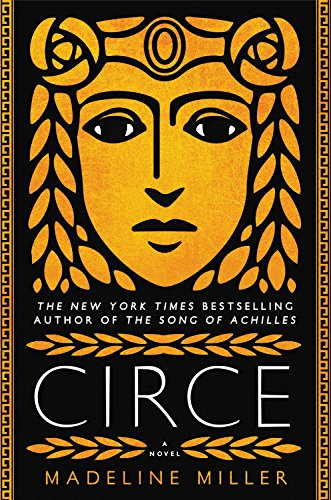
 Why this book: Selected by my reading group. I saw a review that said that if you liked Silence of the Girls, you will like Circe. I really liked Silence of the Girls, so thought we’d give this a try. It was different and good.
Summary in 3 Sentences: Circe is a modern story transposed into the setting of mythological Greece, with a special focus on Odysseus and the Odyssey. The reader encounters gods and myths from that era but within a story about a young woman who straddles the world of gods and mortals and encounters challenges that are timeless. The protagonist Circe is a witch- goddess who is exiled to an island where she encounters Odysseus on his journey home from Troy – and their love affair creates the backdrop for a drama that is both mythical and mortal, and relevant to us living today, in its scope and impact.
My impressions: Very clever and interesting novel. I very much enjoyed reading it and found the theme and setting fascinating. For me, it started off a bit slowly, but gathered momentum and became quite an adventure of hardship, growth and transformation for its female protagonist. I likened it to science fiction, or magical realism, the setting being the mythical world of ancient Greece. The story includes gods, monsters and mortal heroes with whom most of us are somewhat familiar, and a number with whom most of us are not. As is to be expected in a world where gods and mortals interact together, boundaries between what is possible and what is not, are never quite clear.
Circe herself is a “nymph” a minor female deity borne of one of the Olympian gods – in her case, Helios, the god of the sun, and a nymph, in her case Perse, one of the nymph daughters of Oceanus. Though a goddess, Circe represents a familiar figure in modern literature – a sensitive and independent woman, disenfranchised and disrespected by powerful men, who subsequently grows strong from her rejection and suffering. As a child and young woman, she was ridiculed by her frivolous sisters, disrespected and shunned by her mother, betrayed by her brother and father, abandoned by a man whom she had assumed great risk to help.
And then by her angry father, she was exiled to a remote island in the Mediterranean (the then known world) where she nursed her resentment at the injustices she had suffered. But she rallied and chose to use her time and energy to strengthen herself, build her powers and become more independent. Her life became more “exciting” when seafaring mortals would stumble upon her isolated island, and when she tried to help them, they would often seek to take advantage of what they perceived to be a vulnerable young woman living alone – not knowing that she was a goddess who had powers they couldn’t imagine. The results are I’m sure satisfying to women who have been victimized by brutal men. She would occasionally be visited by other gods, to check on her, harass her, or be amused by her.
As Circe was immortal, the time frame of the novel is over millennia, and includes the story of the forming of the Minoan empire, King Minos, and the mythical story of Daedalus and Icarus. But for this novel, those millennia and other stories are merely a prelude to Circe’s short love affair with Odysseus when he and his crew land on her island on their long journey back to Ithaca after the Trojan war. Circe had been lonely, dealing with the occasional sailors who stumbled upon her island, making do and keeping herself busy with her study of plants and potions for her witchcraft. She and Odysseus connected well on many levels, and the opportunity to be loved and respected by a powerful man made a strong impression on her, though she knew there were risks and liabilities. She knew it was temporary – Odysseus was mortal and so his lifetime was limited. And she knew he must leave – he had a wife and child to whom he was compelled to return. But when he finally departs to continue his journey home, he unknowingly leaves Circe pregnant.
The remainder of the book is Circe dealing with the impact of Odysseus’s short stay. She becomes a single mother, and she deals with challenges that will be familiar to many single mothers. Taking care of a baby and raising a son on her own, a strong young man who eventually must declare his independence from his strong mother, compelled to find his father whom he idolizes. And that leads to more interesting and unexpected developments.
The book reflects the sensibilities of a strong, angry 21st century woman dealing with the impact and isolation of having been disenfranchised by powerful men. While the book includes any number of nasty, boorish, and narcissistic men – both gods and mortals – there are not many admirable men in this book, but there are a few. Prometheus, who was exiled and tormented (for life) by powerful men, was her hero and inspiration. She loved Odysseus while he is with her, and later her son by him grows into an admirable young man. And finally, Telemachus, Odysseus’s son by his wife Penelope. But to be fair, women don’t fare much better in this book – her mother, her sisters, other goddesses are shallow, narcissistic, and self-serving as well. Other than Circe herself, we only truly admire one other woman in the book – Odysseus’s wife, Penelope.
I did really enjoy Circe and recommend it for not only its compelling story, but also the very clever juxtaposition of a modern strong and independent woman with a setting taken directly from the foundational mythology of western culture from three thousand years ago.
NOTE: I didn’t realize until the end of the book that Madeline Miller included a Cast of Characters glossary at the back of the book – which describes/defines the various deities, monsters, and mortals in the book. Knowing this in advance would have saved me many trips to Wikipedia. I also recommend visiting the author’s website on this book, which also provides very useful background without divulging the story.


 Bob's Books