
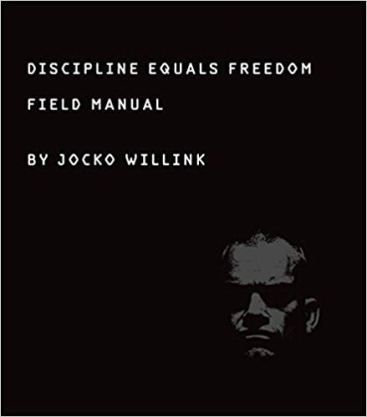
 Why this book: Widely read by SEAL candidates and includes great advice for life for anyone, and especially for young men aspiring to be SEALs. I lead a reading group for SEAL candidates and we agreed on this book.
Summary in 3 sentences: There is only one way to getting better at anything: Discipline. There are no easy ways, no hacks – getting better means having the discipline of focus and daily practice, and with it you can become better, stronger, smarter, faster, healthier and it will set you free. He also addresses his philosophy on where and how to apply discipline in physical training, diet and nutrition, sleep, martial arts, humor, death, compromise, negative talk, and more – it is a compendium of Jocko’s recipe to become and be a warrior.
My impressions: This was my second time reading this book and I enjoyed it and learned from it again. Reflecting its author, this book is direct, intense, and unpretentious. It is a high-testosterone, aggressive, uncompromising, no-nonsense prescription for developing and maintaining a warrior mindset. It is written in brief, simple, almost aphoristic style – two page chapters that grab you by the throat, tell you to quit whining and get on with it. Develop and strengthen your Will. Develop and strengthen your self-discipline. Embody a positive, aggressive attitude, with no apologies, and no excuses.
Though I think he misses some important nuances, I love it. It is Aristotle’s prescription for erring in the direction where you are weakest in order to find that “golden mean” of virtue that works for you, between excess and deficiency. I’m not sure Jocko has a “golden mean” and he certainly doesn’t spend time defining it in this book – this is a prescriprion for how to stay focused and aggressively pursuing your own best self, always, every day, without pause, without question, without apology.
It It is a solid Stoic philosophy of total responsibility, no excuses – it doesn’t matter what got you here, it only matters what you do now. Don’t wonder, don’t wring your hands, and go back and forth. Prioritize and act. You choose, you own it. It is Nike’s “Just Do It” on steroids.
Though he does hint at nuance and judgment in this book, these are qualities that really only come with experience. His default is “Just Go For It!” In my discussion with young SEAL candidates, I suggested that this is the formula to get ready to get thru SEAL training, and I recommended that they keep a copy by their bed and read a piece of it every night, like Jim Stockdale did with Epictetus’s Enchiridion.
Notes on a few of the short chapters in Discipline Equals Freedom:
In “Stress” he tells us to gain perspective from what others have gone through before us, and if the stress is something you can’t control, embrace it. You might as well. Use the stress to make you a better you.
In “Compromise“, he notes that we do have to compromise when working with other people – find common ground. But with yourself, hold the line on your values your goals, the things that are important to you.
In “Default Aggressive” he advocates for an always positive and aggressive stance – a mental attitude with the will to win, succeed, a focus on winning, fighting smart to win.
In “The Darkness” he admonishes us to know it will come, but don’t let it consume us. Just keep fighting. Feed your Will and determination.
In “Remain Vigilant” he warns us to fight the tendency to back off, to cut corners, to slack off our program, back off from our goals. Hold the Line he says, on the seemingly insignificant little things that shouldn’t matter, but do.
In “Good” he describes the Growth Mindset approach to disappointment and disaster. When you get the flat tire, you don’t get the promotion, you get turned down for something you have set you heart on – Good. That opens up new opportunities to develop resilience, be creative in dealing with the setback, learn, and to work harder.
In “Fear” he says it is normal, but we should “step aggressively toward your fear-that is the step into bravery.” Be aggressive.
In “Fear of Failure” he says we should use that fear to work harder, plan better, to make success more likely. BUT we should be horrified at the possibility of sitting on the sidelines and not taking risk, not doing anything. THAT should be the greatest fear.
In “Weakness,” he admits to many weaknesses, and he accepts that, but uses them to motivate him to strive to be a little less weak, a little stronger every day.
In “Staying Motivated” he tells us that motivation is fickle – don’t count on it – it is over-rated. Count on Discipline – make yourself do what you know you need to do, what you have chosen to do it – whether you feel like it or not!
In “Death” he says let us cry no more…let us not dwell on it. Instead let us laugh and love, and let us embrace life…let us live for those who live no more, let us live to honor them.
In “Regret” he reminds us that the most important thing to learn from regret is that we have so much to learn and that the only thing valuable in regret is the lesson you learned. So learn and move on.
In “Nature vs Nurture” Jocko says it is neither. Doesn’t matter. What matters is what you choose. Life is about choice.
In “Destroyer Mode” (I particularly liked this chapter) he says use both emotion AND reason. When one fails you , you need to rely on the other. Fight weak emotions with the power of logic; fight the weaknesses of logic with the power of emotion.
In “Me vs Me” he talks about the battle within himself to become as good as he can be. Becoming as good as you can be doesn’t happen in a stadium or at an awards ceremony. It happens in the heart – every day, in the darkness of the early morning.
In “Laughter Wins,” he reminds us that life is tough, but it gets a lot easier when you are laughing at it. Suffering and hardship can’t stand it when you laugh – so laugh at them all!
The book concludes with additional chapters with specific advice on building the home gym, where and how to train, martial arts, diet and fasting, how to get started, and advice for how to work out for beginners, intermediate, and advanced athletes.
I like his conclusion. He tells us: Don’t just read, listen, watch, study, plan, talk, think, dream – none of that matters. What matters is what you DO. So DO it!
My criticisms – I agree with about 90% of Jocko’s approach, but I am willing to give myself a bit more slack – which, according to his philosophy, is caving in to weakness. But I am also not so focused on being among the hardest core warriors in the world. I listen to my body and sometimes cave into it.
I find joy and pleasure in the occasional creme filled donut, chocolate chip cookie, or piece of key-lime pie. Jocko describes these as poison, and eating them a sign of weakness that one must fight to overcome. Got it – but I also think there are things to be savored, that may not be good for us in excess, but yes, occasionally….I’ve also heard that it’s harder to be moderate than to be extreme – enjoying things in moderation requires constant decisions, whereas the extreme all-or-nothing decision is made only once.
That said, I believe his message is very powerful and his model is worth considering and adapting to one’s own needs and ambitions. As he says, it is a recipe for becoming faster, stronger, smarter, better – and there is no doubt: Discipline does equal freedom when it means that with discipline and will, we can decide and then do – whatever we want.


 Bob's Books