
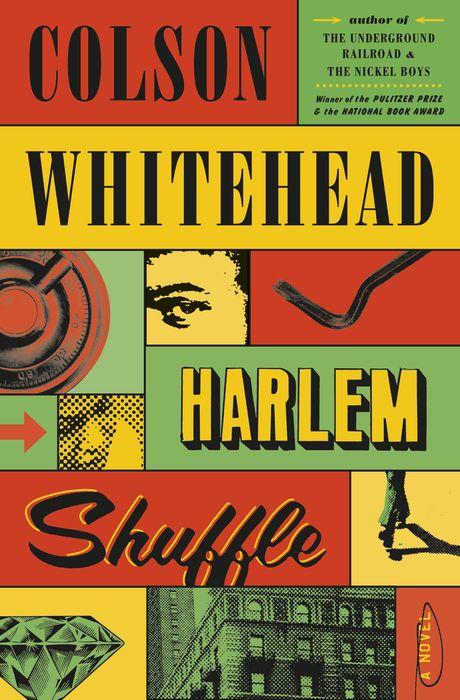
Why this book: I kept seeing this book pop up on lists of the best books of 2021 and the story intrigued me. I had read his Nickel Boys and was impressed, and wanted a bit of escapist fun, while also learning a bit about the black experience in Harlem in the 1960s.
Summary in 3 sentences: The period is early 1960s and Ray Carney is an African American who owns a furniture store and is trying to make a living as a small business owner in the black community of Harlem. He had grown up the son of a small time hustler and crook and found that, though as an adult he was trying to go straight, his cousin with whom he’d grown up kept pulling him into the world of small time crime, serving as a fence for guys who were stealing, which also provided Carney much needed extra money. Meanwhile he had a nice family, things were going well, but he starts losing control of the small time hustling and the fencing he is doing on the side, and eventually, everything he’s worked for – his business, his family, his life are at risk.
My Impressions: I listened to this book and it captivated me from the start. Whitehead creates the world of Black Harlem in the early sixties and it is VERY different from the world I grew up in. We get to know a wide variety of characters in the community. The protagonist Ray Carney is at first a struggling small business owner, and then over time and with some success, his business grows and his status starts to climb in the local community. The story is told from a third person narrator but with a God’s-eye spotlight on Carney, his life, his thoughts, his dreams, his fears. And through him, we get a perspective of what it was like to grow up and try to make a living in Harlem in that period.
This is not a book about race or prejudice or white privilege – those things are there, but are incidental, like the weather, or the geography – a reality that someone who lived in Harlem had to accept and deal with. During the story, there are race riots in Harlem after a policeman shoots an unarmed youth, but for Carney, the riots and violence are very inconvenient, and simply create obstacles to his business and the plans he has. He is angered by white prejudice, but has reconciled himself and accommodated his life to its reality – he is not an activist. His cousin and others are on the make to find ways to capitalize on the rioting – when all the police are fighting the riots, that’s a good time to burglarize black businesses as well as white communities in Manhattan.
In Harlem Shuffle, we see Carney caught between two worlds in Harlem – on the one hand, those who make a living on the edges of “legitimate” society, with crime, preying on white (and black) people of means. On the other hand, there are those who have “made it” in the so-called legitimate and more well-to-do classes of Harlem society – attorneys, bankers, successful businessmen, politicians within the black community. And then outside of that world is white society, downtown, those who own the political machine, the police and the wealth of New York City. Within Harlem, Carney has interactions with both the legitimate powers and the underworld, and as the story progresses, he also has interactions with those with wealth and power in white Manhattan. He comes to realize that those in the “legitimate” world, both black and white, were not so virtuous as they presented themselves to be. In Harlem, Carney refers to people as either crooked or straight, and guys like him, who are not quite either, are “bent” – not really crooked, but their straightness is compromised.
Harlem Shuffle is full of colorful and believable characters.
- Ray Carney himself is who we get to know best. He is self-aware and Whitehead’s narrative gets inside his head and heart. He grew up without a mother, an absentee father who was a hoodlum bad guy, and Carney was on his own a lot, sometimes living with his aunt. He stayed straight in school, and on his own and with no support from his father, got an undergraduate degree and then a graduate degree in business, and was working hard to make his furniture business succeed.
- Carney’s cousin Freddie, with whom Carney grew up almost as a brother, is a n’er do well opportunist, living on the dark side, hanging with thieves and punks – not really a bad guy, not evil or cruel, but an easy mark for bad guys, since he was always looking for a way to get something for nothing, whether it be money, pleasure, prestige. He routinely pulls Carney into criminal or sketchy deals to bail him out of some trouble he’s gotten himself into, which then associates Carney with Freddie’s crime(s) and misdeeds. Carney is frustrated with Eddie’s decision making, but loyal to him, and puts himself at great risk to protect him.
- Carney’s wife Elizabeth grew up in a straight upper-middle class Harlem family, and has little inkling of Carney’s escapades on the dark side. She is a dedicated mother to their two children and has hopes that Carney’s business will move them up the social ladder and improve their standard of living. Her parents were disappointed when she married someone from the lower classes like Carney, but Elizabeth doesn’t share their prejudices and defends Carney against her parents’ condescension. She is clueless about Carney’s illicit work that was helping to finance their improving life style.
- Pepper, a bouncer and underworld hit-man is practical and fearless, with an interesting past from WW2. He had done work with Carney’s father in the past. Pepper became an unlikely ally of Carney’s when Freddie pulled Carney into a caper that almost got Carney killed – and then Pepper saved Carney’s life.
There are of course a lot many more colorful characters in the book, and Whitehead brings each of them to life, and through getting to know them, we get to know more about life in Harlem in the 1960s.
Harlem Shuffle is a good read, an engaging and good story and provides what seems to be a well researched and accurate picture of life in a different culture in American in a different time. I can imagine that there are rather close analogies to that world in todays inner cities, where good people are trying to have a life, and it is very difficult to go straight when crime is rampant and law enforcement spotty or corrupt.
It is also a morality tale, as we see Carney step onto the “slippery slope” of small-time criminal activity to help out his cousin and to make a few extra dollars. Then, without his intention, he becomes involved in more serious criminal activity, and before he knew it, he was in way over his head, and everything he truly valued and worked so hard to achieve was at risk. It’s like Serpico (convicted NYC cop for corruption) said: His biggest mistake was accepting that first piece of free pizza.
As noted, I listened to rather than read the book. That was a really good experience. The reader had the black inner-city dialect and accents down, used different voices w different accents for the different characters – it was engaging and a pleasure to listen to. I suspect that the emotion that the reader gave to the voices and the story gave Harlem Shuffle more immediacy and power than the printed word would have. I recommend listening to Harlem Shuffle.
NOTE:A more complete summary of this book is here on Super Summary


 Bob's Books