
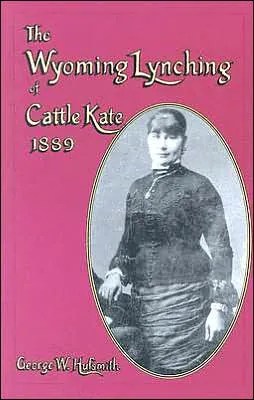
Why this book: I was on vacation in Victor, Idaho, and the owners of the airbnb where we stayed told me about this book, written by the father of the lady who owned the Airbnb. Also I’ve been very interested life on the frontier in the late 1800s, especially Wyoming since I’ve spent so much time there in the last couple of decades.
Summary in 3 Sentences: In 1889, Ellen Watson and her husband Jim Averell were lynched by a group of cowboys led by a couple of other local ranchers. This was the first, and one of the only, lynchings of a woman in the state or even in the West. Over a century later, the author investigates this murder, the political and social circumstances that let up to it, and the consequences, showing that this “extra-judicial” action was actually a murder that ended up being sanctioned (not punished) by the cattle barons who “owned” the political and judicial processes in Wyoming of that day.
My Impressions: This book was a fascinating look at the world of Wyoming and the West in the late 1800s and contributes to what I’ve learned from Prairie Fires, Lonesome Dove, and other books I’ve read that describe that world. Though this book may go into much greater detail on the particulars of this case than I or many would be interested in, it does provide a more in depth look at the people, their life styles, opinions and beliefs than one normally gets from other popular media.
The author provides short biographies of all the key players in this drama. The biographies of the two victims are most detailed, and they provide a fascinating look at how young people of that time might end up as homesteaders in a remote part of Wyoming in the 1880s. We also get the background and a brief bio on each of the perpetrators of the injustice he describes.
The author also provides relevant background of the cattle industry at the time – how the big cattle barons, with thousands of head of cattle were in tension with the small holders with only a few hundred head. We also learn how cattle were “rustled”, how calves were routinely stolen before being branded, the challenges these rustlers faced, etc. This was important because, both Watson and Averell were accused of having rustled the cattle that was on their property when they were lynched.
The cattle barons owned huge herds of cattle and paid nothing for grazing rights on much of the open range in Wyoming, owned by the US government, which had stolen it from the Native Americans. Wyoming was then a territory, and in order to incentivize people to move into these territories and settle them, the federal government offered homesteads of 160 acres for free to anyone who would live on and work that land for five years. This is how Averell and Watson came to this part of Wyoming and came to grief.
After a stint in the US Army fighting Indians, Averell decided to take up farming and ranching, applied for and received rights to a homestead in central Wyoming about 140 miles from Rawlins, the nearest town of any size. Eventually he connected with Ellen Watson who had been a housekeeper and they became romantically involved. They eventually got married, but secretly, because they wanted her to be able to apply separately for a homestead (married couples could only get one homestead) which she did, and was granted a homestead of 160 acres near Averell’s and adjacent to Al Bothwell’s much larger estate. Bothwell was the leader and instigator of the lynching..
Once we get to know the players, the setting, and the general situation in that part of Wyoming at that time, we get a detailed description of the lynching event itself, as the author was able to determine from the evidence available, and there was actually quite a bit of evidence. It was disturbing to read how these two good people, who we’d gotten to know so much about up to that point in the book, were brazenly and brutally murdered out of purely selfish motives.
And then, almost as disturbing as the lynching itself was the author’s description of how the justice system was subverted in bringing the perpetrators to justice. Almost everyone knew who was guilty and why this atrocity was committed, but witnesses were intimidated or killed, evidence was suppressed, and the guilty went free. A journalist for the Cheyenne Daily Leader was directed to write a story that made Averell and Watson out to be a Bonnie and Clyde-like couple, he a cattle rustler, she a prostitute who co-conspired with Averell to rustle cattle from legitimate cattle men. The Leader had the largest circulation in the Wyoming territory and was controlled by the Wyoming Stock Growers Association, which used it to represent their views and wishes. Their goal: Cover for one of their own and intimidate other homesteaders.
Part of the slander, and how she got the press name of “Cattle Kate” was how, in his efforts to completely discredit her, journalist claimed Ellen Watson was actually the notorious Madam of another town named “Kate.” These slanders spread and were picked up and repeated throughout the west, and were meant to influence the public against the victims, and make the perpetrators appear to be purveyors of legitimate vigilante justice.
The author gives us colorful descriptions of the profession of “working girls’ in the world of prostitution at that time – not illegal but not sanctioned by polite society – and then provides evidence that clears Ellen Watson’s name of this calumny. Likewise he offers substantial evidence that Ellen Watson and Jim Averell had purchased their cattle legitimately- evidence that was never permitted to be shown in court.
The tension between cattle barons and homesteaders of which this tragic incident was a part, was reflected in the range wars we saw in the made-for-TV movie Return to Lonesome Dove which I had recently watched on Amazon Prime. This interesting and little known book is very well researched and the author provides extensive footnotes, as well as quotes from publications and interview from that time. It provides a tragic example of how in the wild, wild west even more so than now, justice was indeed in the hands of those with the most money who could manipulate it to serve their interests. It indeed offers an up close and personal look at life out on the edges of the frontier in the 1880s.


 Bob's Books