
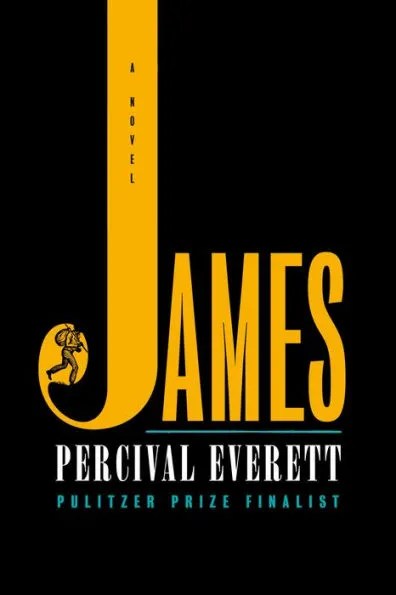
Why this book: I recently listened to a great audible version of The Adventures of Huckleberry Finn and was recently reading strong reviews of this revised version of the well known Mark Twain novel.
Summary in 3 Sentences This is a the author’s re-imagining of Mark Twain’s famous novel written in the first person from the perspective of Jim, the runaway slave who accompanies Huck down the Mississippi River, both of them escaping their lives in 1830s Hannibal, Missouri. In this book we experience many of the same “adventures” and challenges that Twain describes in the original novel, and additional ones that Everett adds to the original story – all seen from a recreated Jim – one with 20th or 21st century sensibilities. We see Huck, white society, slave culture, and southern slaveholders and those who accept it from the perspective of a black man with wisdom, education and insight about freedom, human rights and the imperative for blacks to adapt to survive.
My Impressions: I wasn’t sure what to expect with this book and early on, I wasn’t sure where the author was going with it, and as I got into it I still wasn’t sure I’d like it. But the more I read, the more I was pulled in and finally was very impressed with how he used this classic story to tell us a different story.
In James, Everett creates the character Jim as externally the same (or very similar) to the character in Mark Twain’s novel, but in James, we are inside Jim’s head, and see the world from his perspective, and this “Jim” has the consciousness and sensibilities of a 21st century educated black man, in the body and situation of an early 19th century slave in the South. It’s almost like a science fiction revision of the original story from Jim’s perspective.
In James, Jim plays the role of the stepin’ fetchit, good hearted, smart but simple minded slave that Twain creates in The Adventures of Huckleberry Finn and which has been caricatured in the years since.But in James it’s all an act – stressing that that the slave is a much more intelligent, sensitive and thoughtful character, and pretends to be what white people want him to be. Being seen as simple minded was a tool to ensure their safety – so that whites would not feel threatened by someone intelligent or competent. For a slave to show any intelligence or individuality or righteous indignation at the way he and other blacks are treated, invited severe punishment or death. So Jim teaches his children to talk “slave talk” (“yasuh, massah” or “I don know nuttin’ ’bout birthin’ babies”) to protect themselves from whites who would feel threatened by intelligent, thoughtful, and competent slaves. In James, slaves spoke slave talk when around whites, but among themselves, spoke as people today would speak. This “code-switching” – changing speach patterns to adapt to different social settings – was a tool that Everett used to emphasize how blacks were human beings relatable to us among themselves, but played the role that was expected of them by whites, in order to survive.
The book is filled with the “n” word – necessarily, to ensure that we the readers fully understand the setting. Jim is “nigger Jim” to the whites and is careful to do all he can to be invisible, to not draw any attention, because most attention results in brutal punishment.
James follows the rough trajectory of The Adventures of Huckleberry Finn, Jim and Huck both escaping from Aunt Polly, meeting on Jackson’s Island and then heading down the river together on various flimsy rafts, getting involved with “the Duke” and the “King of France “and their fraudulent escapades. But then James diverges from the Huck Finn story as Jim and Huck get separated and Jim gets involved with a minstrel group, is then sold as a slave, escapes and helps another slave escape, and on his own, secretly returns to Hannibal to reconnect with his wife and daughter. Jim reconnects with Huck again on Jackson’s Island to get his help, and here Everett departs dramatically from the fairy tale happy ending of The Adventures of Huckleberry Finn. Jim then chooses to become the agent of his own destiny. The conclusion is inconclusive, surprising and very well done. No spoiler, but while the ending is inconclusive, it is satisfying.
James provides a valuable perspective on slavery, providing a sober 21st century first person perspective on what it was like to be a slave. In one of the reviews of this book I read, it states that: “In Twain’s text, Jim is intelligent and honest, but also at times bumbling and the butt of jokes. In James, Jim emerges as a fully developed, multifaceted, and complex character. This is possibly only because he narrates his own story. ” Huck represents a compassionate innocently naive white person’s perspective on slavery, and one of the themes of the book is Huck’s moral development and rising consciousness about the evils of an institution he’d come to take for granted. But the majority of white characters in the book represent the prejudices of white supremacists, happily exploiting blacks and slaves.
James was an engaging and enlightening read – very cleverly using The Adventures of Huckleberry Finn story which so many of us know, to provide a rich perspective on how slavery felt to the blacks at that time. It was useful for me to have recently listened to The Adventures of Hucklebery Finn to better follow and appreciate Everett’s clever adaptation.


 Bob's Books