
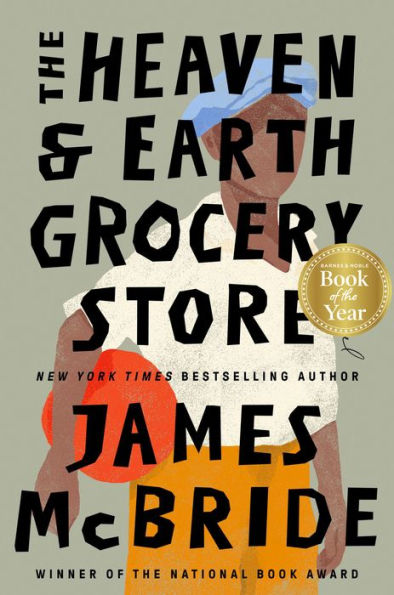
Why This Book: I liked Deacon King Kong and had heard and read good things about this book
Summary in 3 Sentences: The novel takes place in the 1930s in a suburb of Pottstown, Pa, where Jews and Blacks lived apart from the main stream white culture. Through the lives of several colorful figures in the Jewish and African American communities, we get to know how life was constricted by prejudice and racist policies in America at that time. Drama occurs when a prominent member of the community assaults a very popular Jewish lady who was harboring a black boy to prevent him from being unjustly institutionalized, and how the Black and Jewish communities came together to rectify this injustice.
My Impressions Enjoyed this book – and learned a lot, though I didn’t care for how he ended it – more on that later. As he did in Deacon King Kong, McBride has a meandering approach to describing the world of a poor under-privileged neighborhood in a different time and place. We get to know the people who live in that world, and thereby come to understand and appreciate their lives, challenges and in some cases, heroism in dealing with their circumstances.
The setting is a mixed Jewish and Black neighborhood in 1930s Pottstown, Pa. The story initially begins with the protagonist Moshe Ludlow, a rather dour Jewish theater manager marrying and starting a life with the crippled but otherwise beautiful, intelligent and congenial Chona, the Jewish daughter of the owner of the Heaven and Earth Grocery Store. Chona is well loved within both the Jewish and Black communities. In spite of institutional prejudice and racism, Moshe does pretty well making a living as a theater manager in Pottstown but is very careful to stay within his limitations as a Jew in Pottstown. We also get to know characters in the adjacent poor black community and how the blacks and Jew struggle to take care of each other and survive in a world with systemic prejudices and discrimination against both groups.
Ultimately these two communities – Jewish and African American living in a section of Pottstown known as “Chicken Hill” – support each other against the predominant WASP culture that runs suburban Pottstown, though not without sharing many of the same prejudices against each other that the whites have against each of them. The book is populated by a goodly number of memorable and colorful characters from both Jewish and Black communities, and a few bad-apple characters representing the oppressive WASP culture of Pottstown.
I chose to listen to the book because I enjoyed the narrator Dominic Hoffman’s vocal rendition of Deacon King Kong,. Again in Heaven and Earth Grocery Store, Hoffman’s credible renditions of the accents and voices of the Black and Jewish and other characters in the book helped bring the time, and context of the story to life.
The plot to this story is difficult to describe, as it meanders a bit – and seems merely to serve as a venue for describing and developing the many colorful characters in this book, and for describing the culture of Chicken Hill. Moshe and Chona are key characters in the book but disappear for much of it as we get to know the many other interesting characters living on Chicken Hill.
Nate Timblin is Moshe’s lead employee and foreman for his theater and is a well respected black man on Chicken Hill. Nate has a nephew who he wants to hide from authorities who intend to institutionalize him because they believe he is retarded – though in fact he is quite intelligent, but deaf. Chona agrees to hide the boy, but he is eventually discovered and sent to the sanatorium reserved for the indigent – well known for poor conditions and abusing its patients. They hatch a convoluted plot to rescue him from the institution, which takes up much of the latter part of the book – but again, it seemed primarily to offer a context for the author to further develop the fascinating characters in this community.
The ending is satisfying but leaves a few strings untied. What I didn’t care for was how as the book concludes, McBride felt compelled to give the reader a lecture that could have come out of a Marxist textbook. on how the capitalist system is rigged to permit the exploitation of the poor and the working class by the white wealthy classes. That exploitation was evident and easily deduced from the story, as part of the reality of early 20th century America, but I didn’t need for him to preach it to me as The Truth.
That said, I did enjoy the book – and indeed got many insights into Jewish-American culture and how Jews and Blacks lived in small town America a hundred years ago. I was fully engaged in listening to the stories and the voices of the many memorable characters of Chicken Hill, and the descriptions of life in a semi-ghetto of Blacks and Jews outside of Pottstown Pa in the 1930s.


 Bob's Books