The Book Thief, by Markus Zusak

Why this Book? I found this book on my bookshelf – somewhere (used book table?) I had purchased this book. I was looking through books on my shelf for a novel to read between other books assigned in the various book clubs I’m in. I found this one, checked the reviews – they are excellent – and so started to read.

Summary in 4 Sentences: The Setting: A young girl in 1938 Germany is orphaned and given over to a foster home of a poor Germany family living in a village outside of Munich. Though 11 years old, she is illiterate, and now traumatized by the loss of her family and being delivered to strangers, she struggles to adapt to her new foster family, but her foster father is kind and offers to teach her how to read. The Story: Over the next several years, she manages to survive and adapt within the village, attends school, makes a few friends (other outcasts) while all around her, Hitler’s Third Reich and anti-Semitism increasingly reach into her village and her life, and though her family is not political, the oppressive Nazi climate affects them all. Finally: The war itself reaches into the village, people she knows and loves have to take tough decisions, and her strength of character is tested in ways neither she nor the reader would expect.

My Impressions: Wonderful book that deserves its many accolades. Great characters living during one of the main dramas of the 20th century, in a small German town, which could be a small town anywhere, except that this one is sitting at the edge of a world in crisis. The main character is Liesel Meminger and this story is her story – but it is told from the perspective of “Death” – a personification of a “being” who carries souls from their earthly body to the next (undefined) world. Death is telling the story in retrospect – he knows what will happen, and occasionally reveals that this character or that will die much too young, or that this would be the last time a person would see, hear or experience X. But mostly, Death is simply telling the story in a detached observant way, from time to time revealing a human-like sadness or regret. And the author also uses another different literary tool – Death will occasionally step in from outside the story’s narrative to provide additional background or other explanatory information indented in bold letters as an aside.

Liesel is a great character. She is a traumatized orphan turned over to authorities by a similarly traumatized mother. Liesel is delivered to her foster family, initially doesn’t fully understand what is going on, but is alert to what she needs to do to survive. She keeps her mouth shut. She keeps her pain to herself, and does what she’s told. Life has dealt her a very tough hand and she is intent on surviving – by staying as low profile as possible, by trying not to attract attention, to just survive. But she is very curious and desperately wants to learn to read. Early in the book, at her brother’s funeral, she had picked up a dropped copy of a gravediggers manual, which she holds on to as representing her lost brother, and desperately wants to read it. Her kind new foster father Hans Hubermann nurtures her through her nightmares at night, and teaches her to read. She loves to read – it provides her an escape from an indifferently hostile world. Her foster mother Rosa Hubermann is harsh, condescending and unsympathetic, and presses Liesel into service, helping with the laundry Rosa does for the more well-to-do families in the village to help pay the bills. Liesel adapts – does what she’s told, tries to stay out of trouble, keeps to herself while the political temperature in the small village continues to rise in response to the Nazi propaganda.

She makes friends with Rudy, a young boy her age who like her, is an outsider in school, something of a loner who marches to his own drummer. She and Rudy become fast friends, form something of a partnership in navigating the challenges of poor young people in the village. Liesel is a tom-boy and she and Rudy play soccer together, give each other a hard time, but all the while, Rudy is romantically interested in Liesel, regularly asking her for a kiss – which she refuses him.

The story digresses to foster-father Hans’s experiences in WW1 and how he owed his life to a comrade. This incident incurred a debt that that Hans had to his benefactor’s family, which resulted in Max, a Jew escaping the roundup of Jews for the concentration camps, showing up at the Hubermann’s home asking Hans to make good on his debt and protect him. This brings the cost of Nazi anti-Semitism home to Liesel and the Hubermanns, and the story takes a new twist.

In their effort to hide and protect Max while also protecting themselves from the Nazis for the crime of hiding Jews, the Hubermann family including Liesel is transformed. They adjust their lives to bring no attention to their household, to protect Max and share as much of their meager resources with him as they can. Max demands little and is most grateful, and the Hubermann’s – and esp Liesel – become quite attached to him.

At this point the War has begun, the German Army has occupied Poland and Czechoslovakia, has invaded France and Russia, is fighting on two fronts, and life becomes ever more difficult in their little town. Money and resources are scarce, people are hungry, the men are conscripted, though at this point Hans, a veteran of WW1 is too old. Liesel becomes ever more engaged in her reading, and one of the wealthy patrons of Rosa Hubermann’s laundry business had a library, and allows Liesel to spend time there when she comes to pick up or deliver laundry. This was the only contact Liesel had with the world of books. Eventually Liesel would break into the house and steal books – one at a time – thus she became “the Book Thief.”

As things get tougher in her village, Liesel is forced to rise to the challenges that emerge, stepping up to help adults who are struggling to handle the increasing pressure and hardship. We see her courage, and the courage and cowardice, strength and weakness of many who live in the village, struggling to adapt and survive, so close to Munich and the heartbeat of the Nazi regime.

One thing I noticed in reading the book was that most of the “bad” characters in the book, those we were inclined to dislike, eventually showed their humanity in one way or another. The war brought out the worst, and sometimes the better sides of their characters.

I loved this book – The Book Thief is a coming of age novel – a “bildungs roman” about how Liesel grows and develops from a scared young girl into a strong young woman by dealing with the adversity of life in a small German village during the war. It gets better and better, more and more engaging as one reads through the story. The voice and perspective of Death the narrator becomes engaged as “he” narrates this story, all the while being called upon to carry the millions of souls who are dying during this war, into the next world. It is a book I will not soon forget.

Posted in Uncategorized | Leave a comment

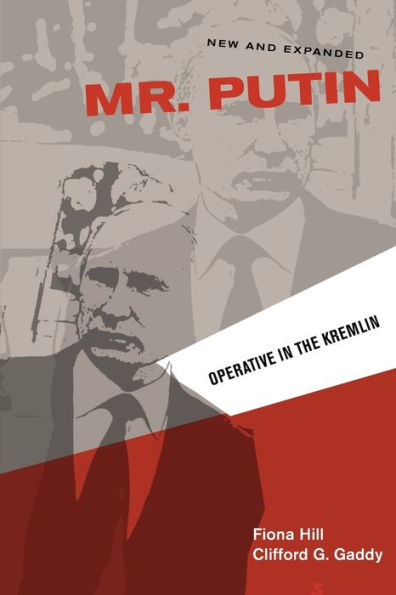
Mr Putin, Operative in the Kremlin, by Fiona Hill and Clifford Gaddy

Why this book:  Selected by my Navy SEAL reading group because one of our members had a connection to Fiona Hill and she agreed to join us on zoom to discuss the book.

Summary in 3 Sentences. The book is part biography of Putin as well as a look at how he got to the top of the Russian government, and the patterns of his behaviour and decisions. Much of what we learn abou this childhood and young adulthood is from his own accounts and a few published accounts of others, showing him to be shrewd in developing connections and influence, and a strategic thinker not only in his personal professional career, but also for Russia. The book concludes with the final chapters addressing his distrust of the West, esp America and the EU, and his relentless effort to strengthen Russia’s influence in the former Soviet states to counterbalance the power of the US and EU.Though the book was published before Russia invaded Ukraine, it concludes with a description of how his goal of bringing Ukraine back under the Russian sphere of influence is an obsession,  and that when he commits to a goal, he will stop at nothing, will fight dirty and do whatever it takes to win.

My Impressions: I listened to the book and in fact skpped a few of the chapters in the middle in order to finish it before our scheduled meeting with Ms Hill, which unfortunately I missed, since I was on a bike trip in Alaska when it took place.  I found it enlightening and disturbing – enlightening, about the cultural background in Russia that Putin grew up in and which shaped him as a Russian leader, and his country to where it is today.  Disturbing, in that it reflects a paranoia and sense of persecution from the West that Putin and his supporters feel, and which is a key component in our current tensions with Russia.  Though the book was written before Russia invaded Ukraine, it is very instructive as to the origins of that war, and of Putin’s mindset and goals.  

The first part of the book is Putin’s biography – his childhood, his various positions in the KGB, and events which the authors believe most shaped his thinking.  Then how he navigated and his lessons learned in the aftermath of the break up of the Soviet Union.  A lot is not known about him because Putin has controlled the narrative on his life, and in his early years, he was very much the quiet gray man – not making waves, not standing out, but cultivating his network and his future. After he came to power in the late 1990s and early 2000s, people knew that he had the means and the will to exact revenge against those who might undermine his image or his own narrative.  The authors apparently did exhaustive research to find what they could, and made the assumptions that made the most sense, and it seemed to me that they tell the story of his rise to power as best they could.

That story also informs the reader about their system, the political and economic chaos and disarray of the 1990’s after Glasnost and Perestroika, and how Putin’s promise of stability so resonated with the political establishment and the Russian people. The book also provides interesting background on his mistrust of and resentment against the EU for what he perceives as almost an economic conspiracy against Russia, and what he perceived as an effort to keep them weak and vulnerable after the wall came down.  Also we learn of his perception that the West in general and the EU and NATO in particular are conspiring to undermine Russia’s relationship with it’s former client states like Georgia and Chechnya, thus explaining his brutal crackdowns – noting that the West made threats about what they would do if he invaded those countries which were never carried out – thus emboldening him in his long term goal to bring Ukraine back into the Russian orbit. 

The book concludes in the final chapters – after chapter 12 – with a  look at Putin’s relationship to the US and NATO and his ambition to bring Ukraine back into the Russian sphere.  The authors laid out the steps leading up to and following Russia’s annexation of the Crimea, of actions they’d taken in Georgia without a strong reaction from the West.  And the authors noted that one thing they can promise about Putin – he will stop at nothing to get what he wants – lie, cheat, steal – he has subordinated all values to: 1. his intent to stay in power, and 2. his intent to recreate Russia as a major world power.  This is ominous, because as of this writing, Russia and Putin are becoming increasingly desperte in Ukraine, and Putin is threatening dramatic measures to achieve his goals, or at least to deny the West their objective of keeping Ukraine out of Russian hands.  Those who know him are warning that we should take his threats seriously.

Ukraine has become Putin’s war, but he’s busy making it Russia’s war to assert itself in what Putin and many Russian’s believe to be strictly their sphere of influence.  The West was not wise in provoking him by advocating Ukrainian membership in NATO or membership in the EU – it just fed Putin’s resentment and paranoia.  We’ll see what happens. 


Posted in Uncategorized | 1 Comment

The Philosopher’s Stone, by Colin Wilson

Why this book:I’ve already read this book twice before, but the last time was 20 years ago. I was interested in revisiting it with the sensibilities of greater “maturity.” Several of my friends have experienced interest in exploring Science Fiction and so I got a few of them to agree to join me in reading this book – for me, again.

Summary in 4 Sentences: The Philosopher’s Stone is written in the first person as an autobiographical account of Howard Lester exploring the potentialities of the human species to move to the next level on the evolutionary spectrum.  His story begins when he is a precocious young man who is particularly moved by literature and music, and adopts an older mentor with whom he spends most of his spare time as a youth and eventually lives with him, and together they explore the possibilities of the mind.  The remainder of the book is our narrator’s journey in developing his own mental strengths and powers, exploring the works of others in the same field and eventually developing a metaphysics and theory of human evolution that have at their center, the power of the human subconscious and imagination to transcend the trivialities and needs of our physical existence.

My Impressions:  A powerful statement of Colin Wilson’s philosophy and his belief in the capacities of human beings to become more than they are.  One must be ready for this book, and this, my third time reading it, I believe I finally am.  I’ve read a lot Colin Wilson’s work – but not for a while – and I’m fairly familiar with his philosophy.   As a novel, The Philosopher’s Stone  gives him the freedom to create the world he wants, to express his views freely through his fictional character, mixing what he believes to be true with what might be true about the potentiality of humans to become much more than they are.  In this novel, Wilson accelerates the development of the human ability to harness the subconscious with a  brain operation which makes it much easier for people to relax the mind, focus attention, tune one’s senses to the environment, and put on hold most of our normal survival instincts which distract us from the insights that our subconscious mind could offer us. 

The ideas he expresses are familiar to me, as I’ve recently read Joseph Murphy’s The Power of Your Subconscious Mind (several times, Shatki Gawain’s  Creative Visualization, and Henriette Klauser’s Write it Down, Make it Happen – all emphasizing that the subconscious mind is somehow connected to a dimension of reality that we don’t understand, and that putting effort into developing that connection, and learning to use it can give us greater freedom and power. 

The novel takes our narrator and protagonist from being a youth to a man in his late 30s or 40s through his journey to understand his own mental powers and the nature of our true powers by experimenting on himself, and then drawing inferences from his experiences and the experiences and ideas of others to better understand the nature of reality and where human beings fit into the universe. One cannot help but be impressed with the Lester’s (and therefore Wilson’s) familiarity with the canons of Western culture, literature, philosophy and art that he draws upon to make his argument for the powers of the mind, man, and potentialities for the future.  In fact he digresses in his explorations to make the case from some of his insights, that indeed, Francis Bacon was the secret author of many, if not most of Shakespeare’s works – an idea that has been around for centuries.

He emphasizes the Value Experience as a flash of insight that gives one a bird’s eye view that transcends the immediacy of the moment.  He says that Value Expeience depend on health, vitality, and will power.  I read a separate work by Wilson, written much later in his life entitled Super Consciousness: the Quest for Peak Experiences (which I review here) in which he expands on the Value Experience he describes in this book, and notes that he got the idea of Peak Experiences from Abraham Mazlow. 

There are strong echoes of Nietzsche’s ubermensch in his description of the powers that the few who indeed do develop their minds will attain, and the weak will of the majority who are satisfied with the banalities of following the rules of social convention, pleasure-seeking an self-indulgence.  

At the end of the novel, some of these ideas get a bit outlandish, proposing the “existence” of supernatural beings who have created and guided human civilizations over millennia – to include civilizations that pre-date what we currently understand as the trajectory of the development of civilizations.  

That said, there are many unanswered questions about how ancient civilizations developed, and if one takes his Ancient Great Old Ones as a metaphor for the God of most cultures and civilizations and religions, the ideas that Wilson proposes, through Howard Lester may not be so preposterous. 

I do have a couple of quibbles with Wilson’s philosophy. It is indeed very individualistic and I don’t believe he gives adequate attention to our human communitarian instincts – our needs for social support and family.  Of the three great approaches to ethical living – autonomy, community, divinity – Wilson’s approach neglects “community.”   I also don’t believe he gives adequate attention to the mind-body connection. He emphasizes the importance of exercising the mind and making it stronger, and he does recognize that being tired depletes vitality and energy, but he doesn’t acknowledge that putting energy into being physically healthy and robust can indeed enhance the energy and vitality of the mind.  I suspect that the world of English Intellectuals with which Wilson associated probably never exposed him to that idea.

Here are some of the major themes and ideas that I took from Wilson in The Philospher’s Stone:

  • Man’s most important capacity for self development is his will.  It is the primary tool by which he can overcome the limitations of his instinctual desires and the trivialities of daily life.
  • It takes a strong will to transcend the instinctual impulses for food, pleasure, and comfort, to achieve something greater – a vitality that can overcome the erosion of aging and increase life and health-span.
  • He emphasizes the “Value Experience” as a key to inspiring the will to transcend the trivialities of daily living.
  • The mind has the power to open the senses to subtler dimensions of reality and the environment -such as history, relationships, mood and possibilities.  These extra-sensory capabilities include second sight, time-vision, and sensing peoples feelings and intentions.
  • Most people don’t have the courage to develop themselves to become what they are capable of; they are bored with the trivialities and repetitions of life, and this drives them to find excitement and stimulation thru drugs, alcohol, crime, and evil behaviors. 
  • Developing mental will, focus and transcendence are the most important next steps in human evolution. 

This is not a book for everyone – it is not a page-turner novel.  But for those who have thought about and explored the potentialities of the mind, and explored some of its hidden powers, it will be thought provoking and perhaps even inspirational.  As Wilson says on page 276, “Who could possibly prefer being asleep to being awake, especially on a spring morning?”

————

BELOW are ALOT of quotes and ideas from The Philosopher’s Stone.  Some are paraphrases, some are quotes.   Going thru my underlines and adding them here helped me to review and better understand the book.  Some are paraphrases, some are quotes.  Page numbers are from the paperback edition pictured above:

When one is completely absorbed in a project, one’s work, a meaningful task, a discussion of “happiness” is a “pointless irrelevancy.”22

What is the point of studying science and “dead facts” if not to make a difference in the lives of the living.23

“The main problem of human life is easy to define.  We live too close to the present, like a gramophone needle travelling over a record.  We never appreciate the music as a whole because we only hear a series of individual notes.” 25-26  (My note: Transcendence?)

Deepest insight of all: Science is not man’s attempts to reach  ‘truth.’  He wants wider consciousness, freedom from this strange trap that holds our noses against the gramophone record – which is why he has always loved wine and music….26

….wider consciousness, those breathing spaces when you feel like a bird, contemplating your existence from above, instead of from the gutter…..The mystics, like the poets, knew all about this ‘birds eye consciousness’ that suddenly replaces our usual worm’s eye view. 26-27

a symphony was always an incantation to induce the same state of mind, the sense of detachment from our humanity,  of entering into the eternal life of mountains and atoms. 31

The past five years had flown by like 6 months. Time’s a confidence trick.  It like a crooked guardian who keeps dipping his hands into your bank account. You think you’ve still got a  fortune left, and then realize that you’re on the edge of bankruptcy.32

The scientist is unwilling to face death and so he sacrifices his humanity and tries to identify himself with the abstract and the eternal.  And the religious man has the same motive, except that he may believe in an after-life for which he has to prepare.  32

If life is consciousness, then the problem of prolonging life should be the problem of increasing consciousness – the aim of science as well as art.32

Shaw: “Minding your own business is like minding your own body – it’s the quickest way to make yourself sick.”   Why should thinking about yourself increase the sickness, and thinking about something else diminish it?35

Science is not a meaningless abstraction, unrelated to human life.  Like art, literature, music, religion, it is the pursuit of an ‘other-ness’ that connects us to some obscure source of power inside ourselves. 36

Is the final end of human knowledge to teach man his own unimportance? 38

The no-man’s land between philosophy and psychology.39

The “value experience” (VE) – the bird’s eye moment, the Buddhist’s ideal of nirvana, rapt contemplation, moments of ‘contemplative objectivity.’40

The 5% of human beings are a dominant minority, driven by an urge for self-development and maturity, mostly expressing themselves through social dominance.  5% of the 5% – .00025% need to express their dominance by another kind of self-expression – the evolution of the mind – basically obsessed by the value experience – the highest form of self expression.  For these people, all other forms of achievement and dominance seem barren.  41

it is hard to achieve VE’s at will, unless you have outgrown the desire to dominate other people and replaced the old domination experience with the value experience.  41 (my note: In his book Super Consciousness, he gives guidance about how to achieve VEs with some regularity)

VE’s increase vitality. 42

People gradually lose the will to live as they get older because the future holds less in store by way of excitement, or love, or discovery43

Man has a deeply ingrained idea that old age is merely a running down – his evolution is frustrated by physical decay, which in turn is the outcome of the collapse of the will. 44

VE’s depend on vitality, health, and will power.44

Evil is the outcome of the frustrated evolutionary drive..  45

Marks’s experiments demonstrated that longevity depends on a sense of purpose..Frankl made the same observation in a concentration camp.  49

The essence of all poetry particularly of the romantic poetry of the nineteenth century. Detachment…floating freedom from one’s personal little problems… the sense of wider horizons.  51

…Clear glimpses of a godlike state of detachment  52

Man is normally trapped in the trivialities of his everyday life, scarcely able to see beyond the end of his nose.  But in certain moments of beauty, he relaxes; his soul expands; he sees distant horizons – of time as well as space.  his mind overflows with beauty – for what is beauty but this sudden expansion of consciousness into other times, other places  the delightful relaxation of tension, accompanied by the realization that man is not really himself unless he is contemplating immense vistas? (my note: Wilson’s Peak Experiences) 53

Nature is as interested in right and wrong as are the saints and moralists.  But it is attached to evolutionary success.  When the dog is in heat, it is impervious to heat, cold injury, because sex is the most primitive form of the evolutionary appetite. 55

What destroys the evolutionary urge in many – habit, repetition and triviality. 55

When man is able to develop this evolutionary faculty for “other-ness” he will be able to resist the erosion of death.  55

There is a reason why most people die fairly early. Their presence would only encumber the earth.  61

Value Experiences have the effect of raising vitality – cancers are the result of a sudden drop in vitality.  70

I saw with perfect clarity why the ‘value experience’ does not guarantee long life, or even immunity of illness.  It is totally unimportant.  It is like a flash of lightning.  But what is important is not the lightening,  but what you see by it.   73

What distinguishes the greatest men is precisely that ability to focus to concentrate the attention.  So my search for longevity through the value experience was a waste of time.  73

Since Husserl, we have realized that consciousness is ‘intentional’ – that you have to focus it or you don’t see anything.  73

Consciousness is not only intentional, it is rational – it keeps relating new meanings to one’s experiences 76

A healthy consciousness is like a spider’s web –  and you are the spider at the center of the web, which is the present moment.  the MEANING of your life depends on those fine threads which stretch away to other times, other places, and the vibrations that come to you along the web. 

Visions and ecstasies of the mystics are perfectly normal and any human being is capable of experiencing them – these moments of meaning are also moments of tremendous affirmation , a clear recognition of what human evolution is all about. 

Man’s freedom is the evolutionary urge which drives him upward, and which therefore provides a REASON when he is confronted by choices.  79

The mental activity involved in imagination is the highest form known to man 81

The mechanism of imagination – associated with ‘relational consciousness.’ – when the  narrow beam of our consciousness broadens and illuminates a wider area, these are Marks’s ‘value experiences.’82

**If we could achieve control over the ‘mental hormone’ that breaks habit patterns, we should be on the verge of becoming supermen.  For the chief human problem is our slavery to the trivial, which we can only break by rather dubious methods – alcohol, drugs, violence, and so on. Yet our need to escape the trivial is so compulsive that we prefer to commit crimes or start wars rather than remain bored.  83

A man does not die of ‘old age’  He gets fixed in old habit patterns until his capacity for ‘other-ness’ is destroyed, and then he allows himself to sink into death.  83

From the beginning I felt the answer lay in the prefrontal lobes of the brain.84

The talent develops as a result of a certain search – the search for value experiences, the childhood moments of universal ‘newness’ and happiness. Most people forget them; poets cling to them and spend their lives searching for them.  87

It is extremely hard for poets to divert brain energy from more practical areas of the brain to these great memory tanks; our animal caution refuses to allow it. So these strange moments of pure vision, of broad relational consciousness only occur when there happens to be a lot of brain energy to spare. 93

False assumption of gerontologists that life is chemical in nature. Men die for the same reason they fall asleep – because the senses close up from boredom when there is nothing to occupy them.  But a man who is deeply interested in something can sty awake all night  (Bob’s NOTE-however the body DOES need sleep) 102

When we are young, the senses are wide awake; life is intensely interesting: anything might happen.103  

Life is sustained by will… but it is gradually creeping automatism that kills him off.  103

Control over the powers of the prefrontal cortex is the ability to widen the beam of attention at will.  103-4

Most human beings live like trains  they just chug forward through life, held on course by the railway lines of convention and habit. …evolution has been aiming at creating a new type of human being , who sees the world with new eyes all the time, who can readjust his mind a hundred times a day to see the familiar as strange. 106

Theoretically web-like consciousness should gradually reveal the deepest levels of the mind. Husserl’s ‘Transcendental ego,’ the hidden self…. the popularity of Christmas is a matter of web-like consciousness…the nearest to mystical experience that most human beings ever approach – forgetting petty worries and irritations and thinking in terms of universal peace. … feeling glad that life occasionally declares a truce.  112 

The insight that we live in the most beautiful planet in the solar system, but meanwhile we live in a dirty narrow claustrophobic life-world, arguing about politics, and sexual freedom and the race problem. 112

The seeds of distrust of life are  planted in us very early  and permanently stunt most human beings.  113

Man is the first objective animal. All others live in a subjective world of instinct, from which they can never escape; only man looks at the stars or rocks and says, “How interesting….” It is the first step toward becoming a god.113

The problem with most people is an obsessive desire for security. They want domestic security and sexual security and financial security and they waste their lives pursuing these until one day they realize that death negates all security, and they might as well have saved themselves the trouble from the beginning.114

They came so close, the romantics… they saw that our capacity to enjoy beauty for its own sake indicates that we have moved into the borderland between animal and god. 115

The senses are not intended to let things in, but to keep things out..most animals possess a degree of second sight… too much insight destroys efficiency. Our senses are so strong that they overwhelm imagination.  116-117

When I look at an object I assume that my senses are giving me its ‘reality;’  but this is not true….When I sink into a condition of meditation, the historical dimension becomes real to me, my senses give me more of its reality than when I am stuck in the present123-4

One of those total infatuations which virile old men are prone…..men who are cautious in business or political life are often prone to rashness in love.  129

The first stage was ‘contemplative objectivity,’ the simple ability to pass beyond the gates of my own personality and to really SEE things, to realize they exist   –  the objective multiplicity of the world. 134

The prefrontal cortex is supposed to rescue us from the present, to allow us to  approach the world from many different angles and points of view, instead of stagnating in a a subjective life world. To escape the subjective134

I had not yet learnt to stop seeing myself as Harry Lester, aged thirty-six, one of fortune’s favored children. Once I managed to lose this personal equivalent of provincialism, time would cease to negate me.137

What is the nature of time? it is a function of consciousness, nothing else. 145

The solution has always been within the reach of human beings – to deliberately increase the brains capacity for concentration by a sustained effort of will.  151

I came to realize that a racial subconscious really exists, and if this is so, then our notion of our individuality is in some sense an illusion, fostered by the separateness of our bodies. 154

“relational consciousness’ – and ability to sense people that can come from not thinking. 154

Time vision is merely an extension of our normal senses..  When the brain is dull, trivialities assume larger proportions.  184

The Great Old Ones?

What would happen if the senses were fully awake, so that every taste or sight or sound produced deep echoes throughout one’s being? Suddenly it seemed to me that I had found a subject really worth the fullest investigation – to find what man is capable of becoming when he is fully awake. The body’s dullness cuts us off from the outside world.   205

I was suddenly aware of the world as a huge sexual roundabout, and for a moment, I ceased to be either male or female, but became both, so that I could simultaneously feel delight of a man as he enters the softness of a girl, and the delight of the girl as she feels his maleness inside her.  206

p207 -desribes the mystic ideal

I was getting the reward that the visionaries in the past should have had: able to hold the world at arm’s length, to see its meaning, to grasp something of its complex pattern.209

his insight demonstrated to me that a man does not need to possess ‘time vision’ to grasp the realities of history215

I launched myself into a sea of serenity, ignoring my personality; my interest in the people in the room, as if observing the earth from some distant point in space…I ceased to be aware of the room.  221

(When we have a sense of confidence that something is going to happen, or that we will win) is not an illusion, born of over-confidence. Our subconscious roots spread farther into the soil of reality than we realize, and in time of unity-of-mind, they control things.  This is not as strange as it sounds..229

The Shavian-Bergsonian philosophy – Running parallel to the universe of matter there is another universe, of pure life. And life has invaded matter.234

Life remained static – until some chance mutation introduced death. And with death came the possibility of reproduction; and with reproduction came new mutations. Evolution was launched.  235

Yes, “they” had created human beings as their servants.  “they” had power , but  no precision.  And for long ages, human beings served them faithfully, and were allowed insights into many secrets….their danger that their servants would themselves become the masters of the earth and learn the ancient secrets.  239

Now most of our human problems are due to the self-division that arises from individuality, for all our problems can be summarized in one word: triviality.  We are victims of the ‘demon of the trivial.’  All human evils can eventually be traced to the narrowness of human consciousness.   241

The intelligent man controls his frustration, examines the obstacle, and calculates how it can best be removed.  It is not that he is naturally patient. Impatience is a sign or high vitality, and intelligence should be more vital than stupidity, not less.  He DIRECTS his impatience as the barrel of a gun directs a bullet. 241

All neurosis and insanity is due to self-division, to self-criticism outweighing vitality. Self-criticism is a brake, and brakes sometimes jam. 242

The legendary civilization of Mu 242

Man has developed a conscious mind that marches in the opposite direction from his instinctive drives.  Every young man who becomes obsessed by literature or music or science is aware that he is creating a personality that has nothing to do with his more violent emotions: rage, lust, jealousy.247

Conscious powers of focusing are dangerous according to one’s degree of control of the subconscious levels of the mind.  248

The Old Ones observed these humanoids they had created, and they realized the power of the human imagination fueled by optimism and purpose…they went through the phase that every intelligent teenager experiences: of developing a new individualized consciousness, and leaving the instincts to fend for themselves.  248

The “focusing muscle” can be strengthened by exercise.250

I sat in the armchair, and allowed myself to sink into contemplative objectivity. 252

Time vision is a complex way of intuiting the inner-reality of an object, in the way a handwriting expert can ‘read’ the writer’s character in his formation of letters. 255

Ted Serios, the man who can make photographs appear on a photographic plate by concentrating on it…256

People needed fear and self-discipline, if they were not to become decadent.258

And then another feeling came upon me – a total,  deep ecstatic loyalty to the Great Old Ones.  It was simply self-evident that they were the most powerful beings in the solar system and deserved the greatest devotion, the deepest love . It was  the Blakeian principle; ‘Everything that lives is Holy, life delights in life.’264

The Ancient Old Ones had made an interesting discovery; that Man was basically a religious animal. 266

But it must be remembered that in a basic sense, the Old Ones were not ‘plural’; they were more like a single being…. Man was a mirror in which the Old Ones could see their faces – or rather their Face.  269

As the conscious mind learned to project its visions of reason and order, the vast energies of the subconscious writhed in their prison, and projected visions of chaos.272

the Old Ones will simple let man stagnate until he suffers the price of stagnation: death… The alternative is clear enough.  The Old Ones must awaken to find a society of Masters, with whom they can collaborate on equal terms. 275

The vast majority of the human race consists of people who will shrink from the great step to inner freedom 275

Who could possibly prefer being asleep to being awake, especially on a spring morning?  276

Man should possess an infinite appetite for life. It should be self-evident to him, all the time, that life is superb, glorious, endlessly rich, infinitely desirable.  At present, because he is in a midway position between the brute and the truly human, he is always getting bored, depressed, weary of life.  He has become so top heavy with civilization that he cannot contact his springs of pure vitality. 277


Posted in Uncategorized | Leave a comment

Fishcamp, by Dorothy Savage Joseph

Why this book: I’ve always been interested in Native Alaskan culture, and I picked this book up at the Native Alaskan Heritage Museum in Anchorage during my visit in Sept 2022.

Summary in 3 Sentences: This is the personal account of the author, growing up in the small, Catholic and traditional Athabaskan village on the Yukon River in Alaska in the 1940s and 50s. It tells about her life, her family living a life of subsistence on hunting, fishing and berry picking, and the values and traditions of the people in that village in the period before modernization truly came to remote villages.  As she became a teenager and young adult, there was more contact with the outside world, and she wrote this when she was in her late 50s, looking back on her life as a child, after having moved to Anchorage to work, get married, and have her own children.  

My Impressions:  This is a first person memoir of a young native Athabaskan Dorothy Savage Joseph’s childhood growing up in Holy Cross, Alaska, a small Catholic village on the Yukon River.  Dorothy was born in 1940 and her childhood and this story take her through the 1940s and the 1950s, up to when, as a young woman she left her home village to work part time in Fairbanks, and then ultimately to marry, raise a family, and live in Anchorage. We don’t hear much about that later part – the book’s focus is on what life was like in Holy Cross, to include in her family’s “fishcamp” during the 40s and early 50s.

The book is short – 143 pages – and includes some grainy black and white photos that give a bit of context to her story. “Fishcamp” itself was a camp that her family established a few miles down the Yukon from their home village of Holy Cross, where Dorothy’s family went to spend the summer, fishing and collecting berries and the like. Her family lived a subsistence lifestyle – her father hunted and fished for food, his mother preserved the meat and the berries and what they were able to collect during the short spring, summer, and fall to help them get through the winter.  What little cash they had was from selling furs from animals that her father hunted, and during the summer, he earned a bit of money piloting boats down the Yukon.

Dorothy was one of apparently 15 children and though she doesn’t mention the burden that so much childbirth had on her mother, it’s clear that there were a lot of children around and all of them were engaged in the project of hunting berries, plucking the feathers from birds her father had shot, cleaning and drying fish, and the myriad activities necessary to live well in the summer, and have enough food to get through the winter, when food would be scarce.

The village of Holy Cross was founded in 1857 by a Catholic Priest and they created a mission there, which included an in-resident school for those who didn’t live near the village, but also included classes and school for those like Dorothy who lived in the village and could get to school. She attended school as a young girls when urgent chores at home did not preclude her attendance. She was (I believe) the 3rd oldest, so as more kids came along she not only helped he mother with food gathering, prep, and storage, but also taking care of younger children.   As she got older and more capable, several times she had to go to school every other year.    By her account she was a good student and loved school. She also loved to read, but reading material was scarce.

Her mother sounds like an extraordinary person – all the things she was able to do while her husband and Dorothy’s father was away hunting and trapping and preparing and storing all the food they needed to get through the winter.  They also had to take care of dogs, as dog sledding was a major form of transportation in the winter.  

She does note that occasionally there were issues with home-brew and some incidents related to drunkenness, but she doesn’t indicate that alcoholism was as much of a problem as I sometimes read that it is today in native Alaskan communities. Most of the memories she shares, are pleasant and positive, and she said she got a lot of help from her mother and sisters in recalling events for the book. Her book is very conversational, as though she were telling it to you at the kitchen table. Occasionally she apologizes for a digression, and then comes back to her main story.

All in all, a very interesting and enjoyable book to get a feel for Native Alaskan culture in a small village in the interior of Alaska in the mid 20th century.  One can’t help but like and respect Dorothy – and I sent her a note thanking her for writing this book.  I was able to read most of it on my plane ride back to San Diego from Anchorage.  But  her story is restricted to her experience as an Athabaskan Native Alaskan – there are in fact at least five different ethnic groups in Alaska, the Athabaskan being the largest, living in the largest portion of the territory in central Alaska.  Those considered by most of us in the lower 48 as “Eskimos” live on the West and Northern Coasts of Alaska 

Posted in Uncategorized | Leave a comment

Rules of Civility, by Amor Towles

Why this Book: Selected by my literature reading group.  Several of them had read the book and wanted to read it again. My wife has read it twice. And we had liked Towles’ other books Gentleman in Moscow, and The Lincoln Highway.

Summary in 3 Sentences: Written from the perspective of a young woman from the midwest living and working in New York in 1938, trying to find her way, living in a women’s boarding house, sharing a room with a rather flamboyant roommate. They are out one evening and meet an intriguing and charming man which sets off a series of events that go in many unanticipated directions.  The story is about the maturing and evolution of her character as her close friends come and go, as she gets into and out of relationships, finds her way into the moneyed social classes,  getting increasing responsibilities at work, and trying to sort out what it all means.

My Impressions:  A really enjoyable read – and I loved the writingThe characters were interesting and it was fun to look at the lives of a group of well-to-do young adults living in NYC in the late 30s, as the depression was waning and the US was carefully watching what was happening in Europe. But the aggressions of Hitler and what was happening in Europe, and the struggles of most Americans during the depression were of little concern to these self-preoccupied 20 somethings from good families with money, looking for fun, love and excitement in New York City. 

The title of the book is taken from a list found in George Washington’s papers entitled: “Rules of Civility and Decent Behaviour in Company and Conversation,”  and Towles provides all 110 of these rules in original spelling and grammar, as an appendix to the book.  Many are anachronistic, but they are rules for an aspiring social climber in the mid 18th century for how to maintain one’s detached decorum and demonstrate good breeding.  They include table manners, how to show appropriate deference to one’s superiors, and how not to be pulled into the muck of behaving like the unwashed masses.  Very much a reflection of English upper class sensibilities. They would not be out of place in Downton Abbey.

After reading the book, I was wondering if there was any point to the engaging story and clever writing. I believe that perhaps a clue may be in the book’s title, and that Towles included Washington’s “Rules of Civility” in the appendix.  The rules are how to play one’s role, to get one what wants, to climb the social ladder by behaving properly.  To be “authentically” oneself is dangerous.   One must learn to suppress and manage one’s emotions, not threaten the social order, and stay disciplined in following the “rules of civility.” 

I would recommend to anyone choosing to read this book, to go through the appendix first, and keep Washington’s “rules of civility”in the back of their mind as they enjoy the Rules of Civility.  

Many of the characters in this book were indeed young and endeavoring to do what is expected, either to climb to, or remain in the upper classes.  Two of the male characters and one of the female characters broke that rule – sensed the artificiality of the lives they were leading, and followed their heart to find out what they were truly made of.  My assessment of Katey Konent, our narrator, was that she was in the middle – not necessarily drawn to the world of upperclass civility, recognizing its shallowness, but unwilling to give it up.  In the end she chose to follow her own path, but without throwing out the rules – she colored within the lines,  but her heart (it seemed to me) was elsewhere.  

There were spots where Towles opened the door to more substantial topics, but he didn’t dwell there – he didn’t go through the door, left it open and moved on. Rules of Civility does not demand introspection or reflection on one’s values or life,  and can be enjoyed simply aa a good read – largely because of Towles’ writing.  As I read the book, I underlined passages and quips that I found inspired and creative. Towles is the master of the bon mot.  But on further reflection on the topic of authenticity, or conformity to social norms, I came to believe that there is more here than meets the eye.  

Here are but a few of the lines I underlined and which I believe capture some of Towles’ wit and insight, as well as both the wisdom and the prudence contained in Rules of Civility: 

  • Be careful when choosing what you’re proud of – because the world has every intention of using it against you.  p 37
  • (A group of alienated Russians gathering at a bar) In such close proximity, time slowly strengthened their sentiments while diluting their resolve. 31
  • That’s the problem with being born in New York, the old newsman observed a little sadly. You’ve got no New York to run away to.  85
  • Wearing a man’s suit and a white collared shirt, she was blowing smoke rings and wishing she was Gertrude Stein.  113
  • There are tens of thousands of butterflies: men and women like Eve with two dramatically different colorings – one which serves to attract and the other which serves to camouflage – and which can be switched at the instant, with a flit of the wings.  117
  • Uncompromising purpose and the search for eternal truth have an unquestionable sex appeal for the young and high minded; but when a person loses the ability to take pleasure in the mundane – in the cigarette on the stoop or the gingersnap in the bath – she has probably put herself in unnecessary danger….One must be prepared to fight for one’s simple pleasures and to defend them against elegance and erudition and all manner of glamorous enticements.  128
  • But as the Greeks teach us, there is only one remedy for that sort of hubris.  They called it nemesis. We call it getting what you deserve, or a finger in the eye, or a comeuppance for short.  133
  • For what was civilization but the intellect’s ascendancy out of the doldrums of necessity (shelter, sustenance and survival) into the ether of the finely superfluous (poetry, handbags and huate cuisine)?
  • …the kind of man who would have been better off at sea – that world without women or children or social graces, with plenty of work and unspoken codes of camaraderie.  141
  • After all, where I came from the mission was to pay as little as one could without stealing  190
  • Even at ten feet you could tell she was spinning a yarn at a friends’s expense.  As Jack introduced me, I wondered how long I’d have to chat before I could extricate myself politely. 203
  • There it was again. That slight stinging sensation of the cheeks. It’s our body’s light-speed response to the world showing us up; and it’s one of life’s most unpleasant feelings – leaving one to wonder what evolutionary purpose it could possibly serve.  204
  • On the panel in front of me were two silver buttons. One that said “Now,” and one that said “Never.” 207
  • It was like she’s said all along: She was willing to be under anything, as long as it wasn’t somebody’s thumb. 215
  • (After being asked what he thought of Thoreau’s Walden) Tinker: Well at first I wasn’t sure I was going to make it. Four hundred pages of a man alone in a cabin philosophizing on human history, trying to strip life to its essentials.  Kate: But what dit you think in the end?  Tinker: In the end – I thought it was the greatest adventure of them all.  228
  • Thoreau says (in Walden) that men mistakenly think of truth as being remote – behind the farthest star, before Adam and after the reckoning.  When in fact, all these times and places and occasions are now and here. In a way, this celebration of the now and here seems to contradict the exhortation to follow one’s star. But it is equally persuasive. And oh so much more attainable.  230
  • For the most part, in the course of our daily lives we abide the abundant evidence that no such universal justice exists. Like a cart horse, we plod along the cobblestones dragging our masters’ wares with our heads down and our blinder in place, waiting patiently for the next cube of sugar.  252
  • Anne: There’s a pretty clear difference between physical and emotional needs. Women like you and I understand this. Most women don’t. Or they’re unwilling to admit it.  256
  • Anne: Most people have more needs than wants. That’s why they live the lives they do.  But the world is run by those whose wants outstrip their needs.  259
  • The picture was an hour under way, so I watched the second half and then stayed for the first. Like most movies, things looked dire at the midpoint and were happily resolved at the end. Watching it my way made it seem a little truer to life.  259
  • As a quick aside, let me observe that in moments of high emotion – whether they’re triggered by anger or envy, humiliation or resentment – if the next thing you’re going tosay makes you feel better, then it”s probably the  wrong thing to say. This is one of the finer maxims that I’ve discovered in life. And you can have it, since it’s been of no use to me.  p. 260
  • I suppose that Anne was right when she observed that at any given moment we’re all seeking someone’s forgiveness.  297
  • I know too well the nature of life’s distractions and enticements – how the piecemeal progress of our hopes and ambitions commands our undivided attention, reshaping the ethereal into the tangible, the commitments into compromises.  324

There is much wisdom in Rules of Civility, and it can be contrasted with the practical prudence we see in the characters, following the “rules,”  going along to get along.  But Towles doesn’t tell us which is which – it is for the reader to distinguish.   Because of the engaging story and his smooth-as-butter writing and wit, Rules of Civility  can be enjoyed superficially as a good and fun read, or one can go deeper and explore where the wisdom might be.  Who were truly happy and fulfilled, and who were simply reaping the rewards of social approbation and a comfortable lifestyle that come from following the “rules of civility,”  keeping the status quo’s values unchallenged and in check.  And what are WE doing?  Who do we know who has thrown the rules of civility to the wind in order to indeed be true to themselves and their dreams, and become the person they aspire to be? And what do we see when we look in the mirror?  


Posted in Uncategorized | Leave a comment

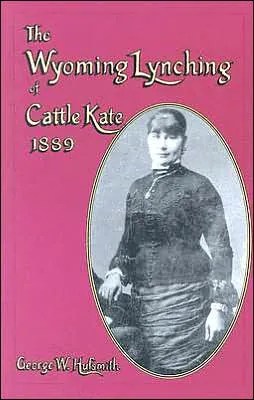
The Wyoming Lynching of Cattle Kate 1889, by George Hufsmith

Why this book: I was on vacation in Victor, Idaho, and the owners of the airbnb where we stayed told me about this book, written by the father of the lady who owned the Airbnb.  Also I’ve been very interested life on the frontier in the late 1800s, especially Wyoming since I’ve spent so much time there in the last couple of decades. 

Summary in 3 Sentences: In 1889, Ellen Watson and her husband Jim Averell were lynched by a group of cowboys led by a couple of other local ranchers. This was the first, and one of the only, lynchings of a woman in the state or even in the West.   Over a century later, the author investigates this murder, the political and social circumstances that let up to it, and the consequences, showing that this “extra-judicial” action was actually a murder that ended up being sanctioned (not punished) by the cattle barons who “owned” the political and judicial processes in Wyoming of that day.

My Impressions:  This book was a fascinating look at the world of Wyoming and the West in the late 1800s and contributes to what I’ve learned from Prairie Fires, Lonesome Dove, and other books I’ve read that describe that world.  Though this book may go into much greater detail on the particulars of this case than I or many would be interested in, it does provide a more in depth look at the people, their life styles, opinions and beliefs than one normally gets from other popular media.

The author provides short biographies of all the key players in this drama.  The biographies of the two victims are most detailed, and they provide a fascinating look at how young people of that time might end up as homesteaders in a remote part of Wyoming in the 1880s.  We also get the background and a brief bio on each of the perpetrators of the injustice he describes.

The author also provides relevant background of the cattle industry at the time – how the big cattle barons, with thousands of head of cattle were in tension with the small holders with only a few hundred head.  We also learn how cattle were “rustled”,  how calves were routinely stolen before being branded, the challenges these rustlers faced, etc.   This was important because, both Watson and Averell were accused of having rustled the cattle that was on their property when they were lynched. 

The cattle barons owned huge herds of cattle and paid nothing for grazing rights on much of the open range in Wyoming, owned by the US government, which had stolen it from the Native Americans. Wyoming was then a territory, and in order to incentivize people to move into these territories and settle them, the federal government offered homesteads of 160 acres for free to anyone who would live on and work that land for five years.  This is how Averell and Watson came to this part of Wyoming and came to grief.

After a stint in the US Army fighting Indians, Averell decided to take up farming and ranching, applied for and received rights to a homestead in central Wyoming about 140 miles from Rawlins, the nearest town of any size. Eventually he connected with Ellen Watson who had been a housekeeper and they became romantically involved.  They eventually got married, but secretly, because they wanted her to be able to apply separately for a homestead (married couples could only get one homestead) which she did, and was granted a homestead of 160 acres near Averell’s and adjacent to Al Bothwell’s much larger estate.  Bothwell was the leader and instigator of the lynching..  

Once we get to know the players, the setting, and the general situation in that part of Wyoming at that time, we get a detailed description of the lynching event itself, as the author was able to determine from the evidence available, and there was actually quite a bit of evidence.  It was disturbing to read how these two good people, who we’d gotten to know so much about up to that point in the book, were brazenly and brutally murdered out of purely selfish motives.

And then, almost as disturbing as the lynching itself was the author’s description of how the justice system was subverted in bringing the perpetrators to justice.  Almost everyone knew who was guilty and why this atrocity was committed, but witnesses were intimidated or killed, evidence was suppressed, and the guilty went free.  A journalist for the Cheyenne Daily Leader was directed to write  a story that made Averell and Watson out to be a Bonnie and Clyde-like couple, he a cattle rustler, she a prostitute who co-conspired with Averell to rustle cattle from legitimate cattle men. The Leader had the largest circulation in the Wyoming territory and was controlled by the Wyoming Stock Growers Association, which used it to represent their views and wishes. Their goal: Cover for one of their own and intimidate other homesteaders.   

Part of the slander, and how she got the press name of “Cattle Kate” was how, in his efforts to completely discredit her,  journalist claimed Ellen Watson was actually the notorious Madam of another town named “Kate.” These slanders spread and were picked up and repeated throughout the west, and were meant to influence the public against the victims, and make the perpetrators appear to be purveyors of legitimate vigilante justice.

  The author gives us colorful descriptions of the profession of “working girls’ in the world of prostitution at that time – not illegal but not sanctioned by polite society –  and then provides evidence that clears Ellen Watson’s name of this calumny. Likewise he offers substantial evidence that Ellen Watson and Jim Averell had purchased their cattle legitimately- evidence that was never permitted to be shown in court.

The tension between cattle barons and homesteaders of which this tragic incident was a part, was reflected in the range wars we saw in the made-for-TV movie Return to Lonesome Dove which I had recently watched on Amazon Prime.  This interesting and little known book is very well researched and the author provides extensive footnotes, as well as quotes from publications and interview from that time.  It provides a tragic example of how in the wild, wild west even more so than now, justice was indeed in the hands of those with the most money who could manipulate it to serve their interests.  It indeed offers an up close and personal look at life out on the edges of the frontier in the 1880s.


Posted in Uncategorized | Leave a comment

The Politics Industry, by Katherine Gehl and Michael Porter

Why this book: I’m in a reading group in which one of the members works for the governor in the state of Missouri and is considering running for office.  When we asked him why he would want to submit himself to such a losing proposition, he suggested this book.  For those of us who’ve become cynical, it provides some light at the end of the tunnel in how our political system works, or doesn’t.  

Summary in 3 Sentences: The authors represent both Democratic and Republican perspectives explaining why the current political system favors the extremes and keeps moderate and middle of the road candidates out of the system.  They speak of the Democrat-Republican “duopoly” which has a vested interest in the system as it currently functions, even though it doesn’t serve the interests of the majority of Americans very well- and the party bosses are quite OK with the frustration of the many, as long as they retain their power and prerogatives.  And then the authors suggest a practical means for changing and improving the system to give the majority of voters a greater voice in who represents them in government – and they note how their recommendations are gaining momentum across the country.

My Impressions.  I really liked and was inspired by this book.  This book explains why our political system, as it is set up now, benefits what they call the established “duopoly” of Democrats and Republicans – and how the “powers that be” in each party are invested in a system that they understand how to manipulate to keep themselves in power – though it is certainly not optimal for serving the interests of the majority ofAmericans.   They explain how the current primary systems in most states serve the established parties and the candidates the party bosses want to run and win, while discouraging or prohibiting candidates who the public may prefer, but who may not be willing to toe the party line and advocate for positions that the power brokers in the parties want. 

They offer example after example of how popular and middle of the road candidates were pushed out of the electoral process, or marginalized, on both Republican and Democratic sides, because they didn’t appeal to the fully engaged and more radical extremes of their party faithful, or because they may have advocated for positions that key financial donors to the parties opposed. And if such a candidate fails to win the party’s primary, many states have “sore loser” laws which prevent people who fail to win their party’s primary from running as independents or write-in candidates in the general election.  These “sore losers” often appeal to independents and others who did not participate in the primary, and the party bosses don’t want them to bleed votes away from their selected candidate.

The authors are fair – they represent both Republican and Democratic perspectives – For every example of perfidy by one party, they also offer a similar example of such an action by the other party, proving their point – BOTH parties are invested in the current system, which inhibits innovation, inhibits partisan and non-partisan collaboration, and serves the interests of the power brokers in each party, rather than the electorate.  If you, like me and so many of my friends, are frustrated with what our political system is giving us for representatives, you’ll find this book insightful as to why, and positive in offering a means to “fix” the system, so that the system isn’t “fixed” like it seems to be now.

The authors point out how states who elect the candidate with the plurality of votes often get a “representative” who much of the electorate can’t stand. For example they gave an example in which a state  elected a governor who won something like 35 percent of the votes, where the other 65 percent was split among 2 or 3 other candidates.  The reality was that close to 60 percent of the voters couldn’t stand the candidate who was elected, but the candidate’s party had been able to rally 35 percent of the state to vote for their preferred candidate. As a result, the state was stuck with a very unpopular governor.  

The authors make a strong case for open primaries – not party primaries – to determine which candidates go on the ballot in the general election. The open primary gives the voters a chance to choose from a wide variety of candidates.  Open primaries do not require a party affiliation to to be considered to be put on the general election ballot.  After an open primary the candidates with the most support get on the ballot, whichever party they come from, which could mean that more than one candidate from a party may be on the ballot for the general election. California has an open primary and the top 2 get on the ballot; Alaska has a top 4 process. Maine and Alaska are the only two states with both open primaries and Ranked Choice Voting.  There are strong movements in other states to move in this direction.

The authors advocate for top 5 or top 4 candidates getting on the general ballot and that voters then rank their choices. This is called Rank Choice Voting (RCV) .  They describe it in detail in their book, but here is a simple explanation from the website  Ballotpedia   which provides an excellent explanation of this process.  Voters rank the candidates for a given office by preference on their ballots.

  1. If a candidate wins an outright majority of first-preference votes (i.e., 50 percent plus one), he or she will be declared the winner.
  2. If, on the other hand, no candidates win an outright majority of first-preference votes, the candidate with the fewest first-preference votes is eliminated.
  3. All first-preference votes for the failed candidate are eliminated, lifting the second-preference choices indicated on those ballots.
  4. A new tally is conducted to determine whether any candidate has won an outright majority of the adjusted voters.
  5. The process is repeated until a candidate wins a majority of votes cast.

The movement toward open primaries and RCV is gaining momentum and a google search will offer a lot of options to explore it, notably Ballotpedia and fairvote.org

This is an excellent primer into how our political system functions, but doesn’t “work” to express the needs of most Americans. It’s short – I listened to it and in only about 7 hours. As a result I’ve chosen to get involved in the process of advocating for Open Primaries and Ranked Choice Voting.  

Posted in Uncategorized | 2 Comments

American Ceasar – Douglas MacArthur 1880-1964 by William Manchester

Why this book: I’ve had it on my shelf for decades – probably bought at a used book sale.  I’ve found biographies great to listen to, and so when my wife and I were going on  a long road trip, I suggested we listen to a biography, I offered her a number of options, and she picked this one. Having the print version to refer to with the pictures and maps was a nice-to-have.

Summary in 4 sentences: By many regarded as one of the best and probably the most famous biography of one of  America’s most famous heroes of the 20th century.   This biography begins with his father, recipient of the Medal of Honor for actions during the Civil War, Douglas MacArthur’s youth, and ascendancy thru the ranks in the Army, to include multiple awards for heroism in WW1, until he’s become the senior officer in the US Army in 1935.  Then the final two thirds or more of the book recounts his leadership in WWII, concluding with a detailed look at what led to Truman firing him as the leader of the US and UN’s efforts in Korea, and then the final decade and a half of his life – in which old soldiers just fade away.   Impressive in this book is Manchester’s editorializing and commentary on MacArthur’s great successes and failings throughout. 

My Impressions: MacArthur has been an often reviled figure in American history – and certainly he deserves some of that antipathy.  But this book reveals that indeed he was an extremely gifted and talented leader – he didn’t get to be a 5 star general simply by being arrogant and self-serving.  I am much more impressed with him now than I was before, when basically all I knew about him was that somehow he failed to defend the Philippines at the onset of WW2, vowed “I shall return,” and was humiliated and fired for defying President Truman’s injunctions during the Korean War.  Indeed he was a vain, and somewhat pompous prima donna, and self-righteous in his views of how to fight wars.  But there was much more to the man than that. 

I can honestly say after reading American Caesar that Douglas MacArthur one of the the most fascinating men I’ve ever read about. He is a mixture of so much good, which interestingly enough is the up-side of his flaws – egotism, vanity, not just the courage but also the arrogance of his convictions.  His reputation in the US today is that of a self-important prima donna who disobeyed President Truman and was justifiably fired – the first and only 5-Star flag officer ever relieved of command.   

Indeed MacArthur was all of those things BUT that may well be the least important part of the story.  There is little disagreement about his brilliance as a Fighting General, and apart from some poor judgment in preparing the Philippines for Japanese aggression at the onset of WWII, his decisions as the lead strategist for Allied forces in the South Pacific are almost universally regarded as brilliant; his performance and decisions as Pro Consul ??? of the Philippines after WWII are still revered in the Philippines, and he is universally praised as the architect of Japan’s post war transition to democracy and affluence in the world.  Also, until he was relieved by Truman, his performance overseeing the Korean War has been studied and admired by generations of military leaders.  

MacArthur was certainly a flawed man, but what great man isn’t!   Churchill once said “Good and Great are seldom in the same man.”   Throughout this brilliant biography, Manchester editorializes on MacArthur’s actions, decisions, behaviors, offering insightful and cogent criticism of some of what he said and did, but balancing these comments with different perspectives and his and other’s praise for his unusually brilliant accomplishments, often for decisions he made against the recommendations of other less creative, less decisive leaders.  Given that his most controversial decisions frequently, almost always, yielded the results he promised,,it is perhaps understandable that he would usually disregard objections to his ideas from his staffs, his contemporaries, his superiors. That lack of humility and willingness to occasionally question his own convictions was however, eventually his undoing. 

But the book starts at the beginning – actually with MacArthurs father.  Arthur MacArthur was a young enlistee from Wisconsin in the Union army and was awarded the Medal of Honor for his role in the spontaneous (no officer directing) charge uphill to take a seemingly impregnable Confederate position on Missionary ridge in the battle of Chattanooga during the Civil War.  Arthur MacArthur stayed in the army after the Civil War and Douglas grew up on remote army posts all over the country until he went to West Point himself.  His father rose to be a Lt General in the Army, at the time, the highest rank in the army, was idolized by his son Douglas, and set an example for courage and conviction that Douglas would live up to and surpass in his lifetime.

Manchester’s writing is superb – a master of the English language and his commentary on MacArthur and his times was so articulate and masterful that it sometimes took my breath away.  

A couple of the more interesting human-interest sides of this bio, apart from the more high profile military and political aspects of his life, include that as manly and heroic as MacArthur was, he was deeply devoted to his  mother, and she to him.  While at West Point, he apparently was engaged to be married to several women at the same time, and his mother helped disentangle him from that complexity.  As a field grade officer he  had a mistress – a kept woman that he secretly supported in an apartment in DC for quite some time.   He eventually had a short term marriage to a high society flapper, which only lasted a couple of years, but he did eventually marry a woman who idolized him and he took good care of her, though she did call him “My General.”  They had a son who MacArthur doted on, but who after MacArthur’s death changed his name and disappeared into obscurity. 

The biography of Douglas MacArthur follows his career from his time at West Point, where he was the Brigade commander and graduated with an exceptional  record.  As a junior officer he distinguished himself in fighting in the Philippines against insurrectionists, in Mexico when we almost went war with Mexico at the beginning of the 20th century, and during WW1 where he was awarded numerous awards for exceptional courage and bravery.  He led an incredible life until his passing at the age of 84 in 1964.  His biography is chronological, and I’ll briefly list the chapters in the book, with a note or two on each:

  1. Ruffles and Flourishes 1880-1917 – About his father’s service in the Army during and after the Civil War, his family background and childhood, his time at West Point and early years as a Junior Officer in the pre WW1 Army.
  2. Charge 1917-1918  His experiences in WW1. He distinguished himself with bravery and leadership that was extraordinary, one of the few officers who led his men out of the trenches to assault the enemy.  His men loved him and he was awarded seven Silver Stars for bravery and rose from the rank of Major to Brigadier General in the few years he served in that war. .
  3. Call to Quarters 1919-1935 -Charted his rise in rank and prestige eventually becoming at age 50 the youngest man ever to be appointed Chief of Staff of the Army.
  4. To the Colors (1935-1941) HIs appointment to Field Marshall of the Philippine Army.  His father had also been the senior US military officer in the Philippines after the Spanish American War – when MacArthur was a young man.  This chapter covers Douglas MacArthur’s futile efforts to prepare the Philippines and gain support from the US to prepare for expected Japanese attack on the Philippines. 
  5. Retreat (1941-1942) The final years prior to the Japanese attack, then the debacle during Japan’s attack, his retreat to Bataan and Corregidor, a fortress Island in Manila Bay and eventually being ordered to leave the Philippines for Australia where he was assigned Supreme Allied Commander of US forces South Pacific..
  6. The Green War (1942-44) As the Supreme Commander of US and Allied Forces in the South Pacific, his strategy and actions pushing back and retaking islands the Japanese had taken and protecting Australia.  His generalship here is widely regarded as brilliant and a key to US victory in the Pacific.
  7. At High Port (1944-1945) This period covers the last years of the War, his return to the Philippines, his re-establishing of a government in the Philippines, the island hopping campaign toward Japan,  and how he worked together with Nimitz and the Navy to secure the victory. Apparently he was not privy to the planned bombing of Hiroshima and Nagasaki.
  8. Last Post 1945-1950) This fascinating section is about how MacArthur as Supreme Commander Allied Powers in defeated Japan resisted calls to punish Japan; rather he made sure that they retained their dignity and helped establish a democracy in a society with no such tradition.  He had almost absolute power and he was at his best here. 
  9. Sunset Gun (1950-1951) This section covers the Korean War – MacArthur simultaneously running Japan and being the supreme commander of the UN efforts to stop the North Koreans and eventually the Chinese in Korea.  His decision to land at Inchon, against the advice or everyone, including the Joint Chiefs was his crowning achievement, but the follow-on is where his vision and Truman’s and the UN’s parted ways. 
  10. Recall 1951) A detailed look at the events and misunderstandings that led to Truman firing MacArthur.  Manchester clearly believed Truman was justified; he is also very critical of the way it was done.  
  11. Taps 1951-1954) MacArthur’s life after he was relieved in Japan and Korea by Truman.  When he returned to America he was hailed as a hero and got more positive attention than Eisenhower – and MacArthur thrived on this adulation.   Manchester is quite critical of MacArthur’s behavior after the famous firing, his parading around the country arguing against Truman’s and the government’s foreign policy.  He mellowed in his later years and continued to be regarded as an American hero, consulted by Eisenhower and Kennedy administrations. 

This is a great biography of one of the most complex and compelling figures in American History and his life is fascinating lens through which to look at American history, especially the US Army and American policy in Asia prior to during and after WWII.  Many of the issues he wrestled with and warnings he gave 70 years ago, are still relevant today. 

An excellent and more thorough review of American Caesar by Nathan Eberline can be found here  https://www.nathaneberline.com/blog/american-caesar

Posted in Uncategorized | Leave a comment

The Graveyard Book, by Neil Gaiman

Why this book: Strongly recommended by Tim Ferriss and Mike Rowe.  I’d also read Gaiman’s The Ocean at the End of the Lane and found Gaiman’s magical realism not only enjoyable but stimulating.  I was inspired to read something different, and so finally got around to ordering this book.

Summary in 3 Sentences: A toddler unwittingly escapes a brutal murder of his family, by simply wandering out of the house and down the street at night and into a cemetery, while the family’s murderer was at his grisly work.  The child encounters the ghosts of those buried in the graveyard, and they hide and protect him from the murderer who comes looking for him, and then they decide to raise him, since he no longer has parents of his own. The rest of the book is a coming of age novel, with the bizarre twist of coming of age in a graveyard, being mentored and taught by “people” long dead, teaching the child parapsychological skills and tricks, introducing him to a different reality and preparing him to enter the world of the living.

My Impressions: Neil Gaiman’s specialty is magical realism, and this book is some of that, but a little bit different.   Its target audience is youth – 8-12 years old with life lessons appropriate to young people approaching puberty.  But it also an enjoyable and interesting read for adults with a vivid imagination.

The story begins with our young toddler wandering out of his house, up the street and into a graveyard while his parents were being murdered, by a Man Jack, and he is saved from a similar fate by those in the graveyard deceiving the murderer.  The graveyard was many centuries old, nearly abandoned and over-grown by weeds in a small town in England.  Its “inhabitants” had died in some cases hundreds of years before – and their perspectives on life and the world were also frozen in time.   They chose to keep the now orphaned  and unassuming toddler and raise him in the graveyard, and they gave him the name Bod -short for Nobody. 

The book is about Bod growing up, coming of age, maturing into young adulthood.  Gradually Bod rebels against the restrictions placed up on him by those in the graveyard and begins interaction with the world of the living.   Bod is a normal little boy anywhere, quiet and curious, intimidated by authority, but also a bit bold and adventurous.  But he is growing up in a different world,  one without other children, and with only the ghosts of the deceased residents of the graveyard for company.  The graveyard has its own hierarchy which reflects the status of its residents in life, which is of course comical among the dead, and there is indeed a quasi-social life among the deceased.   Bod is assigned guardians – who he refers to as his parents – and a tutor to share his wisdom and teach him about the world and to keep him out of trouble.  His tutor, his parents and other ghosts advise him to stay safe in the graveyard, and avoid contact with the living, in order to avoid being polluted or otherwise mislead or deceived.  They also teach him how to do things that ghosts can do, but people can’t – to disappear, to move through walls, and other such supernatural tricks that come in handy later when he matures and has more interaction with the world of the living.

As Bod grows up, and becomes a young boy, he becomes more curious about life outside the walls of the cemetery, and befriends a little girl who enjoys wandering into the cemetery for peace and quiet. This is the beginning of his realization that he is not like other living people and that he lives in a unique world.  As he gets older, against the guidance of his parents and mentor, he wanders outside the graveyard and has more and more interactions with the living, and is exposed to greed, dishonesty, and  beligerence.  When Bod stumbles into the “ghoul gate”in the cemetery Bod descends into another dimension of reality here evil lurks, where good and evil are at odds, in a supernatural world that we do not see. After stumbling into that terrifying world, he barely escapes to return to the peace and quiet of the cemetery.

Eventually his guardians and mentor decide that Bod needs to go to school with other children.  He is a good and diligent student, but he keeps to himself and doesn’t fit into the social activities of the other children.   As a quiet loner, he becomes an easy target for the school bullies.  He is small and shy, but clever, and has a few tricks up his sleeve as well as a few powers that other children don’t have which put the bullies in their place.   Eventually he decides school is not for him.

Toward the end of the book this battle between good and evil bring home why he is in the graveyard, and he confronts why his parents were murdered when the murderer returns to find him and finish the job of murdering the entire family.    We learn that this murder which brought him into the graveyard to begin with, is part of a bigger battle between good and evil.  In the end Bod has to decide whether to live in the world of the living, where good and evil coexist, a world of order and disorder, chaos and predictability, or whether to remain in the graveyard, where nothing changes, but it is peaceful, safe and comfortable.  He chooses life – with all its hazards. 

The Graveyard Book reminded me of Lincoln in the Bardo which also takes place in a graveyard with the ghosts of the deceased sharing views on what they were observing while President Lincoln was visiting the grave of his son Todd.   The theme of fate also arises – was Bod “fated” to escape the murder of his family? And was the attempt by the murderers to find him and finish the job also a futile attempt to outwit fate? 

This is a fun book – clever and short – it would indeed be fun to read it to or with a young person and then discuss it.  But also a fun and interesting book for adults.  I enjoyed Gaiman’s creativity and his clever story telling.  

Posted in Uncategorized | Leave a comment

2034 – A Novel of the Next World War, by Elliot Ackerman & Adm Jim Stavridis

Why this Book: Gifted to me by my friend Doug W, and I’d read a couple of Elliott Ackerman’s other novels which I liked.  Also, I have been impressed with Adm Stavridis over the years. 

Summary in 3 Sentences: The authors create a very realistic scenario regarding China’s dispute with the US over their claim to the Spratley Islands and their territorial waters, and the US commitment to freedom of navigation through those waters.  China continues to push the issue until a small  confrontation leads to China taking military action against the US Navy, which makes the US aware of the degree of sophistication of Chinese cyber capabilities to blind and disable a very computer-dependent military and US economy.  Additionally Iran, and Russia get involved supporting China, while India plays a key role as a semi-neutral player, as tensions increase in a 21st century version of a bipolar cold war and escalate to a tragic confrontation.

My Impressions:  Very well done and realistic, and those watching the news will be afraid that some of this might come true well before 2034.  The two authors create a novel with realistic characters representing the numerous cultures and entities in this tense scenario, to include senior White House officials, senior US military officers, Iranian militants, Chinese military and political leaders, Indian diplomats, as well as Russian military.  

Key Characters include the female Admiral in charge of the US Naval task force which confronts the Chinese in the South Pacific, a US Admiral and senior civilian political appointee on the White House staff,  a US naval aviator, a Chinese admiral working in the political apparatus for the PRC who becomes a Chinese Carrier Battle Group commander, an Iranian senior military officer at the end of his career running terrorist operations against the West, who finds himself in the middle of this great power conflict.   In this short book, the characters are not able to be fully developed, but they are realistic and compelling,  though only two dimensional.  Each of these characters plays a role in providing valuable perspectives and insights into the human dimensions of the miscalculations that led to this complex and multi-faceted international conflict.

I suspect that in this collaboration, Elliot Ackerrman provided the primary literary and novelistic structure and input to this novel, while Admiral Stavridis provided insights into how the US National Security apparatus works (or doesn’t). and brings his extensive experience to bear in how countries interact at the strategic and diplomatic level under crisis, in the international arena.

This is a powerful short book – all the more powerful because it reflects possibilities and potential outcomes of what is playing out in the news today between the US and China, and Russia and Iran.  Well written and highly relevant. 


Posted in Uncategorized | 2 Comments