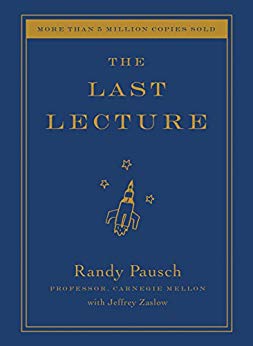
The Last Lecture, by Randy Pausch

Last LectureWhy this book: I am preparing a blog post on 200 days – what it would mean to know you only have 200 days to live. Well, here is a book by a guy who lived (and died) that experience.  I listened to his “last lecture” on youtube and wanted to read the book.
Summary in 3 Sentences:  Randy Pausch was a professor in Computer Science focusing on Virtual Reality when he was diagnosed with stage 4 Pancreatic cancer and given only 3-6 months to live.  His “Last Lecture” can be viewed on YouTube and this book is his story – about how the Last Lecture came about, how he prepared for it, and in this book he elaborates on the points he makes in the presentation of his lecture. He uses the Last Lecture and this book as frameworks to celebrate the life he has lived, to share his most joyous moments, and to pass on lessons he has learned.

My Impressions: This book is full of joy.  Throughout he shares how lucky he has been in his life, and and he shares stories of his most joyous moments.  He also shares his failures and mistakes from which he gleaned the many life-lessons he has learned in his 47 years.

The book is also a “letter” to his 3 children who he knows, and we know, will grow up without him.  He hopes in this book to pass on fatherly wisdom that may be useful to them when they are older, but for which they are too young and inexperienced to fully appreciate while their father is still on this earth.  He shares how he is trying to be a great father to them in the limited time he has left, and how this book is his attempt to continue to serve them after he’s passed on.

This book is partly an account of how he has dealt with knowing he has a limited time to live, partly a celebration of the life he has been able to live so far, and partly a “What I have learned about living well” to pass on to his kids in the future and to us, his readers now.   He fulfilled each of these goals well, but what was particularly inspiring to me was his exuberance over the various experiences he recounts from his life, and his appreciation for how lucky he has been.

The book is a great reminder of what’s important in life and how to pay attention to it while living it – these are the things that a good, positive man realizes when he is told he only has months to live. And so he passes that on to us.  He shares his dreams as a child and in fact became aware that he had in fact realized his most important child hood dreams – for which he was very thankful.  He has a whole section entitled “Adventures… and Lessons learned.”  He offers us rules about parenting and encouraging children, as well as encouraging others – especially students and subordinates – and helping them fulfill their dreams.  And the longest section is entitled, “It’s about how to live your life.”

He is very open and personal in his book. He calls himself (and has a chapter entitled) “A recovering jerk” based on his self-centered focus when he was young and ambitious, and how others helped to bring him around.  And then, he shares how he helped bring other ‘jerks” around. Chapters with titles like, “Earnest is better than hip,” and “Don’t complain, just work harder,” and “Don’t Obsess over what people think,” “Look for the best in Everybody,” and “Watch what they do, not what they say.”    Lot’s of homespun wisdom based on his own stories and his own hard-earned life lessons.

It is a near end-of-life testament to a life well lived. We should all be so lucky as to be able to look back with few regrets and mostly joy at the life we have lived, the positive impact we have made, and the legacy we leave to our children and others.  But Randy Pausch’s book reminds us – that is a choice we make while we are alive.

This is a book I could and should read again. And I will.

Posted in Uncategorized | 1 Comment

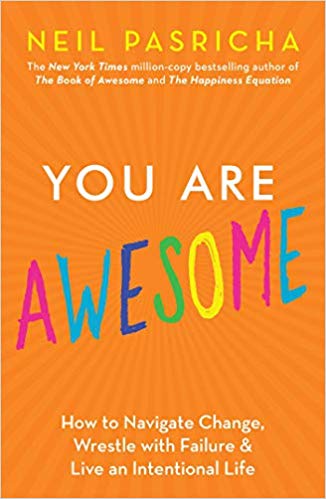
You are AWESOME – How To Navigate Change, Wrestle with Failure, and Live an Intentional Life, by Neil Pasricha

You are AwesomeWhy this Book:  The publisher asked me whether, if they sent me an advance copy of this book, I would read it and review it.  I said yes.  They sent it. I read it.   I liked it, and this is the review.

Summary in 3 sentences:  The author advises the reader at the beginning of the book that this book is about resilience – and indeed the first ¾ of the book is about dealing with disappointment, failure, mistakes, and bouncing back.   The practical advice is based on the author’s own  experience as well as his research and reading of many others, and we learn much about the author’s own life as he shares his failures and disappointments and the tools he used to turn those into fuel for his future success.   The last quarter of the book is sage advice about a different kind of resilience – how to deal with success, which can often bring its own challenges, distractions and and opportunities to get off-track and unhappy.

My impressions: I liked this book considerably more than I thought I would.  It is a nice mixture of autobiography and practical wisdom borne of the author’s own hard earned lessons learned, but also based on extensive reading and research into the teaching of others on resilience and happiness.   I realized that part of why I liked the book is I that I like the author as he presents himself in the book – I like his tone, his playfulness, his vulnerability, his self-deprecating humor, and I like his advice.

It’s a short and easy-to-read book.  It is not meant to be “heavy” or laced with psychological jargon.  It is meant to appeal to the everyman in each of us, and does not pretend to offer anything groundbreaking to academic literature on happiness or resilience.    He doesn’t impart any great new wisdom or insights – I’ve heard it all before, from other speakers or authors, or in other books.  It’s common sense practical wisdom repackaged in a very readable and user-friendly book.  And it was good for me to read again.  It reminds me that it’s always good to revisit the basics – in any endeavor, especially in life – and he offers some good practical wisdom for negotiating the challenges of living in our complex society.  His very conversational and unpretentious approach makes his insights accessible and inspiring.

The book is divided into 9 chapters or “secrets” with (sometimes enigmatic) titles like  “Add a Dot-Dot-Dot…” or “Tell Yourself a Different Story” or “Lose More to Win More” or “Find Small Ponds” or “Go Untouchable.”  Each of these chapters includes several short sub-chapters.  It’s enjoyable to read, easy to follow.

I particularly liked how he brought in the stories of his parents – immigrants from India to Canada- and how in their struggles first in India and then later integrating into Canadian culture, they embodied many of the principles he espouses.  He shares how his parents continue to inspire him – his mother first, then his father. Pretty amazing stories of resilience, perseverance, and success.

I feel like I’m pretty good at dealing with disappointments and “failing forward” though I must admit, I’ve never had that assumption truly stress-tested with a monumental failure – largely due to luck, partly due to being fairly practical and resilient by nature.  That said, while I was engaged in reading the book, I became frustrated with a situation at work and retreated into self-doubt and feeling persecuted, unappreciated, and under attack from malevolent forces massing against me.   I had just read how Neil Pasricha had experienced the same, noted that this negative perspective is a common occurrence experienced by almost everyone, and that it is almost always wrong.

So, I took his advice, applied his insights to my own situation, calmed down, and indeed over the next days on further examination, realized that I was way over-exaggerating my issue, and was internally over-reacting.  Situation resolved. No Big Deal. Thanks Neil.  Certainly nothing like getting fired, or divorced, or dealing with the death of a loved one, or rejected and dissed by someone you respect, but still…the principles he offered applied.  To paraphrase Nietzsche: “That which does not kill me can make me stronger, if I so choose.”

His personal story reminded me of another book I recently read: Range by David Epstein.   Epstein recommends that in order to find a “quality match” between what one does for a living, and what one’s passions and interests are, one must often try out a number of different jobs – until finding that quality match.  That’s what Neil Pasricha did.  BUT, as Neil shared, to follow that advice often involves working for years at poor-quality matches, dealing with feeling frustrated and unfulfilled, and being willing to accept an indeterminate number of failures and disappointments until one finds that true, “quality match.”  That is the resilience and perseverance Pasricha’s book is helping us to find.  “Fail More to Win More,” he says.

What I personally found most useful in You Are Awesome were his insights about how to remain positive and resilient in the face of success.  Yes – success.  The challenges he faced when he finally found the work he loved – his own quality match – are challenges I can relate to.   Managing one’s time and attention, staying focused on what truly matters, staying grateful for and not taking for granted what one has, not getting down when good intentions may not blossom, and practicing saying no to the many opportunities for distraction.

Three pieces of advice that truly resonated with me:

  • The two minute rule: When somehow I let life get in the way of a daily activity I’ve committed to for myself,  do it for just 2 minutes that day.  Don’t blow it off  – just do it for 2 minutes.  Two minute of yoga, two minutes of working out, two minutes of meditation, two minutes of playing the fiddle, two minutes of writing a letter.  Whatever I commit to…keep the commitment, even if just for 2 minutes.
  • Every morning practice: “I grab an index card or a journal and write these three prompts for that day: “I will let go of….  “;  “I am grateful for….”;   “I will focus on….”
  • Untouchable time: Regularly block and protect a period of time (preferably a full day, or a half day, or even just a few hours) that I will take no phone calls, not read nor write nor respond to any email or text.  Just time to think, write, or be alone with myself.

(Seem simple? I’m still working on building these in. Simple, but not easy….)

Again, You  are Awesome is not an academic treatment of resilience, and is not meant to compete with Jonathan Haidt’s or Sam Harris’s or Daniel Gilbert’s work on happiness and resilience. But many of Pasricha’s insights and suggestions are the same as theirs – just packaged in a way that is accessible to a wider audience.  As he says in the introduction,  You are Awesome is about resilience, and is meant to complement his previous two books: The Book of Awesome (about gratitude), and The Happiness Equation (about happiness).  

This little book could help a lot of people get out of their own way in their search for happiness, and offers great advice in how to stop playing the blame game, or the “Im a victim game, and start playing the  “No Excuses – its up to me game and get on with their lives.    

Some quotes I marked that I thought worth sharing (page numbers from the paperback advanced readers edition):

What’s the spotlight effect?  It’s the feeling that we’re being noticed, watched, observed, and importantly judged much more thane really are.  Because we are the centers of our own worlds, we believe we’re the centers of everyone else’s world too.  p 51

When it comes to predicting the future, we’re all stupid. Each and every one of us.  p74

I’d bump into the former employees again years later.  And what did they tell me? Every single time?  “Getting fired was the best thing that happened to me! If I hadn’t gotten that severance package, I never would’ve had those crucial six months to spend with my dad before he died.” Or “I travelled to Peru and became a nutritional supplement importer and I love what I’m doing now!”  Or….Or….Or…  p75

Sure, you’re going through a failure.  But it’s very possible, and very likely, that what you’re going through is a step toward a future you’ll be happy with. But you just can’t see it – yet.  p 77

Well, the average man will kiss sixteen people, have ten sexual partners, six one-night stands, four disaster dates, four relationships that last less than a year, and two relationships that last more than a year, fall in love twice, be heartbroken twice, cheat once and be cheated on once – all before he finds a lifelong partner. Does that sound like something you want to go through? Me neither, but in a way, isn’t it also relieving to hear? Because it may help shine a light on the invisible steps ahead of you on the staircase you’re climbing on the way to the longterm, committed relationship you may desire.  p 84-85 (note: he offers similar statistics for women)

“I failed my biology exam” is a lot different from “I failed my parents.”  (Ask yourself these) three questions:  Will this matter on my deathbed? Can I do something about it? Is this a story I’m telling myself? p123

Do it for free for ten years p 133

Success blocks future success.  The issue here is that when you’re good at one thing, the world conspires to keep you there. Stay in your lane. stick to your specialty….making it harder and harder and harder to mentally break out and explore new ground and try new things.  p 152

My goal isn’t to tell you how many figures (dollars) you should plan to spend on failures. It’s to give you a mental model you can apply in your life to accelerate your lose rate and therefore accelerate your win rate.  Lose more to win more. p 155

But the truth is when we look at our flops we’re really giving ourselves credit for all the learning and stamina and resilience baked into those moments when we made ourselves  a little stronger.  p 156

Let me share what Untouchable Days look like up close.  I think of them as having two components.

  • There is the deep creative work. When you’re in the zone, your brain is buzzing, you’re in a  state of flow, and the big project you’re working on is getting accomplished step, by step, by step.
  • There are the little nitros. Little blasts of fuel you can use to prime your own pump or open up your creative centers if you hit a wall.   p 225
Posted in Uncategorized | Leave a comment

Ride with me, Mariah Montana, by Ivan Doig

Mariah MontanaWhy this book: I’ve read several other Ivan Doig books and really liked them all. Doig is one of the pre-eminent Western writers of the 20th Century.  This is the 3rd book in his Montana Trilogy, behind English Creek and Dancing at the Rascal Fair, both of which I’ve read and reviewed.  I wanted to complete the trilogy, to see what happened to the McCaskill family 100 years after the beginning of the series.

Summary in 4 Sentences:  Jick McCaskill is 65 years old, a widower, and the third generation of McCaskills running a ranch in the fictitious town of Gros Ventre in Northern Montana.  His daughter Mariah, a photographer for the fictitious Montanian newspaper, invites Jick to join her and her ex-husband Riley, to drive his Winnebago on a tour of the state to support her taking pictures and Riley writing feature articles about what they see, as part of the Montanian‘s centennial celebration of Montana’s statehood.  The book is written in Jick McCaskill’s voice as he shares his antipathy toward his former son-in-law, his wonder and amazement at his daughter, his impressions of the work they are doing and in his uniquely Western voice, he describes the state of Montana they are traveling through.   Living together in a Winnebago for over a month, the relationships between these three and a later participant in the journey, evolve, and we get to know the players through their interactions with each other and with the towns and people of Montana, and there are some surprises in the making.

My Impressions:  This book is best read soon after reading English Creek, in Doig’s Montana Trilogy.  English Creek is in Jick McCaskill’s voice, looking back as an older man at a key window in his youth, just prior to WWII.  Ride with me, Mariah Montana is also in Jick’s voice as an older man, but here he is sharing his present day perspectives on himself, his family and friends, and a number of those who appear in English Creek.  There is a sweet continuity to the two books that is not appreciated if they are read separately or with a number of years between them, as I did.

There is not a lot of action in this book, and there were times when I wasn’t sure I wanted to finish it.  I wasn’t sure I liked Jick McCaskill’s rather sardonic view of his son-in-law Riley and his daughter Mariah and their friendship with each other and commitment to their work.   The incongruity between the language of Jick’s narrative – earthy and humorous and tied to the land, and Riley’s language in his columns – educated, poetic, and descriptive – represented the differences in their outlook and their generations.  His relationship with his very independent, athletic and attractive daughter Mariah was clearly close, but there were tensions there too – mostly centered around Riley.  Though Mariah and Riley were divorced, they were still close, and there was still chemistry between them.

The language Doig gives to Jick to describe the Montana towns and country-side they are driving through, is beautiful, powerful and authentically Montanan.  The wide prairies, the Rocky Mountains, the small towns, the buffalo, the people – all evoke a Montana that reminds me of Wyoming where I have spent so many happy weeks over the last decade and a half.   But I did get a little bored with the story-line and the Winnebago going from here to there, and Jick complaining about Riley and Mariah – sometimes being a grouchy old curmudgeon about the whole chore of driving them around the state.  We get to know him and his wife Marcella, who had died of cancer not long before, through his many reminiscences, some of which also went to his parents, grand-parents, and other family members who we had gotten to know in the previous two books in the trilogy.

There are a number of subtle and not-so-subtle sub-themes in the book:  The dying out of family ranch life that had settled and made Montana, as farming transitioned from families to agri-business;  the withering of the small towns on the prairie; the challenges of growing old without one’s life partner; the challenges of watching one’s children reject the life you have lived in exchange for one that you don’t understand; the melancholy of seeing generations-old family ties to towns and the land dying out as new generations seek other opportunities elsewhere; the beauty of the land and nature under assault from big business, mining, and agri-business.   To my pleasant surprise, Doig brought these themes together in a satisfying way at the end of the book – as I finished the book, I was glad I had stuck with it.

I  wish I had read it sooner after completing English Creek – as I noted, chronologically the predecessor to this book. The story in Mariah Montana  takes place nearly 50 years after the story Jick relates in English Creek.   Had I read Mariah Montana, sooner after English Creek and Rascal Fair, the stories and people Jick recalls in Mariah Montana would have been fresher to me – it’s been 5 years since I read Rascal Fair and English Creek.  But those stories and people did come back to me – they were powerful to me when I first read them.

Ivan Doig passed away in 2015.  According to Wikipedia, Doig “won the Western Literature Association’s lifetime Distinguished Achievement award and held the distinction of the only living author with works of both fiction and non-fiction listed in the top 12 of the San Francisco Chroncle’s poll of best books of the 20th century.” It was interesting that he dedicated Mariah Montana to Wallace Stegner, another so-called “western” author who wrote one of my all-time favorite books – Angle of Repose.

Some quotes from Ride with me, Mariah Montana  to give you an idea of Doig’s writing style (page numbers refer to the hardback version, published in 1990.)

Before I could point out to her that free stuff is generally overpriced, she was tying the whole proposition up for me in a polka dot bow.  “So all you’ve got to do is bring the motorhome on over and meet the scribbler and me Monday noon.  Is that so tough?” (p 4)

None of us spoke, while the songs of the birds poured undiluted. I suppose we were  afraid the spate of loveliest sound would vanish if we broke it with so much as a whisper. But after a bit came the realization that the music of birds formed a natural part of this place, constant as the glorious grass that made feathered life thrive.  (P 29)

Here he was, as Riley as ever, like whatever king it was who never forgot anything but never learned anything either.  And here I was, half the time aggravated by the two of them fore letting themselves wallow around the countryside together this way, and the other half provoked at myself for being ninny enough to be doing it along with them.  (p 43)

Leona just smiled.  I’d begun to notice, though, that she had different calibres of smiles. The broad beaming expression that seemed to welcome all of life – the Alectric smile, I thought of it as, for I had first seen it on her when she and Alec were sparking each other, that summer of fifty years ago – shined out most naturally. You could read a newspaper by the light of that facial glow.  But there was also a Leona smile that her eyes didn’t quite manage to join in; the smile muscles performed by habit, but there was brainwork going on behind that one. And then there was one that can only be called her fool-killer smile; when you got it, you wondered if you’d been eating steak with a spoon.   (p 240)

(About Eastern Montana)  Grassland with sage low and on it ran to all the horizons – cattle in specks of herds here and there – and a surprising number of attempts had been made to scratch some farming into this bare-bone plain, but what grew here mostly was distance.  Except for an occasional gumbo butte or a gully full of tumbleweeds, out here there were no interruptions of the earth extending itself until bent by the weight of the sky. (p 281)


Posted in Uncategorized | Leave a comment

Jack London – Sailor on Horseback, by Irving Stone

Jack London Sailor on HorsebackWhy this book: As a boy, I read a number of Jack London short stories as well as his novels The Cruise of the Dazzler, White Fang, and of course Call of the Wild.   I re-read Call of the Wild about 10 years ago and loved it – (reviewed here) the sled-dogs were a great metaphor for a SEAL platoon.  In the meantime, I’ve become something more of an outdoorsman myself, and have spent some time studying Nietzsche who I knew was an inspiration to Jack London.  Jack London was reputed to be a somewhat larger than life but flawed character who died young.   Intrigued, I decided to find out more
Summary in 3 Sentences: Jack London grew up very poor in the San Francisco Bay area in the late 1800s, and with very little support from his family, was largely on his own in a very tough world to survive and get by.  Blessed with an intrepid spirit, he confidently dove into the toughest environments and toughest challenges, and with pluck, grit and an uncanny ability to get along with people, he managed to survive and prevail.   After many amazing adventures, and many false starts as a writer, he eventually became one of the most successful and best recognized authors in the world, but like many other such great adventurers, his toughness and skill at managing physical challenges and adversity did not translate into a well-managed life in the labyrinth of civilization, and his generosity and appetite for always wanting more, eventually were his undoing.

My Impressions: What a life! In his 40 years, Jack London lived more than almost anyone in a lifetime of twice as many years.  His is truly a rags-to-riches story.  His adventurous spirit compelled him to take on one risky adventure after another and his warm and congenial personality helped him to get along easily with people at every level of the social spectrum.  His life included such a wide variety of adventures with such a wide variety of people, he was never at a loss for material for his next story.   He was also blessed with a great imagination which gave him the ability to create a variety of compelling stories based not only on what he experienced, but also stories built with variations on what might have happened.

He was an avid reader and student. When he had no money, he haunted the libraries. When he did have money, he built a great personal library.  What he couldn’t experience himself, he experienced vicariously through the writings of others. He studied their styles. And then created his own.

Among the more amazing things he undertook, and survived, were:  as a 16 year old he was an independent oyster “pirate” with his own boat and live-in female mistress;  when that didn’t work out, he became part of the California Fish Patrol in San Francisco Bay; later he traveled across the Pacific working on an ocean going Seal hunting schooner; during the depression of 1893, he worked at a wide variety of grueling jobs at slave ages; he spent a year riding the rails as a tramp, begging food, living in hobo camps, and just getting by.  At age 20 he came back to the Bay Area and went back to and graduated high school, but as badly as he wanted to,  he couldn’t go to university – he had to work to support his mother.  All this time he was writing and submitting his stories to various magazines.   Eventually, his unique writing style and the amazing stories he wrote began to be noticed, and slowly, he was able to make a living from writing.

His fame grew – from his many short stories and then from his novels, most famously The Call of the Wild.  He and his writing eventually were in great demand, he was paid well for his work, and making a living was no longer a challenge.  But managing his money and resources was.  From the early 1900s until his death in 1916, he published an enormous amount of work, from novels, to autobiographical pieces to a large number of short stories.

London always struggled with money.  In his early years he had none, was often on the verge of starvation, and lived from hand to mouth.  His need for money drove him to write prolifically.  When he eventually became famous and well-paid for his work, he spent considerably more than he made, became recklessly extravagant, and was always in debt, which again forced him to continue writing and submitting work for publication at an amazing pace.   He was by nature trusting and generous, and was taken advantage of not only by unscrupulous dealers, but also by his friends.   He was never able to get himself out from under financial pressure – as soon as he got a significant sum, he paid off his debts, and then took on another hugely expensive endeavor, for which he did not manage costs and expenses well. And so, the debt continued.

This biography by Irving Stone was written in the mid 1930s just 20 years after London’s death, when most of those who knew Jack London well were still alive. Stone was given access to a huge trove of London’s letters and documents, and was able to conduct extensive interviews with many of those closest to Jack London when he lived.  Irving Stone makes clear in his book that he was a great admirer of  Jack London – and indeed there is much to admire about him.  But he also describes London’s foibles and failings, though it does seems he is careful to not too aggressively go after him or some of those who did not serve London well – as many of those were still alive  It was a different time, and London had only been dead two decades.

Who was Jack London?  I’ll share a couple of paragraphs out of Sone’s book  that give you a small taste of Stone’s writing style and a sense for the character he wrote about (w page numbers from my old signet paperback, for my own reference)

He had a strong gregarious instinct, he liked to rub against his own kind, yet in society he saw himself as a fish out of water.  Because of his background, he took to conventionality uneasily, rebelliously.  He was used to saying what he thought, nothing more nor less.  The hard hand of adversity, laid upon him at the age of ten, had left him sentiment but destroyed sentimentality. It had made him practical so that he was sometimes known as hard, stern, and uncompromising; it had made him believe that reason was mightier than imagination, that the scientific man was superior to the emotional man. “Take me this way” he wrote to Anna Strunsky in the early days of their acquaintanceship, “a stray guest, a bird of passage splashing with salt-rimmed wings through a brief moment of your life – a rude blundering bird, used to large airs and great spaces, unaccustomed to the amenities of confined existence.” (p106)

Hargrave records that Jack was intrinsically kind, irrationally generous, a prince of a good fellows to be with.  He had a gentleness that survived the roughest associations.  In argument when his opponent had caught himself in the web of his own illogic, Jack threw back his head and gave vent to infectious laughter.  Hargrave’s parting estimate of Jack is too genuine to be tampered with. “Many a long night Jack and I outlasting the vigil of the others, sat before the blazing spruce logs and talked the hours away.  A brave figure of a man he was…An outdoor man, in short a real man, a man’s man.  He had a mental craving for truth. He applied one test to religion, to economics, to everything: What is truth?  He could think great thoughts. One could not meet him without feeling the impact of a superior intellect.  He faced life with superb assurance, and faced death serenely imperturbable. ” (p 78-79)

He loved Nature tenderly for all the beauties there were in her, but above all, he loved her for her force, the terrific strength with which she dwarfed all mankind. (p 70)

There were four primary periods of London’s life that he turned to, to mine his experiences for his short stories and novels: 1. his time on the waterways around San Francisco as a young sailor, oyster pirate and then as a Fish Patrol official; 2. His time as an Able Bodied Seaman on a sealing schooner in the Pacific; 3. His time as a tramp criss-crossing the United States looking for short term work, food, and hanging out with the other tramps. 4. (perhaps most importantly) his time in the Klondike during the Alaska Goldrush, and 5. his sailing voyage in his sailing ship The Snark to Hawaii, the South Pacific,  and Southeast Asia.

London was an ardent and very outspoken socialist – and seeing how he grew up mostly with the poor and disenfranchised, it is not hard to understand.  He was extremely well read,  and very disciplined in his reading and his writing. It is interesting and ironic that for London, Nietzsche was a major source of much personal inspiration.  Nietzsche was an ardent individualist and hated institutional constraints on the freedom and self-expression of the strong, which characterize the socialism that London advocated for. London was aware of the incongruity but it didn’t seem to bother him.  Perhaps he assumed based on his life up to that point, that with enough bravado and courage, an ardent individualists like himself would always find a way to buck the system.

The last several years of his life read like a tragedy –  he was being consumed by hangers-on, taken advantage of by those he trusted, and there were so many who wanted a piece of him and his wealth. He struggled to maintain his larger-than-life persona and the life-style he enjoyed – the wealthy man of the people, generous to a fault, hail-fellow-well-met, drinker, a visionary for whom no task or project was too great. When one of his great dreams – the building of the Beauty Ranch house in Sonoma County – literally went up in flames just as it was being completed, his spirit seemed broken.  The sparkle left his eye, his drinking increased, his health failed and he seemed to go into a deep depression.  He was already ill and in pain from a variety of causes, his poor health was exacerbated by his alcohol, and he was taking morphine to help him sleep. One morning he didn’t wake up.  There was a long standing rumor of suicide, but most current biographers dispute that.

Irving Stone doesn’t directly address London’s  alcoholism as a major vice – I believe in part due to the sensitivities of the period when he was writing the book .  But subsequent biographies do, and most attribute his decline in large measure to his drinking.  If you see parallels in this regard to Hemingway and even Steinbeck, you are not alone.

After reading the book, I read 4 of his short stories: The King of the Greeks, The White Silence,  Grit of Women, and Love of Life.   Common themes among those four are common themes in much of London’s work: great persistence and struggle in the face of great adversity, courage, loyalty, and the power and beauty of nature.  I would like to read more –  I find appealing London’s love of adventure and adventurous people, his fascination with those who are willing to get outside their comfort zones, take on risk and seek adventure – and become better for it.  His stories explore the toughness and the tenderness of the human spirit.  And I loved his positive tenacity, his playfulness, his vitality, and his exuberance for life.

There are probably more current biographies than this one, but they certainly build on Irving Stone’s research written so soon after London died.  It is my understanding that this was the first of the truly serious biographies of London.  It is a fascinating read and I thoroughly enjoyed it.  If anyone who reads this would like to join me in a further exploration of Jack London, and would like to read more of his short stories or perhaps one of his lesser known novels, please contact me.

Posted in Uncategorized | 3 Comments

Loonshots, by Safi Bahcall

LoonshotsWhy this book: I listened to Tim Ferriss’s interview with Safi Bahcall and liked him and what he said – it was excellent. Also this book was a pick of The Next Big Idea Club, to which I belong.
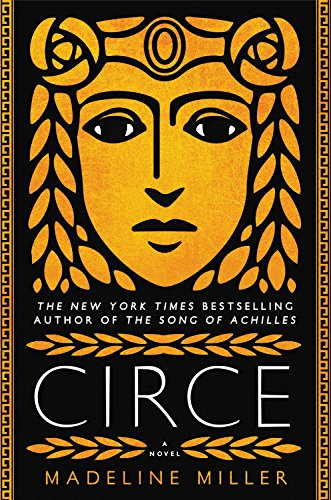
Summary in 3 Sentences: The thesis of this book is that our society only makes progress when it adopts new ideas, which are almost always resisted by those with a strong vested interest in the status quo. He provides us many fascinating and surprising historical examples to support his thesis that an organization must be structured to separate those supporting the franchise from those developing creative new ideas.  He also provides other practical steps for how an organization can cultivate break-through ideas to succeed, and minefields that must be avoided – not only by organizations, but also by the creative individuals themselves.

My Impressions:  Fun and fascinating read.  Bahcall was trained as a physicist who then went into business. Bahcall grabs our interest with stories about products we now take for granted, which have changed the world we live in, how they were often strongly resisted by those who found them unnecessary, superfluous or bound to fail.  Such things as radar in the military, movie ideas such as the James Bond series or Star Wars series, commercial jet travel, medical innovations like statin drugs.  In each case the innovator persisted against the nay-sayers and the conventional mindset to eventually succeed in changing the world we live in.

Trained as a physicist and a very astute learner, Bahcall transitioned into business and soon realized that while organizational culture is important to a business success, organizational structure probably is more important when it comes to being creative and innovative.

Loonshots begins by showing how organizational structure can naturally impede creative ideas – what he called and many regard as “loonshots” –  ground breaking or seemingly crazy ideas that can change the world.  An organization that aspires to win through  ground-breaking innovation must separate and shelter radical creative thinkers from those whose job it is to efficiently run the organization.  He says that the “artists” must work separately from, and be protected from the “soldiers” who run the “franchise.”  Soldiers manage risk in order to run the organization as efficiently as possible.  In the short term, radical changes and truly innovative ideas involve risk and accepting failure, and can be very inefficient – anathema to the soldier mentality.

So his first and strongest recommendation is for leaders to structurally, separate the visionary innovators from those who run the franchise.  The leaders must be “careful gardeners (who) ensure that both loonshots and franchises are tended well, that neither side dominates the other, and that each side nurtures and supports the other.” p38  This he calls balanced phase separation.

Bahcall points out, again and again, that “the breakthroughs that change the course of science, business, and history – fail many times before they succeed.” p 37.  The greatest enemy of a truly good idea is what he calls a “false fail” – an idea that is still immature and/or the test or experiment may not take into consideration key affecting variables.  The test/experiment fails or appears to fails not because it’s a bad idea, but because of some other factor that the experiment does not take into account.

He goes on to distinguish between two distinctly different types of loonshots.  First are “P-type” moonshot – referring to a new innovative product or piece of equipment.  The second are “S-type” loonshots – referring to a new strategy, “a new way of doing business, or a new application of an existing product, which involves no new technologies.” p66  Radar, or polaroid cameras, or statin drugs were P-type loonshots.  Examples of S-type loon shots are Walmarts supply chain management and retail system, or how American Airlines creatively managed union contracts, and developed the most efficient computerized reservation system.

He warns against what he calls the “Moses Trap” to which innovative leaders are vulnerable.  It is when a creative individual builds a company based on his/her personal loonshot, and then goes on to think that s/he is a genius who should run everything.  Such creative geniuses are often artists who don’t know how to run a franchise, nor do they understand how to integrate strong franchise management with creative innovation.  He gives several examples of great loonshots that eventually ran out of steam, or failed to capitalize on their wins, because the loonshot creator fell into the “Moses Trap” and failed to adapt with the times and the market –  Steve Jobs during his first period with Apple, Ewin Land of Polaroid, Juan Trippe of Pan Am.

He also shared the opposite of the Moses Trap, which he called the PARC Trap -named for the Palo Alto Research Center developed by XEROX  where great ideas were born and either died, or were hijacked, due to no phase transition to the franchise side of the business. There  was no equilibrium or collaboration between artists and soldiers to permit the business side of the corporation to commercialize and monetize the great ideas.  So the great inventions either died, or sat there until others eventually took them to market, changed the world, and made billions.

The second part of the book is very much about organizational dynamics, and how it is almost a law of nature that a successful business will grow until it transforms itself into a less agile and more bureaucratic, more conservative organization.  Understanding this, and focusing on maintaining an equilibrium between the creative and the franchise sides of the business won’t prevent that, but it will help to manage it.

The section on Phase Transitions is a bit hard for me to follow – the scientist in Bahcall  does analyses of how fires spread, how traffic jams happen, how infectious diseases spread,  tracking terrorist activity.   His point (I believe) is to look at how little ripples can create big waves, and to better understand how small events can have disproportionate effects.  In describing the “axiom of emergence,” he recalls that Sherlock Holmes said that while individuals remain puzzles, man in the aggregate “becomes a mathematical certainty.” p177  He quotes scientist Neil Johnson , “you don’t need to know anything about the individuals,” to detect the patterns in their collective online behavior, and describes this as “the magic of emergence.”  p 184

The follow up to that is the certainty that, inside organizations, as the size of the group grows, incentives shift from focusing on collective goals to focus on career and promotion.  “When the size of the group exceeds a critical threshold, career interests trump.   That’s when teams will begin to dismiss loonshots and only franchise projects…will survive”  p 186

He discusses how as organizations grow, the “return-on-politics” increases – meaning that the career/promotion returns from time and energy spent on managing one’s reputation, one’s network, and how one is perceived in an organization, increase relative to the returns gains from putting time into actually working on a project. p198

Bahcall reaffirms what I’ve read in several other places – that about 150 people is the threshold for a team to stay cohesive around a common project.  After that, he says, “the system suddenly snaps from favoring a focus on loonshots to a focus on careers.”

He offers a couple of solutions to this dilemma and notes how “soft equity” such as recognition from respected peers can almost serve as  “paycheck” to inspire innovation.  He looks at DARPA – and how they have avoided having an overstaffed bureaucracy of people pretending to work, by hiring people for shorter periods and offering no or few promotions – just huge gains in reputation and “soft equity,”  which most can cash-in on later.

“Tilting the rewards more toward projects and away from promotion means celebrating results, not rank.” p218 And it will make larger groups more likely to innovate. The promotion and increase pay system incentivizes low-to-no risk ventures.  He has a great section on changing incentives to increase performance and innovation.

He has a whole section on how span of control is also a factor in facilitating innovation.  The narrower the span, the greater the tendency toward micro-management and risk aversion.  “Wider spans (15 or more direct reports per manager) encourage looser controls, greater independence, and more trial-and-error experiments.  Which also leads to more failed experiments. ” p222..”Which takes us to another reason a wide management span helps nurture loonshots: it encourages constructive feedback from peers….creative talent responds best to feedback from other creative talent. Peers, rather than authority. ” P223.

His penultimate chapter “Why the World speaks English”  answers the question: “Why did loonshot(s) appear and spread rapidly in Western Europe, in the seventeenth century, plus or minus a few years, when the empires of China, India, and Islam led the world in wealth, trade, organized study, and early science and technology for a thousand years?” p239  His answer:  Loonshots flourish in loonshot nurseries, not in empires devoted to franchises.  p257

His concluding chapter “Loonshots vs Disruption” gives fascinating examples of how many of the loonshots that changed the world were creative adaptations to undesired environmental factors.  Many of these were not designed to be innovative or disruptive changes – they were simply creative responses to simple challenges.  He tells why Sam Walton set up in Arkansa which forced him to find a new retail model; why IKEA found cheaper sources, and allowed customers to shop in warehouses, how google searches and transistors were “sustaining” innovations which had already been developed by others.

Conclusion:  For a Loonshot nursery to flourish -inside either a company or an industry -three conditions must be met:

  1. Phase separation:  separate loonshot and franchise groups
  2. Dynamic equilibrium: seamless exchange between the two groups.
  3. Critical mass: a loonshot group large enough to ignite.  To thrive, a loonshot group needs a chain reaction.

He states:  “Leaders well-coached on group dynamics are likely to spend more time with their teams.  It’s fun working with high-performing teams who appreciate you. It’s less fun to spend time with dysfunctional teams who hate your guts.”  p217

“The ability to innovate well is a collective behavior.” p227

Posted in Uncategorized | Leave a comment

Circe, by Madeline Miller

circe-madeline-millerWhy this book: Selected by my reading group.  I saw a review that said that if you liked Silence of the Girls, you will like Circe.  I really liked Silence of the Girls, so thought we’d give this a try. It was different and good.
Summary in 3 Sentences: Circe is a modern story transposed into the setting of mythological Greece, with a special focus on Odysseus and the Odyssey.  The reader encounters gods and myths from that era but within a story about a young woman who straddles the world of gods and mortals and encounters challenges that are timeless.   The protagonist Circe is a witch- goddess who is exiled to an island where she encounters Odysseus on his journey home from Troy – and their love affair creates the backdrop for a drama that is both mythical and mortal, and relevant to us living today, in its scope and impact.

My impressions: Very clever and interesting novel. I very much enjoyed reading it and found the theme and setting fascinating. For me, it started off a bit slowly, but gathered momentum and became quite an adventure of hardship,  growth and transformation for its female protagonist.  I likened it to science fiction, or magical realism, the setting being the mythical world of ancient Greece.  The story includes gods, monsters and mortal heroes with whom most of us are somewhat familiar, and a number with whom most of us are not. As is to be expected in a world where gods and mortals interact together, boundaries between what is possible and what is not, are never quite clear.

Circe herself is a “nymph” a minor female deity borne of one of the Olympian gods – in her case, Helios, the god of the sun,  and a nymph, in her case Perse, one of the nymph daughters of Oceanus.   Though a goddess, Circe represents a familiar figure in modern literature – a sensitive and independent woman, disenfranchised and disrespected by powerful men,  who subsequently grows strong from her rejection and suffering.  As a child and young woman, she was ridiculed by her frivolous sisters, disrespected and shunned by her mother, betrayed by her brother and father, abandoned by a man whom she had assumed great risk to help.

And then by her angry father, she was exiled to a remote island in the Mediterranean (the then known world) where she nursed her resentment at the injustices she had suffered.  But she rallied and chose to use her time and energy to strengthen herself, build her powers and become more independent.  Her life became more “exciting” when seafaring mortals would stumble upon her isolated island, and when she tried to help them, they would often seek to take advantage of what they perceived to be a vulnerable young woman living alone – not knowing that she was a goddess who had powers they couldn’t imagine.  The results are I’m sure satisfying to women who have been victimized by brutal men.  She would occasionally be visited by other gods, to check on her, harass her, or be amused by her.

As Circe was immortal, the time frame of the novel is over millennia, and includes the story of the forming of the Minoan empire, King Minos, and the mythical story of Daedalus and Icarus.  But for this novel, those millennia and other stories are merely a prelude to Circe’s short love affair with Odysseus when he and his crew land on her island on their long journey back to Ithaca after the Trojan war.   Circe had been lonely, dealing with the occasional sailors who stumbled upon her island, making do and keeping herself busy with her study of plants and potions for her witchcraft.  She and Odysseus connected well on many levels, and the opportunity to be loved and respected by a powerful man made a strong impression on her, though she knew there were risks and liabilities.  She knew it was temporary – Odysseus was mortal and so his lifetime was limited.  And she knew he must leave – he had a wife and child to whom he was compelled to return.  But when he finally departs to continue his journey home, he unknowingly leaves Circe pregnant.

The remainder of the book is Circe dealing with the impact of Odysseus’s short stay.  She becomes a single mother, and she deals with challenges that will be familiar to many single mothers.  Taking care of a baby and raising a son on her own, a strong young man who eventually must declare his independence from his strong mother, compelled to find his father whom he idolizes.  And that leads to more interesting and unexpected developments.

The book reflects the sensibilities of a strong, angry 21st century woman dealing with the impact and isolation of having been disenfranchised by powerful men.  While the book includes any number of nasty, boorish, and narcissistic men – both gods and mortals – there are not many admirable men in this book, but there are a few.  Prometheus, who was exiled and tormented (for life) by powerful men, was her hero and inspiration.  She loved Odysseus while he is with her, and later her son by him grows into an admirable young man.  And finally, Telemachus, Odysseus’s son by his wife Penelope.  But to be fair,  women don’t fare much better in this book – her mother, her sisters, other goddesses are shallow, narcissistic, and self-serving as well.   Other than Circe herself, we only truly admire one other woman in the book – Odysseus’s wife, Penelope.

I did really enjoy Circe and recommend it for not only its compelling story, but also the very clever juxtaposition of a modern strong and independent woman with a setting taken directly from the foundational mythology of western culture from three thousand years ago.

NOTE:  I didn’t realize until the end of the book that Madeline Miller included a Cast of Characters glossary at the back of the book – which describes/defines the various deities, monsters, and mortals in the book.  Knowing this in advance would have saved me many trips to Wikipedia.   I also recommend visiting the author’s  website on this book, which also provides very useful background without divulging the story.     

Posted in Uncategorized | Leave a comment

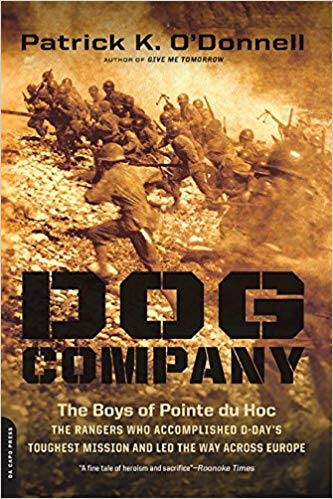
Dog Company – the Boys of Pointe du Hoc, by Patrick O’Donnell

Dog CompanyWhy This Book: I knew I’d be visiting Pointe du Hoc, famous for the Ranger raid at the commencement of D-Day, and this book would give me the background to better appreciate that experience.
Summary in 3 Sentences. This book reads almost like a we-were-there, since it is based primarily on interviews with the guys who survived the war, which includes the funny, tragic, and heroic versions of their experiences.  It begins with intensive training for nearly 8 months in the UK in the lead up to the invasion, and then the initial phases of the assault and climb, and the battle once they got to the top. After about June 8th they were relieved and the remainder of the book is about the Ranger operations moving East into France, Belgium and Germany until the end of the war.

My Impressions: This book is similar to Maj Dick Winters Beyond Band of Brothers,  but it is different in that it is not the personal account of the commander – Patrick O’Donnell is a military historian, researcher and writer, though indeed O’Donnell knew many of the people he wrote about and felt tied to them.  O’Donnell not only honors the men and what they did, but provides perspectives on the horrors that the individual combat soldiers faced in the sustained combat of WW2.

O’Donnell did an enormous amount of research to write a very engaging history of this one ranger company that succeeded in one of the most famous missions during the Normandy invasion. In addition to researching memoirs, and archives, and finding previous interviews, he was able to personally interview several of the key D-Company rangers, as well as others who participated in D-company operations at Pointe du Hoc and later.   As in Dick Winters’ Beyond Band of Brothers we get to know the soldiers personally through their own voices in the interviews, we follow them through their training and rehearsals, and we get their versions of the operations.    Few of the original Boys of Pointe du Hoc were with Dog Company at the end of the war.  Many were killed or seriously wounded,  and most of those who were with them at the end, had been wounded, evacuated, and had returned to continue fighting.  

O’Donnell gives us a detailed account of what Dog Company did on D-Day and the Pointe du Hoc assault and its immediate aftermath – approximately 60 of the 252 pages of the book are about Pointe du Hoc.  Like Ambrose’s Pegasus Bridge, this book focuses on how with luck, courage, and an intrepid spirit, a small group of highly trained men succeeded at a very difficult – almost impossible – mission.  And then we follow these rangers into the most brutal fighting afterward, all the way to the end of the war.  If the number of casualties is the measure how tough the missions were, then Pointe du Hoc was a picnic compared to their battles at Bergstein and Hill 400 in the Hurtgen Forest, and later in the Bulge.

One operation I was surprised I’d not heard of before took place in the battle to retake the city of Brest, France – after D-Day and Pointe du Hoc, but before Bergstein and the Ardennes. A D-Company squad, eventually nicknamed “the Fabulous Four,” kept pressing their luck, and through an amazingly bold gamble, was able to get inside the German fortifications at the Lochrist Battery and get 800 Germans to surrender and surrender the battery itself.  The Lochrist Battery was a seemingly impregnable coastal artillery site that commanded the entrance to Brest harbor,  and was essentially the model for the Guns of Navaronne. That, and how these guys pulled this off is almost unbelievable – the stuff of Hollywood.

At the beginning of this book, wasn’t as engaged as I was with Winters’ Beyond Band of Brothers.  But as I got into it, I became more impressed with the research that O’Donnell had done and the very personal touch he added to the combat, based on the personal reminiscences of the soldiers themselves, as revealed through their interviews.  Dog Company the Boys of Pointe du Hoc is another great book on the intrepid spirit of American citizen soldiers put into the most harrowing of combat situations, and how they took care of each other and their missions. It provides a great perspective on the horrors and heroism of soldiers in sustained combat – in WW2.


Posted in Uncategorized | 1 Comment

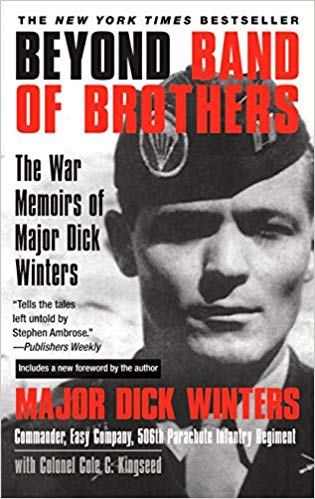
Beyond Band of Brothers, by Maj Dick Winters

Beyond Band of BrothersWhy this book:  I had read Ambrose’s Band of Brothers, and have seen a few parts of the HBO series.  Dick Winters is clearly the hero of the book and the TV series.  I was interested reading his perspective on his actions.  This book gets very high marks from all I know who’ve read it.

Summary in 4 sentences: This is the back story behind the well known book Band of Brothers by Stephen Ambrose, and the HBO mini-series based on it – in which Dick Winters was one of the lead characters.  This is Dick Winters’ very personal auto-biographical account of who he was, how he became a soldier, then an officer, how Easy Company trained in the US and then in the UK, and fought its way through Europe, from D-Day to VE Day.  The majority of the book takes place after D-Day as Easy Company engages in France, Holland, Belgium and Germany, and indeed those were the hardest battles that were fought.  The book concludes with the challenges of managing occupations troops in the months immediately following Germany’s surrender, then his return to America, re-integration into civilian life, and finally his long term involvement with his fellow soldiers after the war.

My Impressions.  This is one of the best first person accounts of an infantry officer in sustained combat that I’ve ever read.  It is very personal and he is honest and humble.  Most of the first person accounts of combat that I’ve read have been special operations forces, since that has been my specialty, but the brutality of war and the sustained combat he experienced go far beyond what most special operations forces experience.

His and Easy Company’s parachute jump into Normandy, and their support of the D-Day invasion only account for about 20 of the 292 pages in this book; the majority and most powerful are his experiences in Operation Market Garden in Holland, and in Bastogne in Belgium where his rangers experienced their most violent combat, and most severe losses.  At the beginning of the book, Dick Winters is a private, was sent to Officer Candidate School to become an officer, and deployed to Europe as a platoon commander.  Then in a year of intense combat rose to Battalion commander, from 1st Lieutenant to Major.

This rapid promotion was in part due to attrition – so many officers and senior leaders were killed that officers had to move up to fill the ranks, as well as to make room for the junior replacements coming in. But he was also promoted due to his competence and proven track record under the stress of combat.  On D-Day itself, after parachuting into Normandy at night, Winters gathered his men together, rendezvoused with his seniors and then led a 10 man squad against a much larger German force to silence several artillery positions that were decimating US troops landing on Utah Beach.  He was awarded the Distinguished Service Cross for this action – the nations 2nd highest award for gallantry in combat.  He continued to perform well under pressure, and the senior leaders in the 508th Parachute Infantry Regiment recognized him as one of their strongest tactical leaders.

Beyond Band of Brothers is also a primer on leadership.  He treated his men with respect but he also set and enforced high standards.  His men knew that he would take care of them, but he never coddled them – he was no harder on them than he was on himself.  He led by example in all endeavors and his men knew that he would never ask them to do anything that he wouldn’t do himself.  The love and respect he felt for his men was well understood and was mutual.

In the last part of the book he briefly summarizes his life after the war, and shares how many of the other soldiers fared in their post-war lives.    Fifty years after the war, when Ambrose’s Band of Brothers was published, and then followed by the HBO mini-series, Dick Winters suddenly became something of a celebrity, but his humility and strength of character were constant.   In the last years of his life, he was in great demand as a speaker on leadership and his simple but very effective leadership principles are included in the back of the book.

A quote that caught my attention, from just after describing his actions on and after D-Day, including the action that earned him the Distinguished Service Cross;

As for myself, I never considered myself a killer, although I had killed several of the enemy. Killing did not make me happy, but in this particular circumstance, it left me momentarily satisfied – satisfied because it led to confidence in getting a difficult job done with minimal casualties. Nor did I ever develop a hatred for the individual German soldier.  I merely  wanted to eliminate them.  There is nothing personal about combat. As the war progressed, I actually developed a healthy respect for the better units we faced on the battlefield.  But that was all in the future.  For the time being, I was just happy to have survived my baptism by fire. I had always been confident in my own abilities, but the success at Brecourt (the action for which he received the DSC) increased my confidence in my leadership as well as my ability to pass it on to my soldiers.  (p 94 pp edition)

This is great book on combat, D-Day, on US combat in Europe in WW2 and on combat leadership.  And it’s a fun read.  Highly recommended.

Posted in Uncategorized | 1 Comment

The Guns at Last Light, by Rick Atkinson

Guns at Last LightWhy this book:  I had heard from several sources that Atkinson’s trilogy about the war in Europe was superb.  He won the Pulitzer Prize for History for the first book in the series, about the North Africa campaign.  I had read his superb books The Long Gray Line, and Crusade and so thought I would add his perspective to my reading on D-Day

Summary in 3 sentences:   This book is broken into 4 Parts covering chronologically the allied assault on and retaking of Europe.  I only read Part 1 (thru page 185, of the book’s 641 pages), which covers the D-Day invasion, the consolidation of the beachhead and the move through France to retake Paris.  The 40 page Prologue provides an excellent and entertaining look at the preparations that allied forces took in the UK to conduct the invasion, and provides perspectives on some of the cultural challenges in the building of the alliance.

My Impressions:  The most literary and beautifully written of the 7 books I’ve read on D-day.  His descriptions are sometimes poetic – the images he evokes describing the land, the events, the people and how they behave, fight, live and die.

Atkinson is clearly one of the pre-eminent American historians of our time – not only    because of the research and material he covers, but also because of the beauty of his prose and the very articulate and insightful manner in which he describes the events.  He is not hesitant to share irony and humor in his history, and sometimes I felt like I was chuckling with him as he pointed out some of the absurdities, human foibles and pettiness that are inevitable in such a very human endeavor as war.  All this mixed in with the horror and tragedy, the mistakes, the role of luck and fate, the heroism and examples of humans at their best.

In his prologue of about 40 pages he describes the build up in the UK to the actual landing, highlighting challenges and processes, and giving a warts-and-all look at some of the cultural tensions that grew out of so many American men “over-paid, over-sexed, and over-here” in the UK.  I also heard the GI response to that jibe, that British soldiers were “under-paid, under-sexed, and under Eisenhower.”  The American military had to put statutory obligations in place for many GIs who fathered children out of wedlock during their pre-invasion training and build-up time in the UK.

Part 1 of 4 Parts  begins with the men in the assault boats and continues through the difficult stages of consolidating their gains, putting Germany on the defensive so that they could carry that momentum through to Paris and eventually into Germany.  Parts 2 thru 4 cover the remainder of the retaking of France, the failed Market Garden and Holland initiatives, the Bastogne and Ardennes campaigns and the Battle of the Bulge in Belgium, and then on into Germany, and finally victory. This review only covers Part 1.

What struck me most about this book, apart from the joy of reading Atkinson’s prose, was the carnage, death and destruction that were required to simply move 30 miles beyond the Normandy beachhead and develop some momentum over the next 4-6 weeks to be able to retake Paris and then get to the Rhine and Germany.

The allies caught the Germans by surprise in their landing at Normandy, but after the Germans realized that this was THE invasion, they moved resources into that area to do all they could to halt the allies, and push them back into the sea.  They did not count on the overwhelming amount of force and resources that the allies brought into this invasion – and no matter how well the Germans fought, they were not going to stop this juggernaut.  Also absolutely key to our success was unchallenged air superiority, with huge numbers of aircraft and seemingly unlimited supplies of ordnance.

I was also amazed at the amount of fratricide – thousands of our soldiers were killed by mistakes, errors in judgment and planning on the part of their own side.  In one case in Operation Cobra, hundreds of Canadiens were repeatedly bombed by British bombers after pulling yellow smoke to indicate the location of friendly forces.  Except that to the British bombers, yellow smoke marked a desired target.

Of the three books looking at the broader picture of the invasion, this was my favorite, and I intend to read Atkinson’s descriptions in Parts 2-4 of the rest of the story about the Allies and their fight to Berlin and victory.

A few quotes to give you a sense of Atkinson’s almost poetic prose in describing the this multi-faceted and multi-dimensional key event in the history of the 20th century:

“Darkness also cloaked an end-of-days concupiscence, fueled by some 3.5 million soldiers now crammed into a country smaller than Oregon. Hyde and Green Parks at dusk were said by a Canadian soldier to resemble ‘a vast battlefield of sex.’  A chaplain reported that GIs and street walkers often copulated standing up after wrapping themselves in a trench coat, a position known as ‘Marble Arch Style.’….Prostitutes – ‘Piccadilly Commandos’ – sidled up to men in the blackout and felt for their rank insignia on shoulders and sleeves before tendering a price: ten shillings (2 dollars) for enlisted men, a pound for officers.” 2

The British displayed forbearance despite surveys revealing that less than half viewed the Americans faovoabley…”Loud, bombastic, bragging, self-righteous, morals of the barnyard, hypocrites.’…An essay written for the British Army by the anthropologist Margarete Mead sought to explain ‘Why Americans Seem Childish.’ George Orwell groused in a newspaper column that ‘Britain is now Occupied Territory.’ ” 22

Occasional bad behavior reinforced the stereotype of boorish  Yanks.  GIs near Newcastle at the swans at a  grand country estate, Thomas Hardy be damned.  Paratroopers from the101st Airborne used grenades to fish in a  private pond, and bored soldiers sometimes set haystacks ablaze with tracer bullets.  Despite War Department assurances that ‘men wo refrain from sexual acts are frequently stronger, owing to their conservation of energy,’ so many GIs impregnated British women that the US government agreed to give local courts jurisdiction in ‘bastrday proceedings’; child support was fixed at 1 pound per week until the little Anglo-American turned thirteen, and 5 to 20 shillings weekly for teenagers.  Road ssigns cautioned, ‘To all GIs: please drive carefully, that child may be yours.’ ” 22-23

“The conversation took a choleric turn: Churchill, who was said to speak French ‘remarkably well, but understands very little,’ subsequently proposed sending De Gaulle ‘back to agers, in chains if necessary.’  De Gaulle, who at six feet, six inches towered over the prime minister even when they were sitting, pronounced his host a ‘gangster.’ ” 34

“For those who outlived the day, who survived this high thing, this bright honor, this destiny, the memories would remain as shot-torn as the  beach itself.” 66

“Dusk sifted over the Seine valley.  Swallows trawled the river bottoms, and the day’s last light faded from the chalk cliffs above the chateau, where antiaircraft gunners strained for the drone of approaching bombers.  Telephones jangled in the salon war room, and orderlies bustled across the parquet with the latest scraps of news.”  83

“A monstrous full moon rose over the beachhead, where 156,000 Allied soldiers burrowed in as best they could to snatch an hour of sleep.  Rommel was right: the invader’s grip on France was tenuous, ranging from six miles beyond Gold and Juno to barely two thousand yards beyond Omaha. ” 84

“West of Bayeux, the Norman uplands displayed the gnarled visage that had been familiar to Celtic farmers even before the Romans marched across Gaul.”111

“Down metalled roads and farm lanes they pounded, columns of jeeps and tanks and deuce-and-a-half trucks snaking though the shot-threshed fields and the orchards heavy with fruit….When the trucks halted for a moment and GIs tumbled out to urinate in squirming echelons on the road shoulders, civilians rushed up to plead for cigarettes with two fingers pressed to the lips, a gesture described by Forrest Pogue as the French national salute.” 148

” ‘There are apparently two types of successful soldiers,’ Patton had recently written his son. ‘ Those who get on by being unobtrusive and those who get on by being obtrusive.  I and of the latter type.’ ” 149


Posted in Uncategorized | 1 Comment

D Day through German Eyes, by Holger Eckhertz

D Day through German EyesWhy this book: I’ve lived in Germany 3 times and studied a lot about Germany and German history.  I thought this would be a good perspective to have. I was right.

Summary in 5 sentences: After WWII in the forties and into the fifties, a German journalist interviewed many German soldiers who were in Normandy and fought the Americans, Brits, Canadians on the beaches on D-day and was planning to compile these interviews into a book.  He died before he could do it, and some fifty years later, the journalist’s grandson put the interviews into a book.  The book includes the interviewers questions and the answers of the then soldiers, telling their very personal, tragic and incredible stories.  He has one German soldier sharing stories from each of the 5 beaches the allies landed on on D-Day – what they were doing up to 6 June, what happened on that day and the immediate aftermath, how they felt, what they thought. HOWEVER, the authenticity of the book is highly questionable and it may be a hoax.

My Impressions: Fascinating.  Whether true or not, these are some of the most intense accounts of combat and the collision between Allied and German forces on D-Day in Normandy that I have read.  Very candid and personal accounts from interviews supposedly done only a few years after the events.  The interviews include the interviewers questions and the (apparently) candid responses of the veterans.   I’m sure some of it is edited in the process of translation, but the perspectives seem genuine and are definitely powerful.  The horror, fear, and violence in  wholesale killing in conventional war is vividly described by the interviewees.  This was one of the most powerful and impactful  of the seven excellent books on D-Day that I read.

This book makes the Nasty Nazis who are killing our boys into human beings.  Like most westerners, I grew up cheering for our side – the good guys – and demonizing the bad guys representing the evil Nazi regime doing horrible things in Europe.   There is clearly  legitimacy in that position.  But war is more complex than that.

These young German men telling their stories, are in may ways like the good guys on our side; they believed what their government told them about the justness of their cause, and were doing what their leaders trained and expected them to do.  And just like our guys, they struggled to survive as they saw their buddies cut down in droves by the bad guys on the other side.  Like the guys on our side, they were doing what they trained to do, and were mostly interested in surviving and taking care of their buddies. 

Many of the German soldiers truly believed the they were fighting an invasion of United Europe and the German Third Reich by a coalition of forces intent on dominating them.  Many of them had good relations with the French and did not necessarily support all the harsh measures their leaders were imposing on them.  They believed the narrative that the Soviet bolsheviks were in league with the fat-cat capitalists in America and the UK to crush Germany and her vision of an independent and United Europe.  Though apart from vague references to international banking and finance conglomerates seeking to rule the world, there was no anti-semitism expressed.  Revisionism perhaps, but these guys came across as genuine to me.

While this combination of two books makes clear the similarities in outlook with soldiers on our side, there were some noteworthy differences between the experiences of the German and American soldiers.

  • Many of the Germans on the Atlantic Wall had been previously injured or were too young or too old to be useful elsewhere.  They were on duty defending the shores of Europe because this was light-duty compared to the other spots where Germany was fighting – Italy and Russia.
  • They felt they were defending their homeland – whereas the Allies (with the exception of the French Troops on the allied side) were seeking to take back or conquer land that had never been theirs.
  • The Germans were augmented by a good number of Poles and Russians, and others from countries the Nazis had occupied earlier in the war, who were either conscripted to fight for the Nazis away from their homeland, or had volunteered for whatever reason.  We were working with willing allies while the Germans were working with often unwilling allies who they mistreated and did not respect.  While many of these soldiers fought hard, it seems that a large percentages were reluctant soldiers, were considered unreliable by the Germans and were unwilling to make great sacrifice on behalf of the Germans, fighting in France, against Americans, Brits, and Canadians.
  • The Germans were overwhelmed by the amount of equipment and resources the Americans had. They couldn’t believe how the Allies were unconcerned about fuel, or ammunition, or vehicles, or food – which seemed to be unlimited.  The Germans were used to struggling constantly with shortages, and having to make do with much less.
  • The Allies had air superiority and commanded the skies. The Germans had no or very few aircraft to use to attack allied ground forces, or to fight allied air power.  Consequently anything that moved on the roads or on the ground, in the open, especially during the day, was a target.  There were so many aircraft in the sky the Germans could count on being seen and attacked from the air.

According to the intro to Book Two,  Book One got so many positive accolades for providing a much needed perspective on D-Day, the author decided to write Book Two almost as an addendum. In Book Two  he included interviews that were not included in Book One.  Book One interviews were one per beach of the invasion – the author apparently selected from the many interviews one interviewee who most dramatically represented the German experience at each of the beaches, from West to East  – Utah, Omaha, Gold, Juno, and Sword.

Book Two was not so clearly organized – he seemed to select 8 interviewees who added different perspectives and represented different groups than were represented in book one.  For example, he has a luftwaffe pilot, an engineer, a military policeman etc, and he included some passages that he knew would be quite controversial.

I recommend this book be included in any study of D-Day. It is a short (~240pp) and very compelling read.

Caveat:  Just weeks after reading this book and after writing this review, I learned that most serious historians are calling this book a hoax.   Apparently, there are no records to be found on the men interviewed, nor of the author, nor does he reference any sources.  I suspect that in short order this will be sorted out, as it is the 4th best selling book on Amazon on WW2, outselling many outstanding books written by legitimate researchers and historians

That said, if it is a fake, it’s well done, and I found the perspectives and experiences related by the interviewees in this book interesting and credible.    Though it may not be what it claims to be, whoever wrote it seems to have done some pretty good research, and the experiences included are probably worth considering as representative of many of the German soldiers on the beaches of Normandy, whether real or fiction.

Posted in Uncategorized | 4 Comments