The Silence of the Girls, by Pat Barker

Silence of the GirlsWhy this book: Recommended by The Economist as one of the best books of 2018, and selected by my literature reading group to read and discuss at our next meeting

Summary in 3 sentences: This the story of the Iliad, told from the perspective of Briseis who had been awarded to Achilles as a prize after leading the Greeks in conquering Lyrnessus (a town near Troy),  while they were engaged in their war to conquer Troy.  In the Iliad, Briseis becomes a pawn in the power struggle between Achilles, the greatest warrior of the Greeks, and Agamemnon, the leader of the Greek forces, but Homer’s Iliad tells us nothing about her – she is simply a beautiful young woman who powerful men desire and fight over.  This book gives Briseis a voice as we hear the story of the Iliad from her perspective, as she observes and describes the world of the camp, the women of the camp, the warriors whose names we all know, and we get a somewhat different version of a story Western Civilization has been telling itself for close to three millennia.

My impressions: A fabulous addition to the Iliad.   It is Pat Barker’s effort to fill in the gaps and offer a version of the “rest” of this very well known story. I read the Iliad from beginning to end just two years ago, and have recently read and reviewed two other novels based on the Iliad: The Song of Achilles a story of Achilles and the Iliad from Patroclus’s perspective,  and Ransom – a fleshed out version of King Priam’s visit to Achilles to ransom his son Hector’s body.  Both were rich and well done, adding depth to Homer’s story, but I give Briseis’s perspective on the Iliad as told in The Silence of the Girls, the nod as my favorite.

The Iliad itself is largely about battle and war, killing and suffering, courage and cowardice, blood and guts of men in battle, the serendipitous role of fate and the gods in war, the rage of Achilles and the insecure and selfish pride of Agamemnon.  It also addresses the heroism of Hector and the tragedies suffered by the House of Priam in the beleaguered city of Troy.  In Homer’s Iliad, Briseis has no identity except as a source of competition between Achilles and Agamemnon, but in this book, she becomes a real person.

The Silence of the Girls is largely written in first person from Briseis’s perspective, though there are chapters in a third person voice narrating what is happening.  In this book,  Briseis is a bit like the Forest Gump of the Trojan War – she had  been part of Trojan royalty prior to being awarded to Achilles,  and then became slave/concubine to both Achilles and Agamemnon.  As such she is present for much of what is related in the Iliad off the battlefield, and she offers the perspectives of an intelligent and perceptive, but also personally engaged young woman on the story of the Iliad.  The Silence of the Girls a must read for a “balanced,” and less testosterone-fueled version of Homer’s classic.

Briseis is proud and angry – she watched Achilles slaughter her two brothers and her husband, and then watched helplessly as he and his Greek warriors slaughtered all the men and young males, as well as pregnant women in her city of Lyrnessus.  And then they looted and torched the city she loved.  She along with all healthy and working age women and girls were spared to be parceled out as war booty, to be slaves and workers for the Greek warriors who had conquered  Lyrnessus.  As a beautiful young woman who had been the wife of the King of Lyrnessus, she was considered the top prize, and was awarded to Achilles,  the Greeks’ greatest warrior and the leader of the expedition, who reportedly had personally killed sixty men.  Achilles accepted his prize with arrogant indifference: he looked her over and said, “She’ll do.”

In the Greek camp, she becomes part of the sub-culture of women workers and concubines.  They share their experiences with and support each other, and help each other survive.  They create their own sense of community as they strive to maintain some sense of self and dignity in an environment that treated them as no more than mere means to the success, pleasure, and convenience of the warriors.

Briseis realizes that compared to some of the other women, she is lucky – Achilles though emotionally distant, does not mistreat her, and as his concubine/servant, she has status that protects her from abuse and violation by other men in the camp. Other women in the camp are not so lucky.  Briseis’s luck runs out when Agamemnon demands that Achilles give her to him as his right as leader of the Greek expedition.  That’s when her troubles, and those of the entire Greek expedition accelerate.  Those familiar with the Iliad know that part of the story.

I found Briseis’s descriptions and impressions of the key players in the Iliad fascinating and enriching.   Patroclus is a true hero in the story and the only male who treated Briseis with respect.  She portrays Achilles as complex, childish, narcissistic, and self-centered, a heroic warrior devoted to his men, a great leader of his men, yet also conflicted and introspective.  He has little interest in her, or in anything outside of his personal honor, and his men and their performance in battle.   Agamemnon is a self-aggrandizing and cowardly leader and is a villain.  Her observations of  Ajax, Odysseus, Priam, Helen, Hecuba, Andromoche,  Automedon, Alcimus and others put meat on the bones of what are two-dimensional characters in the Iliad.

Briseis’s fury toward Achilles as the killer of her husband and brothers, the destroyer of her city,  and her hatred of her powerlessness at being forced to serve as his slave and concubine, mellow somewhat, but never disappear, as she observes his suffering after the death Patroclus.  She realized that though he wasn’t good to her, he didn’t mistreat her, and Achilles patronage did protect her.  She even almost begrudges him some wonder and admiration for his devotion to Patroclus and his other men, for his unique connection to the sea and his mother, for his courage to stand up to Agamemnon, and for the equanimity with which he faces his inevitable death.  Toward the end of the story, Achilles seems to recognize and value Briseis as a human being with more to offer than merely serving as means to his immediate needs.

I was generally impressed with how Barker portrayed the primal, testosterone-driven world of male warriors interacting among themselves.   It fit with my own experience in a life-time with the Navy SEALs.  Briseis was merely a servant bringing them their wine, but was able to quietly observe this male ritual of camaraderie in the evenings.  Her detached, rather unsympathetic observations of these male bonding rituals after battle, with alcohol, rough-housing, lewd humor, and mutual chiding generally rang true to me.  These young men at war are fixated on sex, on physical strength and prowess, on power, and courage in battle, and on the bonds of brotherhood that are necessary for men at war to succeed in battle. This is the universal story of male warriors throughout history.   Briseis quietly observes that world as an outsider, and then shifts her focus to take care of herself and her female comrades as they try to protect each other and survive in the midst of all that primal male energy.  Briseis is indeed a survivor to the last.

The story in The Silence of the Girls goes beyond the story of the Iliad.  Barker adds a few bits from other sources of mythology, and indeed alters a bit of it, and adds a bit of her own at the end, to add to Briseis’s story in ways that make sense and which add to the great story she tells. I also particularly appreciated her treatment of Achilles at the end, as he became more humble and aware, more of a human being and less a heroic icon, as he came to accept Patroclus’s death, and prepared to face his own.

This is a fabulous book for anyone who is interested in a well developed alternate perspective on the Iliad, and a look at the perspectives and suffering of women in classical history.

A few QUOTES: 

(Briseis after Agamemnon’s claimed her and the Greek fortunes turned) I could feel the same hostility, the same contempt, beginning to gather around me. I was Helen now.  110

(Briseis commenting on Patroclus wearing Achilles armor) He had become Achilles.  Isn’t that love’s highest aim?  Not the interchange of two free minds, but a single fused identity?  168

Achilles never drinks too much, never eats too much either – and he certainly never misses his run in full armor round the bay.  He has all the minor virtues, and only one – colossal – vice. 174

(Briseis speaking of of Alcimus and Automedon)  They were as trapped as Achilles was in a never ending cycle of hatred and revenge.  And if they couldn’t free themselves from it, with all the advantages they had, what hope was there for me? 227

(Priam, as he bent his head and kissed Achilles hands)  “I do what no man before me has ever done, I kiss the hands of the man who killed my son.” (Briseis thinking in response…) Those words echoed round me, as I stood in the storage hut, surrounded on all sides by the wealth Achilles had plundered from burning cities.  I thought:  “And I do what countless women before me have been forced to do. I spread my legs for the man who killed my husband and my brothers.”  240


Posted in Uncategorized | 1 Comment

Hiking with Nietzsche -On Becoming Who You Are, by John Kaag

Hiking w NietzscheWhy this book: I’ve studied Nietzsche off and on since I was in college.  Much in his philosophy appeals to me.  I have recently listened to a 24 lecture series in the Great Courses on his philosophy and I continue to be inspired by his “joyful wisdom.”   This book looked like an enjoyable way to explore another approach to Nietzsche through the eyes of a young philosopher who shares his fascination with Nietzsche, while looking at his own life through the lens of Nietzsche’s life and philosophy.
Summary in 3 sentences:  While still a teenager, John Kaag had become enamored with Nietzsche’s philosophy, and travelled to Switzerland lived in the village where Nietzsche had lived, hiked the trails Nietzsche had hiked, and immersed himself in Nietzsche’s life, as much as 19 year old could.  In this book, 20 years later, after attaining a professorship in philosophy, a divorce and a remarriage and a child later, he undertakes the same trip – but this time with his wife and daughter.  This book is about Kaag’s personal trip with his family,  and about Nietzsche – each chapter shares a part of Kaag’s own story from the trip as well as Kaag’s thoughts and perspectives on relevant aspects of Nietzsche’s life and philosophy.

My impressions: I really enjoyed this book – a relatively light and very engaging read, and a good way for someone new to Nietzsche, or someone like me who is familiar with his philosophy, to gain insights into Nietzsche’s life and philosophy.  Kaag gives almost equal attention to Nietzsche the man and his life, as he does to his philosophy.  This is appropriate, since Nietzsche once said that you cannot truly understand a man’s philosophy, unless you know and understand the man.  But in this book, we also get to know John Kaag – it is written in first person memoir form, and he reveals a lot about himself and his own growth process.  He personalizes his exploration of Nietzsche’s philosophy.

It was interesting to me that Kaag’s wife is also a philosophy professor, and a specialist in and advocate for Immanuel Kant, a philosopher is most closely identified with the opposite of Nietzsche’s philosophy.  Kant believed that the only true path to a good and moral life is through reason, and man’s great struggle in life is to suppress emotions that might interfere with reason, and through discipline and practice, to always let reason prevail.  Nietzsche was a leader in the movement against living according to such cold logic, and to let our passions and the human impulses define who we are.

Hiking with Nietzsche includes a great chapter entitled “Zarathustra in Love” which outlines Nietzsche’s personal struggles with romance and love as well as Nietzsche’s philosophy, expressed through his most famous character, Zarathustra, on the challenges and primacy of love.  Nietzsche’s book Thus Spoke Zarathustra is, according to Kaag, “a story of a man shuttling between darkness and light, isolation and togetherness.” (99)  “He will aspire to live alone – as beast and god – and be, in Nietzsche’s words, a philosopher….But he grows weary of his solitary wisdom, ‘like a bee who has collected too much honey.’  In other words, he becomes too lonely and decides to return to civilization. ”

I also really enjoyed the chapter entitled ‘Steppenwolf ” in which Kaag looks at Hermann Hesse’s famous book of the same name about professor Harry Haller’s confrontation with his own primal nature.  I read Hesse’s Steppenwolf a number of years ago, but didn’t really appreciate its Nietzschean implications.  In Steppenwolf, professor Haller’s becomes alienated from and rejects his highly civilized and structured life as a university professor, as he compares himself to a wolf on the steppes of Russia.   In Steppenwolf Haller surrenders to his primal self – in a fantasy or a psychotic episode (I couldn’t tell which)- and with that released repression, ultimately comes to better understand himself as a man.   Hesse through Haller expresses the same alienation  as Nietzsche from a life focused on achieving and sustaining comfort, safety and conformity to social norms.   I found Kaag’s exploration of this Hesse-Nietzsche connection interesting and insightful.

One of the more interesting philosophical challenges I have with Nietzsche and his “master morality”  is reconciling his condescension toward the “sheep” in society with what I believe is an imperative to empathy for those who by nature or environment may not be equipped,  or may choose not to aspire to Nietzchean übermensch morality.  Just go down to the DMV or to the local shopping mall and observe how the mass of humanity ardently seems to strive for those Last Man ideals of safety, comfort and pleasure.  And aren’t most of us at least partly guilty of the same?  In reading Nietzsche, I sometimes find in his writings compassion and understanding; in other parts, I find arrogance, bigotry, and condescension – tendencies which I admittedly fight in myself.

In my own view, no matter where we might be on the spectrum, from sheep to übermensch, there is always room for humility –  and room for those who not only love their own fate, but also love the fate of others.  It is indeed part of our fate to live with those who are less strong than we, as it is the fate of those much stronger than we, to live with us.

What Appeals to me about Nietzsche’s Philosophy:

  • It is very life affirming.  Nietzsche screams an affirmative “Yes!” to life- in all its pain, adversity and wonder. In affirming life, he affirms risk, growth, learning, and the excitement of new possibilities.
  • It is a philosophy that generally prioritizes the heart over the head, the emotions and passions over cold logic, reason, and practical self-interest.  He does not deny the role of reason in a good life, but in the tension between Logos and  Pathos, he will give a lot of weight to Pathos, and when in doubt, he’ll give his vote to Pathos nearly every time – except when Pathos is driven by “negative” emotions, such as resentment, hatred, envy, fear.
  • I DO like his übermensch ideal.  Many will not – but the ideal of a person – a “mensch” – who believes in him/herself, is unwilling to pander, grovel, or beg, who accepts responsibility for who s/he is and the consequences of their actions – appeals to me. The übermensch is never a victim.  I like Nietzsche’s übermensch quite a bit more than I do Aristotle’s magnanimous man – though they do share similarities.
  • I like what he recognizes as the primary tension in living well:  Finding the balance between our need to be unique, self-actualizing individuals, and our need for validation, love, and social connections from the greater society.  On the one hand we have an impulse to be authentic to ourselves, to assert our “will to power,” to own and act on our desires and impulses.  But we know that that if we act on these desires and impulses, we will alienate ourselves from conventional society.   Consequently, we often suppress these impulses and accept conventional values, and conform to the rules of polite society out of our need for social connection and validation.  We don’t threaten the status quo or its underpinnings, in order to fulfill a need for connection to and approval from what he referred to as “the herd.” We indeed need “the herd” to live.  But at what cost to who we are and our potential.  This fundamental dilemma of his “übermensch”  and master morality resonates with me.
  • I find his imperative to “Amor Fati” – to love our fate – to be very powerful.  He tells us to be strong, be positive, be proud, laugh and love.  Own the good, the bad, the ugly – love without constraint or fear, be proud of who we are, make our life our own, make it sing – even though so many demand that we cower and conform, and demand that we follow their rules, and will shame us when we don’t.
  • Nietzsche would have deplored as do I, the moral certainty, political correctness, and “virtue signaling” of both the left and the right in today’s “culture wars” and political discourse. He would have no time for those who look to a formulaic set of rules by which to act, feel, live and judge others.  To the stridently self righteous,  there is no room for being human, for proudly expressing who one truly is,  how one truly feels, for accepting (even savoring!) one’s failures, for accepting oneself as an “authentically” flawed and inconsistent human being, when one is always judging (and chastising!) oneself and others against an extrinsic set of values and code of behavior.  Nietzsche’s objections to these righteous cultural and political values would not be unlike his objections to religion.
  • Nietzsche implores that we write our own rules. Live by them, and take full responsibility for the consequences.  Each of us is an artist, he says,  and our life is our art.  We shouldn’t resent others for resenting us for not living by their rules.  Resentment of others – that is what the herd does.   Living with the resentment of the herd is the price of being one of the authentic ones, living within but apart from, the herd. The übermensch will stand out, and be resented.  And will take the  hits, keep his head up, and carry on.
  • Nietzsche tells us to be proud. Laugh, love, and enjoy.  “If you ain’t having fun doing it, you ain’t doing it right.” I love his line about laughter (see quote from p  214 below,):  “Laughter is the key to amor fati.

That’s what I like about Nietzsche’s philosophy.

Some QUOTES from Hiking with Nietzsche

Nietzsche shared a deep contempt for the rise of bourgeois culture, the idea that life, at its best, was to be lived easily, blandly, punctually, by the book.  14

“It is only as an aesthetic experience ,” Nietzsch insist in The Birth of Tragedy, “that existence and the world are eternally justified.”  14

“There exists in the world a single path along which no one can go except you: whither does it lead? Do not ask,” Nietzsche instructs, “go along it.”  21

Nietzsche was drawn to Emerson’s Promethean individualism, his suggestion that loneliness was not something to be remedied at all costs but rather a moment of independence to be contemplated and even enjoyed.  21

Published in 1841, Emerson’s essay “Compensation, ” the sister essay to his more famous “Self -Reliance, ” promises that “every evil to which we do not succumb is a benefactor”  Nietzsche spent most of his life trying to internalize this message, echoing it repeatedly, most famously in the Twilight of the Idols: “What does not kill me,” he assured, “makes me stronger.”  23

But the ascetic response to suffering was to understand it as a complaint about life.  My challenge – the challenge Nietzsche raises – was to embrace life with all its suffering.  ….In fact Nietzsche often sounds as though happiness is at best a kind of secondary goal.  In Thus Spoke Zarathustra, Nietzsche’s most famous character, having spent this life in the mountains, concludes: “Happiness? Why should I strive for happiness? I strive for my work.” 28

Nietzsche insists that “if thou gaze long into the abyss, the abyss will also gaze into thee.” 35

I’d often thought  that philosophy had a paradoxical effect on Nietzsche and Schopenhauer: it allowed them to come to terms with life, but it made living with others nearly impossible.   41

“Marrying,” Schopenhauer tells us, “means to grasp blindfolded into a sack hoping to find an eel amongst an assembly of snakes.” 42

Kant embodied the Enlightenment ideals of order, harmony, rationality, and above all , duty – philosophical concepts Nietzsche spent his entire life trying to dismantle. 44

According to Zarathustra, the Last Man views safety and comfort as the root of all happiness. Life – like a red-eye flight – should pass as smoothly and painlessly as possible.  51

Nietzsche believed that this obsession with maintaining some semblance of health was far from actually being healthy.  …. According to Nietzsche, there are two forms of health: the futile type that tries to keep death at bay as long as possible, and the  affirming type that embraces life, even its deficiencies and excesses. 52

Human existence is cruel, harsh, and painfully short, but the tragic heroes of ancient Greece found a way to make the suffering and sudden endings of life beautiful, or aesthtically significant.  This is what he meant in the Birth of Tragedy when he claimed that existence can be justified only as an aesthetic experience. 53

…our deep desires for beauty and affection often stem from deprivation, melancholy, and pain.  62

The good is but a prejudice, often harmful, that neds to be stripped bare and reexamined.  66

Eternal recurrence:  “How well disposed would you have to become to yourself and to life to long for nothing more fervently than for this ultimate eternal confirmation and seal.”74

Of course you can choose anything you want, to raise children or get married, but don’t pretend to do it because these things have some sort of intrinsic value – they don’t.  Do it solely because you chose them and ar willing to own up to them.   75

“Before fate strikes us, we should guide it.”  76

(The self) flourishing depends on two things: first, that it can choose it’s own way to the greatest extent possible, and then, when it fails, that it can embrace the fate that befalls it.  Being in love can jeopardize both of these conditions…”to live alone, he writes, “one must be a beast or a god, says Aristotle. Leaving out the third case: one must be both – a philosopher.”  97

(Zarathustra) needs followers and listeners, but he wants them to be free spirits – in other words, ones who wouldn’t deign to follow or listen.  99

The entire book (Thus Spoke Zarathustra) is a story of a man shuttling between darkness and light, isolation  and togetherness.  99

In a post- theological world, self-overcoming remains one of the few remaining goals.  100

(Self over-coming) involves three stages: First become the camel, loaded down with the baggage of the past, of tradition , of cultural constraints…..Second the spirit becomes a lion who would conquer his freedom and become the master of  his own (world)  Finally the lion must become the child.. a new beginning with a sacred Yes.   100-101

Marriage…can slip slowly but surely, into “love” of a neighbor, meaning one who lives in physical but not spiritual proximity.  102

In Plato’s Republic, Socrates comments that the reluctant ruler is the only one who should lead the polis.  119

At the birthplace of European civilization, there were two types of people, the masters and the slaves, and hence two different kinds of morality arose. 123

The “good” for the master is the power to advance, to assert oneself, to make progress.  That which is “bad” is the opposite: weak slow, cowardly, and indirect.  ….to be good is to be noble; being noble necessarily means that one is powerful; power is beautiful (although it can also be terrible.) 123

Slave morality is anything but straightforward.  The slave gives the master a steady sidelong glance and lies in wait.   124

The sheep blame the eagle for his carnivorous ways.  125

Fasting – Nietzsche saw through the veneer of good health straight to the core of something even more important: self-mastery. 129

“The individual, Nietzsche writes, “has always struggled to keep from being overwhelmed by the group. If you try it, you will be lonely often, and sometimes frightened.” 147

One way of retreating from pop culture is to embrace unabashed elitism.  This was culture -exclusive, but not oppressive. …Quiet: the one thing the herd cannot abide. Silence, the sound of oneself, enables –  even necessitates – thinking.  151-152

(Thomas Mann living in) California, the place where decadence came to roost, seemed so out of sync with Nietzsche’s intellectual project.  It seemed like acquiescing to, instead of fighting civilizations’s downward spiral.  162

“In every real man a child is hidden that wants to play.” Nietzsche said.  164

But existentialists, following Nietzsche, suggest that our overblown risk aversion doesn’t track the actual danger of a particular situation but rather our own sense of anxiety.  166

According to existentialists such as Nietzsche, dread has no particular object or cause but rather emanates uncomfortably from the very pit of being human.  It is, in Kierkegaard’s words, the “sense of freedom’s possibility.”  166

Children remind us, in delightful and painful ways, what it is to be a person.  167

Adorno explains that “a human being only becomes a human at all by imitating other human beings….Today self-consciousness no longer means anything but reflection on the ego as embarrassment, as realization of impotence: knowing that one is nothing.” 176

The last decade of Nietzsche’s life reveals many things: that life itself outstrips philosophy, that one can really live on in dreams and fantasies, that life and story are inseparable, that degeneration is often regarded as an embarrassment worthy of covering up, that dying at the right time is the greatest challenge of life, that the line between madness and profundity is a faint thread high in the mountains that eventually disappears.  179

Empedocles believed that the world operated under exactly two principles of order: love and strife. His cosmology envisions a dynamic cycle that, in turn, pulls things apart in strife and draws them together in affection, eternally….Nietzsche could wholly accept this description of reality.  182

To feel deeply the wisdom-tinged sadness of growing older, to understand that one’s youth isn’t long gone, but rather somewhere forever hidden from view, to face self-destruction while longing for creation – this is to grapple with Ecce Homo. 186

…a deep and unsettling truth about ourselves, one that nineteenth-centry authors like Melville and Nietzsche had begun to tap into: beneath the reasonable habits of our lives hides a little inexplicable something that has the ability to opt out, even against our better judgment.  191

Freedom allows us to act as a responsible agent, but it also allows us to do otherwise.  The very thing that we are to cultivate in our children – a fee will  – is the very thing that can, at least sometimes, make us lose the little person we love so deeply and painfully.  192

How did Empedocles or Nietzsche cultivate the existential defiance or courage that led each of them up the mountain?  It probably started something like this – in a very simple refusal to act on behalf of one’s obvious self-interest.  193

The attempt to be free, to retrace a path that I’d taken in my youth, had been cut short by my family obligations, and the journey had slowly morphed into a holiday taken in honer of Nietzsche’s memory rather than anything genuinely, authentically Nietzschean.  I had proven unable or unwilling to stop its gradual decline into mundane life. Harry Haller (in Hermann Hesse’s Steppenwolf) had similar thoughts, but he, unlike most of us, gave them free rein: “A wild longing for strong emotions and sensations seethes in me,” he writes, “a rage against this toneless, flat, normal and sterile life.  I have a mad impulse to smash something, a warehouse perhaps, or a cathedral, or myself, to commit outrages.” 202-203

How could a prickly life still, after all is said and done, lead one to renunciation and bitterness? As I’d come to enjoy adulthood, this worry had only intensified.  Privilege and leisure did nothing to mitigate the effects of existential crisis but rather heightened the sense that despite one’s best attempts, life was still largely unfulfilling. Most of modern life is geared toward achieving material success, but only after it is attained is its hollowness painfully apparent.  206-207

Perhaps the hardest part of the eternal return is to own up to the tortures that we create for ourselves and those that we create for others.  213

But (in Steppenwolf) his judges have other ideas:  Haller is condemned not to death but to life. “You are to live,” they instruct Haller, “and learn to laugh.”  It seems so simple, but given the madhouse of Haller’s mind, this was an infinitely harder task than committing suicide.  213

(Harry Haller in Steppenwolf) does after a moment of protest, not only accept but genuinely embrace the disasters of life. This is what Nietzsche calls the “amor fati,‘  the love of (one’s) fate. In the final scene of Steppenwolf, Haller reflects that he “felt hollow, exhausted ready to sleep for a whole year,”  but he had glimpsed something of the meaning of  “life’s game”: “I would sample its tortures once more and shudder again at its senselessness. I would traverse not once more, but often, the hell of my inner being. One day I wold be better at the game. One day I would learn how to laugh.”   Laughter: that was the key to the amor fati. 214

Nietzsche had such disdain for these animals (sheep): Masters and predators loved them only because they were delicious.   215

There is no such thing as an immutable self, at least not in my world….The self does not lie passively in wait fur us to discover it. Selfhood is made in the active, ongoing process…The enduring nature of being human is to turn into something else, which should not be confused with going somewhere else… What one is essentially, is this active transformation, nothing more, nothing less.   220

“Become what you are”:  it has been described as “the most haunting of Nietzsche’s haunting aphorisms.” It expresses an abiding paradox at the core of human selfhood: either you are who you are already, or you become someone other than who you are.  220

Human existence does not proceed from hell to purgatory to salvation – or if it does, it does so repeatedly, and its epicycles are so tight and short that you never fully arrive. 221

Becoming is the ongoing process of losing and finding yourself.  221.

To see the sacred in the prosaic – this might be the objective of life…224

“You must find your dream,” Hesse instructs, “but no dream lasts forever, each dream is followed by another, and one should not cling to any particular dream.”  224

Nietzsche: I am a disciple of the philosopher Dionysus; I would reacher be a satyr than a saint.” 225


Posted in Uncategorized | Leave a comment

Crux, by Jean Guerrero

CRUXWhy this book:  Jean Guerrero had been in our literature reading group a number of years ago, and when we learned that she had written this book, and one of our members had read it and commented that it was quite good,  we selected it to read and Jean agreed to join us to discuss her book.

Summary in 3 Sentences:  Crux is the memoir of a young woman growing up in a broken home and dysfunctional, cross-cultural family in San Diego; her mother was a physician who grew up in Puerto Rico, her father an entrepreneur who grew up in Mexico, who struggled with drug and alcohol dependency, and apparently some undiagnosed social-psychological issues. Her father was only an intermittent presence in Jean’s life as she grew up with the many challenges of a child in a broken home with a hard-working single mom, and a dad who was more often a liability than a support to the family.  In Crux, the author regularly returns to Mexico as she explores her disturbed father’s roots and how his past intersects with, and has shaped who she is.

My impressions:  Powerful book – a fascinating story which covers a lot of territory and kept me engaged throughout.  I was never quite sure where she was going, but as the story grew and morphed it all came together.   Jean Guerrero’s 29 years of life story, as narrated in Crux, is pretty remarkable, from childhood and her first memories, to elementary and high school, to college and beyond to becoming a successful journalist writing and reporting for some of America’s best known media.  It is somewhat of a labyrinthine journey, sometimes focusing on her childhood adventures and mis-adventures, sometimes on her father, other times on her paternal grandparents, other times on her trips to Mexico to explore her family’s past, other times to Mexico as a reporter, and other times, she simply recounts her own maturing process and experiences.  But the theme throughout is how all this has shaped and continues to shape the making of a pretty remarkable and resilient young woman.

Several of the people in our reading group called Jean a “hero” for her perseverance through the challenges of her childhood and young adulthood, to become a well-respected reporter in San Diego.  She was a bit embarrassed to be referred to as a hero.

She did a lot of research on her family to write this book, interviewing her parents, relatives, researching how her family’s history might be preserved in documents.  A couple of impressions struck me:

She tells the story of how her mother and her paternal grandmother met and chose to marry domineering and even abusive men.  This is not an uncommon story in any culture, but particularly in the Catholic Latino culture, which continues to be strongly patriarchal, and women are expected to be subservient to their husbands.  It’s easy to see how such marriages can lead to unfulfilling co-dependency relationships.  As a physician, Jean’s mother had the freedom that Jean’s grandmother and many women do not – a profession and an income that allowed her the freedom to get out of a bad marriage.  But as in any divorce,  a lot of pain and psychological damage – to both parties and the children – are involved.

Another aspect of this memoir that stuck with me was the impact of the loss of a prized parent can have on a child.  To Jean as a child, her father was something of an enigmatic hero, and she didn’t understand the dynamics of his departure, erratic behavior and distance from her and his family.   This is certainly no great revelation, but Crux is ultimately the story of how powerful the impact of a parent can be.  Jean shared with us how in reading a draft of her book, her mother was a bit surprised that Jean’s story focuses so much on her father, who had been a source of so much pain and turmoil in the family while he was with them.  But a father can have a huge impact on a child.  And Jean was seeking to understand the impact this enigmatic and largely absent figure had on her and who she has become.

There were a number of powerful vignettes in her story that stuck with me as well, from her own sexual maturing to a near drowning incident in Mexico, to her efforts as a journalist to explore the world of narco-trafficking in and around Cancun, as well as her exploring the stories of her relatives and ancestors as she sought to understand her family’s history.

Crux is very well written and a fascinating coming of age story of a young woman with a very non-traditional Southern California up-bringing.  Jean is remarkably honest and forthcoming, and I found her often disturbing story to be very enlightening, enriching and uplifting. It is a story so very different from my own, but reflects much of what is happening all around me, but which I do not see.


Posted in Uncategorized | 1 Comment

When a Crocodile Eats the Sun, by Peter Godwin

Screen Shot 2018-11-12 at 11.48.43 AMWhy this book: In a reading group I participate in at my place of work, my boss suggested this as a change  from the types of books we had been reading.  He noted that it is one of his favorite most recent reads. So naturally we selected it to read. It was a good choice.

Summary in 4 sentences:  This is Peter Godwin’s personal memoir,  from approximately the mid nineties to about 2005, but there are numerous regressions going back as far back as prior to World War II. We see the rule of law deteriorate in Zimbabwe, with the rise of criminal gangs which intimidate and steal with impunity – in fact with support from the government.  The author  returns  to his home in Zimbabwe often to visit  his family and friends, and recounts his impressions of how they coped with the deliberate destruction of civilized values and culture in their homeland by the corrupt Mugabe government. And this book is also very much about Peter Godwin’s evolving relationship with his own father.

My impressions: Peter Godwin is an internationally recognized journalist, and his writing reflects his extensive journalistic experience and reputation  – in other words, this book is very well written.  When a Crocodile Eats the Sun is his very personal account of about 10 years of his life during which he returned regularly to Zimbabwe during its political, economic, and cultural decline under the Mugabe dictatorship.  He describes in very personal terms how the deterioration of Zimbabwe impacted his family, friends and his perspective on his own experiences growing up in what had once been Rhodesia.

It is also a cautionary tale about how a thriving country, once one of the most prosperous economies in Africa, can rather quickly be destroyed by a gang of thugs led by a dictator.    He described how Zimbabwe in the early 2000s had the most rapidly declining economy in the world, and yet the leadership didn’t seem to care – continuing to pursue their destructive policies.   This book is a dystopian vision of what a country can devolve into, if/when might-makes-right, good people have little recourse when they are intimidated, harassed, and murdered with impunity, and their property is essentially stolen by thugs operating with the authority of the government.

There appeared to be no government protected human rights in Zimbabwe.   The whim of Mugabe was law, and he pandered to the gangs who supported him, empowering them to loot, steal, and murder.  What was amazing to me was that so many whites and educated blacks who were being victimized by these people, clung to hope and stayed.  The ideals of justice, the rule of law, and human rights that had been (imperfectly)  imported from their British colonizers no longer carried any weight. Whatever values could be associated with the culture of the colonizers was automatically rejected, the good with the bad, the baby with the bathwater.  This was especially true if these ideals compromised, threatened or in any way limited the abilities of Mugabe and his cronies to enrich themselves.

The book covered a lot of territory. Godwin jumped from his childhood, to his young adult hood to his own evolution as a man, to his experiences as an adult, but he repeatedly returned to Zimbabwe – not only as a journalist, but also as a son helping to take care of his aging parents.    His parents had immigrated  to Zimbabwe from Britain after World War II, had worked hard and made a good life for themselves, and considered themselves natives.  They chose to stay and ride out the hardships, in the land in which they had lived their entire adult lives. Peter Godwin, the author, had left Zimbabwe after fighting in the civil war in the 1980s, and became a well-respected international journalist, eventually settling with his young family in NYC.  He visited Zimbabwe often to report on the dissolution of the country and to take care of his parents, as the nation and the rule of law crumbled around them under Mugabe’s dictatorship.

One of the most compelling parts of the book story is when he recounts his parents’ story – a story he had not known growing up.   Not until he was an adult, well into his 30s, did he find out who his father really was, how he had come to Rhodesia, and why he had been so secretive about his past.  Much of the book is about Peter Godwin’s evolving relationship with his father.  Peter Godwin’s personal journey of discovering his own personal identity is a sub theme of the book – not only who he is as a descendent of the white colonizers of Rhodesia, but also exploring his on-going relationship to Zimbabwe, as well as reforging a relationship to his parents as his parents reveal secrets of their past to him.

As his father ages and becomes increasingly debilitated as he approaches his own death, Peter Godwin naturally gives him a lot of attention in the book.  A weakness of the book to me is that his mother struck me as equally impressive and fascinating, but Godwin doesn’t give her, or his relationship to her nearly as much attention.  I would like to know more about her.

Fascinating book.  In our discussion of it in our reading group, all of us were amazed that  we were so ignorant of the horrors of life in Mugabe’s Zimbabwe, and how such a thugocracy could exist within the orbit of Western Civilization with us knowing so little about it.  And how we all noted how quickly a highly civilized culture could fall apart and drift into near anarchy.  Fascinating – and disturbing.

Posted in Uncategorized | Leave a comment

Eternal Life, by Dara Horn

Eternal Life

Why this book:  I was preparing a presentation for the Unbeatable Mind Summit which included current efforts to extend life significantly. I saw this book on a list of the best books of 2018, checked the reviews and decided to give it a go.

Summary in 4 Sentences:  About 2000 years ago, near the time of Christ in Jerusalem,  a Jewish “priest” offers a woman the opportunity to trade her own death for the life of her dying child. She readily agrees, the child lives, but our protagonist, having traded away her own death,  goes on to live many lives – over the next 2000+ years, watching many many husbands, many, many of her own children and other friends live their lives, suffer and die, while she lives on, repeatedly in new incarnations.  There is a love story over the centuries with another such immortal individual – and while both have different attitudes toward their “predicament”, both are weary of living and collaborate to balance their desire to die with their continuing obligations to the living.

My impressions:  I took a chance on this book and I’m glad I did – I was very favorably   impressed.  It is well written, well-constructed, flows nicely, not overlong at about 300 pages and enjoyable to read.  Dara Horn presents a thoughtful story exploring the less appealing sides of fulfilling the immortality fantasy that many of us share, and which today is being discussed as potentially realizable.   In Rachel, the book’s protagonist, we get to know a sensitive but thoughtful woman who is nothing if not resilient – she’s seen a lot in two millennia of living, and has decided that she’s seen enough.  But she made the Faustian bargain to gain the life of her first born child, and then, over the millennia, repeatedly finds herself in the midst of life’s challenges, pain, and suffering.   She endures watching husbands and children making so many of the same mistakes, and suffer the consequences, again and again, simply in somewhat different contexts.

Rachel is pursued throughout the centuries by Elezar, a devoted lover and the father of the child who was about to die, and for whose life indeed they both traded their deaths.   Rachel’s relationship with Elezar is complex.  We don’t get to know him as well as we do Rachel, but he is an intriguing character – persistent, patient, optimistic, and a man of passion and integrity.  Rachel loves him, needs him, but avoids him when she can, because it seems that whenever he has entered her life over the millennia, things became more complicated than she wanted. And there is something that Rachel wants in life that she feels Elezar can’t give her – I’m not sure what that is.

There is much in this book about the perennial challenges women face in finding a mate, being a spouse, and then a mother.  Rachel has considerably more experience in this womanly endeavor than she wants.   While for Rachel, the context changes, and the names and faces change, the people and their struggles don’t.  Her children rarely listen to her wisdom.  She is compelled to keep her secret from all – except Elezar, who has different perspectives and priorities, and faces his own somewhat different challenges with immortality.

Rachel and Elezar are Jewish and their incarnations over the centuries seem always to  be part of the Jewish story.  That aspect of their multiple identities remained consistent throughout their many lives,  and we are treated to many insights about Judaism.

The multiple lives that Rachel and Elezar lived might seem similar to being “reincarnated,” but their new incarnations were significantly different from reincarnation theory as I understand it.  In “classic” reincarnation, individuals are not usually aware of their  previous lives and in each new life, must be born, grow, and mature anew.   Also most reincarnation theories are purpose-driven – the goal is to overcome one’s karma, to perfect oneself in order to get out of the continuous cycle of life and death.  Rachel and Elezar on the other hand, always find themselves alive again as young adults, in new settings with very clear memories of their previous incarnations.  Rachel and Elezar are more Sisyphean than Promethean – they are simply doomed to push the rock of life’s problems up the hill again and again, for eternity, with no “reward” of heaven or nirvana to strive for or to look forward to.  Their challenge is to learn to love their fate.

Rachel’s life in America in the 21st century is a key part of the story, and much of Eternal Life is a back and forth between her 21st century life and her life of 2000 years ago. There are references to her lives in between, and certainly references to lessons learned and experiences, but the author doesn’t offer us much detail – she makes her key points focussing on how Rachel deals with her challenges in these two lives in particular.

What were Dara Horn’s key points?  Here is my take:

  •  Immortality is not all it may seem. One is reminded of the line out of the movie Troy in which Brad Pitt, playing Achilles, notes, “The gods envy us because we are mortal.”
  • There are some common themes Rachel has seen in her many lives, with her many husbands, her many children:  She seemed to believe in her 21st century life, that there wasn’t much human folly she hadn’t seen or experienced.
  • A mother’s love for her children is perennial and painful.  It was very, very hard for her to continue raising children and knowingly watching over-and-over again as they grew old, suffered, and died, while she continued to live.
  • The Rachel-Elezar love story was interesting. It was deep and powerful.  Elezar was totally committed to Rachel.  Rachel loved Elezar, but her instincts as a mother were much stronger.  I sensed that this was a generalization that the author meant to make about all or most women.
  • Love, family, and concern for the person one loves are what make the suffering and challenges of life worthwhile.
  • Death eventually may indeed be a blessing.

The book is about a woman written by a woman – so that perspective is very well represented in the book. I would have liked a bit more about Elezar’s perspective.  I would also have liked more about Rachel’s lessons learned about how men and women relate, how she evolved and got better at love and marriage in her many marriages, about the men she picked to marry, how those decisions worked out.  Did she get better at picking a spouse, since that is such a key component to a happy life?  What were her lessons learned?  It would have added a few  more pages to the book, but would have added a lot – from my perspective.

I enjoyed this book, gained some interesting insights, and found Rachel’s and Elezar’s challenges thought-provoking and insightful.  Eternal Life is a good read for a thoughtful and intelligent reader – and would prompt a great discussion in a book club.  It can also be enjoyed simply as a good story.  I’d give it 4 stars.


Posted in Uncategorized | 1 Comment

Networking is a Contact Sport, by Joe Sweeney

Networking is a contact sportWhy this book: I teach Business Communications in the Master of Science in Global Leadership program at the University of San Diego.  I met Joe Sweeney  a couple of times when he was speaking for The Honor Foundation, really liked him and read his book. I have assigned it as required reading in my USD class for the section we do on networking.
Summary in 3 Sentences:  Joe Sweeney shares how he has used the philosophy and approaches in this book to help him make not just contacts, but friends all over the country. He describes networking as primarily an opportunity to deliberately meet and help others, to enrich their lives, establish credibility, and thereby earn and win their trust.    He offers advice for how to navigate awkward networking situations, how to avoid creating awkward networking situations oneself, and offers advice to those looking for a job, trying to find their way in new communities, as well as how quality networking can and should cross racial and gender boundaries.

My Impressions:  This book is  fun read and full of great stories.  Joe Sweeney’s enthusiasm for the topic, for meeting people, for making a positive difference in their lives, for sharing the joy and opportunities of a positive networking philosophy are contagious.  He recognizes that he may be blessed with an unusually upbeat and outgoing personality, so adapts his philosophy for those who may not be as sure of themselves socially in classic networking situations.  He has a separate chapter on networking styles for different personalities, and how to adapt one’s networking to the personality of those one meets and wants to interact with.  Lots of advice about asking the right questions and listening.    He offers great advice to anyone.

There is a separate chapter advocating networking outside one’s racial, ethnic or social group, a separate chapter on the special consideration women have in their networking efforts, and a chapter on networking in the world of social media (though this chapter is bit dated – having been written in 2010.)

The introduction and first chapters, and the final chapters entitled “The Master Networkers,” and “Networking Will Enhance Your Life” sum up Joe Sweeney’s philosophy on networking as a means of building bridges, making friends, helping people and becoming a resource in one’s community -and with that, the best things will come your way.

Like a lot of business books, it has a very handy summary of key points at the end of each chapter, which facilitates reviewing the key points of the book.

Networking is a Contact Sport is more than about networking. It is also espouses a philosophy of life -how to live well in a community.  And Joe Sweeney lives what he preaches.  He is definitely a giver, and it has served him well.

The below quotes give you a sense of for the book. My students in MSGL without exception have found this book very useful, and a joy to read.

NOTABLE QUOTES (with page numbers from the 2010 hardcover edition)

Networking is not about figuring out how to use business contacts for your personal gain. People can smell an agenda from one hundred paces, and if you strike up a loaded conversation with someone you barely know with the end goal of developing some sort of business relationship that lines your pockets, you’ll burn a bridge and never build a meaningful relation with that person.  12

I see networking in an entirely different light. I view networking as an opportunity to give, not to get, a way to make myself available to friends and contacts without any expectation of  reciprocity.  12

One day you’ll have to transition from the struggle for success to a quest for significance. 12

Touch triumphs over technology every time.  The hunger for human contact is universal and eminently more satisfying.  …I like people.  I like their stories. I like the contacts.   15

The main thing I’ve found in life is that success – and failure – leaves clues.  I’ve studied successful people, and they invariably have one thing in common: they saw themselves involved in something bigger than themselves.  19

Networking starts with introductions.  I love introducing myself – not because I think I’m anything special – but because I’ve learned the value of connecting with others.  31

I enjoy being on a first-name basis with breakfast waitresses, office janitors, and the guys at the street corner hot dog stands.  Treating these folks with respect is not only the right thing to do – because I’m treating them the way I would want to be treated – but I’ve learned that the people you meet while moving up the ladder will be the same people waiting for you if you ever have to make your way down the ladder. 31

Networking is like cultivating a garden: nothing will ever bloom if you don’t take time to water and weed, to give plants the proper amount of attention .  32

Good networking is also about being a good listener because if you wait long enough, people will leave clues about how things are really going with their lives.  32

Networking is about acting with confidence and exuding a self-assurance that you belong and are comfortable in your own skin.  33

Act like you belong, no matter where you are… a quiet assurance that you belong in the room – people will be attracted to you.  34

Talk to them like you would with your next door neighbor.  34

Good networking begins with the ability to start and carry on a good conversation…the ability to engage in small talk speaks well of you – and leads to engrossing exchanges that deepen a relation ship…staying engaged as an active listener is hard work, but well worth the effort. 41

The art of good conversation is very much like playing a game of backyard catch.  After you utter something, you’re tossing the ball of conversation to the other person, meaning it’s his or her true to say something.  43

It’s easier for me to be an active listener if I’m the one asking the questions.  45

…anything work-related, plus the always reliable kids, sports, and weather, are safe places to start a conversation.  46

When you attend a party, reception, or networking opportunity, act sas if you’re the host. Take time to introduce people to each other. Make sure others are having a good time.  Those at the party will gravitate toward you because they want to be near the “host.” 51

No matter what style or trick works for you, become good at learning names.  Never forget that one of the most impressive things you can do to become a good networker is to remember someone’s name.  51

The 5/10/15 program is basically an organized system that provides a structure and personal accountability.

  • 5 means that I try to have five “meetings or “encounters” a day.
  • 10 means I send out ten letters or pieces of correspondence on corporate or personal stationary , every single day.
  • 15 means I make a minimum of fifteen phone calls a day

(Bob’s note:  This is a bit ambitious for me.  I have recommended to my students that they start with a 3-5-8 program and when that’s working, move to 5-10-15)

The difference between Networking and Not Working is one letter. 69

The only job security you’ll ever have is the faith and confidence you have in your abilities.  72

CEO’s and Presidents who pounded the table are now pounding the pavement.  78

Business is not about managing money; it’s about managing relationships and personalities.  91

Personality “types:”  Captain, Social Director, Steward, Navigator.  92-93

Networking from scratch:  Befriend everyone in your organization, volunteer for your company’s committees, eat lunch with others, work out with others.

Networking is a place you go to give, not to get.133

What matters is how you take the initiative to approach others, how you introduce yourself, how you listen carefully to discover shared interest or goals, and how you use your shared interest or shared values as the basis for sustaining a new relationship. 135

…something I call PFE – or Pay Forward Enterprises.  I got the idea for PFE after seeing the movie Pay It Forward a decade ago…”Paying it forward” meant the recipient of a favor does a favor for a third party rather than paying the favor back.  220

While we all agree that networking helps your businesses and advances our career, what gets overlooked far too often is that networking supplies you with a rich set of experiences, expands your contacts, and provides the framework for living a life of significance.  221

Joe Sweeney concludes Networking is a Contact Sport with the following summary of the key points he makes, but without the great stories he tells to make these points: 225-226

  1. Relationships make the world go round
  2. No matter where you are, keep an eye out for networking opportunities.
  3. When you’re attending a mixer of social event, be intentional about meeting the right people, but don’t hand out business cards unless asked to do so.
  4. Networking 101 is working the the 5/10/15 program, which means five meetings or encounters, ten letters or pieces of correspondence, and fifteen phone calls a day – which could result in five”engagements” or business making opportunities.
  5. If you’re unemployed, remember that who you know is often more important that what you know. This is the time to let everyone you know know that you need a job.
  6. Knowing what personality type you are can help you understand how you network best and how best to network with others.
  7. Don’t fly solo through life. Ask someone – or several close friends – to be your wingman. Everyone needs a confidant.
  8. If you’re new to a community, look for ways to get connected with others by coaching youth sports, volunteering with civic groups, signing up for the PTA, or joining a church. Identify what your passions are and do something that you’re passionate about.
  9. Everyone needs a BWAG – a Big, Wild, Audacious Goal.  What’s yours?
  10. If you’re a member of a minority group, learn the language of business. Networking can break down racial barriers.
  11. Understand the differences in how men and women network.
  12. Social networking on the Internet through platforms like Facebook and Twitter extend your outreach, but keep in mind that email messages and voicemails will never replace face-to-face contact and looking someone in the eye.
  13. Find a mentor early in your career and become a mentor later in your career. One of the emails that gets forwarded around the Internet is the “Charles Schultz Philosophy,” even though the late creator of the Peanuts cartoon strip never said those words. Still the point was a good one. If you were asked to name the most recent Best Actor Oscar winner, or the last Super Bowl or World Series victor, or the last Dancing with the Stars champions, you probably couldn’t do it. No one remembers the headlines of yesterday very long.  But…
  14. ….if you were asked to name the teacher who impacted your life the most, or the friend who helped you through a difficult time, or five people you’d enjoy spending time with, those are the people who’ve made a substantial difference in your life.  They aren’t lauded by Hollywood or given a ticker-tape parade down Broadway, but those were the people and mentors who cared about you and enriched your life.
Posted in Uncategorized | 2 Comments

Ransom, by David Malouf

RansomWhy this book: Recommended by Susan Chamberlain with whom I was hiking on the All American Leadership Expedition with NOLS.  Susan mentioned this book when I shared with her that I’d recently read The Iliad.
Summary in 3 sentences:  This novel is built around the scene in The Iliad in which King Priam of Troy sneaks into the camp of the Greeks (Achaeans) to ransom his son Hector’s body.  The book gives the reader a brief look at the events in The Iliad that led to Ransom‘s main story –  Hector’s death at the hands of Achilles, the mourning in the chambers of King Priam and his wife/Hector’s mother Hecuba, and Priam’s unlikely decision to visit the camp of the Achaeans to ransom his son’s body. It concludes with Malouf’s interpretation of the famous scene in which Priam begs Achilles to return Hector’s body to be buried with all appropriate honor and religious ritual, and then he and Achilles share their mutual grief at the loss of those closest to them in that war.

My Impressions:  This is a short book, more a novella than a novel, and it is powerful and beautifully written. Malouf is also a poet and that is evident in his writing.

The book begins with Patroclus’ decision to stand in for Achilles in battle with the Trojans and his death in battle at the hands of Hector, the leader and hero of the Trojans.   Then Achilles is distraught at the death of his closest friend Patroclus.  His grief turns to remorse and guilt for letting Patroclus stand in for him, and then rage and fury as he seeks and gets revenge, challenging and defeating Hector in battle, then desecrating his body by dragging his corpse around the walls of Troy – an outrage even by the standards of that time. These events are outlined in The Iliad, and set the stage for the rest of this story that Malouf so skillfully imagines and shares..

He takes us inside the court of King Priam of Troy and we are with Priam as he shares his grief with Hecuba, his wife and the mother of Hector.  We meet a Priam’s other sons – brothers and half brothers to Hector, the princes of Troy, who are in a sense anti-heroes to Hector’s heroism.   They are the “perfumed princes” of Priam’s court – not fighting themselves as Hector did.  We also meet Paris – one of Hector’s brothers, a warrior himself, but very flawed, his own self-indulgence a primary cause of the war itself.  We are reminded of the decadence of the court in Versailles in France – dandies, and self-indulgent royalty with little concern for anything other than their own pleasure, comfort, and power.   Hector was the shining star of Priam’s sons and of course they all resented him for it.

Priam is consumed with guilt for all that he did not do as a father to Hector, and feels that he can redeem himself to his hero son by retrieving his body from Achilles and giving him a proper burial, thus freeing his spirit to join his ancestors in the underworld world.

Hecuba and his sons seek to dissuade Priam from his crazy idea – the King of Troy going into the camp of the Achaeans to meet and bargain with Hector’s killer – a man they observed as a maniac, dragging Hector’s body round and round the walls of Troy.   But Priam is adamant.

Priam departs the walls of Troy disguised as a beggar with a cart full of ransom hidden under a blanket, and makes the trip to the camp of the Achaeans.  An interesting part of the story is Priam’s relationship with his cart driver -a poor commoner at the opposite end of the social hierarchy from Priam.  Priam is quietly impressed with this man’s simple courage and dignity, as the two travel together and quietly try to converse. They have their own “adventures” during this trip away from Troy, in which the King is dependent for his own survival on the practical skills of his cart driver.

Through luck they reach and enter the camp of the Achaeans, and we see camp and the world of Achilles through Priam’s eyes.  At this point in the war, the Trojans have the upper hand, but Priam senses that the Trojan cause is doomed.

Eventually we get to the powerful and emotional meeting between Priam and Achilles described in conclusion to The Iliad.  In Ransom, Malouf gives this scene greater depth and a richer context.

In this short book Malouf retells one of the great stories from one of the great books of the Western Canon. He breathes life into these mythological characters and we can identify with their grief and distress.  He beautifully touches many topics – grief at the loss of a close friend or of a son, a father’s guilt, family tensions in how to move forward, uncontrolled rage leading to poor and irrevocable decisions, the gulf between the elites and commoners, shared grief between enemies, and the the absurdity of war, .


Posted in Uncategorized | 1 Comment

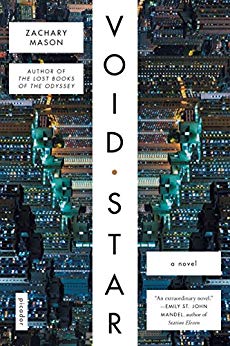
Void Star, by Zachary Mason

Void StarWhy this book: Selected by my literature reading group because of its focus on AI – a topic many of us are interested in.
Summary in 4 sentences: The story takes place about 150 years in the future, and follows three main and several supporting characters from very different social groups in a dystopian world that Mason predicts will evolve out of current movements to integrate biological humans with computers and artificial intelligence.   Several of the characters have memory implants that  can access the internet, and as we follow them in the story, we see the power and the challenges of this new capability.  As the story evolves, we meet a “business leader” who is seeking to  consolidate immense power through a very powerful network of AI servers.  The memory implant of one of our main characters is key to his ambitions, and the book evolves into a struggle between the business leader and our female protagonist for control of the world’s most powerful AI.

My Impressions: This is a complex and different book – not easy to get into, nor easy to follow.  But it poses some interesting questions about the direction our culture and civilization may be heading, as capabilities of Artificial Intelligence increase at rates we can hardly imagine.   The writing style is a bit cold and impersonal, and the characters are not particularly well developed nor easy to connect or empathize with.  But the story itself, and its vision of the future force the reader to confront possible implications of current developments in AI.    Some of these developments are exciting, but many are of concern.

Throughout the book, I was asking myself, “Is the world that Void Star describes credible?”   I believe so –  to a certain degree.  And at the conclusion of the book I was left with a lot more questions than answers about the world Mason was envisioning.

The story is set in the un-determined time in the future – sometime in 22nd  or perhaps 23rd century (I figure about 150 years from now) – envisioning a future when great power is very much a function of control over Artificial Intelligence servers and the systems they control.  At this point, the human race has already begun the transition of merging human biological and computer power with cyborg-like computer chips implanted in the brains of those few individuals with the connections and money to afford them.   Early steps in this direction are already happening in the labs of some of our most advanced research institutes. Void Star takes the implications of these developments in a direction that many believe is indeed where we are heading.

The memory implants that Void Star  envisions can network with other AI  systems and even other humans, through wireless or even ethernet connections, and if one has one of these memory implants, one’s personal memories and essentially one’s identity, can be hacked and even stolen digitally.  In this world, as it increasingly is in ours today, privacy is a function of the security of networks, but  today’s privacy challenges and concerns pale in comparison to those in the world of Void Star.

We follow three main characters in Void Star, as the book builds to a major AI event in the future which affects the entire world. The chapters are short, and often rather cryptic.  Each chapter deals with one of the three main characters, and the chapters alternate between these three. This stylistic tool made it difficult for me to follow, and even to get to know each of the characters.  The characters are very different and their lives are separate and unconnected, though as we expect, they do eventually converge, but in ways I’m not certain I understood, much less could explain.

In following the lives of these three characters we get glimpses of the world Mason envisions a century or two into the future.   There are some predictable changes and improvements, such as faster transportation, the ubiquity of self-driving cars, and easy access to the “cloud” of information. Global warming has caused the oceans to rise to where today’s great coastal cities are flooded. New York City, Singapore, and many others resemble Venice as networks of canals, and many coastal cities have been abandoned.   For those who can afford it, advances in biomedicine have dramatically extended not only the years one can expect to live, but also the years of productive, youthful energy and working life.   As the well-off classes have taken advantage of these advances in technology,  health, and computational power, the gulf between the haves and have-nots in the world has widened, to where the privileged live in walled cities, and the poor and underprivileged are consigned to certain neighborhoods or territories where they live in violent and unregulated anarchy.

I did however regularly see what I considered  “anachronisms” – experiences and features in that world that are familiar to us in the early 21stcentury, but which I can hardly imagine in this dystopia he describes in the 22nd or 23rd century.  For example, everyone is focussed on their phones.  The laptop is the main connector to the web.  WiFi is not always available.  At the end, one character’s daughter runs off with a guy to help run a car rental agency near the airport.  These seem to be convenient markers for the 21st century reader to feel like we understand at least some of the experience of our characters.  There are many such anachronisms in the book, which I found amusing, and wondered if they were a joke, or perhaps reflected a lack of imagination, or perhaps an unwillingness to envision in greater detail this future world.

One concept I found fascinating is how in this AI-centric world, one’s identity is very much tied to one’s memory, and with an implanted chip, memory can be recorded, shared, downloaded, even stolen.  Our main character had two sources for her memories – her biological memory and her computer chip memory and her conscious awareness could go back and forth.  We also saw characters who internalized the memories of others.  This idea of merging different people’s identities by merging their memories is fascinating.

Also one’s mortality is also tied to memory.  If all of one’s memories – feelings, impressions, insights can be retained when the body dies, is one really dead?  This is a question Mason leaves hanging at the end, as he insinuates that self-awareness – consciousness – can continue with this intact memory that is retained after the body no longer exists.

As the book culminates, I indeed got confused as to what was “real” and what was someone’s imagination, or what was virtual reality or enhanced reality, generated by an AI.  It reminded me of some of the “magical realism” novels I’ve read, such as One Hundred Years of Solitude by Garcia Marquez, or The Ocean at the End of the Lane by Neil Gaiman.

The issue/question of our mortality is a sub theme throughout the book.  Several of the characters have dramatically extended their lives and their youthful capabilities – looking, acting, functioning like people decades or even a century younger than their chronological age.    As the book concludes one of our characters seems to have defeated death from biological causes, but is paranoid about dying as a result of an accident or at the hands of a sinister force.  Rather than enjoying this everlasting biological life, this character lives in fear, and assumes no risk of accident or malevolence that might end their eternal life.

I also wonder whether one of the scenes at the conclusion of the book was a metaphor for a choice humans have to make – to continue down the path of increasing mathematical predictability of humans by merging us more with computers, or giving precedence to our irrational, “human” sides – heart, feeling, fear, joy, emotions.  There were only a few glimpses of such ultimately non-rational, human sides of our characters in this book.

Mason hardly mentions the role of the state in regulating AI or any of the challenges of this future world.  I wonder if this omission is intentional –  pointing to the continued weakening of governments as regulatory powers in the face of increasing power of private entities, especially those with access to great computer power and powerful AIs.

For a different view of how current trends may turn out, I listened to a podcast discussion between Sam Harris and Kevin Kelly in which Kevin Kelly shared a more positive vision of the future than Mason does in Void Star. Kelly envisions a global “organism” – a super-connection between people and their computers.  We struggle to imagine what this would be like – but Kelly reminds us that not long ago, we couldn’t imagine our current global economy or the development of extensive and global on-line shopping. Kelly calls this future interconnected phenomenon a “super-organism.”   He believes that there will be multitudes – thousands and millions of AIs in this super network.

Void Star is a challenging book – not an easy read, but it definitely stretches the imagination of the reader.  One has to be ready for that challenge before undertaking the challenge of reading this book. But if you’re ready for it, it can be very rewarding.


Posted in Uncategorized | 1 Comment

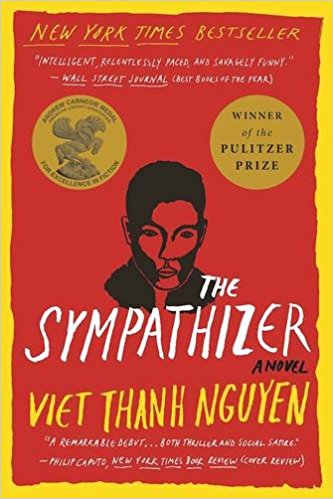
The Sympathizer, by Viet Thanh Nguyen

SympathizerWhy this book: Selected by my literature reading group, based on a strong recommendation from a friend of mine, and its Pulitzer Prize for fiction, 2016. My literature group is on a roll with great Pulitzer Prize-winning fiction.

Summary in 3 Sentences:  Written in the first person, from the perspective of the very intelligent and observant aide-de-camp of a Vietnamese General, it begins with the chaos surrounding the fall of Saigon, and then moves to arriving in the US as refugees and beginning a new life. But our protagonist is  all the time an agent for the communist regime, with divided loyalties –  to his mentor, the General, his friends and those who support him in the US, as well as to his commitment to the ideals of the communist revolution and his masters who remained in Vietnam.  This book is much more than a spy novel – it is  an insightful and biting look at both US and Vietnamese culture, about split identity, conflicting values, about loyalty and fanaticism, duty and friendship, violence and redemption, and concludes with a surprise that opens the door to a great discussion – what just happened?

My Impressions:  This book deserves its accolades.  I can’t think of any modern writing that has impressed me more.  At the bottom of this review, I offer a number of insights, expressions and turns of phrase that impressed me with their originality.

The beginning of the book is set in the chaos, and panic of the final days of Saigon, and we experience some of the desperation and sense of betrayal that people felt who had supported and fought with the US but were left behind, often to be tortured and slaughtered, by the victors in that war.  The first person account is remarkable – the language is remarkable, the sense of chaos is remarkable.

Soon we are in the United States and we experience the disorientation of the refugee for whom the world has changed, the rules have changed, and his/her own sense of identity and possibilities have changed.  The earth is figuratively moving beneath their feet as they struggle to find their balance. Naturally the refugees stick together and support each other, and also revert to practices that are inappropriate to our culture -like killing people who you believe have betrayed you.

A number of times throughout the book, we are led to believe that the story we are reading is being written or related to a commandant – someone who has control over our protagonist, who is telling his story.   These references to an authority are intermittent and not explained – until the end of the book.

The protagonist openly and unashamedly shares his challenges as a single man dealing with a healthy sexual appetite and attraction to women, but not often finding fulfillment of this biological drive.  Heterosexual men will be able to relate to much of what he shares of his private thoughts and activities, which will make some women uncomfortable or even incredulous.  This is not a key part of the story, but so much of what the author shares in the book is about the human, and not just the Vietnamese experience.  We men are not used to such candor in literature about such things – and I found his honesty both amusing and refreshing.

What I found most fascinating about the book was the author’s descriptions of American culture – his amazing, almost poetic use of metaphor and language.  These perspectives are from an intelligent and articulate observer, and his insights were sharp and on target Yes – more negative than positive, but these insights were from a disenfranchised refugee struggling to find his way.

He explores the dark side of human nature – and there are some disturbingly violent scenes in the book – which help him make the point of how depraved, violent and insensitive to suffering people can become when narrowly focused on their own goals. Cultures can become that way too – as we clearly see in both Vietnamese and American cultures.

There is also a whole section of the book in which he becomes an advisor to a movie based on Apocalypse Now – based on Conrad’s Heart of Darkness.  It is a scathing while at the same time admiring critique of Hollywood and Francis Ford Coppola.

There are so many sub-themes in this book, it is hard to list them.  The book is very much about cultural and personal identity – their many layers and how they are inter-twined – and can even be in tension with each other.  The value of loyalty is also a key theme  – to causes, to countries, to friends and family, to values and principles and also, how these loyalties can be in conflict with each other.   The book actually begins with our protagonist expressing the challenge of being able to see complex issues from (at least) two sides.  He (and his loyalty) seems always to be torn between the multiple perspectives on an issue -each of which he understood, and for which he had sympathy.

The ending of the book is a surprise – and it is intense.  I will not spoil it for anyone who intends to read the book, but let me simply say that our protagonist does return to Vietnam.  And at that point the identity issue takes a turn in a very different direction. It becomes less about an insightful and articulate refugee seeking to find his place in both his Vietnamese community and American culture, but more about his human identity, beyond the various masks he had worn to that point.  More about ultimate values and purposes.

The Sympathizer is a very powerful book.  It offers biting satire of American culture, while also offering poignant insights about the experience of state-less and disenfranchised refugees living in America, about how suffering can open the door to a greater truth that transcends so much of what preoccupies most people in their daily lives.  A worthy recipient of the Pulitzer.


Notable quotes – page numbers refer to the Grove press paper back edition of 2015.  Some of these impressed me for their insights, others simply for their very clever and colorful use of language and metaphor or analogy.

Nothing, the General muttered, is ever so expensive as what is offered for free. 4

Even if they found themselves in Heaven, our country men would find occasion to remark that it was not as warm as Hell. 24

America, land of supermarkets and superhighways, of supersonic jets and Superman, of super carriers and the Super Bowl!…although every country thought itself superior in its own way, was there ever a country that coined so many “super” terms from the general bank of its narcissism, was not only super-confident but also truly super-powerful, that would not be satisfied until it locked every nation of the world into a full nelson and made it cry Uncle Sam? 29

I had an abiding respect for the professionalism of career prostitutes, who wore their dishonesty more openly than lawyers, both of whom bill by the hour.  37

(referring to a government bureaucrat:) A mid-ranking apparatchik in the Ministry of the Interior, he was neither too tall nor too short, too thin nor too wide, too pale nor too dark, too smart nor too dumb. Some species of sub-undersecretary, he probably had neither dreams nor nightmares, his own interior as hollow as his office.  p 42

(referring to the picture of Diem being shot) Its subtext was as subtle as Al Capone: Do not fuck with the Untied States of America. 46

He had an elaborate Oriental rug on his wall, in lieu, I suppose, of an actual Oriental.  62

…he reclined in an overstuffed leather club chair that enfolded him like the generous lap of a black mammy.  I was equally enveloped in the chair’s twin, sucked backward by the slope and softness of the leather, my arms on the rests like Lincoln on his memorial throne.  p 63

So it was that we soaped ourselves in sadness and we rinsed ourselves with hope. 71

I had been resigned to the consolation of man’s best friend, i.e., self pleasure, and certainly did not possess the wherewithal to consort with prostitutes. 76

…He swallowed his pill of Catholicism seriously. He  was more embarrassed and discreet about sex than about things I thought more difficult, like killing people, which pretty much defined the history of Catholicism, where sex of the homo, hetero, or pedaristic variety supposedly never happened, hidden underneath the Vatican’s cassocks.  …It’s hypocrisy that stinks, not sex.  77

This seed of sexual rebellion one day matured into my political revolution, disregarding all my father’s sermons about how onanism inevitably led to blindness, hairy palms, and impotence (he forgot to mention subversion.)  If I was going to Hell, so be it! Having made my peace with sinning against myself, sometimes on an hourly basis, it was only due time before I sinned with others.  78

Like a shark who must keep swimming to live, a politician – which was what the General had become – had to keep his lips constantly moving.  90

So the list went, a fair percentage collecting both welfare and dust, moldering in the stale air of subsidized apartments as their testes shriveled day by day, consumed by the metastasizing cancer called assimilation and susceptible to the hypochondria of exile. 91

…his honorable grandfather was insufferable, as most men of utter conviction are.  93

…The need to defend God, country, honor, ideology, or comrades – even if, in the last instance, all he really is protecting is that most tender part of himself, the hidden, wrinkled purse carried by every man. 98

Hardly any male travel writer, journalist, or casual observer of our country life could restrain himself from writing about the young girls who rode their bicycles to and from school in those fluttering white ao dai, butterflies that every Western man dreamed of pinning to his collection.  114

Madam would sit (her daughter) down and …lecture her on the importance of maintaining her virginity and of cultivating the “three Submissions and Four Virtues” – a phrase that calls to mind the title of a highbrow erotic novel.  The mere mention of her endangered or putatively lost virginity provided ample wood for the cookstove of my imagination, a fire I stoked in the privacy of my room.   115

Hollywood’s high priests understood innately the observation of Milton’s Satan, that it was better to rule in Hell than to serve in Heaven, better to be a villain, loser, or anti-hero than a virtuous extra, as long as one commanded the bright lights of center stage.  134

Most actors spent more time with their masks off than on, whereas in my case, it was the reverse.  136

….the land where the pursuit of happiness was guaranteed in writing…a guarantee to be allowed to pursue the jackpot of happiness?  Merely an opportunity to buy a lottery ticket?  Someone would surely win millions, but millions would surely pay for it.   142-43

Isn’t it funny that in a society that values freedom above all things, things that are free are not valued?  146

(referring to landing in the Philippines) …(I was) mugged by the full force humidity of a tropical climate.  It’s like getting licked from throat to balls by my dog every time I go outside…149

Some of us confidently declared that all high-end fashion models did was have sex with each other.  If we were high-end fashion models, so the reasoning went, with whom would we rather have sex, men like us or women like them?  160

…his fate was sealed with superglue.  165

The look in his eyes…which I assumed to be some saintly mix of exotic pain and painful ecstasy.  171

Hollywood functioned as the launcher of the intercontinental ballistic missile of Americanization.  172

…the hours dribbled away like saliva from a mental patient’s mouth…184

…that warm, sweet glow of affordable blended scotch really did help, as comforting as a homely wife who understands her man’s every need. 185

I laugh, even though inside me the little dog of my soul was sitting at attention, nose and ears turned to the wind…185

I was finally left with nothing but myself and my thoughts, devious cabdrivers that took me where I did not want to go.   186

They (most Americans) believe in a universe of divine justice where the human race is guilty of sin, but they also believe in a secular justice where human beings are presumed innocent.  You can’t have both. You know how Americans deal with it? They pretend they are eternally innocent no matter how many times they lose their innocence. The problem is that those who insist on their innocence believe anything they do is just.  At least we who believe in our own guilt know what dark things we can do.  190

But amnesia was as American as apple pie, and it was much preferred by Americans over both humble pie and the fraught foods of foreign intruders.  195

Resentment was an antidote to gloominess, as it was for sadness, melancholy, despair etc.  199

…his paisley tie as fat as Elvis Presley 200

…lying was a skill and a habit not easily forgotten.  This was true also for the representative, whose kindred tricky spirit I recognized.  In negotiations, as in interrogations, a lie was not only acceptable but also expected.  203

We would all be in Hell if convicted for our thoughts.  205

I had hit him where it hurt, in the solar plexus of his conscience, where everyone who was an idealist was vulnerable.  Disarming an idealist was easy. One only needed to ask why the idealist was not on the front line of the particular battle he had chosen.   215

Army surplus C-rations, which looked almost exactly the same entering the human body as they did exiting it.  221

Napoleon said men will die for bits of ribbon pinned to thier chests, but the General understands that even more men will die for a man who remembered their names, as he did theirs…all anyone ever wants is to be recognized and remembered. 222

Life is a suicide mission.  222

Usually Bon used words like a sniper, but this was a spray of machine-gun fire 223

If something is worth dying for, then you’ve got a reason to live….they now had something to live for if not to die for…

That was the subversive’s dilemma. Rather than flaunt ourselves in the sexually dubious costumes of superheroes, we hid beneath cloaks of invisibility .  225

Wars never die, I said. They just go to sleep.  225

…the bottle of scotch. Like me, it was half empty and half full.  231

After love, was sadness not the most common noun in our lyrical repertoire? Did we salivate for sadness, or had we only learned to enjoy what we were forced to eat?  These questions required either Camus, or cognac, and as Camus was not available I ordered cognac. 234

The hardest thing to do in talking to a woman was taking the first step, but the most important thing to do was not to think….being rejected was better than not having the chance to be rejected at all. Thus it was that I approached girls, and now women, with such Zen negation of all doubt and fear that Buddha would approve.  239

My first three principles in talking to a woman: do not ask permission; do not say hello; and do not let her speak first.  240

While I was critical of many things when it came to so-called Western civilization, cleavage was not one of them.  241

Principle Five: statements, not questions were less likely to lead to no.  242

What makes us human is that we’re the only creatures on this planet that can fuck ourselves. 245

Americans saw unhappiness as a moral failure and thought crime.  254

We were the greatest anthropologists ever of the American people, which the American people never know, because our field notes were written in our own language in letters and postcards dispatched to our countries of origin.  258

I wanted to replicate the oldest dialectic of all with her, the thesis of Adam and the antithesis of Eve that led to the synthesis of us, the rotten apple of humanity, fallen so far from God’s tree.  269

I thought with regret about all the things I would miss about America: the TV dinner; air-conditioning; a well-regulted traffic system that people actually followed;…..(and this paragraph goes on for nearly half a page listing things he would miss about America) 280

Your problem isn’t that you think too much; your problem is letting everyone know what you’re thinking.  281

We plucked off the leeches adhering to us with the stubbornness of bad memories. 304

The entire forest shimmered with the antics of death the comedian, and life the straight man, a duo that would never break up.  To live was to be haunted by the inevitably of one’s own decay, and to be dead was to be haunted by the memory of living.   305

Well, I said, gathering the tattered coat of my wits about me, I believe the unexamined life is not worth living.  311

I had developed feline feelings of both dependency and resentment.  317

What my time in the cave taught me was that the ultimate life and death struggle is with ourselves.  321

Eating (my mother’s) portion, I swallowed not just the food but the salt and pepper of love and anger, spices stronger and harsher than the sugar of sympathy.  327

I understand nothing! – Then you have understood almost everything, the voice said.  333

Certain things can be learned only through the feeling of excruciation.  335

Don’t you see how everything in need of confession is already known?  You indeed did nothing.  That is the crime that you must acknowledge and to which you must confess. 337

…a Cold War chess match played in air-conditioned rooms by white men wearing suits and lies.  361

What was it that I got?  The joke.  Nothing was the punch line, and if part of me was rather hurt at being punched – by nothing, no less! – the other part of me thought it was hilarious.  370

What had I intuited at last? Namely this: while nothing is more precious than independence and freedom, nothing is also more precious than independence and freedom.  375

Posted in Uncategorized | Leave a comment

The Trident, by Jason Redman

TridentWhy This Book:  I had heard several years ago that this was a well-done personal story by a SEAL – which included a lot of humility – not often found in books SEALs write about themselves.  I lead a volunteer reading group for young men in the SEAL Basic Training Command’s Pre Training, Recovery and Rehabilitation (PTRR) phase, who are preparing to begin and go thru SEAL training.  We selected this book based on its reputation – I hadn’t read it yet – so that was enough motivation to finally get to it!

Summary in 4 Sentences: This is Jay Redman’s personal story of his journey to become a SEAL veteran, beginning with a brief look at his childhood, his journey to get into the SEAL Teams, his wild-man, undisciplined years as a cocky young SEAL enlisted man and then officer, and then his experiences in combat, both in Afghanistan and Iraq. What makes this book particularly compelling is that he shares how his cockiness and arrogance, and his lack of self-awareness cost him his reputation with his team mates, and nearly got him kicked out of the SEAL Teams.  He writes painfully and openly about his mistakes, his bad attitude, his long fight to better understand and take responsibility for being ostracized and then finally the long and difficult work it took to repair his reputation and regain the confidence of his SEAL brothers.  Jay was then severely wounded in Iraq and the last quarter of the book is about his long and painful recovery, with dozens of surgeries, how he depended on the love and support of his wife and family, and finally how he’s found a new, post-SEAL Team career to continue serving his country.

My Impressions:  Jay tells his story with candor and humility and it is very well done.  People often ask me to recommend a SEAL book for them to read, and The Trident is one of two that I recommend (the other is Fearless by Eric Blehm.)  Jay tells the story of being a young man who, to put it gently, was a bit too proud of himself and about what he’d accomplished, a bit too entitled and self-assured.  To put it less gently, he was  arrogant, cocky, and immature, and was angry, bitter and accusative when things didn’t go his way.

But it is a story of redemption.  When a pattern of bad behavior and poor decisions cost him the trust of his teammates, and he was about to be kicked out of the SEAL Teams, he was given a second, and then a third chance, and he finally began to accept responsibility – personal responsibility – for the “bad luck,” for the people out to get him, for the opportunities that didn’t come his way.  And with that acceptance of responsibility, with patience, hard work, humility, and good judgment, he was able over time to earn back the trust of his teammates.

The book begins dramatically with him lying severely wounded on the battlefield in Iraq, the battle raging around him, but with Jay in a daze and realizing that he was about to die.  He fought it, but as he was slowly bleeding out, he tried to stay focused on staying alive, but it was so hard, and it felt so easy to let go.  As he felt himself being pulled away,  one of his teammates taking care of him screamed at him to hang on, that the helicopter was just a few minutes out. This screaming and from his insistent teammate fortified Jay’s resolve – he knew that if he could get to the surgery unit, he would probably survive, but then he felt that gentle pull again, and how tempting it was to let go. And then the yelling again from his team mate.  It is a powerful story of a near-death experience.  Obviously he made it the battlefield ER – just in time.

Then the book goes back to what got Jay to that point, briefly outlining his childhood, how he got into the Navy and then became a SEAL and his crazy times as a young and irresponsible SEAL operator.  He did well enough to be recommended for the Seaman-to-Admiral program and was in college when 9-11 attacks occurred.  He wanted to leave college and go to war with his buddies, but his Commanding Officer talked him out of that – telling him that this war would go on long enough – he’d get his chance.

Then came the most difficult part of the book to read, as Jay outlines his series of mistakes, and his immature actions and lack of responsibility.  I wanted to crawl into the book and ring his neck!  But eventually he figured it out, when a couple of senior officers saw potential in him and gave him a second and then a third chance.  One of those officers was the same officer who told him to stay in school.

Then the story becomes inspiring, as Jay patiently and with maturity slowly does everything right to win back the trust of his team mates. He was a full-fledged and impressive member of his team, leading troops in battle when he got shot. And his teammates stood by him – and saved his life.

The last part of the book is about his fight to recover.  It has required amazing resilience. Literally dozens of surgeries.  Here the book really becomes a love story – as his wife Erica was a saint and indeed saved him from descending into despair, with her constant loyalty and support.

The rest of the story, which takes place after the book was written, I know from people who have known and worked with Jay in recent years.  He has provided heroic support to the families of SEALs wounded and killed in action and he continues to serve the SEAL community and other veterans.  The reputation he worked so hard to repair, continues to grow.

Great book, great story, by a man who has seen the depths of emotional and physical pain, and hung in there to come back – stronger than ever.

Posted in Uncategorized | Leave a comment