A Gentleman in Moscow, by Amor Towles

Gentleman in MoscowWhy this Book:  Strongly recommended by a member of my literature reading group.

Summary in 3 Sentences:  Count Alexander Ilyich Rostov,  an educated man of culture, charm and discretion and a member of the aristocracy in pre-revolutionary Russia, is sentenced to “house arrest” in the Metropole Hotel in Moscow, with the warning that if he were ever step outside of it, he would be shot on sight. The Metropole is an oasis of culture and refinement in the new proletarian ruled Soviet Union, and we get to know Count Rostov and a cast of fascinating characters over the next 30+ years, as he makes a rich life for himself within the walls of the hotel – a life in which he finds a way to live fully in accordance with the values that represent the very best of what the Russian Revolution swept away after World War 1.

My Impressions:  I loved this book – from the very beginning and all the way through it.   I’d put it in the top 5 in literature I’ve read in the last 10 years.  It is exquisitely written – I loved Amor Towles use of the English language to capture the feeling of culture and sophistication that Count Rostov represented.  His tightly circumscribed life within the walls of the hotel is in stark contrast to the chaos and turmoil taking place outside the walls of the hotel in Russia at the time, as Stalin collectivized the farms and dissidents were executed, sent into exile or simply disappeared.  All of this is going on in the background of a life well lived in forced internal exile.

The center piece of the story is the character of the urbane Count Rostov whose warmth, sense of manners and propriety, respect for the history and traditions of his culture and the great achievements of cultivated society he retained, even when reduced to living in a 10×10 room in the attic of a hotel.  He continued to live with integrity and class, befriending many – while still holding on to his appreciation for the finest in culinary cuisine, wine,  culture and the best in people – no matter what their background.  He found a way to live fulfill two fundamental imperatives of a life well lived – to be useful and kind. Amor Towles in an interview on Youtube said that his wife wished that he were more like the Count. My wife would wish the same of me.

The Count was an example and a mentor to many. He lived humbly and simply, but always with the utmost in integrity, manners, and character. He mentored many people in the book, to include a child at the beginning, and then he became a surrogate father to an orphan in the second half of the book. These relationships were key to his character and to the story as it evolved.

The world of Count Rostov inside the Metropole included many fascinating characters and beautifully nuanced metaphors for the world we the readers live in, with (seemingly) much greater freedom of action.  The worlds of pre-Stalinist, Stalinist, and post-Stalinist Russia intrudes regularly into the Metropole as close friends visit, acquaintances and interesting guests come and go, and activities are scheduled at the hotel that reflect the tumultuous political world outside its walls – the Kremlin is within sight of the hotel.   The Metropole hotel serves as a meeting place for influential people from around the world, where Western values and conveniences are (mostly) retained, and therefore change comes much more slowly than outside, but indeed the vulgarization of life outside the walls of the hotel walls inevitably creeps in.

For example:  The Metropole had an extensive wine cellar with wines of every type and vintage. A great story is when the apparatchiks decided that it was a bourgeois vanity to prefer one wine over another, an anachronistic reflection of individual differences in a world which was moving toward sameness and homogenization.  And so, the newly appointed manager directed that the labels be taken off of all the thousands of bottles of wine in the best wine cellar in Russia, in order that customers could only order red wine or white – and that was all anyone needed to know.   Of course the Count and the other sophisticated patrons of the hotel were appalled, but could say nothing.

The richness of the story  in A Gentleman in Moscow is hard to do justice to in a brief review. I will say in conclusion that the ending was a surprise – but was appropriate to the quality of the rest of the book.

An interesting and unexplained aspect of the book:  All of the chapter titles begin with the letter “A” – and we get no explanation – but it is a charming nuance.

Interesting or otherwise Great Quotes:

It was the Grand Duke who took the young Count aside and explained that he must be strong for his sister’s sake; that adversity presents itself in many forms; and that if a man does not master his circumstance then he is bound to be mastered by them. 18

His model for mastering his circumstance would be a different sort of captive altogether; an Anglican washed ashore.  Like Robinson Crusoe stranded on the Isle of Despair, the Count would maintain his resolve by committing to the business of practicalities.  Having dispensed with dreams of quick discovery, the world’s Crusoes seek shelter and a source of fresh water; they teach themselves to make fire from flint; they study their island’s topography, its climate, its flora and fauna, all the while keeping their eyes trained for sails on the horizon and footprints in the sand.  29

Ever since its opening in 1905 , the hotel’s suites and restaurants had been a gathering spot for the glamorous, influential, and erudite; but the effortless elegance on display would not have existed without the services of the lower floor….33

For standing at the edge of his table was the young girl with the penchant for yellow- studying him with that unapologetic interest peculiar to children and dogs.  40

“Manners are not like bonbons, Nina. You may not choose the ones that suit you best; and you certainly cannot put the half-bitten ones back in the box…”52

Having systematically made an impression in every corner – with a weighty remark here, and a witty remark there – he now excused himself “for just moment.”  67

Here indeed was a formidable sentence – one that was on intimate terms with the comma, and that held the period in healthy disregard.  68

“Poetic concision demands the avoidance of a pair of words when a single word will suffice.” 69

For it is a fact that a man can be profoundly out of step with his times….For such a fellow, forget any chance of romance or professional success; those are the provenance of men instep with their teams….But events can unfold in such a manner that overnight the man out of step finds himself in the right place at the right time.  86-87

For after all, if attentiveness should be measured in minutes and discipline measured in hours, then indomitability just be measured in years.  Or, if philosophical investigations are not to your taste, then let us simply agree that the wise man celebrates what he can.  110

…then attaining tor the upper hand on the field of battle is measure in the instant.  111

And as she talked, the Count had to acknowledge once again the virtues of withholding judgment…After all, what can a first impression tell us about someone we’ve just met… Why, no more than a chord can tell us about Beethoven, or a brushstroke about Botticelli. By their very nature, human beings are so capricious, so complex, so delightfully contradictory, that they deserve not only our consideration but our reconsideration….120

If the bread was somehow earthen, brown, and brooding, the honey was sunlit, golden , and gay. But there was another dimension to it…An elusive, yet familiar element…A grace note hidden beneath, or behind, or within the sensation of sweetness.  `127

After all, an educated man should admire any course of study no matter how arcane, if it be pursued with curiosity and devotion. 134

Yes, a bottle of wine was the ultimate distillation of time and place; a poetic expression of individuality itself.  Yet here it was, cast back into the sea of anonymity, that realm of averages and unknowns.  144

As we age, we are bound to find comfort from the notion that it takes generations for a way of life to fade. 144

But if the Count took pride in knowing that everything was in order, he took comfort in knowing that the world would carry on without him -and, in act, already had. 154

The sense of loss is exactly what we must anticipate, prepare for and cherish to the last of our days; for it is  only our heartbreak that finally refutes all that is ephemeral in love.  184

Nina always was and would be a serious soul in search of serious ideas to be serious about. 186

“Then you must trust in her. And even if she is single-minded to a fault, you must trust that life will find her in time.  Fore eventually, it finds us all.”189

Or like the Count and Anna, one may simply join the Confederacy of the Humbled….a close knit brotherhood whose members travel with no outward markings, but who know each other at a glance.  196

“But I do like to think there is a difference between being resigned to a situation and reconciled to it.” 211

(On Jazz – the Count) … had been raised to appreciate music of sentiment and nuance, music that rewarded patience and attention with crescendos and  minuendos, allegros and adagios artfully arranged over four whole movements – not a fistful of notes crammed higgledy-piggledy into thirty measures….. And yet, the art form had grown on him.  216

The two men took each other in from heel to hair – both practiced at confirming at a glance their worst suspicions of each other. 218

…four stalks of celery lying in an orderly row waited like Spartans to meet their fate. 219

..at half past midnight the chef hadn’t the slightest doubt that the sun would shine tomorrow, that most people were generous at heart, and that, when all was said and done, things tended to work out for the best.  219
Posted in Uncategorized | 3 Comments

Waking up -A Guide to Spirituality Without Religion, by Sam Harris

waking-upWhy this book:  I’ve been thinking about this topic for years. I heard Tim Ferriss interview Sam Harris and I liked what I heard, so I started listening to Sam Harris’s pod casts.  I find I agree with him a lot more than I disagree with him, and I agree with him on substantive matters.  This sounded like a book that might help me. I was right.
Summary in 3 (rather long) sentences:  Sam Harris takes a look at what spirituality is and can be, and concludes that for him and many others, it is NOT (necessarily) associated with religion, nor with the “mythology” that is associated with most religions.  Harris rejects religion as a pathway to spirituality for himself personally, and argues that spiritual experience is available to anyone through disciplined practice in studying and understanding consciousness, whether a believer in a religion or God or not.  Waking Up talks about the brain and the mind,  the illusion of self, explores what he calls “the transcendent self” and argues that meditation and mindfulness can create a key hole through which we can move beyond being “lost in thought” to tune in to a more “self-less” connection to our world.

My impressions:  Some books I read are interesting, some are well written, some are entertaining, some are enlightening and have a real impact. This one was all of those.  I have been for decades trying to find a spirituality that works for me.  This book had an impact on me – it doesn’t serve as my “bible” nor is it meant to, but Sam Harris provides well explained insights that help me significantly in my search.  And I’m at a point in my life when I want to give this search more priority.

I have become a fan of Sam Harris through his podcasts, in which he explores ideas with some of the great thinkers in the English language, discussing matters related to philosophy, religion, science, reality, the cosmos – and, well –  whatever interests him.   This book expounds upon ideas I’ve heard him share in his podcasts.

He states in the introductory chapter “Spirituality” that, “Nothing that a Christian, a Muslim, and a Hindu can experience – self-transcending love, ecstasy, bliss, inner light -constitutes evidence in support of their traditional beliefs, because their beliefs are logically incompatible with one another. A deeper principle must be at work.  That principle is the subject of this book: The feeling that we call “I” is an illusion.”  p 9

Waking Up is not long but covers a lot of ground .  The opening chapter “Spirituality” is a fascinating look at “spirituality” and what he considers it to be.  I offer a number of quotes from that chapter below (those listed up thru the quote on p 51).  This chapter is truly worth reading alone.  For those interested in Sam Harris’s well-thought out take on “spirituality,”  he offers his opening chapter free in written form or as a podcast  here.

The subsequent chapters, entitled “The Mystery of Consciousness,” “The Riddle of the Self,”  “Meditation,” and “Gurus, Death, Drugs, and other Puzzles” offer fascinating discussions of other aspects of spirituality and spiritual practice.

The chapter on The Mystery of Consciousness is an insightful look at this really challenging concept.  In this chapter he explores the relationship between what we conceive of as consciousness, and the brain itself, with some very interesting cases of how injury or medical impairments to the brain have affected this key aspect of who we think ourselves to be.

He continues this discussion in the chapter on The Riddle of the Self, and convinces me that the “self” is indeed a very problematic concept.   Harris seems to say that we are like  a hurricane (this my analogy, not his) but in the middle, where we conceive our “self” to be, the self we believe  ourselves to be,  is the eye – nothing.  Yet we identify with all the clouds and turmoil spinning around – quiet, calm, clear skies, nothing.  He says that while we may identify with our thoughts, our emotions, our personal history, these are like clouds and wind – not stable – and agrees with the teaching of Buddhism, that there is no stable self that is carried along from one moment to the next. There is no “self” behind our eyes, housed in our brain, which observes the world.  The “self” that we identify with is merely the contents of our consciousness.  And nothing more.  Two weeks ago, I visited two different good friends of mine, both a bit older than I. With them were their wives, who are struggling with Alzheimers and hardly the women I’d known well when I and they were much younger.  This experience drove home the challenges of the idea of an immutable “self.”

In the chapter on Meditation he discusses how meditation can help us to step away from the swirling of the hurricane, find our way out of the storm when we are “lost in thought,”  and at least momentarily get into the calm and quiet at the “eye of the hurricane” more easily.  With practice it gets easier, and we can stay for longer periods.  He shares experiences from his many years studying meditation in India.  He briefly describes different types of meditation, and why he believes that meditation is an excellent means for us to better understand our minds and our consciousness.  Meditation can help us transcend the idea of the self – and when we need to, can help us to become less self-centered and more “self-less” in relating to our world.

His chapter on Gurus, Death, Drugs, and other puzzles was great fun. He described how Westerners have often falsely identified great mental powers and the ability to focus and meditate, with wisdom and virtue. He shared some amusing and occasionally startling stories of Eastern mystics  coming to the West as Gurus and behaving  badly when given access to the temptations of Western affluence – particularly adoring young women.  He is quite transparent in describing how hallucinogens can tell us a lot about our brains and our consciousness, and can give us insight into what is possible. For him, drugs opened a door to allow him to briefly experience what meditation can allow him to experience on his own, and with much less risk.

His concluding chapter sums up a lot, and the journey through the book to get there is very worthwhile. He again addresses what he sees as the tenuous and often unjustifiable link between religion and spirituality.  In his conclusion, he state that “Happiness and suffering, however extreme, are mental events.  The mind depends upon the body, and the body upon the world, but everything good or bad that happens in your life must appear in consciousness to matter…..During the normal course of events, your mind will determine the quality of your life.”  204

I liked the analogy he makes of us living our lives as if we are caught up in the movie of our lives – totally absorbed.  “Waking up” is to to simply become aware that we are watching a movie, and that awareness can take us, at least for a moment, out of the drama on the metaphorical screen.

—————————————-

Where I think I disagree (slightly) with Sam Harris: I say “I think I disagree,” because I’m not sure.  Reading between the lines in his writing, and other things I’ve read about Sam Harris lead me to wonder if  we may be more in synch than I think.  This is the same quibble I had with Sapiens.  (btwSam Harris will be interviewing Yuval Harari, author of Sapiens,  on his podcast soon, and that will be very good.)

My quibble is this:   Sam Harris states repeatedly that our experience of the world – in moments of ecstasy, spiritual bliss, or drug-induced wonder or terror only tell us about the potential of human consciousness, and nothing about the cosmos or metaphysical reality.  Got it. And yet…. the plethora of unexplained phenomena that do not fit a Newtonian understanding of the universe, and that cannot be accounted for by coincidence or chance, indicate to me at least, a reasonable  possibility that there may indeed be a larger principle at work than Newtonian physics can explain, and that spiritual practice may be able to tap into this principle. Though it is true that such phenomena cannot be reliably and repeatedly reproduced in a lab, phenomena which can’t be explained with current theories of physics happen repeatedly.  By such phenomena I include clearly clairvoyant insights, remote viewing, children who claim to remember events from past lives which research validates occurred, telepathy, etc.

I agree with Sam Harris that amazing mental powers are probably amoral, and we need an approach to spirituality that does not depend on an “unseen order of things” (the name of my brief essay on this idea,) and yet,  to not address this other possible dimension of reality in a discussion of spirituality I believe short-changes the discussion.  Where I do agree with Sam Harris is that our lives and how we live should withstand scrutiny (primarily our own) whether there is a God, an afterlife, karma, Jesus, Bodhisattvas, or whether indeed what we experience in this life is all the we get.   We don’t know.  And our lives and spiritual practice need to work for us,  whatever the case.

Some illuminating quotes from Waking Up (page numbers from paperback edition):

Perhaps I should speak only for myself here:  It seems to me that I spend much of my waking life in a neurotic trance.  My experiences in meditation suggest, however, that an alternative exists.  It is possible to stand free of the juggernaut of self, if only for moments at a time.  11

…what contemplatives throughout history have discovered is that there is an alternative to being continuously spellbound by the conversation we are having with ourselves; there is an alternative to simply identifying with the next thought that pops into consciousness. And glimpsing this alternative dispels the conventional illusion of the self.  14

On one level, wisdom is nothing more profound that an ability to follow one’s own advice. 15

Seeking, finding, maintaining, and safeguarding our well-being is the great project to which we all are devoted, whether or not we choose to think in these terms.  15

Cognition and emotion are not separate.  The way we think about experience can completely determine how we feel about it.  16

Our struggle to navigate the space of possible pains and pleasures produces most of human culture.  16

We seem to do little more than lurch between wanting and not wanting. Thus the question naturally arises:…. Is it possible to find lasting fulfillment despite the inevitability of change?  Spiritual life begins with a suspicion that the answer to such questions could well be “yes.”  17

Being wisely selfish and being selfless can amount to very much the same thing. 31

There is now little question that how one uses one’s attention, moment to moment, largely determines what kind of person one becomes.  31

We manage to avoid being happy while struggling to become happy, fulfilling one desire after the next, banishing our fears, grasping at pleasure, recoiling from pain –  and thinking, interminably, about how best to keep the whole works up and running….We crave experiences, objects, relationships, only to grow bored with them.  And yet, the craving persists.  I speak from experience, of course.  34

The problem is not thoughts themselves, but the state of thinking without knowing that we are thinking. 37

Most of us spend every waking moment lost in the movie of our lives.  38

It is quite possible to lose one’s sense of being a separate self and to experience a kind of boundless, open awareness – to feel in other words, at one with the cosmos.  This says a lot about the possibilities of human consciousness, but it says nothing about the universe at large.  43

The traditional goal of meditation is to arrive at a state of well-being that is imperturbable, – or if perturbed, easily regained.  The French monk Matthieu Ricard describes such happiness as “a deep sense of flourishing that arises from an exceptionally healthy mind.”…The near goal, therefore, is to have an  increasingly healthy mind- that is to be moving one’s mind in the right direction.  44

I have never met another person who denied that some of us are stronger, more athletic,  or more learned than others. But many people find it difficult to acknowledge that a continuum of moral and spiritual wisdom exists, or that there might be better and worse ways to traverse it.  46

It seems to me that a healthy spiritual life can begin only once our physical, mental, social, and ethical lives have sufficiently matured.  46

Some people are content in the midst of deprivation and danger, while others are miserable despite having all the luck in the world.  This is not to say that external circumstances do not matter. But it is your mind, rather than circumstances themselves, that determines the quality of your life….Given this fact, it makes sense to train it.  47

In my view, the realistic goal to be attained through spiritual practice is not some permanent state of enlightenment that admits of no further efforts but a capacity to be free in this moment, in the midst of whatever is happening.  If you can do that, you have a already solved most of the problems you will encounter in life.  49

Investigating the nature of consciousness itself -and transforming its contents through deliberate training is the basis of spiritual life.  51

…it is obvious that consciousness is never truly confined by what it knows. That which is aware of sadness is not sad. That which is aware of fear is not fearful.  The moment I am lost in thought however, I’m as confused as anyone else.  137

It is important to realize that true meditation isn’t an effort to produce a certain state of mind….The deeper purpose of meditation  is to recognize that which is common to all states of experience, both pleasant and unpleasant.  140

…meditation requires total acceptance of what is given in the present moment….it is important to  distinguish between accepting unpleasant sensations and emotions as a strategy – while covertly hoping that they will go away – and truly accepting them as transitory appearances in consciousness.   149

One of the first things one learns in practicing meditation is that nothing is intrinsically boring – indeed, boredom is simply a lack of attention.  156

The truth is that, whatever happens after death, it is possible to justify a life of spiritual practice and self transcendence without pretending to know things we do not know. 186

As a general matter, I believe we should be very slow to draw conclusions about the nature of the cosmos on the basis of inner experiences – no matter how profound they may seem.  192

Changing your perception of the world is often as good as changing the world. 204

….there is no compelling reason to believe that the mind is independent of the brain..A middle path exists between making religion out of spiritual life and having no spiritual life at all. 205

Posted in Uncategorized | 3 Comments

The General, by C.S. Forester

the-generalWhy this book:  I had read it several years ago, and recommended it to my son, who read it, liked it, and wanted to talk about it during his visit.  My friend Jay also wanted to read it and join our discussion.  It was a great book to re-read.  Though written in 1936, it was required reading when I was at the Naval War College in the mid 1990’s. Interestingly, Hitler also read it and recommended it to his Generals before WW2.
Summary in 3 sentences: The General is a novelized story of Herbert Curzon, a fictional British General during WW1 who exemplified the virtues of courage, selfless service, decisiveness, and loyalty to the values of his institution and his nation. His very strict compliance with traditional values, standards, and protocols, and indeed a good bit of blind luck led to his continued promotion into positions of greater and greater responsibility for the lives of tens of thousands of men n war. His extraordinary sense of duty motivated him to do very well what his country called upon him to do, but his personal life lacked heart and depth, and he was unable to acknowledge and adapt to changes in military science and warfare, and his units and ultimately his nation suffered enormously.

My Impressions: Though Forester claims he did not write The General as a leadership case study, nor with the intent of influencing history, it is indeed an excellent case study and did have an impact, which is why it was required reading while I was at the Naval War College. His protagonist Curzon epitomizes many of the leadership qualities that are idealized to this day in military and government institutions, as well as in private sector leadership courses and institutions. He exemplified the virtues of courage, honesty, decisiveness, leadership by example, selflessness, the good of the institution above one’s own or any individual’s convenience, the importance of tradition and protocols, the importance of leaders being visible and present to their organization- these are all important aspects of great leadership.

And yet his overly rational approach to duty stunted the virtue of compassion, and his lack of imagination could not envision or even acknowledge possibilities outside of the catechism of his 19th century military education and experience.  He insisted on applying old solutions to new problems, doing more and more of the same, with greater and greater effort and discipline,  expecting that simply greater effort would assure a better outcome.  Forester offers the analogy of expending more and more energy and resources trying to remove a screw from a board, by simply applying one’s extensive experience removing nails.  (see the specific quote below)

Forester’s The General reminds us that the traditional approaches to leadership are often not enough. While there is much to admire and emulate in Curzon’s  discipline, courage, and selflessness, no discriminating reader wants to lead nor live like him.  Within a great story in a fascinating historical context, The General makes clear that highly lauded character qualities do not necessarily make a great leader. This story offers an example of a person of great character failing as a leader. And, I might say ultimately, as a man.

And yet – while it may be easy to disparage Curzon by applying today’s insights and standards to his decisions and lack of imagination,  that may not be fair.   He was a product of his times, of his culture,  of the British Army of the late Victorian era, which shaped, molded, and created him.  He bought into and fully committed to the values and ideals of his institution, and they drove everything he did.   His behavior, decisions and actions were endorsed and reinforced by the organizational ethos of the British Army of that era.  This should be a warning to those of us who belong to strong and coherent cultures today.

This story reminds me of an article written by my good friend George Reed entitled “Character vs. Situational Imperatives as the Primary Driver of Unethical Conduct: Implications for the Study of Leadership”  In this short piece, Dr Reed  argues convincingly  that situational factors – environment and culture, as opposed to “character” – play a much larger role in determining conduct and behavior than they are frequently given credit for.  He makes the case that our behavior and our perception of right and wrong are more a  function of the values and imperatives of our environment, than of that illusive quality called “character.”

Some of Forester’s insights and perspectives from The General:  

Good judgment in one context often does not  necessarily carry over into a different context.

Political acumen, and a refined understanding of power and influence are KEY to getting promotions and good assignments in the military, especially at the more senior ranks.  Successful senior officers have a strong sense for cultivating influence – not only in  military but also in political circles.

The social inviolability of class boundaries in Victorian England.  The “officer” was not necessarily of the highest class, but served the highest classes and was expected to comport himself accordingly (still true?)   Crossing class boundaries in friendship and marriage could be very costly. Membership in the highest classes was based on birth alone – and such democratic values as “merit” and character, available to anyone regardless of class or birth, were considered by the English elite to be less sophisticated criteria for judging individuals.

Victorian culture. The General offers fascinating insights into English upper class culture in the last years of the Victorian era and the British Empire.

Attrition Warfare.  When the British Army continued to accrue hundreds of thousands of casualties, and continued to throw more bodies into the slaughter, and then asked for more men and resources, political leaders stepped in. I was reminded a bit of Vietnam. And perhaps of Iraq.

The role of wives, women, relatives of those in power and how gossip in their social circles could influence politics, even decisions about who gets which prestigious positions and assignments in the military.

Dating, love, romance,  and marriage in Victorian England.  Curzon’s courting, marriage to and relationship with his wife were very Victorian and traditional.   Their relationship was cordial and close, but hardly intimate by today’s standards.   We get insights into social and sexual mores of the time – and how these were already in transition in 1914.

Leadership required to lead large conventional military forces is very different from that which is effective in special operations.  Rigid discipline is the norm, but it clearly stifles, if it doesn’t kill imagination and innovation.

The dark side of personal reputation and the value the military culture places on it. There were multiple times when Curzon’s concern for his personal reputation colored his judgment regarding what was right or best for the long term interests of the Army and England.

Shortcoming of the book (from my perspective):   I felt sometimes as if Forester were “leading the witness,” so to speak.  Several times he refers to Curzon’s lack of imagination, or calls him “simple minded” and refers to his “silly sword” toward the end of the book.  It was clear from early on how Forester viewed his protagonist. The book would have been better without the author so explicitly injecting his own perspective  and prejudices into the story, and left those judgments to the discerning reader.

Note 1: CS Forester is most famous for his Horatio Hornblower series about a young naval officer in the Napoleonic wars. He also wrote The African Queen – the book upon which the famous movie with Humphrey Bogart and Katherine Hepburn is based.

Note 2: My edition of The General has an excellent introduction written by Merrill Bartlett, Lt Col USMC at the US Naval Academy in the early 80s.  Bartlett’s writings were still being used in the curriculum at the USNA when I served there 20 years later. In his introduction, Bartlett writes: “…Curzon is Forester’s caricature of the best and worst of  (British Commanders of the era) : hide-bound, traditional, and utterly devoid of imagination, yet brave and honorable to a fault.”

————

Some interesting and representative quotes: (no page references since the edition I read has been out of print for decades)

…most of the great body of rules and precedents dealt not with the training of an army for war, but with keeping it inexpensive and out of the way in time of peace.  The system was, moreover, adapted to the needs of an army  recruited from the very young and the very stupid, officered by men of uniform ideas and training…

(Emily anticipating her honeymoon night)  Emily kept her eyes on the page before her although she could read no word of it; she was making an effort now at this late hour to rally her self-control as became one of her blue blood and to go stoically through the ordeal before her without a sign of weakness, like a French aristocrat on the way to the guillotine.

Her Grace was supremely confident in her share of the universal opinion that it was far better to receive distinctions for being someone than for doing something.

In addition as a born intriguer, Mackenzie could not possibly credit Curzon with ordinary honesty, but considered him as just a  fellow intriguer, an ally worth having and especially a potential enemy worth placating.

It was hard to believe that a wave of disciplined men could not sweep across that frail barrier, and as Curzon began to think of that he found himself believing that it would be better even that they should try and fail than moulder here in unsoldierly idleness – it would be the more appropriate, the more correct thing.

The Brigadier General, General Staff was dark and pale, but his face was stamped with the same truculent and imperious expression as his chief’s, as befitted a man whose word swayed the destinies of forty thousand men. There was the same cold eye, the same slight scowl between the eyebrows, the same thrust-forward jaw and cruel mouth. Yet despite Curzon’s more modest attitude as a newcomer, his face had just the same trade marks, curiously enough.

His anxiety regarding his division prevented him from delegating more of his authority than he was compelled to, and early morning and late night found him patiently reading court martial records and confidential reports on junior officers.

It was his duty to make the division efficient; that was why he slaved and toiled over the business.  His desire for his own professional advancement, his anxiety to stand well in Emily’s eyes and in those of her family were undoubtedly acute, but they were not the motives which guided him.  He had been given a job of work to do, and he did it to the best of his ability, although the desk work made him thin and irritable and spoilt his digestion and his eyesight, and although he could never find time now to have all the exercise for which he craved.

Accustomed only to nails, they had made one effort to pull out the screw by main force, and now that it had failed they were devising methods of applying more force still, of obtaining more efficient pincers, of using levers and fulcrums so that more men could bring their strength to bear. They could hardly be blamed for not guessing that by rotating the screw it would come out after the exertion of far less effort; it would be a notion so different from anything they had ever encountered that they would laugh at the man who suggested it.

The Generals round the table were not men who were easily discouraged -men of that sort did not last long in command in France. Now that the first shock of disappointment had been faced they were prepared to make a fresh effort, and to go on making those efforts as long as their strength lasted.

There was no love lost between the Regulars and the others who gayly styled themselves Irregulars. After a short trial it was found impossible for the two sections  to mingle without friction in the social life of the Headquarters mess, and by an unspoken agreement the staff fell into two separate cliques, only coming together for the purpose of work.

Kitchener’s Army found its grave on the Somme, just as the old regular army had at Ypres.

Curzon worked with grim determination during those three months. There was always pressure to be applied to someone – transport officers who said that a thing could not be done, major generals who flinched from exposing their divisions to some fresh ordeal, artillery colonels who pleaded that their men were on the point of exhaustion.  He did his duty with all his nerve and all his strength, as was his way, while the higher command looked on him with growing approval; he was a man after their own heart, who allowed no consideration to impede him in the execution of his orders.

He had been gifted with a temperament ideal for a soldier in the presence of the enemy, knowing no fear and careless of danger, and yet his duty now consisted in never encountering danger, in forcing responsibility on others, in desk work and paper work and telephone work which drained his vitality and sapped his health.

All a successful attack demanded was material and determination.

And he was lonely in his responsibility, too, although loneliness meant little to him.  Save for Emily, he had gone friendless through the world among his innumerable acquaintances.  He would sometimes, during the summer of 1918, have been desperately unhappy if he had stopped to think about happiness. But according to his simple code, a man who had attained the rank of Lieutenant General, was the son-in-law of a Duke, and had a loving wife, could not possibly be unhappy. There could be no reason for it. Unreasonable unhappiness was the weakness of poets, and others with long hair, not of soldiers, and so he believed himself to be happy as the British Army plunged forward into the slaughter of Passchendaele.

Posted in Uncategorized | Leave a comment

Waiting for Snow in Havana, by Carlos Eire

waiting-for-snow-in-havanaWhy this book: This was the KPBS 2016 One Book; One San Diego selection and also a National Book Award winner.  My reading group (rightly) assumed it would be a good read.   As  a memoir, this selection was an exception – we normally choose fiction.  But this book reads like great fiction, with the added advantage of being actually true.
Summary in 3 sentences:  We view the world of Havana undergoing the chaos and trauma of Castro’s revolution through the eyes of young Carlos Eire- writing in first person, mostly between the ages  8 and 12 years old.   He is a normal  happy-go-lucky, occasionally naughty  young boy, having fun with his friends, but he shares his fears and anxieties born of strict Catholic schooling and the violence of the Castro revolution,  which upended the comfortable world he had grown up in.  Eventually his family is torn asunder, he and his brother are sent to the states, and we get glimpses of the difficult life he lived as a young refugee in America.

My Impressions:  Beautifully written – Carlos Eire is a poet at heart. As my wife was reading it, she recalled  how Frank McCourt’s Angela’s Ashes, in (in a very different setting) evoked the mindset of a young boy viewing a crazy world of adults with some confusion – and perhaps more insight than he realized. Carlos Eire’s story indeed shares that brilliance with McCourt’s.

The story begins while his world is relatively “normal” in Havana, and devolves until everything is in disarray, the Castro revolution has shaken the foundations of all that made sense to him and the world he knew.  He describes Castro’s Orwellian world of double speak and propaganda, and how he witnessed  firing squads and the round up and imprisonment of political dissidents on TV or in person.   Such events eventually became almost routine and unremarkable.

The story is told sequentially, though from early on in the book, we jump from Havana to a few years into the future in the United States where Carlos and his brother Tony were later passed from foster home to foster home after leaving Cuba.   We get brief glimpses of the uprootedness, the fears, the challenges  and uncertainty of their life as immigrants, but then, the story returns to his innocent perspective as a boy in Cuba, unaware of what awaited him.

The story is multi-dimensional.  It is a coming of age story of a young boy in a chaotic and  challenging environment; it is the story of the very painful disruption of Cuba in transition; it is the story of a family with some rather eccentric characters dealing with uncertainty and disruption; it is the story of the shock and loneliness of a young boy being sent away from all that he knew to live in the strange world of the United States.

But what is even more remarkable about this book is  Eire’s writing – how he tells his story.  Almost every chapter  can stand alone as a beautifully written short story.  His chapter 27, about his first experience falling in love as a young boy, is classic.  His humor, his metaphors and imagery, his openness about his fears, anxieties, fantasies, and transgressions are remarkable.  He originally intended to publish this book as a novel, because he was uncomfortable being so transparent about his life and fears.  He was uncomfortable shining so much light into his own thoughts and anxieties, and his family’s life, circumstances, and foibles as a memoir, so he chose to publish it as a novel -to give himself some plausible deniability.  I believe that his intent to publish it as a novel very much influenced the style of his writing – less that of a memoir, more that of a novel.  But since it was all in fact his personal story, his remembrances, as accurate as he could recall, his publisher insisted that it be a memoir, and we are the richer for it.  That is much of what makes this great literature.

Key Takeaways for me:

  1. I loved his writing – a memoir as literature.  I was as amazed by his writing as I was by his story.  This book reminded me of other memoirs I’ve read written by poets – Maya Angelou and Robert Service.   Carlos Eire is a history professor at Yale, and though not a poet by profession, he is clearly a poet by temperament….
  2. How truly bad, brutal, and self-righteously power hungry Castro and his revolution were.  I had of course heard some of this, but experiencing it vicariously through the eyes of one who experienced it directly,  or was exposed to some of the worst of it indirectly, was eye-opening. I now have a better understanding of the depth of the Cuban-American  hatred for Castro.
  3. The amazing resilience and fortitude of people coming to this country with nothing – how the Cuban people in Miami stepped up to take care of those who were able to get out and get them on their feet. And the discrimination of America of the 60s toward anyone who was not Anglo-Saxon.  “Spic” was an epithet Eire got used to hearing about himself and other Hispanics.

I participated in a fascinating live Skype session at the Imperial Beach Library with Carlos Eire specifically to discuss this book.  IF you’re interested in this book, or read it and liked it, I’d recommend watching/listening to an interview with with him on Youtube in which he shares many of the same insights and perspectives. The interview was conducted soon after  Waiting for Snow in Havana was selected as the One Book, One San Diego book for 2016.  It can be viewed here.

A few quotes from the book that struck me (page numbers from the paperback edition)

Good and evil dancing with each other so tightly, only one subatomic particle between them, while indifference looks on, as a chaperone, with her two lazy eyes, neither one of them capable of focusing….they dance so fast, good and evil, these two polar opposites. So tightly and furiously. You can’t dance with just one of these partners. If you cut into their dance, you end up with both, as a threesome.  And if you fear cutting into the dance, and taking a spin with good and evil, you end up dancing with the cross-eyed, ugly chaperone. 70

How great, to be born to one of those families, and to have the children of similar families bring you presents and sing “Happy Birthday”in English as you blew out the candles on your excruciatingly well-decorated cake. 70

That was another very Cuban deal. Mothers stayed around for the party.  None of this drop-off-the kid-thank-God-see-you-two-hours-later American kind of stuff. No. These mothers stayed for the whole party, keeping an eye on things and talking to one another. How well I remember those phalanxes of moms, and my own mother among them. 74

The marble walls were a golden yellowish hue and very shiny, as though polished with a vengeance.  137

Here are some of the ways in which my family thought you could catch pneumonia and die: Standing in front of an open window with wet hair. Going outdoors without a shirt on, except at the beach. Going outdoors in the daytime wearing just a T-shirt, except at the beach. Wearing a shirt without an undershirt. Wearing shorts between November and February. Going outdoors without a jacket between November and February, no matter what the temperature. Taking a shower with water that wasn’t warm enough, no matter what time of the year, even on the hottest days. Wearing shoes without socks. … catching a chill, under any circumstances was a death sentence. 139

What they didn’t know was that it would take only one brief plane ride to turn me from a white boy  into a spic.  160

What I had come to loath the most was the unrelenting barrage of information on the Revolution and its programs. It was like nothing else I had ever experienced, this saturation bombing of the mind.  232

There is nothing in the world like the sound of sacred symbols being pulverized, little by little.  277

Posted in Uncategorized | Comments Off on Waiting for Snow in Havana, by Carlos Eire

Natural Born Heroes, by Christopher McDougall

natural-born-heroesWhy this book:  Strongly recommended by my friend Jay.
Summary in 3 sentences:  Fascinating combination and convergence of several themes and stores:  The Cretan resistance against Nazi occupation, specifically focused on a single operation – the kidnapping of a German general; the experiences of the author with a couple of fellow British aficionados of the Cretan resistance traveling to Crete to retrace the steps of the resistance fighters on that one famous exploit; the evolution of the concept of fitness and ‘the hero’ over centuries and millennia; modern day research into a healthy diet and and physical fitness which indeed makes more sense than what most of us have grown up with.  All these themes are tied together in this book.

My impressions:  I started by trying to read it, but struggled a bit, since the author was going back and forth between his multiple themes.  He just seemed to be all over the place, and I couldn’t follow it.  Jay told me that didn’t surprise him, especially if I were trying to read the book in 10-15 minute increments.  He  noted that the whole requires a more extended visit to the book than brief, incremental reading sessions.  So I bought the book on audible – listened to it while driving and loved the story and message.  If your attention span is compromised, for whatever reason, I recommend listening to it. It’s very engagingly told as a recited story, and fun to listen to.

The story of the Cretan resistance and the kidnapping of the German general begins and concludes the book, and it ties the entire book together.  McDougall frequently leaves  Crete and WW2 and take us on what seems to be a digression about how concepts of fitness have evolved, and then he comes back to our heroes planning and conducting amazing operations against the brutal Nazi regime in Crete.  The British Special Operations Executive (SOE) commandos helped organize and support the Cretan resistance to sabotage Nazi efforts to make Crete a reliable logistics support base for their Eastern Europe offensive.  They made life difficult for the Nazis in Crete, thus providing  critical support to the Allied fight against the Nazis.  Many argue that the tenacity of the Cretan resistance delayed the German invasion of Russia by two months, significantly undermining the success of that operation.  The resistance heroes are both British and Cretan;  as an American special operator, I can appreciate the risks and heroism of the British agents, and I am amazed and inspired by the tenacity, resilience, and sacrifices of the Cretans.

But the book is really about health, courage, fitness, nutrition, and a life style full of a creative and “useful” movement.  The story of the Cretan resistance is a backdrop which helps him make his points: How could these unlikely commandos, untrained in the military arts, not particularly fit or athletic by modern standards, pull off one of the most daring special operations in extremely difficult and remote terrain? What where the physical and physiological, mental and emotional elements that enabled these heroes to succeeds?  All of this comes into play in this book.

Some of the transitions between the various themes were awkward or occasionally strained, and he may have tried to do too much with the book to do it all well, but it was a very interesting and creative look at all of his themes.   I loved listening to it. And I learned a lot that I’ll not soon forget.

——-

Some of his key points and my take-aways:

Exercise and Diet.  Our bodies evolved primarily in the hunter-gatherer world of our pre-historic ancestors, and they function best when to whatever degree we can, we are able to simulate the types of exercise and movement of that environment – to which our bodies were optimized.  Early in the book, he introduces us to the development of parcours running and looks at the evolution of fitness and health training through the 20th century. In the process, he disparages the gym/fitness industry and the focus on bodybuilding and appearance, rather than agility, speed, and more “useful” manifestations of physical ability. Women will be impressed and inspired by his comments and examples on the relative equality of the sexes in matters of general fitness and capabilities.

Later in the book he spends 3 chapters on nutrition.  Our metabolism developed and evolved with our bodies during that same hunter-gatherer period, and he claims our bodies are ill-suited to the modern high-calory/high-carb diet that most Westerners live on.   With numerous examples of the world’s best ultra-endurance athletes switching to the diet high in fat, protein and complex carbohydrates,  he points out how not only health but performance is optimized.  He also advocates endurance training conducted primarily in the (relatively) low hart-rate – “aerobic” zone, keeping one’s heart rate at no more than 180 minus one’s age. I’d heard/read all this before, especially in the book Primal Endurance, but he makes the case more convincingly and with more flair than others.  He disparages with particular vehemence the sports-drink  and food industries as having profited mightily from leading people astray with clever advertising on what constitutes good fitness and good health.

Greek and Cretan culture: McDougall regularly returns to Greek mythology and the heroes  of classical Greece in his description of heroic living and heroic lifestyles.  But his focus is on Crete – especially the Cretan people as they rose to the challenge of Nazi occupation. Hitler expected Crete to fall to the German juggernaut in 2 days. It took months and many more resources than they had planned for the Nazis to sufficiently subdue Crete to use it as a logistics staging base.  We learn of the toughness, the loyalty, the intrepidity of the Cretan farmers and shepherds, and how they did not hesitate to risk everything to fight the Nazis.  Raiding, stealing and smuggling  had been part of their culture for generations, which had bred a level of independence and cleverness that the Nazis couldn’t control.  Fiercely independent they resisted all efforts by the Nazis to manage and subdue them. I was inspired by the degree to which the Cretans hold each other accountable to an ethic of courage, freedom, and loyalty that is uncommon in much of the West. I particularly enjoyed his description of the Greek value of Xenia –  the moral obligation to help and be hospitable to visitors, strangers, or others in need.  “Xenophobic” is from the same word.

Concept of the Hero: Having thought and written some about heroes and “Living Heroically” I was intrigued by his writing on heroism as being tied to a concept of the whole man – or whole person.  Most of those who played key roles in the Cretan resistance and Greek mythology were men, but in his updates and stories from recent research and examples include women in his concept of whole-person heroes.

He talks about the idea of heroism as a practical skill that can be learned, and that heroes are “useful” to those around them and to their larger communities.  Such usefulness requires the hero to be fit, agile, healthy, and adaptable – as well as having the more classic qualities of courage and selflessness.  This requirement for the hero to be adaptable and “useful” is part of his argument against current fitness models emphasizing large muscles or specialization, in areas which are not agile, adaptable or useful.

He refers often to Odysseus who was sneaky and clever and innovative, not just willing to march to his own drummer, but to do so while also protecting himself and ensuring his own survival.  He relates how other Greek heroes and gods exhibit these same qualities, representing the cultural values of ancient Greece and Crete.   The British and Cretan heroes in the story of the Cretan resistance were not our classic made-in-Hollywood heroes.  The Brits in the Special Operations Executive (SOE) were individuals who in many cases were rejects from conventional military training, sometimes eccentric, often people who wouldn’t have succeeded in the very structured and hierarchical world of the conventional military.  The Cretan farmers were often peasants and shepherds who simply, and without question, stepped up when called upon to risk everything for their cause.  These independent Cretan peasants who were raised to be hard, hardy, and loyal,  he called  “natural born heroes.”   The British unconventional warriors who were assisting them were more like T.E. Lawrence than James Bond or Sylvester Stallone – often they were poets and classics professors, accountants and others not from classical “heroic” backgrounds.

Quibble:  As with many books like this – my quibble is that he makes his arguments too strongly and doesn’t present counter positions, or potential alternatives to his position on health, diet, and fitness.  There remains some controversy about his positions.  I spoke with one of the nutrition/health specialists at Naval Special Warfare who had read the book and liked it. But his quibble is mine –  his case for  high fat diet and low-hear-rate training do not take into account performance or life-style goals where these might not fit, or always be optimal.  He doesn’t talk about how athletes must train at high heart rates for certain sports.  SEALs for example need endurance, but just as importantly, need explosive strength, which requires different training.  In noticing this, I assume that he left out other parts of the story with the Cretan resistance that may not have fit his narrative.  That said, I still really liked the book.


Posted in Uncategorized | Leave a comment

Sapiens a Brief History of Humankind, by Yuval Noah Harari

sapiensWhy this book: Sebastian Junger and Seth Godin  strongly recommended it in Tim Ferris’s podcast interviews with them. Then my friend Jay read it, and also insisted that it is a ‘must-read.” So I had to move it to the head of the line – which I did by buying the audio and listening to it while driving.  Twice through.

Summary in 3 Sentences: This book is a biological and anthropological analysis of the evolution of the human species. He briefly but engagingly covers pre-history, when there were multiple species of humans , and why it is believed that Homo-sapiens dominated and eliminated other humanoid species, and then gives an analysis of how human society,  cultures and values have evolved to become our current civilizations.  The book finishes with a wary look at the future of Homo-sapiens as the species as we now know, given the rapid development of genetic manipulations, and mechanical and computer based additions to augment human capabilities in bionic and cyborg-like components.

My Impressions: An incredible book, with a huge scope and message, with implications and insights that have changed the way I think about myself and the world.  I listened to Sapiens on audio, and when I completed it, I started over from the beginning, and listened to it in its entirety again-there is SO MUCH there, that I wanted to hear it all again. Then I bought the  hard-copy version of the book as well.  I have just read the chapter on happiness, entitled “And they lived happily ever after,” and though I’ve heard it read on audio twice before, I still found it new and fresh.  I plan to read several more of the chapters in print and expect the same reaction.  I’ve found that reading print really is a different experience of assimilating “knowledge” and content.  On my recommendation, my  wife is currently reading it, as are my son and daughter.

In his Sapiens – A Brief History of Humankind, Harari has an agenda and a perspective, and though he clearly seeks to be intellectually honest and as close to objective as possible, he also is viewing our species through his  a certain lens, with certain values – which he leaves the reader to deduce.   He nearly always attempts to provide a fair representation of alternate perspectives than his own,  but we are left in little doubt of his values and where he stands.  Given the similarity of his lens and mine, that he and I are both fairly well educated  (he much more so than I), middle class, Western males, with somewhat refined moral and “liberal” sensibilities,  I find his perspective convincing.  I use the term “liberal” in the sense of advocating maximum individual freedom, not its political sense.

——-a bit more detail—–

I got so much out of this book that it is hard to write a review/summary.  Though there is little new or revolutionary in this book, how Harari tells the stories to explain his points and their implications truly make this a valuable and engaging read. Here are a few of the perspectives/insights that impressed me (page numbers refer to the 2015 hardback edition):

Genetically, we are hunter-gatherers. We evolved over nearly 2 million years to be hunter gatherers – and it was only about 30k years ago that we began cultivating agriculture and living in villages and cities.   Then as a species, for thousands of years we were largely a mix of farmers living in small villages and small urban centers, until just a couple of hundred years ago, when the industrial revolution began a much more rapid urbanization.   In the last 100 or so years, the environment in which most people live has changed dramatically, but we all still have a genetic code that evolved adapted primarily to a hunter-gatherer world. He explains the many implications of Homo sapiens having a genetic make-up which evolved to thrive in one context, is now somewhat maladapted to the environment in which most of us live.   He suggests that “the transition first to agriculture and then to industry has condemned us to living unnatural lives that cannot give full expression to our inherent inclinations and instincts and therefor cannot satisfy our deepest yearnings.” 378

Homo Sapiens are environment changers and destroyers.  We learn how wherever Homo sapiens have ever gone, going back tens of thousands of years, they have significantly altered the flora and fauna of the world they move into.  The most dramatic example he offers was when Homo sapiens came to Australia some 45 thousand years ago.  “The moment the first hunter-gatherer set foot on an Australian beach was the moment that Homo sapiens climbed to the top rung in the food chain on a particular landmass and thereafter became the deadliest species in the annals of planet Earth.”  64  He describes how within a few millennia after arriving in Australia, the large mammals disappeared – the giant koalas, the marsupial lions,  450 lb six foot tall kangaroos, giant wombats and lizards.  These were major food sources for the newly arrived hunters, and these large mammals reproduced far too slowly to make up for their decimation by marauding hunters.  He tells a similar story of how the arrival of Homo Sapiens on the American continents foretold the eventual extinction of the large mammals that roamed those land masses – mastodons, woolly mammoths, saber tooth tigers, and more.  The wooly mammoth in Asia also thrived until its habitats were shared with increasing numbers of Homo Sapiens.  What happened thousands of years later to passenger pigeons, and nearly happened to American Bison was ‘merely’ a continuation of a trend with our species.

Money, credit, trust. This is a fascinating chapter – how barter and trade evolved over a few thousand years into creating money as a means of commerce with a commonly agreed upon value, eventually backed by the power and authority of the state.  Money alone has little practical value without trusting that others will value it, and be willing to exchange labor, services products for it, trusting that they can then use it to purchase products and services from others who also trust in its value. Take away that trust, take away people who are willing to trade goods and services for it, and it is merely pieces of paper or metal, of little value.  Today most “money” is in the form of data stored in computers, traded by those who “trust” in the basic integrity and equitability of the system of exchange.

The evolution of credit begins pretty simply but has evolved into a much more complex system with promises, built on promises, built on more promises, kept track of first by ledgers and now by computers – again all based on trust, in a system of common values, and based on trust in an authority which will hold people and institutions accountable for honoring  promises (credit) extended at the agreed upon value on the agreed upon terms.  Take that trust and enforcement authority away, and our economic system collapses.

Myths upon which society is based.  He points out how the main difference between Homo Sapiens and other intelligent mammals is our ability to discuss, believe in and build a social structure based on things that don’t actually “exist.”  Like rules, laws, customs and social conventions.  Like human rights.  Like cultures, values  and belief systems.  These “exist” only in the minds and imaginations of people.  Complex civilizations require vast numbers of people to believe in these myths, and to behave accordingly.  He points out how these myths include moral obligations to people we don’t know, and will never know.  As society has become more globalized over the last millennium,  agreeing on  common values (myths) has been essential for people of different cultures to trade, work and even live together.  No other species exhibits this ability to coordinate activities among so many different members of the species.  And this collaboration of large masses of people depends on belief in common mythologies – such as the importance of rule-of-law.

Religion, paganism,  polytheism, manichean dualism, monotheism. There is a fascinating section on the evolution of religious beliefs over millennia.  Early Homo sapiens clearly believed in forces outside their control that needed to be appeased.  Belief in the power of rocks and mountains and nature evolved into the polytheism that we are familiar with in ancient Greek and Roman civilizations. In the middle East and eventually in the Roman empire there was a wide belief in a Manichaeans creed that life is a constant battle between forces of good and forces of evil. He points to how when a new religion comes into a region, it frequently absorbs and incorporates the beliefs of the old.  When Christianity became widespread and eventually adopted as the state religion of the Roman empire, Christian monotheism absorbed much of the polytheistic practices that the local populations believed in by including the worship and honoring of saints. The widespread belief in Manichaeans dualism was absorbed by including the Devil and Evil into Christian ontology.

How we treat animals:  Harari makes the point that over millennia Homo sapiens have met their own needs by exploiting animals, often cruelly.   If we measure the success of a species by how well its genes have survived and multiplied, the most successful mammals are cattle and sheep, and of birds, chickens. But if we measure success by how well the species fulfills the purposes for which their genes have evolved, then these animals are indeed poor examples of “success.”  Two centuries ago, there was very little outrage and concern for how slaves were treated and exploited to serve the needs of the more dominant of the Homo sapiens.  Today there is little outrage or concern about how animals are treated  and exploited  – kept in tiny pens their whole lives, quickly fattened and slaughtered – to meet the demands of the market for meat protein. The movement toward free-range chickens and free-range and grass-fed cattle is the beginning of a recognition that if Homo sapiens have a moral obligation to other Homo sapiens, they may also have a moral obligation to other species.

“Over the last two centuries tens of billions of (laboratory monkeys, dairy cows, conveyor-belt chickens) have been subjected to a regime of industrial exploitation whose cruelty has no precedent in the annals of planet Earth. If we accept a mere tenth of what animal-rights activists are claiming, then modern industrial agriculture might well be the greatest crime in history.” 379

Happiness. The second to the last chapter in the book looks at the idea of happiness and asks the provocative question, “Have all of our advances and the progress of civilization made people happier?”  And then he tackles the obvious question imbedded in that question:  What do we mean by “happiness?”   He notes that “The generally accepted definition of happiness is ‘subjective well-being’.”  He laments that historians have neglected to look at how people’s happiness has “evolved” or changed, or devolved, over time.  He asks, “…have the seventy or so turbulent millennia since the Cognitive Revolution made the world a better place to live?  Was the late Neil Armstrong, whose footprint remains intact on the windless moon, happier than the nameless hunter-gatherer who 30,000 years ago left her handprint on a wall in Chauvet Cave? If not, what was the point of developing agriculture, cities, writing, coinage, empires science and industry.” 376  It is not a rhetorical question – he spends much of the chapter exploring the implications of this question.  The chapter on happiness includes fascinating and provocative sections on measuring happiness, happiness through drugs or chemicals, the meaning of life, and self knowledge.

Future of Homo Sapiens:  The final chapter entitled “The End of Homo Sapiens” is fascinating and disturbing.  Harari provides example after example of how genetic engineering is a genie out of the bottle and advances in genetic mapping and genetic therapies are happening at mind-boggling rates.  Science is so rapidly expanding the scope of human power and capabilities that most of us are barely aware of what is happening, nor do we have much of an inkling of where these new capabilities and knowledge will take us. Many are very concerned about the rapid advances in artificial intelligence, to the point that within a generation, we’ll have computers that are so close to being human that it will be difficult to tell the difference – but the computers will be much, much more “intelligent” and capable. Bionic limbs, cyborg-like humans are already a reality with exciting and concerning implications for the future.  He speaks of the Gilgamesh project where biologists and geneticists believe that within a few generations, they will be able to defeat death as a natural outcome of the process of aging.  The prospect of eugenics and genetic manipulation, of computers that are “conscious,” of defeating disease and death, these prospects opens many doors for exciting and terrifying outcomes.   Stay tuned.

My minor quibble:  Harari gives almost no attention to the possibility of a reality that science has yet to accept, much less embrace.  In describing how how people and chimpanzees have been trained to operate artificial limbs with their minds – and in some cases in locations far apart from the individual, he doesn’t address the implications of such power of the mind.  Nor does he refer to the many documented cases that science simply can’t explain because they can’t duplicate them – people having clear visions of events before they happen, children speaking languages they have never heard before, children and adults under hypnoses providing detailed descriptions of people, places, events that were completely outside their experience and even outside their lifespans.  And of course there is more.

In the breadth of his look at Homo Sapiens,  I believe unknowns and  unknowables deserved mention. Colin Wilson, a skeptic, was asked to investigate strange occurrences with the intent of debunking them.  Subsequently, after exploring and examining these unexplainable events and occurrences, he had his mind changed – and wrote a book entitled The Occult in which he describes a wide variety of documented events  for which there is no scientific explanation.    He doesn’t provide explanations, but notes that he is convinced that there is a dimension of reality that we clearly don’t (yet) understand. Scientists still have yet to explain Stonehenge, the Pyramids, Easter Island, and even some voodoo-like occurrences. Harari never alluded to any of these mysteries in Sapiens A Brief History of Humankind nor in his discussion of religion, happiness, life’s meaning.    To not acknowledge nor address the unexplainable at all is a notable omission, especially considering that he went to great pains to present his arguments and perspective from an intellectually honest perspective.

Posted in Uncategorized | 1 Comment

The Brief Wondrous Life of Oscar Wao, by Junot Diaz

oscar-waoWhy this book: Selected by my literature reading group. One of our members had read it and loved it. Also, it continues our recent trend of reading Pulitzer Prize winners.

Summary in 3 Sentences: The book follows a family back and forth from their origins in the Dominican Republic, living under the brutal dictator Trujillo, to their lives as immigrants living in Paterson NJ in the NYC metropolitan area. Oscar Wao is one of a number of characters of the family we get to know in this book, and in the process come to understand something of the culture of the Dominican Republic, the terror of the Trujillo regime, and the world of hispanic immigrants in New Jersey.  The story is about Oscar Wao’s search for maturity, love and adulthood within this cauldron of people fighting for dignity and meaning in these two chaotic and often unforgiving worlds.

My impressions:  This is a book I won’t soon forget – not like anything I’ve ever read before.  Modern, fast moving, interesting, provocative – the book cover describes  Diaz’s writing as “adrenaline-fueled” which is a fair, but insufficient description. The writing is amazing – fast moving, colloquial, clever, imaginative, evocative.  It is hard to describe what this book is about – in fact in reading it, I wasn’t quite sure – until the end.   The characters are rich and varied, and the action and stories go back and forth between New Jersey and Santo Domingo – the context is alive and chaotic.

The writing is crazy – includes lots of Spanish vernacular – some of which I understood, but that which I didn’t, the context was usually enough.  The addition of healthy amounts of colloquial and even vulgar Spanish, mixed in with colloquial and vulgar English clearly gave the intended impression – these people are products of both worlds – the barrios of Santo Domingo and the lower class gringo world of New Jersey.  The language says more than simply the words.

Oscar is a fat nerdy kid who desperately wants a girlfriend, but no girl is interested in a very self-conscious, obese, science fiction nerd.  So Oscar dreams about his fantasy girlfriends, and writes his own Sci-Fi stories – continuously.  He falls in love repeatedly, but it is never reciprocated.  Then the author leaves Oscar, and we spend quite a bit of time getting to know his mother and her traumatized childhood and early adulthood in the Dominican Republic before she emigrated to the US.   And then we get to know Oscar’s fiercely independent older sister, then we come back to Oscar, and then to his Grandmother in Santo Domingo.  And their crazy inter-connected lives.

The narrator becomes one of the characters in the book – part of Oscar Wao is written in first person and reflects the narrator’s personal perspective and role in the story.  The author/narrator is a Dominican Republic macho dude, who tries to help Oscar, but is very much a contrast to him – an athlete, quite a “player” with the women, and in love with Oscar’s sister Lola.

In thinking about this book, it seems to be about so many things. It is about the Dominican diaspora, life under the brutal dictatorship of Trujillo, the chaotic and insecure world of hispanic immigrants in the greater NYC area, the role of curses and superstition in Dominican culture.  It is about the romantic, sexual, emotional  frustration of being an isolated fat-kid nerd in a world driven by a very macho ethic, and standards of attractiveness set by  Madison Avenue.

But, the theme and thread that runs throughout this book and ties it all together, is love –  in its very many manifestations.  In this book, we see it as obsession, infatuation, purely physical/erotic, manipulative, possessive, violent, fearful, parental, protective, insecure, and finally even unconditional and spiritual.

It all comes together in the end.  While I never quite new where the story was going, it was worth the effort to make the trip to get there.   A very powerful ending. One friend in my group commented “I don’t know if Oscar was a saint or a fool.”  Clearly some of both. I felt uplifted by the book in a very strange way – which I believe is what Diaz intended.

Key Take-aways: 

  • Love has many, many manifestations.   Some are harmful to those whom it touches; others are sources of great beauty and selflessness.
  • Trujillo and his lackeys were a brutal caricature of what we would consider a banana-republic, self-centered, megalomaniacal Dictatorship.  He and his henchmen exploited the Dominican Republic – people and resources – purely for their personal pleasure and egocentric desires. It would be funny if it weren’t so tragic – hadn’t caused so much pain, suffering, and death, and cost the world so many good and talented people.
  • The world of young hispanic men and women in America is very different from the world I grew up in.

Some quotes, one-liners, and expressions that caught my attention.  I offer them here to give you a feel for the book – page numbers from the paper-back edition:

…that oh-so-famous First Nation exterminating Colt.44, heavier than bad luck and twice as ugly. 46

His head contained zero, a perfect vacuum.  47

..before he even realized what had happened, he had buried himself in what amounted to the college version of what he’d majored in all throughout high school:  getting no ass. 50

It’s never the changes we want that change everything.  51

Not touching because it was not their way.  Respectability so dense in la grande that you’d need a blowtorch to cut it, and a guardedness so Minas Tirith in la pequena that you’d need the whole of Mordor to overcome it.  Theirs was the life of the Good People of Sur.  78

…<She was> as stubborn as the Laws of the Universe themselves. 102

…in a Latin America already a year and a half into the Decade of the Guerrilla – a student was something else altogether, an agent for change, a vibrating quantum string in the staid Newtonian universe. 110

He had an immaculate head of hair and Hector Lavoe glasses and the intensity of a South  Beach dietician. 111

At first, Beli had her reservations about the Gangster. Her ideal amor had been Jack Pujols, and here was this middle-aged Caliban who dyed his hair and had a thatch of curlies on his back and shoulders. More like a third-base umpire than an Avatar of her Glorious Future. 124

We postmodern platanos tend to dismiss the Catholic devotion of our viejas as atavistic, an embarrassing throwback to the olden days, but it’s exactly at these moments, when all hope has vanished, when the end draws near, that prayer has dominion.   144

In those days the cities hadn’t yet metastasized into kaiju, menacing one another with smoking, teeming tendrils of shanties.  145

Is my brother there? was all she ever said.  Cold as Saturn.  181

And I wonder: what hurt him more? That I was never really his friend, or that I pretended to be? 181

Dude, you don’t want to be dead. Take it from me. No-pussy is bad.  But dead is like no-pussy times ten.  193

In a better world I would have kissed her over the ice trays and that would have been the end of all our troubles.  But you know exactly what kind of world we live in. It ain’t no fucking Middle-earth.  194

Of course…nobody wanted to room with him. – what a surprise (we all know how tolerant the tolerant are.) 195

She’d sit alone, erect as a lectern.  198

But if these years have taught me anything it is this: you can never run away. Not ever. The only way out is in.  And that’s what I guess these stories are all about.  209

Posted in Uncategorized | 2 Comments

Leadership in Balance: The Fulcrum-Centric Plan for Emerging and High Potential Leaders, by Mike Lerario

leadership-in-balanceWhy this book: It was selected by our All American Leadership reading group as our bi-monthjly selection.  Also, the author, Mike Lerario is part of our team.
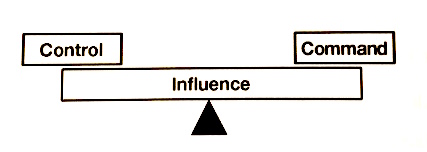
Summary in 3 sentences:  As he notes on the cover, Mike wrote this book addressed primarily to emerging and high potential leaders, but it has insights that leaders at any level can use.  He divides leadership into four domains,  and then makes the point that each domain demands that leaders understand their own strengths, weaknesses and proclivities AND understand the context in order to get the best result in each situation.  The “balance” in Leadership in Balance is finding the “fulcrum” which provides the best application of the leaders abilities within the specifics of a particular situation.

My impressions: Mike is unapologetically Army in his approach, but his approach to leadership applies in any context. He uses many examples from his career as an Army infantry officer to make his points, but also applies his methodology to the corporate sector, where he is also an experienced consultant.  I like that he emphasizes self-understanding, and broad contextual understanding as key to exercising effective leadership – noting that no two people are alike, and no two situations are alike – so at least theoretically, every interaction between a leader and the challenge s/he faces is unique.  He places a large emphasis on judgment – based again on self knowledge and contextual understanding.

The four domains of leadership discussed in the book are Communications, Adaptability , Focus, and Influence. Each gets a chapter with explanation and examples of successes and failures, often from the author’s experience in the Army.

Within each of the four leadership domains he identifies two extremes that leaders must balance.  To be effective, they must find the fulcrum between the two opposing tendencies,  in finding the best, most effective response.   In the domain of Communications, it is transmit vs receive; for Adaptability it is rigid vs flexible; for Focus it is selfish vs selfless; for Influence it is command vs control. In each of these domains,  leaders must find the fulcrum to balance their personal style at the right point between these two “extremes” that is most effective to meet the demands of a particular situation.

I found the discussion of focus most interesting.   It is important to include in the discussion of leadership how and why the leader must take care of him/herself, and not always be “selfless.”  I was happy to see him repudiate the idealistic notion that leaders must always be selfless – always sacrifice themselves and their own needs on the alter of taking care of others.  Leaders must also take care of themselves, in order to take care of their teams and others.   In order to advance in one’s career and have a larger impact, the leader must pay close attention and occasionally make sacrifices to “selflessness” in order to advance.  This is a useful discussion.

I found the distinction between “command” and “control” very valuable.  He describes these as two ends of a spectrum of how we “influence” our team to work together to achieve what it wants.  In the common vernacular, command-and-control are used together as a single concept associated with a military, top-down, directive style of leadership. Not so, says Mike. He says that the operative word in command is “why,” while in control, it is “how.”   Below is a diagram from the book.

c2-better

I felt that the chapter on communication had so much in common with the introvert-extrovert personality types in the MBTI that “introversion” and “extroversion” as basic personality types deserved a mention. But the content was quite good.

The idea of finding a “golden mean” between two extremes is an idea with a pedigree that goes back to Aristotle’s virtue ethics – where Aristotle described a “virtue” as the golden mean between excess and deficiency in a specific behavior -and whatever the virtuous  golden mean might be, differed depending on the the individual and the context.  Mike applies this idea to the virtue of good leadership.

Included in the book is a personal style assessment the Leadership Fulcrum Assessment available on his website www.bethefulcrum.com .  Those who purchase the book get a code which makes the assessment free of charge.  The assessment is ideally is taken before reading the book. but I took it afterward and found it interesting and valuable. The LFA is a self-assessment, and I and others think it also has great potential as a 360 instrument.  Mike agrees and is continuing to develop it.

Leadership in Balance is a short book – just over 100 pages and I’d give it 5 stars for what I believe Mike intended – to provide insights, perspectives and a framework to serve as a basis for in depth discussion of leadership for rising and mid level leaders.  I’d give it 4 stars for the insights it provides for more experienced leaders at more senior levels of organizations – still valuable, still insightful, still challenging, but probably most valuable for more junior and mid level leaders.

Key Take-Aways:

  1. It reinforced the importance of understanding one’s self and the value of personality and style “tests” to help one lead well.  I’d add to this the importance of  leaders seeking dispassionate feedback on their style and tendencies, in order to make better decisions in a particular situation.  So few leaders are as self-aware of their tendencies, proclivities, strengths and weakness as they need to be. This book reinforces how important that is.
  2. It reinforced the “situational leadership” principle of adapting one’s response to the specifics of a situation. There is no one-size-fits-all approach to inspiring others and getting the most out of a team.  Some principles work better, more often in more situations, but almost nothing (that I can think of) always works, always gets the best result, all the time, in all situations.
  3. There were a number of nuggets in the book that I will be able to use in my own work. For example, I mentioned his discussion of command and control. I relearned the parable of Napoleon’s corporal.  I loved the quote from Jefferson: “In matters of style, swim with the current; in matters of principle, stand like a rock.” There are many more such nuggets in this book.
Posted in Uncategorized | 1 Comment

Man’s Search for Meaning, by Viktor Frankl

mans-search-for-meaningWhy this Book: Though all of us had read it before, my three-person reading group agreed to read this wonderful little book again.   By Man’s Search for Meaning, I refer to his  Experiences in a Concentration Camp (about 100 pages) and not the follow-on longer piece explaining Frankl’s “Logotherapy” that normally accompanies it.  Man’s Search for Meaning has been recognized by many sources as one of most influential books of the 20th century.

Summary in 3 Sentences:  Viktor Frankl was a young Jewish psychotherapist practicing in Vienna, Austria, when he and his wife were arrested by the Nazis, crammed into a cattle car and sent to Auschwitz.  This book is Frankl’s  memoir of his experiences and how he dealt with the brutality, deprivations, suffering, and dying, that surrounded him and  became his life as an inmate in several Nazi concentration camps during WW2.  He shares his message of how a sense of purpose, facing one’s fate with courage and determination can give meaning and nobility to one’s life in the most austere and brutal of circumstances – when everything has been take away except the “last of human freedoms” – the ability to “choose one’s attitude in a given set of circumstances.”

My Impressions: This is an inspiring and positive book, in spite of the darkness of the world he describes.  The darkness is the context, but the focus is the light – the determination to survive, as best one can, holding on to one’s humanity, as best one can, when it seems that Love, Good, and Charity have abandoned one’s world.  The lessons he shares in the extremes of the concentration camp apply to all of us – even in our very comfortable civilized lives  – since psychological suffering takes many forms.

He discussed the experience of coping wth the concentration camp experience, in three phases:

  • The shock of entry into the concentration camp, when everything was taken away from them, and “all we possessed, literally, was our naked existence.”
  • The second phase was the resignation of being in the camp, “the phase of relative apathy in which we achieved a kind of emotional death,” in the face of the the horror, the suffering, the torture and the dying.
  • And the third phase was release and starting life anew, after they “literally lost the ability to feel pleased, and had to relearn it slowly.”   Frankl writes “Step by step I progressed, until I again became a human being.”  

In about 100 powerful pages in Experiences in a Concentration Camp Frankl gives us the essence of what he learned about himself, about others, and about suffering in each of those three phases.

This was perhaps the fifth time I’ve read this book.  I try to read it every 4 or 5 years and every time, it takes my breath away. Though there is almost no religion in this book,  the spiritual lessons are palpable.   Frankl’s story and his lessons from it remind me to invest in and reinforce the spiritual dimension of my own life.  It was really great to read it with Jay and Emily who had both also read it  before, and who were grabbed (again) by different quotes, scenes, and lessons than was I.  I did not read the Logotherapy piece with them again – they found, as I had when I read it 10 years ago, that it philosophically reinforces the message of Frankl’s story in Experiences in a Concentration Camp.

Viktor Frankl gives 3 simple rules as the source of true happiness:

  • Do work that matters
  • Love unconditionally
  • Grow from adversity.

We see all of these in action in Man’s Search for Meaning. Frankl’s own words capture the essence of this short book much better than can I.

Some (of the many) Powerful Quotes:   (no page numbers because I’m reading an out-of-print edition, and it has been reprinted so many times…)

Don’t aim at success – the more you aim at it and make it a target, the more you are going to miss it. For success, like happiness, cannot be pursued; it must ensue, and it only does so as the unintended side-effect of one’s personal dedication to a cause greater than oneself, or as the by-product of one’s surrender to a person other than oneself.  Happiness must happen, and the same holds for success; you have to let it happen by not caring about it.  (from the preface to the 1984 edition)

We knew that we had nothing to lose except our so ridiculously naked lives.

At such a moment, it is not the physical pain that hurts…it is the mental agony caused by the injustice and unreasonableness of it all.

Reality dimmed, and all efforts and all emotions were centered on one task: preserving one’s own life and that of the other fellow.

 In spite of all the enforced physical and mental primitiveness of the life in a concentration camp, it was possible for spiritual life to deepen.  Sensitive people who were used to a rich intellectual life may have suffered much pain… but the damage to their inner selves was less.  They were able to retreat from their terrible surroundings to a life of inner riches and spiritual freedom. Only in this way can one explain the apparent paradox that some prisoners of a less hardy make-up often seemed to survive camp life better than did those of a robust nature.

A thought transfixed me: for the first time in my life I saw the truth as it is set into song by so many poets, proclaimed as the final wisdom by so many thinkers.  The truth – that love is the ultimate and the highest goal to which man can aspire.  Then I grasped the meaning of the greatest secret that human poetry and human thought and belief have to impart: The salvation of man is through love and in love.

Love goes very far beyond the physical person of the beloved.  It finds its deepest meaning in his spiritual being, his inner self. Whether or not he is actually present, whether or not he is still alive at all, ceases somehow to be of importance.

The intensification of inner life helped the prisoner find a refuge from the emptiness, desolation and spiritual poverty of his existence, by letting him escape into the past.

Humor was another of the soul’s weapons in the fight for self-preservation.

We were grateful for the smallest of mercies…The meager pleasures of camp life provided a kind of negative happiness, – “freedom from suffering,” …Real positive pleasures, even small ones, were very few.

Everything that was not connected with the immediate  task of keeping oneself and one’s closest friends alive lost its value.  Everything was sacrificed to this end.    A man’s character became involved to the point that he  was caught in a mental turmoil which threatened all the values he held, and threw them into doubt.

It was, therefore, in an attempt to save one’s own skin that one literally tried to submerge into the crowd.

..fate was one’s master…At times lightning decisions had to be made, decisions which spelled life or death.  The prisoner would have preferred to let fate make the choice for him.

We all had once been or had fancied ourselves to be “somebody.”  Now we were treated like complete nonentities.  The consciousness of one’s inner value is anchored in higher, more spiritual things, and cannot be shaken by camp life.  But how many free men, let alone prisoners, possess it?   Without consciously thinking about it, the average prisoner felt himself utterly degraded.

There were enough examples, often of a heroic nature, which proved that apathy could be overcome, irritability suppressed.  Man can preserve a vestige of spiritual freedom, of independence of mind, even in such terrible conditions of psychic  and physical stress.

We  who lived in concentration camps can remember the men who walked through the huts comforting others, giving away their last piece of  bread. They may have been few in number, but they offer sufficient proof that everything can be taken from a man but one thing: the last of the human freedoms – to choose one’s attitude in any given set of circumstances, to choose one’s own way.

Even though conditions such as lack of sleep, insufficient food and various mental stresses may suggest that the inmates were bound to react in certain ways, in the final analysis, it becomes clear that the sort of person the prisoner became was the result of an inner decision, and not the result of camp influences alone. …any man can, even under such circumstances, decide what shall become of him – mentally and spiritually.  He may retain his human dignity even in a concentration camp.  Dostoyevski said once, “There is only one thing that I dread: not to be worthy of my sufferings.”

…The way they bore their suffering was a genuine inner achievement.  It is this spiritual freedom – which cannot be taken away – that makes life meaningful and purposeful.

But not only creativeness and enjoyment are meaningful. If there is a meaning in life at all, then there must be a meaning in suffering.  Suffering is an ineradicable part of life, even as fate and death. Without suffering and death, human life cannot be complete.

He may remain brave, dignified and unselfish. Or in the bitter fight for self-preservation, he may forget his human dignity and become no more than an animal. Here lies the chance for a man either to make use of, or to forgo the opportunities of attaining the moral values that a difficult situation may afford him. And this decides whether he is worthy of his sufferings or not.

It is true that only a few people are capable of reaching such high moral standards. Of the prisoners only a few kept their full inner liberty and obtained those values which their suffering afforded, but even one such example is sufficient proof that man’s inner strength may raise him above his outward fate.

It is just such an exceptionally difficult external situation which gives man the opportunity to grow spiritually beyond himself.

The prisoner who had lost faith in the future -his future – was doomed.  With this loss of believe in the future, he also lost his spiritual hold; he let himself decline and became subject to mental and physical decay.

The typical reply with which  such a man rejected all encouraging arguments was, “I have nothing to expect from life any more.”  …We had to teach the despairing men, that it did not really matter what we expected from life, but rather what life expected from us.  …Life ultimately means taking the responsibility to find the right answer to its problems and to fulfill the tasks which it constantly sets for each individual.

When a man finds that it is his destiny to suffer, he will have to accept his suffering as his task; his single and unique task. He will have to acknowledge the fact that even in suffering, he is unique and alone in the universe.  …His unique opportunity lies in the  way in which he bears his burden.

Long ago we had passed the stage of asking what was the  meaning of life, a naive query which understands life as the attaining of some aim through the active creation of something of value.  For us, the meaning of life embraced the wider cycles of life and death, of suffering and of dying.

I said that someone looks down on each of us in the difficult hours – a friend, a wife, somebody alive or dead, or a God -and he would not expect us to disappoint him.  He would hope to find us suffering proudly – not miserably – knowing how to die.

We all said to each other in camp that there could be no earthly happiness which could compensate for all we had suffered.  We were not hoping for happiness – it was not that which gave us courage and gave meaning to our suffering, our sacrifices and our dying. And yet, we were not prepared for unhappiness

Posted in Uncategorized | 5 Comments

Elephant Company, by Vicki Croke

elephant-companyWhy this book: Highly recommended by a friend of my mothers.  I was intrigued, bought it, and Mary Anne read it while I was engaged in other reading. She loved it. I was between reading group books, and decided to pick it up.

Summary in 3 Sentences: Jim Williams grew up in England, served in WW1 and signed up to work for the Bombay Teak company, deep in the jungles of Burma harvesting teak trees. This is the story of his amazing life – but most importantly of his special relationship with the elephants and the Burmese elephant handlers who were working for him. The book highlights  key events and anecdotes of his life, his special relationship to all animals, but especially with the elephants he was working with, his close relationship with the Burmese, culminating with his courageous service as a LtCol in the British Army leading elephants supporting the British Army fighting the Japanese in WW2.

My impressions: A wonderful book, beautifully written.  It is essentially the biography of Jim Williams and his experiences working in the jungles of Burma with Asian elephants and Burmese elephant handlers, called uzis.  Jim had a gift for connecting with animals in general but with elephants in particular.  The story was an inside look at the life of a British colonialist working in the Burmese jungles between the wars, but also a fascinating look at a very interesting and principled character who represented the best of what the British empire brought to their colonies, while working for a company  engaged in some of the worst of what the British inflicted on their colonies.  But the real story was about Jim Williams and the elephants.

In the introduction the author states: “…he discovered in the elephants virtues he would work to develop in himself: courage, loyalty, the ability to trust (and the good sense to know when to be distrustful,) fairness, patience diligence, kindness and humor. ‘Not a bad way to learn,’ he said, because ‘the elephant takes a more kindly view of life than we do.'”

Jim Williams grew up in Cornwall, England,  served with distinction in WW1 and then, like many adventurous young men in Victorian and post-Victorian Britain, sought adventure out on the fringes of the British empire. He signed up to leave England and go to Burma to help extract teak from the jungles.   We learn of his struggles with the old school leaders of the Bombay Teak company, how very quickly he revealed himself as a gifted animal handler.  He taught himself to do fairly advance veterinary work on his elephants, and also looked after his Burmese workers and their families. We follow him through his career, his eventual marriage to an amazing woman, his advancement to a fairly senior position – all the while staying as close to the elephants as he could, and spending as much time in the jungle as he could.

A sub-theme of the book was Jim Williams’ relationship with one particular elephant – Bandoola – who was clearly an extraordinary animal – an “alpha male” in elephant society.  The two of them shared a special connection, and drew strength from each other. Throughout Elephant Company, Williams’connection with Bandoola was one of mutual respect and admiration.

The book concludes with Williams being in charge of elephants supporting British General William Slim’s efforts to resist and then drive the Japanese out of Burma during WW2.   There is one operation in which Williams led a team of Burmese and elephants on an evacuation and overland movement that many still marvel at, which saved the lives of not only the elephants but dozens of refugees.   Bandoola was a key leader in that expedition. At the end of the war, the Bombay Teak company was finished in Burma, due to the post-war revolution that resulted in Burma’s  independence.  Williams and his family returned to Britain, where he struggled to find meaning in his life – to satisfy his love of taking care of animals and people.

The book is beautifully written. I loved the way the author tells the story -with not only understanding and excellent research, but also clear compassion for Williams, his family, the elephants and others affected by the tribulations of the time.  I have thoroughly enjoyed biographies of Victorian and post-Victorian English adventurers, such as Sir Richard Francis Burton (not the actor) and Ernest Shackleton, and Williams is cut of something of the same cloth.  Williams courtship of his wife Susan was beautifully told, and she was clearly an amazing woman herself – I just wish the author had told us more about her, and about her life.  At the end of the book I was left feeling like I was cheated of getting to know Susan Williams better.

Key Takeaways for me:

  1. Jim Williams sense of adventure and perseverance were part of what helped him not only survive, but thrive in the really difficult and austere environment of the Burmese jungle.   Key strengths of his were his belief in himself, his very positive attitude, and the love he showed for the people and elephants he was working with, and his appreciation for the beauty of where he was.
  2. Williams loved animals and clearly had  a special connection to them – they sensed that.  His respect for them allowed him to learn from them many of the virtues which made him a uniquely well-respected and impressive role model.

A few quotes: (page numbers from the paper back edition)

“It is impossible to understand much about tame elephants unless one knows a great deal about the habits of the wild ones,” Williams wrote.  46

From the men, there was regular talk of ghost tigers and tree and water spirits.  Williams himself often sensed that certain areas in the jungle felt hallowed, and usually he would discover that they were, in fact, holy places to the local people. To  walk these forests, he noted, one had to accept phenomena that were beyond logic. 88

<“Musth” is the condition of a bull elephant in heat, during which they become very aggressive and exhibit certain changes to their physiology.>  Bigger, stronger males NOT in musth will generally defer to a smaller one who is.  Bulls have even been observed running in the opposite direction when just catching a whiff of a musth bull. Receptive females, on the other hand, are attracted to them.  97

Like his counterparts back home, < Williams> as a young workingman, was learning to negotiate the adult world.  But here in the jungles of Burma, elephant society was his model.  He didn’t emulate middle-aged bankers or scholarly old college dons.  For him it was matriarchs and bulls.  106

Here on the bank of the river, was another of life’s lessons from the elephants that could be applied to people:  Dominance is not leadership.  From  animals, Williams said, people could learn about taking “authority without being a bully.”  129

As eager as Susan was to settle in, it would have to wait.  There wasn’t time to unpack boxes from England, as the couple were about to embark on their first jungle tour together. This is what Jim had been dreaming of for a decade: his life among elephants shared with his true love.  177

Posted in Uncategorized | 1 Comment