Cutting for Stone, by Abraham Verghese

Why this book: Selected by my literature reading group after 3 in the group said they’d read it before, loved it and wanted to read it again. I’m glad they did.

Summary in 4 Sentences: This novel is written in the first person from the perspective of a young man who grew up in Ethiopia at a Christian hospital with physicians and nurses primarily from India. The protagonist is one of identical twins born in the hospital under difficult circumstance – which led to the death of his mother, his father a surgeon disappearing, and a lot of mystery around what happen. The rest of the book is his story of growing up in the hospital he and his brother being adopted by two other doctors until he decides to become a surgeon and greaduates from medical school in Ehtiopia.  Political instability forces him to leave Ethiopia and emigrate to America, where he becomes a surgeon while also unravelling the mystery of his birth and his parent. 

My Impressions: Cutting for Stone is something of an epic tale of a young man’s life, that begins with his mother, a nun who had grown up in India, meeting his biological father, a doctor also from India on a ship to Ethiopia, where both of them on their way to serve.  Then our protagonist recounts his life in Ethiopia, ultimately moving as an adult and a newly minted physician to America, then finally returning to practice in Ethiopia. It is a longer book at 655 pages bit beautifully written and easy to read.  The story is told from the perspective of Marion Stone, one of twins born near the beginning of the book. It begins with Marion looking back and describing how his parents came to be in the (fictional ) “Missing” hospital in Addis Ababa, the capitol of Ethiopia.

Strengths of this book are the elegant writing, Marion’s descriptions of his childhood growing up in the suburbs of Addis Ababa in the mountains of Ethiopia, and his maturing into young adulthood.  We also learn something of the key events in Ethiopia’s history, the idol worship that many Ethiopians had for Emperor and dictator King Haile Selassie, the political unrest and efforts to overthrow him and how that political turmoil affected the people in Addis Ababa.  And then later, Marion’s fascinating descriptions of his impressions of NYC as he arrives from Ethiopia and how he adjusted to the crazy culture of Brooklyn. 

  Another key strength of the book are the many fascinating characters in Marion’s life – from his childhood and young adulthood in Ethiopia, to the people who shape his life after he gets to America.  The character development for the main characters is well done.   Our view of the characters is from Marion’s perspectives and prejudices, though Verghese does step into a “God’-eye-view”  to provide background and important insights into the lives of several of the key characters central to the story.  In that most of the key characters are surgeons, Verghese (also a surgeon) introduces us to some of the challenges and satisfactions of surgery – he walks us through some of the procedures and indeed I learned quite a few things about human biology and surgery as a side benefit to the book.

The Story Very early in the book, Marions describes – ostensibly from what he had learned from those who had been present – his own very difficult birth with that of his twin brother, and then the sudden disappearance of his surgeon father immediately after his mother died in childbirth.  Marion and his brother Shiva are then raised by two of his father’s colleagues at the hospital. A background theme and question throughout his childhood is why his father left so abruptly, abandoning his two sons, and where did he go?  Marion and his twin Shiva grow up on the hospital grounds, with medicine, surgery, disease, suffering, healing, and dying all around them. As identical twins they are initially inseparable, but eventually grow apart and actually become estranged (over a girl friend, not surprisingly)  Also, not surprisingly, they both eventually go into medicine. 

As is the case in most good novels, there are a number of love stories that move the story along – between his parents early on, between the male and female surgeons who became Marion and Shiva’s  adopted parents, the troubled love story between Marion and his childhood sweetheart, in contrast with the promiscuous Shiva’s many adventures.  But there was also the familial love story between Marion and his adopted family and care-givers in the hospital compound, the long term and troubled brotherly love story between Marion and Shiva, as well as the love – hate – love story between Marion and his biological father.

Wisdom and quotes There was also a lot of wisdom in the book, and i highlighted a number of passages.  Here are a few with page numbers from the paperback edition pictured above.. 

  • But she was also filled with a nameless ambition that had nothing to do with love.  What exactly did she want? It was an ambition that wouldn’t let her compete for or seek the same things others sought. p57…….In the last few years she’d come close to defining the nameless ambition that had pushed her this far: to avoid the sheep life at all costs. p 59
  • Wasn’t that that the definition of home? Not where you are from, but where you are wanted? p95
  • It was called “Tizita“; there was no single equivalent English word.   Tizita meant “memory tinged with regret.”  Was there any other kind, Ghosh wondered. p152
  • Maybe it was written on my face that I’d become aware of human complexity – that’s a kinder word than “deceit.”  I was trying to decide where to peg my own truth, how much to reveal about myself – it helped to have such a  steadfast father in Ghosh, never fickle, never prying, but knowing when I needed him.  p272.
  • The parable of Abu Kassem’s Slippers (p 350-351) impressed all of us. It concludes with: “If you keep saying your slippers aren’t yours, then you’ll die searching, you’ll die bitter, always feeling you were promised more.  Not only our actions, but also our omissions, become our destiny.” 
  • What human language captures the dislocation , the acute insufficiency of being in the presence of the superorganism, the sinking, shrinking feeling at this display of industrial steel and light and might?   It was as if nothin I’d ever done in my life prior to this counted.  p464
  • Being the first born gives you great patience.  But you reach a point where after trying and trying you say, Patience be damned.  Let them suffer their distorted worldview.  Your job is to preserve yourself, not to descend into their hole.  p467
  • B.C. sat back in his chair.  “Whatever America needs, the world will supply.  Cocaine? Colombia steps to the plate.  Shortage of farm workers, corn detasselers? Thank God for Mexico.  Baseball players? Viva the Dominican Republic.  Need more interns? India Philippines zindabad!” p491
  • “Call me old fashioned,” Deepak said,”but I’ve always believed that hard work pays off.  My version of the Beatitudes.  Do the right thing, put up with unfairness, selfishness, stay true to yourself…one day it all works out. Of course, I don’t know that people who wronged you suffer or get their just deserts.  I don’t think it works that way.  But I  do think one day you get your reward.” p508

And Finally Cutting for Stone was a fascinating and fun read. In our reading group, some were put off by some of the soap opera-like aspects of the love stories,  though I’m something of a sucker for that human drama. Indeed Verghese did tie up a lot of loose ends at the end, which was satisfying for me as a reader, but which, had he left more questions unanswered, it might have made it a more classic novel.  It was a worthy selection for our group and we had a great discussion – a highlight being which of the many interesting characters intrigued or inspired our readers most, 

I’d also recommend another short review of Cutting for Stone by Kelly Pettyjohn – which is very much in harmony with mine, and can be read here.

Posted in Uncategorized | 2 Comments

Catch 22, by Joseph Heller

Why this book:  Selected by my SEAL reading group for our July session. I had read it before, when I was in HS and too young to appreciate it.  

Summary in 3 Sentences.  The setting is an Army Air Corps bomber squadron stationed in southern Italy during WW2, flying bombing missions against the Nazis who occupy Italy.  Cpt John Yossarian feels he’s risked death enough and is trying various stratagems to be taken off flight status so that he can survive the war. The book is a satire not only on the unheroic Yossarian but also on the many “interesting” young men in his squadron, whose self-serving actions, fears and eccentricities are caricatures of people we all know.  While the book is a humorous satire of military culture, it is also a serious look at what combat does to men, and the various ways different people respond to military culture in war. 

My Impressions: This is a well known classic that is written in a style that is not always easy to follow.  It’s not simply about the folly of war and the unheroic sides of warfare, but also very much about human folly and human nature- about flawed characters who seem like caricatures of self-centered, small-minded and eccentric people responding in very human, humorous, and even tragic ways to the stresses of combat in a huge event that is hard to fully grasp.  Patriotism and what’s “good for America” are twisted and used to rationalize and justify nearly any action that will serve to satisfy selfish interests.

Joseph Heller has a finely tuned sense for irony and seeing and describing the absurdity and hypocrisy in people, seemingly working together, but mostly pursuing their own interests while claiming pursuit of a larger goal.  The main character, Yossarian sees this self-centered hypocrisy and wants to opt out, but the momentum of the war, the Army, the culture in his squadron, and his ambitious, self-promoting leaders thwart his every effort.

Catch 22 has two formulations: 1. A problem whose solution is denied by conflicting rules, eg “No work unless you have an agent, but you can’t get an agent, unless you’ve worked; and 2. all things are permitted that you can get away with.

Rather than a smooth flowing story,  Catch 22  is more of a collage of events broken up into chapters, which Norman Mailer described as a “crazy patchwork of anecdotes, episodes, and character portraits.”  The main character whose struggles unify the book is bombardier John Yossarian and his on-going effort to have his service completed so that he can survive the war – his primary objective.  He is a competent and capable bombardier – in fact one of the best in the squadron – but he is unapologetic about his fears.  His efforts to get off flight status continue to be thwarted by his squadron commander Col Cathcart who keeps raising the number of combat missions that a flight crewman must complete before being taken off flight status.  In most squadrons, after 40 combat missions, a pilot has risked enough, has done his duty and is taken off flight status.  Col Cathcart raises the number each time many of his pilots reach the required number, so that he keeps his most experienced pilots in the squadron, as he volunteers for the most dangerous missions (which he does not go on) in his quest to be promoted to General. 

Sometimes it seems that Yossarian is the only semi-sane character in the book. I was reminded of the old TV series Green Acres in which the character played by Eddie Albert lives in a community of dimwits and fools –  only in this case, they are Colonels and Majors, and flying airplanes and dropping bombs in war.   Yossarian is the only character who seems to be aware of the irony in their circumstance, the craziness of how they are conducting the war, and is self-aware enough to have a reasonable perspective on what is going on.  He admits his fears, his pain, his cowardice, and unapologetically schemes to use the absurd system to fulfill his goal of surviving the war. 

Yossarian also participated in the craziness and debauchery of the squadron when they go to Rome during their time off, to blow off steam, get drunk, and have orgies with the very available prostitutes who make their living servicing soldiers on leave. These are fun chapters to read, about young men, like young men everywhere, especially in the military, and especially during war, prone to alcohol fueled extremes, ungoverned by reason, wisdom or maturity.  Fun is fun, the crazier the better, and Catch 22 is always in play.

I recently spent an afternoon listening to stories from a retied SEAL friend of mine describing crazy incidents with his SEAL platoon in Vietnam – how they ignored authority and rules, thumbed their noses at common sense, water skiing down the Mekong river with fire-fights going on around them, debauchery that rivaled what Heller describes in Catch 22.  He loved Catch 22.  No wonder the book resonated so well with Vietnam veterans!  

A few of the more memorable characters in Catch 22, in addition to Yossarian: 

  • Milo Minderbender who used his position as supply and mess officer to create a financially lucrative network trading, buying, selling, speculating across all of Europe and beyond makng lots of money but always claiming that what is good for the the men is good for America. A caricature of the ingenious businessman who’ll rationalize everything for the sake of profits. 
  • Major Major who was promoted to Major by a computer glitch, is made a leader because he would be ignored, is only a figure-head section leader, who wouldn’t see anyone or do anything.
  • Col Cathcart – the commander whose sole ambition in the war was to become a general.  He distrusted anyone who might get in the way of that ambition, and would kiss the butt of any senior officer who might help him.
  • LtCol Korn Cathcart’s hard-nosd, but slimy Executive Officer who is clearly smarter than Cathcart his boss, and is also a self-serving schemer who advises Cathcart in how to get ahead, so that he can get ahead on his coattails 
  • Lt Scheisskopf who had been Yossarian’s ridiculously narrow-minded and pedantic company officer in his basic officer training, who, by the end of the novel has been promoted to LtGeneral.
  • Cpt Nately from a wealthy family, straight arrow patriot, wouldn’t violate his Christian principles, believed in his service as supporting a great cause, with a traditional view of duty and heroism.  He fell madly in love with a prostitute in Rome – who found him boring and uninteresting.
  • Maj Orr – an eccentric outcast, very smart and competent pilot, Yossarian’s tent mate who has a propensity to get shot down and land his plane in the ocean. The one character in the book who outsmarts everyone and the system in the end. 
  • Nately’s Whore  when the boys went to Rome for their regular debauch, she was always there, and serviced any of the men who would pay her, much to Nately’s disappointment. In the end, she plays an even more absurd role, trying to kill Yossarian for giving her bad news. 
  • Chaplain Tappman An Anabaptist minister, essentially a good man but who is shy, self-conscious and submissive, he is ignored and disrespected, by the men, squadron leadership, and his subordinate, Sgt Whitcomb. He is homesick and yearns for his wife and family.  But Yossarian treats him with respect.   

By the end of the novel it is clear that the humor and absurdity have a very tragic side, and I had already begun to side with Yossarian in his efforts to not be a part of it.  We also see in Yossarian a more humane side, as he gets emotionally involved with his girlfriend(s) sees the horror of what the war has done to Rome, feels the pain and loss of so many of his friends.  There is a chapter toward the end where Yossarian is walking through Rome at night and observes some of the worst in human behavior, of violence begetting violence, of people using whatever power they may have to harm or exploit those who are unable to fight back.

SOME QUOTES from the book representative of Heller’s sardonic wit and insights about the self-delusional way people think: (page numbers from the paper back version pictured above)

  • That men would die was a matter of necessity; which men would die, though was a matter of circumstance, and Yossarian was willing to be the victim of anything but circumstance. p68
  •  Everyone agreed that Clevinger was certain to go far in the academic world.  In short, Clevinger was one of those people with lots of intelligence and no brains, and everyone knew it except those who soon found it out….He knew everything about literature except how to enjoy it. p68
  • It was the despair of Lieutenant Scheisskopf’s life to be chained to a woman who was incapable of looking beyond her own dirty, sexual desires to the titanic struggles for the unattainable in which noble man could become heroically engaged.   p73
  • Major Major had been born too late and too mediocre.  Some men are born mediocre, some men achieve mediocrity, and some men have mediocrity thrust upon them.  With Major Major it had been all three. Even among  men lacking all distinction he inevitably stood out as a man lacking more distinction than all the rest, and people who met him were always impressed by how unimpressive he was. p83
  • Open your eyes Clevinger. It doesn’t make a damned bit of difference who wins the war to someone who’s dead. p123
  • “You know, that might be the answer – to act boastfully about something we ought to be ashamed of. That’s a trick that never seems to fail.”  p139
  • Yossarian laughed and turned her arms loose. “Let’s have a little more religious freedom between us,” he proposed obligingly.  “You don’t believe in the God you want to, and I won’t believe in the God I want to. Is that a deal?” p180
  • Col Cathcart lived by his wits in an unstable, arithmetical world of black eyes and feathers in his cap, of overwhelming imaginary triumphs and catastrophic imaginary defeats.  He oscillated hourly between anguish and exhilaration, multiplying fantastically the grandeur of his victories and exaggerating tragically the seriousness of his defeats.  p188
  • The colonel (Cathcart) was certainly not going to waste his time and energy making love to beautiful women unless there was something in it for him.  p211
  •  The old man continued, “The frog is almost five hundred million years old. Could you really say with much certainty that America, with all its strength and prosperity, with its fighting man that is second to none, and with its standard of living that is the highest in the world, will last as long as….the frog?”               Nately wanted to smash his leering face. p243
  • The chaplain had mastered, in a moment of divine intuition, the handy technique of protective rationalization, and he was exhilarated by his discovery.  It was miraculous.  It was almost no trick at all, he saw, to turn vice into virtue and slander into truth, impotence into abstinence, arrogance into humility, plunder into philanthropy, thievery into honor, blasphemy into wisdom, brutality into patriotism, and sadism into justice.   Anybody could do it; it required not brains at all.  p263 
  • “Catch -22 says they have a right to do anything we can’t stop them from doing.”   “…Didn’t they show it to you?” Yossarian demanded. “Didn’t you even make them read it?”  “They don’t have to show us Catch-22,” the old woman answered. “The law says they don’t have to.”    p407
  • Catch-22 did not exist, Yossarian was positive of that, but it made no difference.  What did matter was that everyone thought it existed, and that was much worse….  p409
  • Colonel Korn nodded approvingly. “That’s good. I like thew way you lie. You’ll go far in this world, if you ever acquire some decent ambition.”  p422

The 50th anniversary edition of Catch 22 that I read concluded with essays about the book by prominent literary figures Norman Mailer, Alfred Kazin, Anthony Burgess, provided added perspectives, to include how the book came about, Heller’s process, how it was received, controversy and popularity. I would also add that the introduction in the 50th anniversary edition by Christopher Buckley (Wm F Buckley’s son) also provides great perspective on the book.

For me it was not easy to get through the beginning – it seemed unfocused and uninspiring, though often quite humorous.  About half way through, it started to flow for me, and the unfocused beginning started to make sense. By the end, I was truly into it, sensed the humanity of the book, and was very glad I’d read it.  

Posted in Uncategorized | Leave a comment

The Fall, by Albert Camus

Why this book: I’d read it before and recall being quite impressed with it.  I’ve also found other books by Camus insightful and provocative  – The Stranger, The Plague.  A friend of mine had a copy of  she was trying to give away, and I accepted this one and was interested in reading it again.

Summary in 3 sentences: This is the story of a man who had achieved all that most men would aspire to in life, as an attorney in Paris: a successful career, a great professional and social reputation, respected within the best societies, toasted as a generous philanthropist, and having had amorous affairs with many beautiful women.  And when he was at the apogee of his success, he walked away, escaping to Amsterdam where he lives alone and spends his evenings as a bar-fly in a seedy bar, sharing his story about how hollow, phony, hypocritical his life had become to any one who would listen.   This book is all in the first person, as he tells his story to another patron he’s met in the bar.

My Impressions: The Fall is a short book – 147 pages of relatively large print in the version I read (not the one pictured here).  It begins with Clamence, an expatriate Frenchman, seemingly bragging about the life he’d lived in Paris, all he’d accomplished and how much success he’d had. “But just imagine, I beg you, a man at the height of his powers, in perfect health, generously gifted, skilled in bodily exercises as in those of the mind, neither rich nor poor, sleeping well, and fundamentally pleased with himself without showing this otherwise than by a felicitous sociability. You will readily see how I can speak, without immodesty, of a successful life p 27 And a bit later he notes:    “I have to admit it humbly, I was always bursting with vanity…I, I, I is the refrain of my whole life, which could be heard in everything i said.” 

Then he gets into how so much of his persona was for show, intended to impress, but not truly authentic.  He shared how he realized that so much of what he was doing was in order to be judged positively by others in his successful  and wealthy social circle  – but he intimates, that those whose admiration he sought and had won, were themselves playing the same game.  When he judged himself, he realized he was not really who he pretended to be, that he was indeed a phony, and eventually couldn’t stand himself any longer.  

His relationships with women, about which he goes on at some length, are exploitative and manipulative.  “Sensuality alone dominated my love life.”  p58 There appears to have been little true intimacy or emotional connection, though he enjoyed the company of his many lovers, as they kept him from being bored – until indeed they did bore him, and then he moved on to a new conquest.  “In as much as I needed to love and be love, I thought I was in love. In other words, I acted the fool.” 99  Given the relatively superficial nature of his relationships, he was able to sometimes keep more than one lover at a time.  “I used to advertise my loyalty and I don’t believe there is a single person I loved who I didn’t eventually betray.” p86

The main themes I took out of this book were that this man Clamence is much more thoughtful and introspective and honest with himself than most men who pursue the lifestyle he had enjoyed in Paris – and that is why he eventually couldn’t stand the hypocrisy of his superficial life and inauthentic values.  As he judged himself, he realized that he feared being judged – because he knew he was such a phony.  He imagined his “friends” – his adoring public – laughing at him.  

He writes: “My friends hadn’t changed. On occasion, they extolled the harmony and security they found in my company. But I was aware only of the dissonances and disorder that filled me.  I felt vulnerable and open to public accusation. In my eyes my fellows ceased to be the respectful public to which I was accustomed…and they lined up in a row as on the judge’s bench.” 78

He even noted that telling his story is an attempt to appear wise and insightful and honest to those to whom he related it.  He does find comfort and absolution in admitting his “guilt.”   He in fact takes pride in it.  ‘The more I accuse myself, the more I have a right to judge you.  Even better, I provoke you into judging yourself, and this relieves me of that much of the burden.” p140

He writes that in his current Amsterdam life, “I haven’t changed my way of life; I continue to love myself and make use of others. Only the confession of my crimes allows me to begin again lighter in heart and to taste a double enjoyment, first of my nature, and secondly of a charming repentance….Since finding my solution, I yield to everyone, to women, to pride, to boredom, to resentment….Once more I have found a height to which I am the only one to climb and from which I can judge everybody.” p142 

He talks about how he had come to realize that  freedom is not a prize and a privilege,  but is a burden –  knowing that one indeed does have choices but also much responsibility. “Once upon a time, I was always talking of freedom.  At breakfast I used to spread it on my toast. I used to chew it all day long and in company, my breath was delightfully redolent of freedom.”  But then he later notes that he had finally come to realize that  “freedom is not a reward or a decoration that is celebrated with champagne, Nor yet a gift, a box of dainties designed to make you lick your chops.  Oh no!  It’s a chore, on the contrary, and a long distance race, quite solitary and very exhausting…At the end of all freedom is a court sentence; that’s why freedom is too heavy to bear, especially when you’re down with a fever, or distressed, or love nobody.”  p133

He addresses religion’s effort to deal with the problem of guilt – the guilt that comes with living in human society.  “Believe me, religions are on the wrong track the moment they moralize and fulminate commandments. God is not needed to create guilt or to punish.  Our fellow men suffice, aided by ourselves. You were speaking of the Last Judgment.  Allow me to laugh respectfully.  I shall wait for it resolutely, for I have known what is worse, the judgment of men…..Don’t wait for the Last Judgment. It takes place every day”. p 110,111

He tells a story of having been alone on a bridge many years ago in Paris late at night and having been approached by a young woman.  He turned and walked away, and a moment later,  he heard a splash and a scream in the water below the bridge.  He looked back and the woman was no longer on the bridge. He then continued to walk, and did nothing, notified no one, and didn’t even check the papers the next morning. His sense of guilt and cowardice has remained with him ever since.

The Fall is a disturbing book, but it is impressive in its simple style – as a first person monologue, one side of a conversation, as the narrator is confessing his own cowardice, sense of guilt and inauthenticity, to another man he’s just met, describing feelings and sensibilities that he believes we should all feel to some extent, but are afraid to examine or admit..  The back page of my copy says it well – describing it as a “monologue on the human condition” which “implicates us all.”

(page numbers refer to where the quotes are found in the  First Vintage International Edition 1991, which I read, and are included primarily for my own benefit.)  


Posted in Uncategorized | Leave a comment

On Call in the Arctic – A Doctor’s pursuit of life, love, and miracles in the Alaskan Frontier, by Thomas Sims

Why this book: I continue to be inspired and fascinated by Alaska – especially remote areas.  I saw this book in a used book store in Florida, and picked it up.

Summary in 3 Sentences: As Tom Sims was finishing up his medical internship in 1971 on his way to becoming a practicing physician, he got a letter from the draft board telling him to report to his local recruiter, which he knew would probably mean being sent to Vietnam.  Recently married with a child, he accepted as an alternative an offer to join the Public Health Service in Alaska (part of the Uniformed Services of the US) and after reporting, learned that he would be the lone doctor in Nome and a radius of close to 150 miles. He spent just short of 2 years there and this book is him telling his story in the first person, chronicling his challenges, adventures, life and other amazing experiences as the only doctor in a small town on the Bering Sea above he arctic circle, 50 years ago.   

My Impressions: This was a fascinating memoir of about 2 years in the authors life. The book is written in a first-person, conversational and personal style, as if he were sitting with the reader and telling the stories.  The chapters are short, the print is easy to read, and these 307 pages were fun and went by quickly.  

He begins with a little bit of background on himself and his life, and the series of events that led to him finding himself in Anchorage, getting a very brief indoctrination into being in Alaska, the Public Health Service and his role in it.   In very short order, he, his very pregnant wife Pat and their daughter were on a plane to Nome, where they would live for the next 20 months.  Sims is humorous in describing his introduction to government military bureaucracy -very different from being an intern in a civilian hospital in California. 

His introduction to his new life in Nome was not auspicious.  His home was temporary, he had very little support, his personal goods wouldn’t get there for months, his wife was soon to give birth – and he was quickly thrust into the breach of being the only doctor in that entire region.  The nurses and assistants in what passed for a “hospital” were hard working and resilient, but from day one, he was on- call, largely on his own, and expected to respond to cases 24/7/365.  

He shares with us the challenges of adapting to an austere life in Nome which indeed was a good sized town by remote Alaskan standards.  But the meat of the book is the author relating stories of medical emergencies he had to deal with, for which he had little to no training, and very little support. He was on his own to improvise and trust his instincts to save people’s lives, under very austere conditions, and he shares numerous such incidents – some in Nome itself, and some in remote villages where he had to fly in to deal with a crisis which demanded immediate personal attention.

The remote Eskimo villages each had a health and medical advisor who could contact the hospital in Nome for guidance or counsel,  or to report serious incidents that might require the doctor’s presence. In emergency cases, Dr Sims would call on one of the bush pilots to fly him out to the village, where he could treat the patient in person, and occasionally, a patient would have to be flown to Anchorage if the problem required advanced care or facilities. In one case, he was flown to a village, saved a patient’s life, and then a storm came in and it took him 9 days to get back to Nome. And just getting back to Nome proved to be an edge-of-the-seat adventure in its own right. 

During the winter, Nome only got a few hours of daylight per day, and then total darkness. Sims became depressed and struggled with the lack of daylight, experiencing a condition known as SAD – Seasonal Affective Disorder.  He describes how slowly after 21 Dec, they got a few more minutes of daylight per day and slowly he recovered.  He also described the breaking up of the ice in the Bering Sea in the spring as a remarkable and dramatic event, with what sounded like explosions and the crashing of the huge ice blocks against each other.  

Sims and his wife established close relationships with the local community and made many friends.  They were’n’t always welcomed though – there was jealousy on the part of one of the other senior government officials in Nome, who was jealous of Sim’s close ties and credibility with the locals and he sought to make Sims’ life difficult.  One of the older local indigenous women resented that Sims and his family had integrated so well with the indigenous community; she didn’t like that their popularity lent credibility to some of their “white culture” practices and many of the locals enjoyed participating in such things as a fourth of July parade. 

The book concludes with Sims being offered another position in Anchorage, which would give him and his family access to many of the comforts of the lower forty-eight, as well as a position that gave him regular hours, and thus more time to be with his family. He was happy to leave the harassment from the other senior official in Nome, and being on-call round the clock 365 days a year, but he knew he would miss the intimacy of small town living. The final chapter is an epilogue which shares that Sims and his family then moved to a small town in Oregon with many of the charms of Nome, but without the many inconveniences. 

This is short and fun book provides insights not only into life in remote towns in northern Alaska, but also the tribulations of medical doctors treating people in remote areas with little support. This is a great book for people like me who are fascinated with Alaska, its culture and people and how intrepid men support people living on the edges of civilization.  


Posted in Uncategorized | Leave a comment

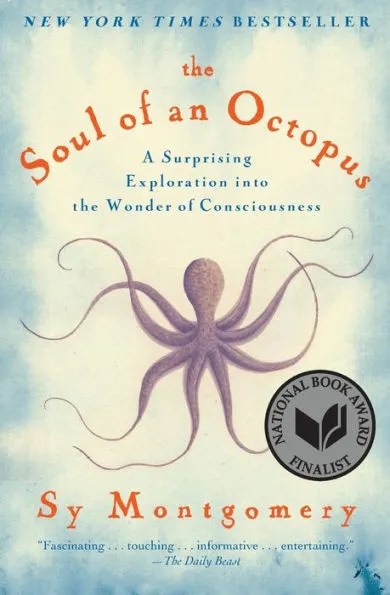
The Soul of an Octopus – an exploration into the wonders of consciousness, by Sy Montgomery

Why this book:  I loved An Immense World which gives a lot of attention to the octopus,  and I had really enjoyed the Netflix documentary My Octopus Teacher. My wife had read The Soul of an Octopus twice and highly recommended it.  The author has written several successful and highly regarded books on the natural world.

Summary in 3 Sentences: This book is Sy Montgomery’s personal exploration into how octopuses live, behave and have many human-like abilities and emotions. She writes in the first person, full of fascination and energy as she tells of her experiences and in fact relationships with several octopuses in the New England aquarium, as well as digressing to describe research and the experiences of many others who’ve made octopus research their life’s passion.

My Impressions:  What a fun and fascinating book, full of joy, new insights, the wonder of learning about a species so very different from humans, but with abilities that in some cases put us to shame. A large source of her information and experience comes from becoming a part of the Octopus team at the New England Aquarium in Boston, and we get to know the various members of that “team” of octopus followers and how their relationships with different octopuses have affected them.

Additionally, she visits and spends time at other aquariums that have octopus tanks. and shares what she learns from them that adds to what she experiences in Boston. And finally, she learns how to SCUBA dive, a process which didn’t come easy to her, but which she also describes. As  then as a certified SCUBA diver, she takes us on diving expeditions to other parts of the world with researchers in octopus behavior and biology and she shares those experiences with us.

A few things about the octopus that people may not know:

  1. They recognize individual people and can be affectionate and playful
  2. Every octopus has a different personality -some are reserved, others outgoing and social, others aggressive.
  3. They display emotions in their behavior as well as in how their coloring changes.
  4. They have 3 central brains, but each of their tentacle receptors also has neurological decision making, brain-like abilities. The central brain(s) is more like a federal governor.
  5. Different species of octopus which live in different parts of the world can behave very differently. Fore example most octopuses are solitary creatures, but there are species which live and work together. 
  6. When octopuses mate and lay their eggs, they have fulfilled their biological function and (in most octopus species) when male octopuses mate, they die soon after.  When a female octopus lays its egg, she protects them until they hatch and then dies soon after.  

Montgomery concludes her book with a chapter entitled ‘Consciousness’ and raises the question of whether octopuses have self-consciousness and to what degree can we compare their consciousness with ours. 

She writes, “But what is the soul? Some say it is the self, the ‘I’ that inhabits the body…..Others say that soul is our innermost being…..One calls soul ‘the indwelling consciousness that watches the mind come and go, that watches the world pass.’  Perhaps none of these definitions is true. Perhaps all of them are.  But I am certain of one thing as I sit in my pew: If I have a soul – and I think I do – an octopus has a soul, too.”  (p 227-8)

This is not only a fascinating book, it is a fun read as we explore this very different world – not only of the octopus but also other marine life in the world in which they live – from the joyful and fascinating perspective of a woman who is in love with her subject.  It is uplifting and enlightening. The big message one takes from this book is that the world of marine life is much more complex and fascinating than most of us realize, and the octopus is a prime example of that.  It is humbling.  There is SO much we don’t know, understand, or appreciate in the world, and especially in marine life.  


Posted in Uncategorized | 1 Comment

Klara and the Sun, by Kazuo Ishiguro

Why this book:  Selected by my Science Fiction Reading Group which has decided to focus on how AI plays out in Sci Fi especially with the possibilities of AI and humanoid robots.

Summary in 4 Sentences: Klara is an Artificial Friend (AF)  who has been purchased to serve as a friend and companion to a young girl who is afflicted with a long term disease.  The book is written in the first person  through Klara’s eyes in her role as a friend and companion to a young girl, and Klara in this role becomes engaged not only in the young girl’s life, but also in the lives of those around her – her family and friends, and their close friends – not acting as a mere machine, but not as a human being either.  We experience drama that is common in the relationships people have with close friends and family in their lives, but as experienced through the perspective of a very perceptive non-human AI robot.  The novel concludes with some fundamental questions about the interface between humans and extremely intelligent and human-like AI robots. 

My Impressions: An interesting and provocative book telling a story that brings to the surface issues that our culture is now beginning to face.  As we begin to wrestle with the rapidly increasing capabilities of AI and ChatGPT, Ishiguro writes a novel in the voice of a robot who was serving as an Artificial Friend (AF) for a young girl who is struggling with an illness. The story is told entirely from the perspective of Klara, the AF, and we experience the world through “her” eyes.  It  takes a while to adjust to her AI perspective when she describes the world and the people in it, but how Klara perceives the world (definitely differently from most of us) is an important part of the story

The story begins in the store which sells Artificial Friends and as we are reading Klara’s voice, it is initially not clear who she is or what is happening.  But slowly Ishiguro gives us clues and the story starts falling into place.  The first part of the story takes place in the AF store and we get to know Klara, how she sees the world, some of the dynamics in a store which sells robotic AFs.  We get a clue regarding the title when we learn that AFs are energized by solar power and need to be recharged by sunlight.   We learn that AFs seem to have their own personalities and character qualities – each one different.  My own opinitos is that Ishiguro made them a bit too similar to people, but Klara’s personality and character ,and her detached AF perspective are an important part of the book.  Eventually Klara is selected and purchased to be a friend and companion to Josie, a young girl about 13 years old who is not well.  . 

Klara goes home with Josie and her mother, and in the next portion of the book, we get to know Josie, her mother, the housekeeper, and Josie’s boy friend Rick through Klara’s eyes.  And we begin sensing that  something uncomfortable is going on.  We learn that Josie has an undetermined long term, debilitating  illness and her mother is very stressed about that.  But we are not only getting to know Josie and her home environment, but we are also getting to know Klara, as she serves Josie as a friend and helper. Klara shares with us her observations, what she perceives is going on, without judgment.  At this point in the book, I was beginning to wonder where this was going.  But as I suspected, it was building to something more interesting, and dramatic, which I’d prefer not to reveal without a spoiler alert. 

Josie and her mother connect with an artist doing a “portrait” of Josie and in that process, we meet Josie’s father, divorced from the mother, and we get insights into their fractured relationship. Klara observes the tension between the two of them, and Josie’s reaction, and we learn of tensions in the household of Josie’s boyfriend Rick, between him and his mother.  Klara gets pulled into all of these complicated relationships as a dispassionate observer, asked for her advice and perspective. Again, her dispassionate and selfless perspective and insights are interesting and provocative, as she is drawn into very contentious and emotional interpersonal issues.  .

Klara is very intelligent, very observant, curious and thoughtful, has been programmed to behave in accordance with values of service and compassion. She is very human-like, with a couple of caveats – she doesn’t get bored, she doesn’t need to eat, sleep, or have any of the other biological functions of humans, but she can be sad,  disappointed, or pleased,  and she seems to be completely selfless.  In many way Klara is moving toward an ideal – it occurred  to me that she resembles in many ways my image of a Zen Master – compassionate, caring, constantly observing, acknowledging,  but not judging. 

But she also has some flaws in her reasoning based on an incomplete perspective and inadequate background or programming. For example, she assumed that since she gets energized by he sun, and sunlight cures whatever ails her and other AFs, she believes that these powers of the sun extend to humans as well.  She also assumed that because AFs exist to keep humans company, there is nothing more important to humans than avoiding loneliness.

In the end I see the following issues that Ishiguro novel brings up

  1. Is there something unreachable, un-programable deep inside a human that can’t be replicated in a superbly competent AI Robot, well-programmed to be as human-like as possible?
  2. Does a human-like AI have rights?  Klara is sometimes treated as if she were human, other times as if she were a piece of practical machinery, like a vacuum cleaner, to be ignored or discarded when convenient.
  3. What does it do to a human to treat an almost-human AI as a mere servant, a mere means to one’s ends and ultimately disposable?
  4. The emotional and personal issues that Klara observed in the tense relationships between Josie and her mother, between Josie’s mother and her ex husband, between Rick and Josie, between Rick and his mother, between Rick’s mother and her former lover contrast starkly with Klara’s life and perspective.  Are THESE the essence of being human – compared to the dispassionate reasonableness of Klara? 

I felt that Ishiguro made Klara a bit too human – with feelings such as fear, sadness, anticipation and excitement, pleasure and disappointment that are not currently considered part of the AI robotic portfolio.  Klara didn’t simply express and exhibit these emotions – the way Ishiguro wrote the story, in the first person from HER perspective, she actually seemed to “feel” these emotions as she expressed them to us the readers, and she seemed to be indeed “self” conscious.  In my mind those are huge steps from being a smart computer toward being near-human.   But if I’m correct in assuming that the above four issues were Ishiguro’s main points, her near-humanity helps make those points and highlights those issues. 

Klara and the Sun is not a difficult read, but it takes a bit of faith in Ishiguro to hang with it.  It moves along slowly at first, as he sets the scene, introduces us to Klara, the AI perspective and the environment in which she is serving her role. About 2/3 of the way through the book, the drama begins which was for me worth waiting for.  The ultimate drama delivered to the reader the issues I think Ishiguro wrote the book to highlight.  It will be a good discussion in my Sci Fi reading group.  

Posted in Uncategorized | Leave a comment

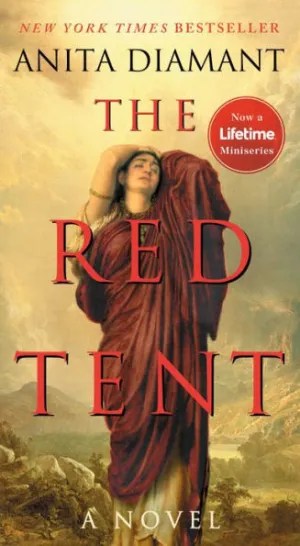
The Red Tent, by Anita Diamant

Why this book: Selected by my literature reading group as an appropriate shorter female oriented follow- up to the much longer and very male-oriented previous  book we’d read, The Count of Monte Cristo.

Summary in 3 Sentences: An autobiographical novel written in the first person by a woman living in biblical, pre-Judaic times telling her life’s story.   The author chose Dinah, an obscure person in The Book of Genesis, a great granddaughter of Abraham, and gives her a voice to tell a novelized version of her life’s story, which reveals much about life in the Near East several thousand years ago. The first half of the book Dinah coming of age as the daughter of Jacob and one of his  wives, but since polygamy was normal in those times, Dinah had several other “mothers” – other wives of Jacob, who lived in the red tent who took care of each each other as sisters, and each other’s children. As Dinah matures into womanhood – which in that day meant child bearing age – her life changes rather surprisingly and dramatically, and the remainder of the book is about her transition into becoming a woman and a mother and her later adult life, which includes trauma and several unexpected turns of events, as she has to move to Egypt. 

My Impressions: Powerful book.  Fascinating context and glimpse into life in an era so much different from our own.  Dinah, the narrator and protagonist in this book, is a quiet and precocious young girl who shares with us her feelings and impressions of the world in which she lives and the extended family of which she is a part. She is believable and likable.  Most of the key characters in the book are women; her father Jacob is described in affectionate terms, but he is distant and busy with the work required to care and feed his large family.  

Dinah is the only daughter of the four wives of Jacob and as such she has a special status in the red tent of Jacob’s wives. As she grows up she becomes close with one of Jacob’s other wives who is a midwife. Dinah eventually accompanies her “auntie” in delivering babies, and over the years, she becomes skilled in midwifery herself.   She has favorites among Jacob’s other wives – her other “mothers,” as well as favorites among her many male siblings.   Her “milk-brother” Joseph was her close pal growing up – milk brother meaning they both nursed from the same woman at the same time frame.  A couple of her half-brothers tormented her, others she was indifferent and not particularly close to her.  As soon as the boys were old enough to follow adult guidance, they were out with their father helping with the sheep and goats, while Dinah helped the women in women’s work.

The first third to half of the book is Dinah describing her child hood and life in and around the red tent.  We follow Jacob’s large family as they move to another area to reconnect with Jacob’s brother Esau, and we are exposed to a different culture, a number of new characters in Esau’s family, and the challenges of travel in those days.  Here we meet another strong figure, Jacob’s and Esau’s mother, Isaac’s wife, a stern and shamanistic old woman known as The Grandmother.  She was the keeper of traditional values, possessed para-normal powers of healing and clairvoyance, and had a retinue of women servants known as ‘the Deborahs’ – as they all had the same name, and were virgins, committed only to her service.   

The Red Tent refers to the women’s tent and the menstrual cycle that is required to be a full fledged member of that tent. Pre-menstrual girls were only rarely allowed in, and the red tent was where the society of women kept secrets from men, and it was a major breach of trust for a woman to share with men what she’d heard and learned in the red tent.  A sense of mystery was cultivated. 

When Dinah finally has her first menstrual cycle, there are rituals and ceremonies that go with that key transition, and she becomes a full fledged member of the red tent.  A woman’s monthly cycle gave her the privilege of three days of being idle in the tent, to relax, and celebrate.  Naturally all the women’s cycles synchronized, so this was a special period of communion among the women.

Soon after Dinah’s first menstrual cycle, the book takes a sharp turn as Dinah falls in love, becomes pregnant and tragedy ensues which forces Dinah to move to Egypt.  The next phase of the book is her life in Egypt – a very different culture and life than she had lived in Canaan.   She joins a different family group, and her experiences as an adult woman and mother take a number of different turns.   This is a fascinating period and Dinah indeed lives the rest of her life in Egypt, but we see some of the earlier characters reappear.  In order to avoid a spoiler alert, I’ll leave it at that.

I thoroughly enjoyed the story, the Dinah character and immersing myself in the culture of that part of pre-western history,  well before Christian times.  As different as those times, customs and cultures were from our own, one of the key takeaways was how the humanity of the people of that time shines through as not so different from our own. Most of the key characters of the book – Dinah, her mothers, her mentors, close friends women;  men did not play a major role in the story, except for a few key scenes and incidents that indeed drove the story.  The author noted in her notes at the end of the book, that though most of the feedback she’d gotten on the novel had been from women, she had also gotten positive feedback from men, one of whom she quoted as saying he “enjoyed a sense of getting ‘fly-on-the-wall’ insights into women’s hearts.”  That describes my response as well.  I believe I got some important insights into women’s perspectives on a number of things that surprised me.  

I think men and women both would enjoy this book, but will get different lessons and takeaways.  

Posted in Uncategorized | 1 Comment

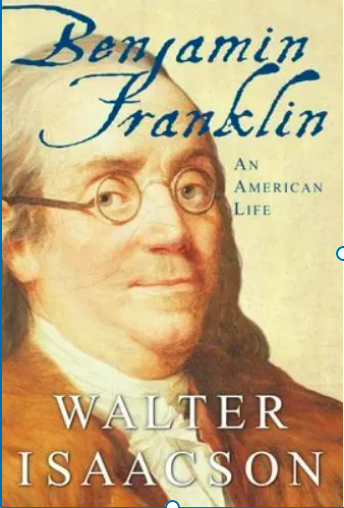
Benjamin Franklin – an American Life, by Walter Isaacson

Why  this book:  I’ve had this book on my shelf for years, had never gotten around to reading it, but have always been fascinated by Benjamin Franklin.  So I decided to listen to it on audible.  I find biographies easy and enjoyable to listen to on long bike rides or car trips.  But listening doesn’t allow me to underline nor make notes in the margins, so I have to rely on my memory and impressions to write a review.

Summary in 3 Sentences: This is the story of Benjamin Franklin’s life from his birth in 1706 to his death in 1790. It is also a fascinating lens through which to look at the founding of not only the American experiment in government, but also a key period in the formation of American culture and values.  We learn in this biography not only the facts of Franklin’s life, but also what shaped his character, his strengths and weaknesses, and the great impact he had on the forming of the American government and American culture. 

My Impressions:  A great biography of a fascinating man, which deserves its reputation as one of the best. This book confirms what I had always heard and understood –  that Franklin was one the most fascinating of our founding fathers.  A thoroughly enjoyable personality and a fascinating life described in a bio that is beautifully written by a Pulitzer prize winning biographer.  

Isaacson’s bio begins with Franklin’s family ancestors living in England.  His father emigrated to the Colonies where Benjamin was born in 1706 as the 15th of 17 children his father Josiah had by two wives.   The book roughly outlines his childhood and development as a young man.  From early on Franklin was a gifted communicator – writer, essayist and satirist.  As 15 or 16 year old teenager, he began writing his first newspapaer columns as letters to the editor from the perspective of a middle class, middle-aged widow under the pseudonym of “Silence Dogood” commenting on issues of the day, and concerns of normal middle class people, based largely on his own personal perspectives and what he’d heard from friends and neighbors. These letters were well received, and were cleverly enough written that few suspected that they were from the pen of a teenaged boy. He stayed in the newspaper printing business for much of his life, writing satirical social commentary and political criticism under various pseudonyms, eventually graduating to writing the still popular Poor Richard’s Almanack. 

As a young man Franklin was resourceful, charming and always seemed to land on his feet. He made people comfortable and people liked him – except when they were competing with him, and found that his cleverness and ability to charm others and make friends easily made him a formidable opponent.  When work became hard to find in the colonies, at the age of 18 he found his way to England where he lived and worked as a typesetter and printer for 3 years before returning to the colonies and becoming a successful printer and newspaper publisher.  

This bio covers what Isaacson believed were not only those things that developed his character, but also so much that revealed his character as well.  He was a natural organizer and a subtle leader; he was able to take a stand on controversial issues without alienating too many people in the process, including those who disagreed with him.  He frequently found himself serving as a bridge between competing factions as he grew up, and which eventually led him into that role as the colonies grew apart from Mother England and tensions mounted.  He loved England and English culture, while also loving America and the middle class culture that was blossoming in the colonies.  He had a lot of influence with reasonable people on both sides of the tension between the colonies and England, but was not trusted by the most extreme advocates of either side.   In fact Franklin initially opposed separation from England – he wanted to maintain a relationship akin to what England eventually developed with its commonwealth partners. 

As tensions mounted, Franklin spent a number of years representing the colonies in England, but failed to soften Parliament’s over-bearing attitude toward the colonies – and his moderating influence and position cost him credibility with both the English aristocracy, as well as the colonial firebrands.  During the Revolutionary War, he represented the colonies to France and played a key role in winning their support which was crucial to the eventual success in the War of Independence.

Throughout Franklin’s story Isaacson describes his love for but neglect of his wife, Deborah who refused to travel and join him in England where he spent much of his life while married to her, or in France during the Revolutionary War.  But Deborah remained loyal to him and effectively managed his home and affairs in Philadelphia while he was gone.  We learn of Franklin’s many platonic romances –  which Isaacson believes remained mostly Platonic – though that’s hard to say.  If they were   consummated, this would have been difficult to determine in this pre-Victorian age, as discretion was one of Franklin’s strong points.  But many hundreds of Franklin’s letters survive – those he wrote and those he received, including from the many women he was close to, including his wife Deborah, and they are quoted from liberally in this biography.

While still single, Franklin had an illegitimate son William by a woman who is still unknown, but believed to have been a “woman of the street,” who gave the child up to Franklin and later, he and Deborah raised him as their own.  Franklin and Deborah had a son who died of small pox, and then later a daughter.  Franklin gave his son William all the advantages of being the son of a famous father, but they were later estranged when William, having became the Royal Governor of New Jersey, sided with the British during the Revolutionary War.   William was imprisoned during the revolution by the colonial government, and after being released in a prisoner exchange, moved to England. Even after the war, Franklin and William never reconciled. 

We also get to know Franklin the scientist.   Though lacking formal education, he was one of the best known practical scientists in the world;  his groundbreaking work with electricity made him famous throughout Europe and whenever he travelled, he was feted by the great minds and scientists of his day.  Electricity was only one of his many scientific interests – his natural curiosity and his desire to understand the natural world inspired experiments that broke ground in ocean currents and refrigeration, and other natural phenomena. He invented the lightening rod, the Franklin stove, bifocal glasses, among other things.   He was granted an honorary doctorate in 1762 by Oxford University and afterwards was often addressed or referred to as Doctor Franklin

Franklin always saw himself as a member of and advocate for the middle class. He felt himself a part of what he called “the leather apron crowd” – those who worked with their hands to produce something.  He signed his papers “Benjamin Franklin, printer.”  He had little time for those who put on airs of elitism, and aristocracy – he had great faith in the wisdom and values of working people – whose interests and values he felt it his calling to represent.   

Franklin possessed what we would today call “practical wisdom” – he was not a theoretical philosopher, rather was a thinker who sought what worked – an early American pragmatist, and his Poor Richard’s Almanack was full of practical wisdom and insights that were meant to be useful in living a successful and happy life – for most people of modest means.  Isaacson at the conclusion of the book relates how such “practical wisdom” was looked down upon by many elites, who saw his insights as small minded advice for small minded people – how to save money, save time, be more efficient in simple day-to-day living.   Franklin’s virtues compare well to Aristotle’s “virtues “- seeking the Golden Mean as a means to succeed in a social world – the Greek word is Phronesis -“a type of wisdom or intelligence relevant to practical action in particular situations. It implies both good judgment and excellence of character and habits.” (wikipeida).  

After serving as an elder statesman in the writing of the Declaration of Independence, Franklin spent most of the revolutionary war in France representing the interests of the colonies to the French government, and cultivated and gladly played the role of the wise and charming backwoodsman to the effete aristocracy of pre-revolutionary France. He was respected and adored by much of the French aristocracy, but despised by some of his fellow Americans – especially John Adams – who saw him as lazy and self-indulgent.  Adams’ intensity and self-righteousness on the other hand alienated many of the French and made Franklin their much preferred interlocutor.  His successful efforts to win the affection and support of the French Crown and parliament for the colonial cause were arguably essential to the colonies’ eventual success at winning their independence.

By the end of the war, Franklin was into his late 70s and returned to a new America where he was nearly as well known as George Washington as one of the heroes of the new country.  But by now his health and energy were beginning to fail.  He reluctantly accepted a key leadership role in the Constitutional Convention of 1787, struggling with gout and other ailments, but again, his ability to build bridges between parties on contentious issues played a key role in bringing that effort to fruition.   He was a much admired mentor of Thomas Jefferson who was one of the last people outside his family to communicate with him. He died at home in Philadelphia in 1790 at age 84, fortunately before learning of the atrocities of the French Revolution in his beloved France.

Isaacson’s biography concludes with interesting comments on Franklin’s legacy.  He includes critiques of his life, character, and philosophy by notable figures over the last two centuries, based on what Isaacson implies are rather elitist condescension toward his espousing of middle class values, his willingness to compromise to find solutions, and his advocacy for practical rather than the theoretical ideals.  

In reading this book, I became an even greater admirer of Franklin than I was before.  He had a perennially positive attitude, sought and played to the good, rather than the angry or selfish in people, and created a life and a philosophy which were his own and unique to his time.  These qualities have led to him being called by some the first “real” American.   He disdained fanaticism of any kind, uncompromising religious belief and values, and narrow views of right and wrong as taught by conventional thinkers.  He believed in and lived by his own spiritual beliefs without demeaning Christian or other more conventional religious values and beliefs.   He was a practical utilitarian in that he indeed sought the path which created the greatest good for the greatest number, which usually meant compromising with the ideals of opposing sides.  He was his own man who sought and effectively did improve the lives of his community and society.  He did not take personally the often vicious criticism from his critics. 

One can read the key facts of Franklin’s life in Wikipedia’s article on him, but Walter Isaacson’s biography does a superb job of creating a sense of the man himself, his strengths and flaws, and the times in which he not only lived, but thrived and also made a long term positive impact. 

Posted in Uncategorized | 2 Comments

Code Over Country – the Tragedy and Corruption of SEAL Team SIX, by Matthew Cole

Why this book: A controversial book about the culture of the Navy SEALs. I’d heard a lot about it from several who’d read it, and I volunteered to host a discussion of the book amongst a group of SEALs, active and retired. 

Summary in 3 Sentences:  Cole looks at Navy SEAL culture primarily beginning with the post-Vietnam era with Dick Marcinko, the founder and first Commander  of SEAL Team Six.  He investigates and describes a litany of crimes and bad behavior by SEALs beginning in the 1970s, through the 80s, 90s and 2000s to provide a picture of the shadow side of the heroic image that SEALs enjoy in America and around the world.  His conclusions, elaborated below, are that these instances of war crimes, and other unethical behavior have been covered up, that leaders have not held perpetrators accountable, nor have leaders been held accountable, and that there is a culture of looking the other way to protect comrades when such incidents and bad behavior might damage the SEAL brand, or the careers of senior officers.  

My Impressions: This book was difficult for me to read, as I know most of the people he talks about and accuses in the book.  While most of us in the SEAL community recognize that most of the unsavory incidents he describes did actually take place, I and my colleagues in the SEAL Teams object to his approach, which we believe, makes an inadequate effort to include mitigating factors or context to the incidents he describes.  These mitigating factors are not excuses, but I and my colleagues believe that describing the environment, context  and other factors would provide a clearer picture of the incidents he describes, and a more accurate assessment of the shortcomings in the SEAL culture.  We also believe his listing of the worst behavior of SEALs over 5 decades deliberately leaves an unfairly negative impression of SEAL culture overall.

Cole has cherry picked some of the worst things that SEALs have been accused of and chronicles them in this book. It is a litany of bad judgment and criminal behavior that has gone un-recognized and unknown outside the small circle of the SEAL community. I was aware of or had heard about most of the incidents he describes – some had been reported in the press, and others were new to me. I’d heard rumors of those that took place in SEAL Team SIX during the recent wars in Afghanistan and Iraq; his book fills in details which he got from other operators who were unhappy that these incidents had gone unpunished, and who were willing to share their perspectives with him. 

It is clear that Cole tapped into a vein of dissatisfaction in SEAL Team SIX and was able to get a number of experienced operators to share their stories and disillusionment.  One must always be a bit careful taking such stories at face value – that said, I have little doubt that most of the stories are true, and that the disillusionment by other operators that these incidents were ignored or not punished may be justified.  That said, the SEAL community and SEAL Team Six certainly have issues that need addressing, but Cole doesn’t balance them with other factors that would put them in context, and indeed, in some cases may make them less egregious than Cole makes them out to be.  But I’m certainly biased.

Additionally, several friends of mine point out parts of the book that based on their personal experience are inaccurate, and skewed to support Cole’s point about the corrupt culture of the SEALs. And some of what he described relied on accounts by individuals who probably had a personal ax to grind. That said, Cole says that he only included incidents that were corroborated by several people, noting that he’d heard of several incidents even worse than those he reported,  but which he did not include in the book because he could not corroborate the stories he’d heard with several different people.   I’ve spoken to no one who disputes that the major incidents he describes in the book happened, though most argue that he does not give a complete accounting, and that he chooses to tell the story in a way that fits his narrative – that SEAL leadership did not take appropriate action, and in many cases, looked the other way. 

I DO think this book needed to be written – to bring to the surface and the awareness not only of the American people but also the SEALs that there is a shadow side to the media generated hero myth that surrounds the SEALs.  And I believe it needed to be written by an outsider – it would have been very difficult for a SEAL to be fair in writing this book, largely because of what Cole accuses the SEALs of – namely putting protecting the brand above full disclosure.  This book would have been better had Cole provided more context and perspective that would help explain and perhaps make understandable, if not forgivable, the incidents he describes. He could have gotten that perspective from a number of reputable SEALs.

The book begins by going back to the early 70s when I came into the SEAL Teams and makes Dick Marcinko out to be the progenitor of the “all things excusable” mindset of SEAL Team machismo and operational success.  In my mind, Marcinko simply amplified and exaggerated what was already there.  Though most of the book focuses on SEAL Team Six since 2001, Cole does point out how the culture that created these incidents already existed and was fertile ground for aggressive young men going beyond the bounds of what is acceptable in the execution of their craft.  Most would realize that that is  to be expected in war, especially a war against such a brutal and vicious foe as we had in Al Qaeda and ISIS.  His point was that while excesses may be expected or understood, they shouldn’t have been excused, and were in some cases even encouraged by leaders, and that no one was held accountable.  I believe that there is some legitimacy to that position.

He makes the case that this is not just a SEAL Team Six problem, but he believes that the SEAL Team Six ethos has infected the other teams.  In addition to how Marcinko formed and created the culture and ethos of SEAL Team Six, he recounts other incidents that were not part of SEAL Team Six, making the point that the issues are community-wide and not confined to that one organization.  He unveils the ugliness that the public doesn’t know, but that most SEALs do, of Chris Kyle’s service as a sniper for SEAL Team 3, and  of Marcus Luttrell’s Lone Survivor story, the murder of Special Forces Sargeant Logan Melgar by two SEALs.   He also provides a detailed look at the Eddie Gallagher fiasco that was revealed in Alpha by Dave Philipps.  The things he shares are not widely known, but ARE well known in the SEAL community – and he notes that the Navy and the SEAL Teams are content to let the popular narrative stand, and not to dredge up old wounds, because the Navy and the Teams benefit from the heroic mythology that surrounds Navy SEALs, and the public enjoys it.

Cole has several key take-aways from his book. These are the ones I gleaned:

  1. Navy SEAL leadership has been unwilling to hold their friends and good operators publicly accountable for acts which transgress the laws of armed conflict, or common sense boundaries of ethical behavior in combat, especially if these acts are otherwise unknown to the public.  There has been a conspiracy of silence to protect not only individuals, but also the SEAL brand.
  2. That officers who have been part of this “conspiracy” to protect the brand have been rewarded with promotions, all the way to flag officer.
  3. Protecting the SEAL brand has been important not only to SEALs but also to the Navy, which uses SEALs as a major recruiting tool. The SEAL brand has likewise been useful for politicians who strive to be associated with SEAL heroism and success.
  4. Protecting the SEAL brand has taken priority over integrity and upholding standards of behavior and ethics on the battlefield.  Similarly, within the ranks, protecting the “brotherhood” has also taken priority over enforcing standards and holding people accountable. 
  5. Enlisted operators are held accountable for and punished for actions that senior officers are not. 
  6. Many of the worst behaviors are a result of operators being at war for nearly 20 years straight – that politicians and military leaders have aggressively used SEALs in the Global War on Terrorism without sufficient consideration given to protecting these elite operators from the psychological costs and damage caused by being at war for nearly two decades.  Some of this has resulted (naturally) in a numbness to violence and killing that is in part responsible for the crimes he describes. The SEALs themselves have colluded in this, as their brand and ethos as the nation’s toughest warriors is to never say “enough.” 

I’ve listened twice to a very well done podcast interview former SEAL Team Six operator Andy Stumpf had with author Matthew Cole about this book (“Cleared Hot” podcast episode 227) .   Stumpf basically does not argue with the facts, nor with most of the conclusions that Cole comes to in his book, but notes that the environment Cole describes about SEAL Team Six does not align with Stumpf’s own experience there.  He challenges Cole on some of the overall impressions he leaves, arguing that Cole paints an overly negative picture of the culture of the SEAL Teams.  While not arguing with him about the incidents he describes nor his conclusions, Stumpf does argue that the good and moral members  and actions of the SEAL community deserved more attention than Cole gave them. That said, I do agree with both Cole and Stumpf that the rogue or “pirate” element in the SEAL community is there, and that not enough has been done to keep this element in its box, nor to make clear that “going rogue” will not be tolerated by SEAL leaders nor by the rest of the SEAL community. 

The analogy that comes to mind is describing America and US Culture in terms of the many cases of immoral behavior and poor judgment in how American people and leaders have behaved in America’s past, eg, our early ambivalence about slavery, how we have treated Native Americans, discrimination against minorities and people of color, special privileges to the wealthy and the well-connected, the many examples of arrogant and even criminal behavior by our government.  A book that indeed tells the truth about the many ways in which the US has not lived up to its ideals would not in my opinion, give a fair picture of America or of US culture.  Similarly Cole’s picture of the SEAL community is a distortion.  Cole’s response to that objection was that enough books have been written about the virtues and heroism of the SEALs – he wanted to show the shadow side. But primarily describing the shadow side is also not a fair picture. 

THE SEAL DISCUSSION:  It began with a number of those present noting where Cole got some of it wrong – “facts” that he cited that individuals on the call knew from their personal experience were simply inaccurate, or flat out wrong.  Many of those who Cole names in his book would not agree to be interviewed, because of his articles in Politico about SEALs exclusively pointed out flaws in the SEAL community.  One of those present said that he’d spent well over an hour being interviewed by Cole, providing mitigating information and context which Cole did not include in his book – the retired SEAL believed because his input didn’t fit  Cole’s narrative.   One of those present  was actually talking to lawyers about suing Cole for deliberately giving an inaccurate account of a story in which he was involved.  Many felt that Cole clearly intended to cast aspersions on the honor of the SEAL community, based on the actions of a few bad actors, and that he did not adequately provide context, nor balance these bad events with the very many positives.  That said, in the end, most of us agreed that better leadership would have prevented the many of the most egregious events he described, and that indeed the SEALs had fallen short of their outstanding reputation in some areas, especially in exercising moral courage in leadership.  We generally agreed that SEAL leaders should do more to prevent these things in the future- with better leadership, better screening, and more emphasis on moral courage and ethics-in-warfare training. 

The book clearly touched a nerve. For several days after the zoom session, the discussion continued with a series of emails among participants.   Because of Cole’s reputation as a SEAL Team muck-raker, many SEAL leaders still refuse to read the book, and indeed my impression is that many SEAL leaders have indeed chosen to look the other way.  But I believe it should be read, and should generate an open discussion within the ranks of the SEAL community.   I personally would prefer to keep this discussion out of the public eye – though Cole argues that these incidents and bad behavior should be acknowledged to American taxpayers, and should serve as a warning about giving politicians a blank check to send Special Operators into extended wars. He argues with justification, that not just SEAL leaders but also politicians and the public have chosen to look the other way. 

Posted in Uncategorized | 2 Comments

In the Kingdom of Ice – the Grand and Terrible Polar Voyage of the USS Jeannette, by Hampton Sides

Why this book: Selected by my SEAL book club for our May 2023 session. I had proposed it, having read it maybe 10 years ago – and I was thoroughly engrossed reading it for a second time. 

Summary in 3 Sentences: Many of the world’s top scientists believed that there was a navigable passage that connected the Atlantic and Pacific Oceans in the polar regions and the US as well as European nations sponsored exploratory trips to discover it  – this is the story of a US effort with a US Navy vessel in the late 19th century. The USS Jeannette headed through the Bering Straits and eventually became icebound and never broke out, and after two years, the crew were forced to abandon ship and head hundreds of miles south over the ice to Siberia.  This book covers this voyage from its inception until the surviving crew made contact with Siberian natives. 

My Impressions: Powerful story which tells not only a story of heroism and heroic performance under great stress and life-threatening conditions, but also a lens to look at America of the 1870s abnd 80s.  It is also a powerful leadership book in that the protagonist, Lt George De Long was pretty close to a model leader as the Commanding Officer of the USS Jeannette making numerous very tough decisions under life and death pressure.  If you found the Shackleton story powerful and inspiring, you’ll love this one as well – though it doesn’t have the same fairy tale ending.

For much of the 19th century there was conjecture of a warm water polar region which would permit shipping to travel from Europe to the Far East or to California without having to round the cape.  The first quarter of the book outlines how and why some of the best minds believed in a warm-water Polar sea, and how that inspired not only this expedition but previous failed efforts to find a way thru the Arctic to reach the Pacific Ocean.  The US government had funded a disastrously failed effort to find that route up the west coast of Greenland, and Hampton Sides opens Kingdom of Ice with a brief account of that effort – in which De Long played a part- leading a bold effort to find and rescue those who had never returned.  (That story is well told in the book Trial by Ice, which offers an example that contrasts sharply with both De Long’s and Shackleton’s expeditions.)  De Long and the Jeannette would attempt to find that Northwest Passage by going through the Bering Straights and heading to the North Pole.

The book then continues by providing biographical sketches of the two main characters in the book – George De Long and his wife Emma – how they met, courted and married, and then their lives during the 2+ year preparation for beginning the expedition. That included finding, purchasing and refurbishing a ship that would be sturdy enough to withstand the ice and the conditions in the most Northern latitudes, putting together the right crew, lobbying for support and money, though the vast majority of the financial support would come from Gordon Bennett, the mercurial owner and editor of the NY Herald Tribune.  Through this period, we see his process in selecting the key players for his expedition and we get to know many of them.  Gordon Bennett plays a large part in the beginning of the book, as it was his intent that sponsoring this expedition would provide stories and fame for his newspapers which would increase his own power, wealth and influence. 

The expedition got underway from San Francisco Bay in 1879 headed to Alaska stopping at several small ports to replenish coal and supplies before heading to the East Coast of Siberia, making contact with natives and then into the Arctic Sea, where much sooner then they expected, they were frozen into the ice pack and would stay that way for nearly 2 years. Then in June 1881,  the ice finally crushed the Jeannette, and De Long and the crew abandoned the ship onto the ice, bringing with them all that they thought they could use.  At this point we are about half way through the book.

Hamptons Sides also gave us some insights as to how the rest of the world was waiting for news of the Jeannette’s great mission and adventure.  Much of that was in how Emma DeLong was thinking as he quotes some of her many letters, but he also describes several rescue attempts as authorities were concerned at not having heard anything from the Jeannette for two years.  One of those rescue attempts included John Muir, the famous naturalist and founder of the Sierra Club, who wrote a book about his experience in the far north looking for the Jeannette.  

The second half of the book is divided into two parts: First the efforts and incidents of Jeannette’s crew to cover the 500+ miles from where they abandoned ship, over the ice and freezing water to reach the northern coast of Siberia, where they hoped to contact civilization. This experience compares well with Shackleton’s experience on the ice pack after abandoning the Endurance.  The final quarter of the book is about the experience of those who made it to the northern coast of Siberia just as winter was setting in, and their efforts to connect with natives and eventually civilization to rescue them.

De Long kept a thorough personal journal as well as ship’s log, and Emma De Long also kept her many letters which she described as “letters to nowhere” since she had no idea whether they would reach her husband.  Hampton Sides had access to all of this in painting a powerful picture of heroism, determination, suffering, privation, rising above and defeating the most inauspicious bad luck.  Each of the chapters began with excerpts from a letter written by Emma to her husband, reminding us that while the men on the Jeannette were suffering, their families likewise suffered, not knowing anything of the fate of their husbands, sons, friends.  

The suffering and perseverance of those who reached Siberia was intense.  Spoiler alert: not all of them survived but some did, barely, and they then did all they could to rescue or find those who had not turned up.  Those who did survive, made it very small subsistence villages in the farthest north regions of Siberia – and they had to contend with communication and culture gaps to convince the natives to head back into the regions where no one lived during the winter, to search for survivors of an American Navy ship.

This book was worth reading twice, especially for an aficionado of survival stories by the toughest of men in the most austere and demanding of circumstances.  A classic of the trials and tribulations of Arctic exploration in the 19th century. 

Posted in Uncategorized | 1 Comment