Lifespan – Why We Age – and Why We Don’t Have To, by David Sinclair

 Why this book:  I had heard David Sinclair interviewed by Peter Attia and was impressed with the interview. I have just read The Longevity Paradox, and wanted to see what Sinclair had to say that might fit with, or contradict what Gundry had said in his book (they are pretty much in synch.)   Also, Sinclair and his views were among the original sources of my interest in the new longevity, about which I wrote in my essay a few years ago.

Summary in 4 Sentences: This book makes 4 important claims: First that aging is a disease and the symptoms of aging as we now know it,  are not pre-determined and can be delayed by decades or potentially indefinitely. Second, that research is progressing rapidly to better understand the biological processes of aging, and scientists are finding ways to arrest these process.   Three, there are cultural and institutional impediments to progress in this field, given that our medical system is invested in treating diseases, rather than preventing them and promoting vitality and longer health span. And Four, that it is inevitable that significantly increased life and health spans will be available to those who can afford the coming medicines and treatments,    but that change will cause some significant social disruptions, and the world is not ready.  

My Impressions: This is a wonderful book, exciting to read, even if I didn’t understand ALL  the bio physiology.  He explains why and how he is certain that in the next few decades, life expectancy for those living in healthy societies will increase by 50% and more.  Don’t believe it?  He uses the analogy of how in less than a century, we went from the Wright brothers to putting a man on the moon.  Or from a pocket calculator and a walky-talky to a cell phone connected to the whole world and the knowledge of the ages. Sinclair’s enthusiastic belief in this vision of significantly increased life and health span is infectious, but he doesn’t shy away from the challenges his prognosis presents. Lifespan is written in three parts: 

Part 1 WHAT WE KNOW (THE PAST).  In Part 1, he introduces us to some of the research that has led to the key bio-physiological bases for his predictions.  A key player in the Longevity drama is our sirtuins.  He describes how sirtuins ” order our bodies to ‘buckle down’ in times of stress, and protect us against the major diseases of aging: diabetes and heart disease, Alzheimer’s disease and osteoporosis, even cancer.   They mute the chronic overactive inflammation that drives diseases such as atherosclerosis, metabolic disorders, ulcerative colitis, arthritis and asthma. They prevent cell death and boost mitochondria, the power packs of the cell.” p 24  Activating and energizing our sirtuins is one of the keys to increasing our longevity and health span.  Sirtuins are a key player throughout the book.

He goes on to explain how our genes work in this process,  using analogies, such as, that our genome is like a grand piano, each gene is a key on the piano, and the pianist that plays this piano is the epigenome which determines which genes are expressed, when and how. The epigenome is very much influenced by our environment and things we do, choices we make, how we live, what we eat,  and our lifestyle decisions.  So the epigenome is fundamental to who we are. He states it directly, “Studies of Identical twins place the genetic influences on longevity at between 10 and 25 percent which, by any estimation, is surprisingly low.  Our DNA is not our destiny.” p37  The “epigenome” is actually more important. 

Much of the rest of Part 1 is Sinclair making the case that aging is something that we have assumed is the way it has to be, but aging can be hacked and “cured.”   He notes that while lifespans have increased, “health spans”  have not – we have kept unhealthy, unhappy people alive for decades longer than in the past. This is not acceptable.  He notes that many of the diseases that afflict the aged can be dramatically mitigated if not “cured,” by better understanding the microbiological processes by which we deteriorate.  He gives us numerous examples of research with mice and other mammals which have had amazing results, and that some of these insights are already moving into therapy for humans. 

PART 2. WHAT WE’RE LEARNING (THE PRESENT) This is a heavy chapter which outlines the many lines of research that are supporting his thesis that aging can be “cured” and he explains the steps that anyone can and should take to extend not just their lifespan, bur more importantly, their health span. 

He discusses the research about why creating healthy stress to the body creates long term resilience -stresses such as fasting, exercise, High Intensity exercise, heat stress, cold stress – anything which stimulates the body at the cellular level to make itself stronger and more resilient to prepare for such future stresses.  Our bodies have to be nudged, or even shoved to adapt, to become stronger and more resilient.  He writes that “ A bit of adversity or cellular stress is good for our epigenome because it stimulates our longevity genes.” (p112)

We learn that a molecule called “NAD is the central regulator of many major biological processes, including aging and disease” and serves as fuel for sirtuins to do their good work.  He talks about NAD boosters that are having a positive impact on many people,  resveratrol, MTOR inhibitors, NMN molecules, metformin as an anti-cancer drug that many are taking off label. He writes that an extensive study of metformin in 41,000 users between ages 68 and 81 “concluded that metformin reduced the likelihood of dementia, cardiovascular disease, cancer, frailty, and depression , and not by a small amount.” (p125)

 We learn about senescent cells – what he calls “zombie cells” that “might as well be radioactive waste.” Our bodies create senescent cells, that are still alive, but no longer reproducing, and as they live on without doing any work, they release tiny proteins called “cytokines” that cause toxic inflammation in our bodies. He notes that inflammation is also a driving force in heart disease, diabetes, and dementia, and cause other cells to become senescent, releasing more cytokines.  Inflammation is so much a part of age-related diseases, scientists and doctors often refer to “inflammaging.”   He  shares how research is developing “senolytic” drugs which may be able to kill senescent cells , by “inducing the death program the should have happened in the first place.”(p153)

He notes how our biology is designed for us to live long enough to reproduce and raise our young. After that our evolutionary/biological work is done. Some of what has evolved to help us survive and thrive while we’re young and reproducing and raising children,  is no longer useful and becomes counterproductive as we age.  Scientists are exploring how to identify and modify these biological mechanisms that have outlived their usefulness and can inhibit health and well-being once we’re beyond our reproducing and child rearing years.  For example, senescent cells are not normally a problem for young people.  But they apparently are an important part of the aging process for those of us who are older.  

MEDICAL INNOVATION:

Pharmacogenetics – the increasing realization that medication acts differently among people of different genotypes, including often having very differently effects on men and women.  “Eventually , every drug will be included in a huge and ever expanding database of pharmacogenteic effects.  It won’t be long before prescribing a drug without first knowing a patient’s genome will seem medieval.” (p184) 

With a simple blood test, doctors will be able to scan for circulating cell-free DNA.. and diagnose cancers that would be impossible to spot without the aid of computer algorithms…We’re going to get ahead of symptoms. Way ahead.  We’re even going to get ahead of “feeling bad,’  Many diseases, after all, are genetically detectable long before they are symptomatic.” p186

We will have clothing with sensors that can track biomarkers, and other devices that will send alerts to doctors if there is something amiss with your heart rate or breathing pattern. He predicts that bio tracking will help stop acute and traumatic preventable deaths by the millions. Bio tracking will “see you when you’re sleeping and know when you’re awake..<will> be able to identify through the data when  you are feeling sad, driving too fast, having sex, or had too much to drink. “p198  There are clearly problems which accompany the advantages of such bio tracking – someone will have to keep and store and regulate access to the data.  Who will that be? Who do we trust?  Are we willing to give up that privacy?  He has a whole section on how bio tracking will be key to defeating the next pandemic (this book was written before the COVID 19 pandemic)

He writes that”Once you recognize that there are universal regulators of aging, in everything from yeast to roundworms to mice to humans… and once you realize that it’s all one disease, it all become clear:  Aging is going to be remarkably easy to tackle.  p147-8

PART 3. WHERE WE’RE GOING (THE FUTURE) In this final part of his book, Sinclair gives warning – there are serious problems that accompany the opportunity to live decades, perhaps even centuries longer.  And he looks at social and political trends internationally that are related to, and will impact the movement toward increasing health and life span.

He writes, “Most people, upon coming to the realization that longer human lives are imminent, also quickly recognize that such a transition cannot possibly occur without significant social, political, and economic change. ..there can be no evolution without disruptions.”  (p219)

He points out problems with the American medical system that does not seriously promote healthy living, and is surprised at a general American unwillingness to look at and seriously consider systems that seem to better promote health and well being. The US is ranked 24th internationally on a rating of a Human Capital Index – a measure of knowledge, skills, and health that people in a nation accumulate over their lives.  China was 25th.” (p275)

This section is a fascinating potpourri of issues that he is concerned with, that are related to his work in defining aging as a disease and improving life and health span.  Problems/issues which he identifies and explores include:

  • Environmental sustainability of increasing affluence and longevity across the globe. Environmental degradation continues, as does over-consumption and increasing waste.  He quotes environmental writer George Monbiot that “consumption bears twice as much responsibility for pressure on resources and ecosystems as population growth.  (p283)
  • 100 year old politicians? As people get older and healthier, they tend to hold on to power and influence.  It may be much more difficult for younger people to bring in new ideas, and influence positive disruption when octogenarians, nonagenarians or centenarians won’t give up positions of power and influence. 
  • Social Security – The expected retirement age will have to evolve.  Do we push the retirement age out to 75 or 80 or beyond?   There is no economic model which allows for large numbers of people living 40+ years beyond their retirement age. 
  • Increasing the gap between rich and poor.  Currently “the richest 10% of Americans live 13 more years than the poorest 10%.”  (p231) That gap will increase dramatically, as the wealthier have access to genetic testing, gene editing, and other tools for maximizing health and life span that the poor do not.  This will have predictable disruptive social consequences.  The Rich-Poor gap will be even more dramatic internationally. 
  • Older work force. There willl be more older workers, and they are different from younger workers – offering different value and liabilities in the work place.   With more older workers remaining longer in the work force, our culture will have to more actively confront the issues of age-discrimination in the work place.
  • The medical profession is NOT focused on disease prevention, or helping people to live well. “Research aimed at prolonged vitality is rather paltry; the biggest checks are still being written to supporting initiatives aimed at recognized diseases.”  (p268)  “Effective longevity drugs will cost pennies on the dollar compared to the cost of treating the diseases they will prevent. “ p273)
  • Individual  choice. How do we attack preventable causes of aging, such as poor diet, poor lifestyle, obesity, lack of exercise, etc that are based on individual choice?  Each individual has choices to make daily that impact their health and longevity.  “The most critical daily decisions that affect how long we live are centered around the foods we eat.” p190
  • He also argues for death with dignity, and argues against spending enormous sums to keep people alive, but miserable, when the prognosis is clear. 
  • GMOs To solve our food shortages and other crises, we need to accept the strong evidence that GMOs are safe. 
  • CRSPR gene editing will bring changes that affects longevity that we can’t yet predict.

CONCLUSION: He writes that “Although I’m very  optimistic about the prospects for prolonged vitality, I’m not that optimistic. I don’t know any reputable scientist who is. One hundred years is a reasonable expectation for most people alive today. One hundred twenty is our known potential and one that many people could reach – again, in good health if technologies in development come to fruition. If epigenetic reprogramming reaches its potential, or someone comes up with another way to convince cells to be young again, 150 might even be possible for someone living on this planet with us right now. And ultimately there is no upward biological limit, no law that says we must die at a certain age… But these milestones will come one at a time, and slowly. Death will remain a part of our lives for a very long time to come, even as the time of it is pushed out in the coming decades.”  p 247-8

 So, what does David Sinclair do? Since he is on the cutting edge of longevity research, he is often asked this question – what does HE do to increase his own health and life span.  Below is a copy of page 304, of Lifespan where he answers that question: 

(from p 304 of paperback edition of David Sinclair’s Lifespan , published 2019

Since reading this book, I’ve added NAD+ (an NMN Booster), Vit K, and Resveratrol to the supplements I take.  And in the other areas, I’m pretty close to what David Sinclair does.  Metformin, which he argues should be a standard longevity enhancing drug for most people, still requires a prescription, primarily for diabetes.  He notes that a large portion of those who study longevity are taking metformin – off label.  They either are doctors, or know doctors who will prescribe it for them. It is very inexpensive.  

Posted in Uncategorized | 1 Comment

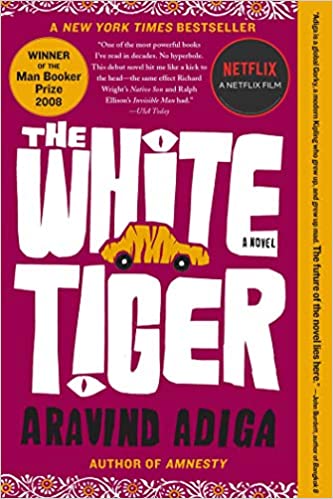
White Tiger, by Aravind Adiga

Why this book: Recommended to me by my son Brad, who told me that if I liked Shantaram (which he knows is one of my top 5 favorite novels) I would like  The White Tiger – which is also written in a first person narrative, takes place in India, and provides a unique perspective on Indian culture.  

Summary in 3 Sentences:  A life story with an edge, from the perspective of a person from a lower class in India, writing a long letter to the Premier of the Peoples Republic of China about the reality of his life in India, to tell the “truth” and undermine the Public Relations white-washing that the Premier would certainly get on his up-coming visit to India. Our narrator describes his life and his difficult path from being the son of an impoverished rickshaw driver to becoming a successful business man and entrepreneur.  But this is NOT a Horatio Alger story; rather it is a description of the corruption and sense of entitlement of the wealthier classes, their indifference to the suffering and indignities of those in the lower classes, and we see that our narrator’s success seemed to demand compromising basic human values that he believed those in power use to keep the lower classes in their place. 

My impressions:  Powerful, engaging, fascinating, and a fun quick read.  It is told from the perspective of a smart, ambitious young man from one of the lower classes in India – the Halwai caste of sweet makers – observing, describing, and then breaking into the entrenched system in India which he argues keeps the poor poor, and the rich rich.  It provides great insight into a level of poverty that is hard for most westerners to imagine.  We see how a stratified caste-culture like India’s, demands a subservience of those in one caste to those in another that is difficult to for us in the West to contemplate, but which I suspect  people of color might say has had its analogues in America.  

The only voice we get from our narrator is in the letters he writes to “His Excellence Wen Jiabao, Premier of the Freedom Loving Peoples of China” in a long letter, composed over seven nights – promising that his life story will give the Premier a more accurate impression of life in India.   His supposed intent is unveil the truth behind the public relations images of India as a free, capitalist, democratic country that Premier Jiabao will certainly be presented during his forthcoming visit to India.    By his last letter he is addressing his letter simple to “Mr Jiabao.” 

Our narrator was named “Boy” when born – his parents too busy to give him a proper name. Later he gave himself the name Balram Halwai, but adopted as his identity what an inspector of his school said about him, that he was “an intelligent, honest, vivacious fellow in this crowd of thugs and idiots… a creature that comes along only once in a generation…The White Tiger.”  He says up front that his life’s story ought to be called “the autobiography of a half-baked Indian.”  (Which sounded to me very familiar to  The Absolute Diary of a Part-Time Indian, told from the perspective of an outlier Native-American Indian, which I just read!)

Balram and his family grew up living in what he referred to as “the Darkness” in a country village far from the centers of power, learning how to “faithfully serve your masters with absolute fidelity, love, and deviation.”  Unlike most born in his situation, who simply accept or surrender to their lot in life, Balram is relentlessly curious,  always seeking a way to learn the ropes, to ingratiate himself with those who can help him rise above his poverty, and cunningly seeking an advantage that will help him get ahead. 

Balram describes what he calls “The Great Indian Rooster Coop” noting that the trustworthiness of servants is the basis of the entire Indian economy – the sense of loyalty and servitude to masters that holds India together.  The “Rooster Coop” analogy refers to roosters who sit in their cages, calmly watching their brothers beheaded and chopped up to feed their masters, knowing they will be next, but doing nothing.   He notes that to break out of the Rooster Coop, one has to be prepared to see one’s family destroyed – literally killed – for upsetting the social order. “Servants have to keep other servants from becoming innovators, experimenters, or entrepreneurs.  The coop is guarded from the inside.”  p166

Initially, Balram is conflicted between the family values of the village he came from, and what he needed to do to get ahead.   As Balram moves away from his village, the simple values of his village, his grandmother’s exhortations,  and “the Rooster Coop” held sway, but they eventually lost their pull on him as he realized that those with power and the money play by very different rules.  Balram becomes a driver for a wealthy group of coal magnates and eavesdrops on their conversations, as he drives them to their various meetings to pay off politicians or to engage in their expensive debauchery.  And though some treat him with respect and dignity, he eventually comes to realize that they will throw him under the bus in a heartbeat to protect their wealth and status.

We get to know not only the cruel and vicious magnates, but also those liberal idealists who profess to be concerned for the inequities in the system, but don’t have either the backbone or the power, or are unwilling to make the sacrifices necessary to make any real difference.  And Balram meanwhile sits and listens, is ignored as a non-entity, and his attitudes begin to change. 

He not only begins to resent the power of his masters, and their indifference to those like him, but he also directly experiences their self-serving corruption.    And he also desperately wants to rise up to be someone others envy – and he realizes that to do this, he must become more like them.   

It is indeed a revolutionary book – told with an engaging personal style, bitter irony, and with a working class sensibility and smug humor.  He pokes fun at a political leader to whom he refers as “The Great Socialist,” who has duped the lower classes into thinking he is their defender against the greed and power of the wealthy, but indeed is in league with them, and just as corrupt as they are.  The Great Socialist, like so much else he sees is a sham meant to placate the poor, to keep them in their place, and protect the power of the elites. 

We also get to know the subculture of the drivers for the rich – how they carve out their own pleasures and satisfactions within the system, without threatening their own relatively privileged positions.  They refer to the idealistic Balram from a remote rural village as “country mouse.”

Balram is an interesting and complex character.  We admire his curiosity to learn, his unwillingness to surrender to the corruption and the fate of so many millions in his situation. We admire his cleverness, his initiative and ambition to learn and grow.  And he routinely  makes reference to the wisdom of the great poets – noting an understanding for a perspective that he seems to appreciate, but his very practical nature doesn’t internalize. Several times he quotes poets and icons of wisdom such as his quote of the Islamic poet Iqbal that ”The moment you recognize what is beautiful in this world, you stop being a slave.”  236  

Is he noting how he is straying from their wisdom, or Is he merely mocking them?  

But I couldn’t help but also be repelled by the “entrepreneurial” actions he takes – by necessity, he would argue – to get ahead and become the entrepreneur he is proud to have become.   We know throughout his long letter to Premier Jiabao that Balram has indeed found success as an entrepreneur.  What he had to do to achieve it is an important message of this book.

The Netlix Movie based on the book is quite a good representation of the book, its story and message.  As usual, I recommend reading the book first – it’s short – then watch the movie.  

My own “meta” view:  The White Tiger describes a phenomenon that can be seen in many parts of the world.  It is an example of what happens when leaders try to transpose a system and philosophy of human rights, human dignity, freedom and capitalism that has evolved over centuries in the UK, Europe and eventually the US, onto cultures with very different histories, values and social structures, that have evolved over millennia.  The shoe doesn’t always fit.

Below are some quotes I found interesting and which give a sense for the style of The White Tiger.

The one infallible law of life in the Darkness is that good news becomes bad news – and soon. 30 

To break the law of this land – to turn bad news into good news – is the entrepreneur’s prerogative.  32

I don’t keep a cell phone, for obvious reasons -they corrode a man’s brains, shrink his balls, and dry up his semen, as all of us know.  33

In the old days there were one thousand castes and destinies in India. These days, there are just two castles: Men with Big Belies and Men with Small Bellies. And only two destinies: eat – or get eaten up.  54

Is there any hatred on earth like the hatred of the number two servant for the number one?  66

Like eunuchs discussing the Kama Sutra, the voters discuss the elections in Laxmangarh. 82

Do we loathe our masters behind a facade of love – or do we love them behind a facade of loathing?  We are made mysteries to ourselves by the Rooster Coop we are locked in.  162

The rest of today’s narrative will deal mainly with the sorrowful tale of how I was corrupted from a sweet, innocent village fool into a citified fellow, full of debauchery, depravity and wickedness.” 167

Standing around books, many books in a foreign language, you feel a kind of electricity buzzing up toward you, Your Excellency.   It just happens, the way you get erect around girls wearing tight jeans.  Except here what happens, is that your brain starts to hum.  175

The poor dream all their lives lof getting  enough to eat and looking like the rich.  And what do the rich dream of? Losing weight and looking like the poor.  191

Referring to the Red Light District: “An hour here would clear all the evil thoughts out of my head. When you retain semen in your lower body, it leads to evil movements in the fluids of your upper body. In the Darkness we know this to be a fact. 213

Delhi is the capital of not one but two countries – two Indias.  The Light and the Darkness both flow into Delhi.  215

The history of the world is the history of a ten thousand year war of brains between the rich and the poor. Each side is eternally trying to hoodwink the other side: and it has been this way since the start of time.  217


Posted in Uncategorized | Leave a comment

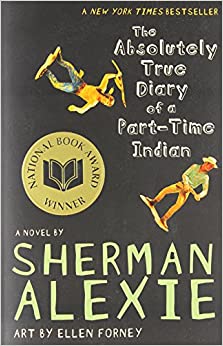
The Absolutely True Diary of a Part-Time Indian, by Sherman Alexie

Why this book: Mia recommended it in my literature reading group as something different and a bit shorter, after our previous, somewhat longer book.   It is also a National Book Award Winner.

Summary in 4 Sentences:  A fictional story told in 1st person by a teenage boy who lives on the Spokane (Washington) Indian Reservation, describing the relatively hopeless and resigned-to-failure-and-obscurity  world that he lived in, and his choice to leave the high school on the rez and attend the white high school, where people have hope, ambition and a belief in their future.  While that decision is supported by his parents, it is a regarded by his best friend and others in his tribe as treasonous, putting personal ambition above loyalty to his tribe and community, and was a statement that he somehow deserves “better” than others in his tribe.   The story is about his struggles to integrate into his white high school, while retaining his connection to the community of his Spokane Tribe.  It is about  his internal conflict between what he loves about the world he has grown up in, and his desire to get beyond the narrow parochialism of so many in the tribe who have no ambition to break out of the boredom and heartache of living and staying on the reservation. 

My impressions: A somber theme, presented in a fun, engaging and entertaining read which includes many profound insights that I look forward to discussing with my reading group friends.  The author captures the language and adolescent mentality of a precocious Native American teenage boy well – he is believable and brutally honest about his insecurities his fears, his desires, his pain and disappointments, and his few tentative hopes for his future.  It is a story of conflicting cultures, individual freedom, divided loyalties, and familial love. And more.  It is a short book, engaging and thought provoking. 

Our protagonist goes by Junior to his Indian friends, but at Rearden High School, his white teachers  preferred to call him Arnold, his given name. The story begins with Junior describing life on the rez, with his best friend Rowdy, who is somewhat his opposite.  Junior is small of stature, and timid, and is picked on and regularly beat up by the bigger kids. He accepts that as just part of his life. His best friend Rowdy is the opposite – mean, aggressive, fearless, and will fight anyone. Rowdy often protects Junior, and the bullies frequently leave Junior alone because they know Rowdy is not afraid of anything or anyone, and will come after them if they harm Junior.  

But Rowdy gets beat up regularly at home – by his alcoholic dad.  Rowdy comes to school wearing his bruises, cuts, black eyes as a badge of his toughness.  Junior’s parents are kind, would never hit him, but they are also a dysfunctional family – dad’s an alcoholic and out of work.  

Junior is frustrated by how things don’t seem to work on the rez; school is not taken seriously, by the students, or the parents –  not even by the teachers.   Junior senses the resignation – the general sense of: “What’s the point?”  Finally one of his teachers tells Junior he needs to escape –  get off the rez to attend Rearden, the white high school out in the community off the rez, and not succumb to the forlorn resignation on the rez.  The teacher tells him not to give up like the others.   Junior considers this, agrees, and decides to take that step – and there begins the story.  

Rowdy and his friends hate him for leaving their high school on the rez to go to Rearden high school.  They see that as a betrayal –  of them, their tribe, and their culture – going over to the other side.  This decision is hard on Junior for many reasons apart from his friends on the rez rejecting him.    Just getting the 20+ miles to and from school everyday is a challenge.  Not only won’t his former Indian friends talk to him,  the kids at Rearden don’t know what to make of a kid from the rez either.  He is ignored, eats alone, people don’t talk to him – they don’t know what to say.  He isn’t cool, not “popular,” not like them.    But he hangs in there,  eventually making a couple of friends, and the indifference of some of the kids slowly becomes grudging, but distant  respect.  He seeks out another nerdy kid who is also a loner and he and Junior become friends. Though his former best friend Rowdy won’t have anything to do with him any more,  his new friend Gordy enjoys his company. Gordy is very smart, curious, and well-read, enjoys and inspires Junior to open up his world even more.

And then Junior decides to go out for the basketball team,  even though he believes it is a futile effort.  But again, he persists, works hard, and the coach sees a spark in him, and to Junior’s surprise, he makes the team. Making the basketball team changes things for Junior, as we see him work hard, create an identity for himself at Rearden, and he begins to blossom.  But it also puts him in a difficult position; he eventually has to play against the team of his old high school on the rez.  And the star player on his old high school is none other than Rowdy.

This book has so much in it.  People from any group that feels disenfranchised and defensive about its identity, react strongly against those who leave it to find connection with the community they see as threatening.  It is about people feeling trapped and the challenges of leaving what is comfortable to try something new. There is a bit of Campbell’s Hero’s Journey in Junior’s decision to go to Rearden.  It is about leaving one’s tribe or culture, while also loving one’s tribe or culture. It is also about familial loyalty – his parents support him – though they are the only one’s who support him.  He loves his parents in spite of their problems and dysfunctions.  It’s about stepping out of one’s comfort zone, dealing with the difficulties, persisting, getting knocked down, and getting back up.  Anyone who has stood up against the forces of prejudice from people they love will feel for Junior – and admire him.  

Another interesting aspect of the book is that there is a “graphic” dimension to it.  The author posts drawings that Junior made to express his feelings and impressions of some of the key events he describes in his life – done as one would expect from a young teenage boy and adding to understanding the emotional dimension of his experience.  

It is a story that I’m told could be about many Indian reservations.  But its lessons apply to many cultural sub-groups in America. It is about Native Americans, about American culture, about people, about courage, about love and family.  I enjoyed and learned from this book. 

Some quotes I thought worth sharing: 

But I just kept thinking that my sister’s spirit hadn’t been killed. She hadn’t given up. This reservation had tried to suffocate her, had kept her trapped in a basement, and now she was out roaming the huge grassy fields of Montana. p91

“Listen,” Gordy said one afternoon, “you have to read a book three times before you know it.  The first time you read (a book) you read it for the story. The plot. The movement from scene to scene that gives the book its moment, its rhythm. It’s like riding a raft down a river. You’re just paying attention to the currents….The second time you read a book, you read it for its history. For its knowledge of history. You think about the meaning of each word, and where that word came from…p95

I suddenly understood that if even a moment of a book should be taken seriously, then every moment of life should be taken seriously as well. p.95

The world, even the smallest parts of it, is filled with things you don’t know.’p97

If you let people into your life a little bit, they an be pretty damn amazing. p 129

Ever since I’ve been at Reardan, and seen how great parents do their great parenting, I realize that my folks are pretty good.  Sure, my dad has a drinking problem and my mom can be little eccentric but they make sacrifices for me. They worry about me. They talk to me. And best of all , they listen to me….I’ve learned that the worst thing a parent can do is ignore their children.  p153

I mean, yeah, Indians are screwed up, but we’re really close to each other. We KNOW each other. Everybody knows everybody. p153

I used to think the world was broken down by tribes.  By black and white. By Indian and white. But I know that isn’t true. The world is only broken into two tribes: The people who are assholes and the people who are not.  p176

Tolstoy wrote: “Happy families are all alike; every unhappy family is unhappy in its own way.”  Well, I hate to argue with a Russian genius, but Tolstyoy didn’t know Indians. And he didn’t know that all Indian families are unhappy for the same exact reason: the fricking booze.  p200


Posted in Uncategorized | 1 Comment

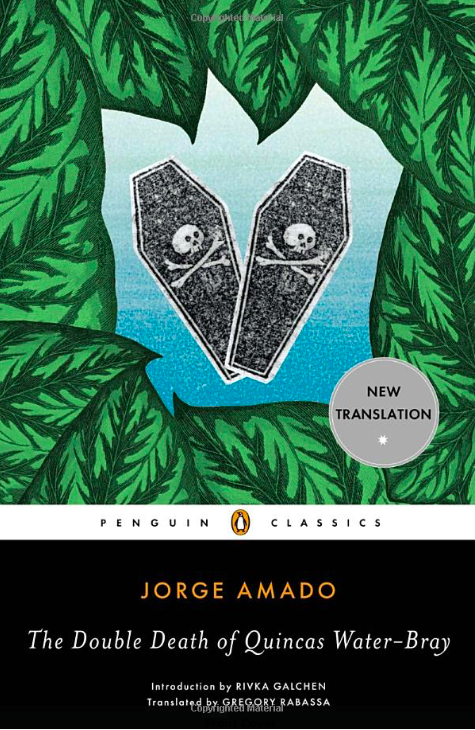
The Double Death of Quincas Water-Bray, by Jorge Amado

Why this book:  Recommended by Janar in my literature reading group.  Janar lives in Brazil, and Jorge Amado is very well known author in Brazil, but not in the US. This novella – only about 70 pages – is a well regarded book of his,  so we added it as an  additional option to another book we were reading.

Summary in 4 Sentences:  A well established respectable, church going family man suddenly up and leaves his family, and not only joins the ranks of carousers, partyers, and deplorables in Bahia, Brazil, he becomes a leader and hero to those whose lives revolve around the bars,  the red-light district, the docks, and the lower class speak-easys.  His family is appalled and embarrassed, choose to pretend that he doesn’t exist, don’t speak about him to their friends or around the children, until they are told that he was found dead in his cheap and dirty cold water flat,  and now they have to claim the body and bury him.  Meanwhile his many admiring friends and fellow carousers want to appropriately mourn the passing of the chief partyer, much to the chagrin of his family.   It is a hilarious story of the clash of cultures between the world of strict adherence to conventional morality, and the world of those who don’t care a whit for conventional morality, preferring to live for today’s more immediate pleasures and friendships.

My Impressions: Very clever, well written and well translated.  Worthy of Steinbeck or Hemingway – both of whom would have very much enjoyed this book, as did I.   We only get to know our protagonist after he is dead, from the sad recollections of his very conventional daughter, and the happy recollections of his friends and fellow carousers.   He is dead, but is he really?  He had been a model upper middle class bureaucrat in the town of Bahia, Brazil, respectable in every way: Joaquim Soares de Cunha, a husband, a father, with a nice home, nice family, church going, doing well in his civil servant career, well-liked and well-respected among respectable people in the community.  Then, at one point, one day, something snapped.

 He got up from his chair, called his wife and daughters “vipers,” and walked out,  and joined the ranks of the carousing dispossessed in the barrios of Bahia, Brazil, consorting with those who respectable society preferred to pretend didn’t exist.  He reinvented himself as Quincas Water-Bray and became  a well-loved and well-respected member of a different community – one that didn’t have nearly so strict (if any) rules of propriety – beyond fun, friendship and taking care of each other.  When after 10 or so years he died, the papers referred to him as the “boozer in chief of Salvador,” the “tatterdemalion philosopher of the market dock,” the “senator of honky-tonks,” “tramp par excellence.” 

HIs wife, daughter, family and friends were horrified and scandalized, and of course, embarrassed by his leaving and his behavior afterward.  For them, the husband/father upstanding member of the community they had known was dead. His name was not spoken around the grand children, nor among each other. When they did speak of him, it was in the past tense,  and they lived in constant fear of being associated with the scandalous tramp whose name occasionally appeared in the papers as part of some drunken act of debauchery that shamed the family.    Leaving his family was of course, his first death – symbolically speaking – the death of Joaquim Soares de Cunha

But now Quincas Water-Bray is lying cold with a smile on his face in a filthy room in a poor part of town.  This creates an embarrassing dilemma for his daughter and family.   It forced them to acknowledge their connection to him, and to undertake the appropriate rituals for claiming their family relative and arranging a funeral that would be “appropriate” for people of their class – but they insisted on honoring the man he had been before, with a proper Catholic funeral that a good family would sponsor to grieve the passing of respectable member of the community.   BUT they and everyone knew, that is not who he’d been for years.   And in every decision, how much it would cost was always an important factor – from the clothes he’d be buried in, to the coffin, to the limousines that would drive people to the cemetery.   

The family’s desires for a proper Catholic burial did not involve his more recent friends – those of the community to which he’d escaped their more uncompromising standards of propriety. It is customary in that part of the world for someone in the family to sit up with the corpse all night, before the burial, but the family members were tired, it was not in a good part of town to be in at night, so late that night, Quincas’s brother chose to leave the corpse in the care of several of Quincas’s friends, who were grieving with them, so that he could go home and get some sleep.

Quincas’s  friends had been drinking much of the day, drowning their sorrows while celebrating Quincas’s life in the way they celebrated everything.  The drinking and story telling led to the the ingenious idea to take the celebration outside the room and into the community where Quincas had been so happy, AND TAKE QUINCAS WITH THEM to celebrate with and say goodbye to his friends and members of his community.  They noted that Quincas was so drunk, he couldn’t stand up or walk on his own, so they held him up and went into town.

We are thereby introduced to the rogues gallery of Quincas’s life, the ladies of the night,  including Quincas’s favorite Quiteria Goggle-Eye, and his many other friends with whom he had partied and associated.  There follows a revery which is reminiscent of Weekend at Bernies or Waking Ned Devine.  It is a slapstick scene but well done, as Quincas’s corpse has a smile on its face and the author has him making (imagined?) comments to those around him.  It is not overdone, and one can’t help but celebrate along with his friends, and even think to oneself “this is how I’d like to go.”   Finally,  they find a conclusion for Quincas on this earth which he would find much more to his liking than a proper Catholic burial. 

The Double Death of Quincas Water-Bray is a fun novella that highlights the hypocrisy of the respectable middle-class through the life and death of one who rejected their values and goes over to the other side and joins with those who celebrate life and each other, and thumb their noses at death. In this book we are given a humorous but insightful story of a clash of cultures..

Posted in Uncategorized | Leave a comment

Matterhorn, by Karl Marlantes

Why This Book: Selected by the SEAL reading group I’m in as our choice for “a novel about war” to read and discuss.   I had already twice read Marlantes book What it’s Like to go to War  (my review  of it here)  was quite impressed, and I’d heard really good things about Matterhorn.  

Summary in 3 Sentences. This is a novel about a  US Marine infantry company in Vietnam, fighting the North Vietnamese Army over a period of about 2 months in and around a fictional isolated outpost named Matterhorn. The protagonist of the novel is a young newly- arrived-in-Vietnam second lieutenant who we follow from his arrival with B Company at Matterhorn through several intense combat operations, the loss of several men in his company, the restructuring of the company and his platoon after losses, and eventually with experience, both tragic and heroic, his promotion to positions of greater responsibility.  The book is a brutally honest look at how marines deal with each other, the stresses of combat, the loss of their platoon and company mates, racial tensions in the company, and the apparently arbitrary orders that they must carry out in fighting an implacable enemy in a war they don’t really understand.

My Impressions: POWERFUL. One of the best novels I’ve read about men at war.  Marlantes puts us inside the perspective of 2nd Lt Mellas, newly arrived in Vietnam, uncertain, and inexperienced.  He had recently been commissioned after graduating from Princeton; coming from a liberal elite university education, he now found himself working with and leading marines who were mostly from poor, broken or working class families without the means to avoid the draft.  Mellas is trying to figure out his role, lead with confidence when he didn’t have much, keep his men and himself alive, under circumstances that just didn’t make much sense to him. The environment he entered was brutal, primitive, and unforgiving; the men, their language and their tasks profane and uncompromising.  He had to adapt. 

Through his eyes we experience how he comes to learn the formal structure of his marine platoon and company, as well as the informal structure of who has what and how much influence.  We experience his uncertainty and anxiety as he steps into his leadership role when he doesn’t really know what to do, and desperately wishes he were somewhere else when faced with grueling conditions and really tough dilemmas. We see how he makes mistakes, recovers, and grows in confidence and maturity, slowly wins the respect of his men, becomes attached to them and suffers when they are wounded and killed.  

We also get inside the perspectives of some of the leaders of the Marines Regiment -those who make the decisions that Mellas and his company had to carry out.  We get to know the ambitious and glory-seeking battalion commander, LTC Simpson and his lackey S-3 operations officer Maj Blakely, whose decisions are driven by how they will appear to those above them in the chain of command, men who are even farther away from the fighting than they are.  And we are shocked at some of their decisions, and are sympathetic to Mellas when he becomes disillusioned with the Marine Corps and his mission there – but he must continue, because of his training, and out of loyalty to his men. 

We also get to know his fellow platoon officers in the company – a diverse group with whom Mellas is trying to fit in.  1st Lt Ted Hawke is the most practical and best suited to the war – admired by the men, empathetic to them, best able to maintain his equilibrium in the face of the capricious decisions of  the leadership. Mellas looks up to Hawke, admires him and wants his respect. Eventually he earns it.

Matterhorn is a roller coaster ride – the platoon goes from one in-extremis situation to another.  And about time they (and we the readers) think they are at the end of their rope, have accomplished the near impossible and earned a break, their leadership gives them an even more daunting task.  We suffer with Mellas and his platoon as these decisions come down. We grieve for the men lost.  The role of luck in combat and the senselessness of so many deaths is a theme.  Mellas, who had never seen a dead body before coming to Vietnam, becomes very familiar with death, facing the likelihood of his own death, as well as having to deal with the consequences of the deaths of those close to him.  It is a powerful book.

The role of morality in war is a sub theme in the book – how in fierce combat, values change and the rules of civilized society just don’t seem to work – and Mellas had to figure out the different rules.   Mellas and his fellow officers had the primary imperative to complete their assigned mission while also taking care of their marines – all other considerations were a distant second.   In order to do this well, officers must establish and protect their reputations as tough leaders and fighters.

Mellas initially struggles with this.  He struggles with leaving a wounded NVA soldier to die in the jungle – there was no real alternative.  How hard should he punish the infractions of his young marines, few of whom are over 20 yrs old?  Should he reveal crimes he’s aware of to the leadership, whose reaction he knows will undermine the combat effectiveness of his men.  His loyalty to his men overrides his loyalty to his leaders and the Marine Corps, including some of the values he had when he entered the Marine Corps.

At the beginning of the book Mellas truly hopes to minimize suffering, and views his enemies as human beings.  By the end of the book, the brutality of the battles he’d fought in, the killing he had seen and participated in, and the capriciousness of death he had witnessed had transformed him from a civilized citizen soldier to a primal fighter, focused on simply protecting his men and staying alive while satisfying the whims of his leaders and the war.  His world had devolved into what reminded me of the primal state of nature Thomas Hobbes described in his classic Leviathan;  where there are  “no arts; no letters; no society, and which is worst of all, continual fear, and danger of violent death” and life is “solitary, poor, nasty, brutish, and short.”

Another key theme in Matterhorn is the racial tension between the black and white marines in Bravo Company.    There are racist blacks and racist whites, some of whom hate each other, some of whom tolerate each other, and some of whom have friends across the racial divide. But they all must learn to set these differences aside and fight together as a team, and take care of each other under the worst of conditions.

This part of the book will be shocking to some of today’s readers, as this sort of racial animosity is certainly much less in today’s military.  Marlantes helps us understand the perspectives and anger from both sides of this issue – as the enforced intimacy between blacks and whites brings simmering issues that they brought with them into the Marine Corps to a head – all complicated by the culture of the Marine Corps which demands unquestioning obedience to the chain of command.   The problems are in garrison, in the firebase; in the field, black and white marines work together and support each other when patrolling or fighting the enemy.  As one of the sergeants said, in the field, they are all green. 

The North Vietnamese enemy is dehumanized in a racist way, always referred to as gooks as  GIs had referred to Japs, Nips, Krauts, and more recently, rag-heads.  Mellas had several realizations that these gooks he was fighting and killing were human beings as well – but this insight complicated his role of leading marines in combat.    He did not linger there. Nor can any soldier really. 

When I spoke to Karl Marlantes prior to our discussion of his book, he shared that Matterhorn is modeled loosely on the Parsifal myth, which is the story of a thoughtful young man becoming a warrior within the Arthurian legends around the Holy Grail. Indeed Matterhorn can be seen as Mellas’s baptism by fire, and evolution from an idealistic ivy league-educated junior officer into a somewhat cynical and hardened warrior who is trying to hold on to his humanity in the midst of so much brutality and violence.  Marlantes also mentioned Joseph Campbell’s Hero’s Journey in our discussion of Mellas.

Undoubtedly Matterhorn has some autobiographical qualities to it: Mellas was from Princeton; Marlantes from Yale and Cambridge.  I could relate – I signed up with some trepidation to join the SEALs during the Vietnam War while studying liberal arts at Stanford and all my friends protesting against the war.   Saigon fell while I was in SEAL training. My combat experience would have to wait a couple of decades, but it was nowhere near as intense as what Matterhorn portrays. 

There were a number of really powerful scenes in the book.  A few that really struck me were:

  • When Mellas struggled with what to do with the mortally wounded North Vietnamese soldier.
  • When Parker died –  a black marine who had been a racial instigator, but became human and won Mellas’s (and my) respect and sympathy.
  • When Col Mulvaney gave LTC Simpson a much deserved ass chewing and described the Marine Corps as America’s whores.
  • When Mellas reflected on his time at Princeton with his well-to-do university friends righteously  wondering how anyone could be so foolish as to join the military and fight in this war, and Mellas saying nothing about his having signed up for the marines – to help pay his tuition.  
  • When Jancowitz defused a potential racial brawl at a movie, by starting the movie, without a reel.
  • The Incongruity of Simpson’s mess night.
  • Vancouver – who he was, how he fought, and how he died.  
  • Mellas’s meeting w Sgt Major Knapp requesting that Cassidy be transferred.
  • Bravo company standing by to go on the Bald Eagle mission, when they all expected to be inserted into a raging battle and many would not come back. 
  • When Hawke walked out to join the Bald Eagle Mission.
  • When Mellas lay behind a log, scared stiff, knowing he had to do something, and had a near out of body experience before he took action.
  • The drinking scene wth all the officers together before being inserted onto Fire base Eiger, and the officers waxing drunkenly poetic about themselves, the situation they were in, each other, and the Marine Corps.
  • The final section, with Mellas looking up at the shadows of the clouds crossing the mountains. 

Posted in Uncategorized | 5 Comments

The Longevity Paradox – How to Die Young at a Ripe Old Age, by Steven Gundry, MD

Why This Book:  I work pretty hard – at least harder than most without being obsessed with it – to build a foundation of health, wellness and fitness that will allow me to live well and pursue my adventures well beyond middle age.  I wrote a piece on longevity in my Bob’s Corner Blog a few years ago which peaked my interest. I read this book while attending a total immersion program in health, wellness, and fitness in Virginia Beach, also intended to increase health and wellness. 

Summary in 4 Sentences:  This is a book about nutrition and the gut-biome – Gundry makes the convincing case that our gut biome, or microbiome – the bacteria that lives in our stomachs and small intestines – is a fundamental source of our health, wellness, or alternatively, our disabilities and maladies.  He argues that certain foods make our “gut-buddies” happy, others make it difficult for them to to their jobs, or help the bad bugs in our gut thrive or make it possible for bad nutrients to pass through the stomach lining and activate our immune system to attack them, which over time, is the source of much our inflammation, arthritis, and degeneration of our physical and mental capabilities.  He argues – again rather convincingly – that a diet that takes care of our gut-buddies and excludes or severely limits foods that support our bad bugs and/or can get thru our stomach lining, will extend health, well-being and life.  He tells us which foods to eat, which to avoid, how best to fast occasionally and why, and gives a whole chapter on meal plans and recipes for longevity enhancing dishes. 

My Impressions:  Fascinating book, easy to read, convincing and inspiring. Gundry is a well known cardiologist who has become something of a nutritional expert. His book The Plant Paradox was an opening salvo (I haven’t read it) in his efforts to explain and  improve people’s diets.   His focus is on the microbiome – our gut and stomach lining.  He writes for the lay person, but most lay people will not be familiar with some of the biology and the names of some of the enzymes and molecules which he uses to explain his arguments – but he makes it easy to overlook that. This book expands and explains the role of dietary consideration in explaining longevity, health span and wellness with a different approach – taking care of our microbiome means taking care of our long term health.  His explanations are convincing and he makes it interesting and even fun – and includes a lot of surprises.  

His recommendations are consistent with much of what I’ve heard from other nutritionists, and are very consistent with Michael Pollan’s simple seven word guide to healthy eating:  Eat Food, not too much, mostly plants. “Eat food” means eat primarily fresh – not processed, packaged, or canned food.  His recommendations will not be controversial with most nutritionists or doctors, though he does argue against the Keto and protein focused argument for more meat and saturated fats.  

What is different (for me) about his approach is the focus on the microbiome, how critically important it is to our health, how broad ranging and impactful the effects of a healthy (or unhealthy) microbiome can be, and how our diet should take care of it.  Some may argue with some of his recommendations, but the biggest question for most people will be: How important is my LONG TERM health to me, and what changes and inconveniences am I willing to put up with in order to invest in it?  Long term health is like a lot of things that are truly good in life – it requires discipline to invest in delayed gratification.  To attain long term health and wellness requires a willingness to endure some short term discomforts and give up some impulsive short term pleasures (junk food, fast food, sweets, easy, fast calories.)  Like working out when I might prefer more comfortable alternatives – like eating, drinking, watching TV. 

He argues that heart disease is largely an auto-immune disorder, brought on by inflammation caused by a diet which promotes inflammation.  He says that cholesterol is NOT the enemy – it is Triglycerides and  he gives an argument that only a cardiologist could give.   He has a whole chapter on memory and brain health and ties that again, to our microbiome and reducing inflammation in the brain. He offers some novel ways to maintain brain health in addition to diet – he argues that our last meal should be four hours before we sleep so that our body’s resources and blood are available to heal and take care of the brain at night while we sleep, instead of digesting our meal.  He argues for intermittent fasting, and occasional fasts or fasting mimicking diets to give the brain and the body an opportunity to cleanse themselves of dead and inefficient cells in the absence of calories.  He clearly believes that over time, dementia and Alzheimers can be significantly reduced if not defeated by a healthy diet that takes care of the brain and reduces inflammation.

He believes that the epidemic of cancer can also be traced to a diet which does not support a strong and healthy microbiome.  He writes that, “The standard Western diet promotes cancer growth at every turn.” p115

He also offers lifestyle changes and challenges to promote longevity and longer health span, to include a simple daily 5 minute exercise program, sleep advice, advice on timing on eating and fasting, as well as an abundance of recipes that follow his plan. He also gives specific guidance on supplements – some of which I’ve never heard of or are probably hard to find.  

He has a section on the 7 deadly myths about longevity – and he debunks them. He’s carefully studied the people in the Blue Zones and found that they largely live on plant based diets, not much meat, lots of healthy oils, regular exercise outdoors, and damn little sugar and simple carbs.  He says, “It’s very simple: if you want a healthier microbiome (and therefore a healthier brain and body), eat plenty of olive oil!” p157

He has many lists and explanations of foods we should eat to support our microbiome and many that we should avoid – quite a few of which conventional wisdom has taught us are good and healthy. But he disabuses us of some this outdated wisdom we got from our grandmothers.  In his arguments though, he gives explanations based on molecules, enzymes, activating inflammation,  gut biome response.  For example, he says “Consumption of dairy products is not conducive to a long life and health span” P90  

A very limited list of his Dont’s and Do’s is below. His complete list is on pages 225- 233 of his book: 

SOME FOODS TO AVOID/minimize:                        SOME FOODS TO EAT PLENTY OF

  • Animal protein (some is permitted)                       * Olive Oil
  • Any dairy products from cows                                 * nuts and seeds
  • anti-biotics                                                                  * cruciferous vegetables
  • wheat and all grains                                                   *Avocados/guacamole
  • most breads                                                                * Extra dark chocolate
  • simple carbs                                                               * Purple sweet potatoes
  • sugar                                                                           * Red wine (some; not “plenty of”)
  • Ripe Fruit (too much sugar)                                    * Coconut/MCT oil
  • Egg whites                                                                  * Spinach
  • Rice brown or white                                                   * Black Pepper
  • soy products                                                               * Green vegetables
  • Most artificial sweeteners                                          *Stevia 

I really liked this book, but to follow all of his guidance would be a full time job and would require giving up some things I am unwilling to give up entirely – but I can certainly significantly reduce how much of them I eat (for me, that’s a pretty long list, and includes key lime pie, ice cream, pizza).  He gives a number of examples of unwell people who’ve switched to and followed his program strictly and had pretty remarkable results, significantly reducing and even eliminating their “co-morbidities.”  

I’m pretty healthy now, but he has convinced me to make a number of changes to my diet that won’t be too hard, but could make a lasting difference – especially in reducing inflammation and improving brain health. As I get deeper into middle age, and in a few years will be knocking at the door of old age, I’m willing to invest more in maximizing my health span and agility to be able to continue to be healthy and physically active to extend my health span and enjoy life into my 90s. I’d recommend this book to anyone who is willing to sacrifice a few short term pleasures and start making investments in their own longevity and life and health span.  The Longevity Paradox may not be a comforting read, but it is convincing.  


Posted in Uncategorized | 1 Comment

Breath – The New Science of a Lost Art, by James Nestor

Why this book: I’ve been practicing Wim Hof breathing method for nearly 4 years now, and so was particularly interested in learning more about breathing as a  means to achieve greater health and improved performance. I was impressed with Joe Rogan’s interview with James Nestor about this book, and when my friends Jay and Luke both  spoke highly of Breath, to include changing the way they performed some basic activities, I was intrigued.  I didn’t read it; I listened to the audio version.

Summary in 4 Sentences: This is an autobiographical account of the authors exploration into breathing as an avenue toward good health, and why and how poor breathing has contributed to many health maladies in modern civilization. He explores the art and science of the simple act of breathing, going back thousands of years and notes that in some cultures, shamans and mystics knew that breath and proper breathing were key to good health.  His main points are that nose breathing is what we are meant to do, that there are a multitude of breathing techniques, each with a different purpose and effect which can positively impact our health and wellbeing.  He also explains how our jaws, skulls, and faces have changed shape since the advent of soft easy-to-chew food, which has shrunk our mouths, jaws and nasal cavities and negatively affected how we breathe  – but all of this can be reversed with a renewed attention and effort given to how we breathe. 

My impressions:  I was surprised at how fascinating this book was. Nestor is a very engaging writer – this is HIS story about his explorations, about the fascinating people he met on this journey, to whom he referred as “pulmonauts,” how he did his research, complete with engaging anecdotes from his travels and explorations. Not only was it fun and engaging – I was surprised and amazed at every turn to learn something new and fascinating about this simple act that we all practice 24/7/365.  

I listened to the audible, which Nestor himself reads, which has the disadvantage that I couldn’t make notes and underlines to help me with this review.  But it had the advantage of me hearing the author himself tell his story with enthusiasm and inflection, and at the conclusion, one of his main colleagues walks us through a number of breathing exercises.

Here are a few of the main points that I got out of his book: 

NOSE BREATHING We should all primarily be breathing through our noses.  Mouth breathing apparently has lots of downsides and he lists them pretty comprehensively. He surprised me with studies and experiments with top athletes which showed that after learning to nose breathe, they performed better nose breathing while performing their sport.  (I’ve begun experimenting with this and after a life-time of mouth breathing during exercise, I’ve realized that it takes practice and adjustment and conditioning.  I’m working on it.)  Nose breathing is optimal for sleeping, and mouth breathing he argues is a key contributor to a number of sleep disorders including apnea as well as chronic snoring.  He recommends (and several of my friends have taken him up on it) purchasing a special tape (Somnifix is one option) to tape the mouth closed as one goes to bed, to force nose breathing while sleeping. 

SKULLS and JAWS  Nestor explored why and how we have become largely mouth breathers by looking at skulls from hundreds and thousands of years ago, and determined that our human ancestors had larger jaws, larger nasal cavities and better teeth than we have had for the last few hundred years.  He argues that this is due to our civilized kitchens preparing softer food requiring much less chewing, which stunts the growth of jaw bones, resulting in smaller mouths, and smaller nasal cavities.  He says that we should be chewing more.  He personally used a device to increase the size of his jaw and mouth which he says has improved his breathing and thereby, other aspects of his life.

CO2 –  I had always believed CO2 to be simply a waste-product of breathing, something that the body was simply trying to get rid of, like cleaning out the ashes in the fireplace.  But it is much more important than I had realized.   CO2 is apparently key to the process of oxygen uptake by our tissues, in that its presence triggers the hemoglobin cells to deliver the O2 that hemoglobin cells are carrying, and then to pick up and replace the O2 with the CO2, to carry it to the lungs for exhalation. (At least that’s what I understood.)  Deficiencies in CO2 in one’s system inhibit delivery of O2.  This section was complicated and I need to review it, but I had been unaware of the importance and value of managing CO2 and keeping it in balance in the process of maximizing performance. There is much more in this section that I need to review. 

SLOW BREATHING.  Nestor makes the case, based on not only his review of scientific literature but also ancient breathing practices, that slow and relatively shallow breathing has advantages in modulating CO2 levels and increasing uptake of O2.  Yes, even when working out.  Also separately,  deep inhale followed by long slow exhale breathing has been a tool for millennia to activate the parasympathetic system, calm the nervous system, and manage stress and anxiety.  For regular daily breathing, he recommends we slow down – and recommends 5.5 – 6 second inhales and the same time for exhales as an ideal breathing rate for someone not engaged in heavy physical exercise, noting that this is the length of time monks used for the Buddhist mantra Om-mani-padme-hum,  and Catholics use for saying the Rosary.  This breathing rate he claims is optimal for calm and focus.

TUMMO BREATHING – He also discusses Tummo breathing, the opposite of slow breathing.  The  Wim Hof method I’ve been practicing for several years is a modern and popularized version of Tummo and involves a series three cycles of 30 or so very deep, fast inhales and exhales, followed by breath holding.  Tummo breathing  has various modalities and versions, and is associated with certain Buddhist meditation practices, and it definitely engenders a different state of mind. Nestor does not advocate rapid breathing in general, especially when it is unintentional or in response to stress, noting that it  stress to one’s bio-system and can have deleterious health consequences.  But he does advocate intentionally choosing to do rapid breathing for short periods,  such as Tummo or Wim Hof Breathing, in order to purposely stress and strengthen one’s cardio system.

BREATHING EXERCISES He concludes Breath with an appendix which outlines about 10 different breathing exercises, each of which has a different purpose in improving or changing one’s health or mindset.  The explanations are simple and easy to practice. For these, the audible version of the book would certainly be preferable to the print version. 


Posted in Uncategorized | 5 Comments

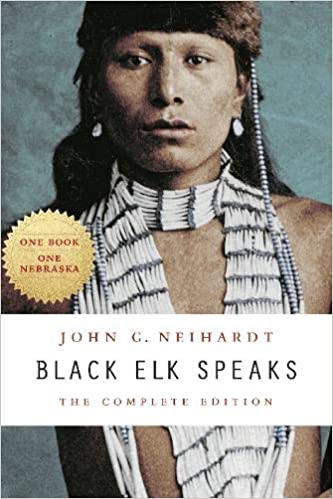
Black Elk Speaks, by John G. Neihardt

I read a much older paperback version than this newer publication, which appears to include photos and other additions my copy didn’t have.

Why this book: I just finished Empire of the Summer Moon about the Comanches and it revived my long term interest in Native American culture.  I have been carrying Black Elk Speaks around with me for nearly 50 years. and  the SEAL reading group I’m in had selected Native American history/culture as a genre for our next session.  After reading Empire and a great discussion I was inspired to finally read what Black Elk had to say. Glad I did. 

Summary in 5 Sentences: This book is Black Elk as an older Oglala Sioux medicine man (in his 60s) relating  his life story to a trusted “Wasichu” (white man – John Neihardt) in the presence of a couple of his friends and contemporaries, with his son translating.  It begins with him describing an incredibly detailed and powerful vision he had while he was a very sick and unconscious 9 year old boy – a vision that shaped the rest of his life.  Then he tells stories about his boyhood growing up in his Sioux tribe, his participation as a teenager in the Battle of Little Big Horn, followed by the subsequent difficult and unpleasant period his tribe experienced trying to maintain their way of life while being pursued and and pressured by the US Army.  He subsequently participated in Buffalo Bill’s Wild West Show traveling in Europe, returned and also fought US soldiers during the slaughter at Wounded Knee. It’s a sad story about his unsuccessful efforts as a Sioux medicine man and shaman to forestall the demise of the Sioux Indian Nation.

My Impressions: This is one of the most powerful and personal first person stories I’ve read from a Native American growing up and living in the northern plains of America during the final years of the Sioux nation.  It is also a powerful story of a Sioux medicine man, his spiritual values, his mystical view of the world, and of his role as an intermediary between the world of spirit and the world of the earth, of nature, of man.  

When the story begins in the 1870s the Sioux were still living more or less the life they’d lived for centuries, but it was all about to end.   Treaties with the “Wasichus” – the Whites – were being made and regularly broken and the floodgates were open to more and more settlers moving into the region.  And then they discovered “the yellow metal that makes Wasichus crazy” in the Black Hills, which were supposed to belong to the Sioux.   When it became clear that the US Army was not going to keep the whites out, the Sioux didn’t feel obligated to stay in their assigned areas either, which ultimately led to Custer, Generals Crook and Terry being dispatched to discipline them and the Battle of the Little Big Horn. 

The life Black Elk describes as a boy growing up prior to Little Big Horn sounds idyllic in a very communal and safe way – how the young men prepared themselves to be hunters and warriors, and the community by and large felt safe and at home in the mountains of what is now Wyoming, Montana, and South Dakota. The power of his boyhood vision, which he took very seriously and literally but kept to himself, made him feel separate and different from the other boys as he grew up, but otherwise he had a normal Sioux boyhood.  As he got into his teens, tensions with the whites were escalating and there were battles and killings, and at age 14, he finds himself in his first warrior role responding to Custer’s attack on his village at the Little Big Horn, and his description fits other accounts I’ve read. It it was truly a baptism by fire.

All through the book he recognizes that during his vision, “the six Grandfathers” he encountered had given him special power and a mission to fulfill during his lifetime.  For a long time, he didn’t know what to do with the vision or his power, and he felt it was a burden.  Finally with the help of some other Sioux medicine men, he undertook a ritual with his tribe which gave him clarity on who he was and what he was supposed to do, and he became a healer of sick people. He didn’t know how his power worked, but he felt that he was only a conduit for a life force – a power that was much greater than he. 

Other well known Sioux leaders play roles in his story, most notably Black Elk’s cousin Crazy Horse who the Sioux regarded as a truly gifted and mystical warrior and a leader.  Crazy Horse had also had a powerful vision and spent much time alone and apart from his tribe, where he communed with the spiritual world.    He was murdered by the Army during negotiations, not killed in battle.  Red Cloud was a Sioux chief who sought to reduce the violence between the whites and the Sioux by trying to find compromise to help save his people.  Red Cloud was seen by some as overly compliant to the whites, and seen as the leader of those referred to as the “hang-aournd-the-fort people.”

As an adult, Black Elk had several other powerful visions he describes in the book, reinforcing his reputation as a mystic and powerful medicine man.  In each he would have a sudden “queer” feeling,  became unconscious and had very clear visions of a spiritual world, or of events/people who were not colocated with him.

Black Elk Speaks is ultimately a sad story, as Black Elk considered himself a failure for not having fulfilled the mission of saving the Sioux nation given to him by the Six Grandfathers in his vision.  It is interesting that the biography of Black Elk in Wikipedia notes that in his later years, he converted to Catholicism and became an important teacher and catechist teaching others about Christianity, and was nominated for beatification. On his death bed he is said to have told his daughter that the only thing he really believed in was his original Sioux beliefs about the nature of the world and “the pipe religion.” 

At the conclusion of my copy there is a short chapter “About this book and its Author.”  It notes that  “Black Elk’s personal story, spoken in Sioux and translated by his son, wasn’t a chronological cohesive, organized account of his life and vision….Black Elk Speaks is actually a re-creation in English of the holy man’s account of his life and vision, given form, coherence and choronogy by Neihardt (who was) an adopted member of the Oglala Sioux, chosen by Black Elk as heir to the seer’s mystic powers. “

SOME QUOTES FROM BLACK ELK SPEAKS that I found notable (page numbers for my reference only, they are from my no-longer-in-print version.)

“(The spirit world) is the real world that is behind this one, and everything we see here is something like a shadow from that world.”  p71

“I always got up very early to see the rising of the daybreak star. People knew that I did this, and many would get up to see it with me, and when it came, we said: ‘behold the star of understanding!’” p148

“Men and women and children I have cured of sickness with the power the vision gave me; but my nation I could not help.  If a man or woman or child dies, it does not matter long, for the nation lives on. It was the nation that was dying and the vision was for the nation; but I have done nothing with it.” p152

“You have noticed that the truth comes into this world with two faces. One is sad with suffering, and the other laughs; but it is the same face, laughing or weeping.  When people are already in despair, maybe laughing is better for them; and when they feel too good and are too sure of being safe, maybe the weeping face is better for them to see.  And so I think that is what the heyoka ceremony is for.”p159-60

“The Six Grandfathers have placed in their world many things, all of which should be happy.  Every little thing is sent for something and in that thing there should be happiness and the power to make happy.  Like the grasses showing tender faces to each other, thus we should do, for this was the wish of the Grandfathers of the World.”p163

“We made these little gray houses of logs that you see, and they are square. It is a bad way to live, for there can be no power in a square.  You have noticed that everything an Indian does is in a circle, and that is because the Power of the World always works in circles and everything tries to be round.” p164

“Behind the woman’s power of life is hidden the power of man…The woman is the life of the flowering tree, but the man must feed and care for it.” p178

“Nothing can live well except in a manner suited to the way the Power of the World lives and moves to do its work.”  p180

“I could see that the Wasichus did not care for each other the way our people did before the nation’s hoop was broken. They would take everything from each other if they could, and so there were some who had more of everything than they could use, while crowds of people had nothing at all and maybe were starving.  They had forgotten that the earth was their mother.” 184

Posted in Uncategorized | 2 Comments

The Attributes – 25 Hidden Drivers of Optimal Performance, by Rich Diviney

  1. Why this book: I had invited the author Rich Diviney to be a guest speaker on the Mental Performance Working Group that I host to discuss his work on The Attributes. Naturally, I thought it would be good for me to read his book first. 

Summary in 3 sentences. Rich Diviney developed the idea of attributes as a means of better selecting candidates for intensive SEAL training, after realizing that assessing for skills was not useful -skills could be taught; he realized that they were actually selecting for attributes which are more innate and determine how a person will react to uncertainty, challenge, and stress.  He and his team were looking for attributes that indicate how a person will perform in uncertain, challenging, stressful environments, often with little warning or time to prepare, and perhaps with little previous experience.  He discusses each of 25 attributes which he breaks down into five categories: Grit, Mental Acuity,  Drive, Leadership and Teamability and offers advice on how a person might  develop attributes, as well as how to use attributes to make oneself and one’s organization stronger.  

My impression:  Really fascinating and well written book.  Easy and enjoyable to read, and a fascinating new concept for selecting, assessing, personnel for hiring and for promotion.  There is a lot of content – each of 25 attributes gets about7-10 pages which flow quickly and easily as he provides fascinating examples from his and other people’s experience to explain each one. I started losing track of attributes after getting thru the first 10 or so – and felt that each attribute could almost justify a whole discussion; but Rich’s intention was to introduce the concept and get the discussion going. 

He discusses the difference between Skills and Attributes:

  • Skills In short,  can be taught, like driving, shooting, accounting, language, climbing etc.
  • Attributes are more inherent.  People have different base-line strengths and weaknesses in their attributes, but with intention a person can develop their  attributes.  Kinda like athleticism or humor- everybody has some, some are stronger/more gifted than others, and everyone can get better. Attributes for Diviney are those qualities that inform a person’s behavior under conditions of Uncertainty, Challenge, and Stress.

He discusses the difference between Peak and Optimal Performance.  

  • Peak performance is the apogee of one’s very best performance, and one can prepare for peak performance,  by targeting one’s preparations to perform at one’s best during a specific time window under specific conditions;
  • Optimal performance means doing the best one can, with whatever one has,  whenever called upon, and under whatever conditions may present themselves. 

The SEAL Teams and other first responders need to select for those with attributes that support primarily “optimal” performance. Peak performance is more applicable to athletic competitions or other performances under predictable conditions.

Attributes for selection?  He described how he and his team working with the selection and assessment team at a SEAL Team, came up with the idea of focusing on attributes. He and his team realized that they were testing candidates under conditions of Uncertainty Challenge and Stress to identify whether a candidate had the baseline attributes adequate to make that person a good candidate for the work they are being selected for, to include capacity to learn the necessary skills.  They realized that a candidate’s skills were not nearly as relevant as their attributes They sat down started listing those attributes that they needed.

 For The Attributes, he distilled several long lists of attributes down to 25 attributes, which serve as a taxonomy for his book. He broke 22 of those attributes into FIVE broad categories: Grit, Mental Acuity, Drive, Leadership, and Teamability. His book is divided into sections – one for each of these categories, and each section devotes a chapter to describe and explain each attributes within that broad category.

  • Grit –  which includes the attributes of Courage,  Perseverance, Adaptability, Resilience – and he does reference Angela Duckworth’s work.
  • Mental Acuity – which includes the attributes of Situational Awareness, Compartmentalization, Task Switching, Learnability 
  • Drive – which includes the attributes of Self-efficacy, Discipline, Open Mindedness, Cunning, Narcissism (as a positive, vice negative attribute).  
  • Leadership –  which includes the attributes of Empathy, Selflessness, Authenticity, Decisiveness, Accountability
  • Teamability – which includes the attributes of Integrity, Conscientiousness, Humility, and Humor.

Three other 3 attributes which he describes and which he argues don’t fit into  any of his  5 categories are: Patience/impatience, Fear/insouciance, Competitiveness/non-competitiveness. 

Though inherent in  “who we are,”  one’s attributes are malleable and can be developed, but not as easy as skills.  Attribute development must be self-directed and deliberate and with conscious effort.  It takes work.    Attributes  have to be seen in different contexts to be understood and assessed. 

To give an example of one of the five categories, Mental Acuity, here’s a bit more detail:

MENTAL ACCUITY refers to how the brain functions and how it processes the world. He got a considerable amount of help from Neuroscientist Andrew Huberman in exploring and describing the attributes under “mental acuity.”   In fact you can view a discussion between Rich and Andrew about the book on Youtube) All four of the mental acuity attributes are inter-related and all work together and in part, depend on each other.

  • Situational Awareness – this is noticing one’s environment and includes “vigilance,” People strong in Situational Awareness notice more things than others. They notice A LOT. Bringing information from the environment into the mind.
  • Compartmentalization – organizes the information that we are noticing with our Situational Awareness.   Compartmentalizing focuses, organizes and prioritizes what matters most and what doesn’t, in what our senses are perceiving.
  • Task Switching – ability to shift focus among tasks back and forth. Shifting focus from one activity to another. Ability to do this quickly and efficiently measures our Task Switching attribute. Task switching costs the brain energy. Ease and efficiency are important. Multi-tasking is a myth.
  • Learnability – neural plasticity – learning to apply new neural networks to new situations. How easy or difficult it is for a person to learn, absorb new information, and use it. 

Rich argues that the Mental Acuity attributes are more interconnected than those in any of the other categories because they are so dependent on the brain,  which functions as an interconnected system. 

A couple of additional interesting pieces that I found in this book:

Empathy (part of Leadership)- like most attributes, it can’t be developed in a classroom. One can learn “about” it, but it requires deliberate work and effort and intentionality to develop it.

Humor (part of Teamability) is a neurological hack into perseverance and courage.  Humor and laughter (jokes)  inundate our brains w dopamine and endorphins.   All high performing teams he argues, have a “class clown.”

Narcissism -(an attribute of Drive) Though normally a pejorative term,  Rich insists that a healthy degree of narcissism is a powerful motivator – it motivates people to work hard, take on new challenges, become the person they are proud of being.   

Self designation He notes that in several of the attributes it is not legitimate to self-designate, or judge oneself in that attribute. Wheras one can, with some degree of subjective accuracy designate oneself as having a high degree of situational awareness, or accountability, but one cannot designate oneself with any real credibility as a strong leader, or a good teammate,or a humorous person. Others must designate you and grade you on those attributes. 

Balancing Attributes – Almost all attributes can be taken to excess – narcissism comes to mind – but to be healthy, they need to be balanced with other attributes (eg humility for narcissism).  Too much compartmentalization and a person loses situational awareness. Too much situational awareness can lead to hyper-vigilance and anxiety.  

Which are the “real” attributes, or the best list?  Rich points out that his list is a distillation of what he and his SEAL team partners came up with for their needs.  He insists that each organization look at which attributes are most important for the positions in their organizations.  His list may be a good starting point.  Empathy for example, will be much more important for a nurse, or child care specialist,  than for a computer programer, or an auto mechanic. He encourages organizations to consider those most suited to their organization, and perhaps for different jobs in their organization and to hire more for attributes than skills, which can be taught.  Organizations which hire for attributes are playing the “long game.”

 Aristotle’s Virtues and Attributes: Those of you who know much about Aristotle’s Virtue Ethic will see parallels between Aristotle’s virtues and Diviney’s attributes.  They both are flexible, based on an individual’s natural proclivities, and they both seek a mean between excess and deficiency that is individual and context dependent.  Aristotle’s “proper pride” which he calls the lead virtue, because it motivates us to strive to achieve the others, is very similar to Diviney’s attribute of narcissism.  The key difference that I see is that Aristotle’s virtues are prescriptive and give guidance to an individual seeking to be the very best version of him/herself possible, given their genetics, family, social class, community, culture.   Diviney’s attributes are more descriptive as an attempt to understand a person as they are, as well as the requirements of a particular position.  Attributes point not to individual virtue in society as much as an individual’s fit for a particular context.  Diviney’s attributes are more practical tools to apply to solving selection and assessment problems than I believe Aristotle’s virtues would be.  

Diviney notes that a person can intentionally seek to develop certain attributes to better fit a role, but as soon as s/he is  trying to develop such attributes to become their ideal person, Aristotle provides guidance on how best to to that.  To become more courageous, do more things that require courage, to become more humorous, listen to and tell more jokes, seek opportunities to appreciate and exercise humor, to develop more perseverance, take on increasingly demanding tasks that require perseverance. That’s why Aristotle was called the common sense philosopher. 

——

The Attributes is an interesting book with a valuable and insightful approach to assessing qualities of people for specific jobs. Though inspired by SEAL team selection and assessment, it is a tool that can be widely used in hiring, and in deciding promotion – by matching a person’s attributes to the requirements of their potential job.  


Posted in Uncategorized | 1 Comment

Empire of the Summer Moon by S.C. Gwynne

Why this book:   Given to me as a gift several years ago, and then when the SEAL reading group I’m in chose to read a book regarding Native American culture/history, I figured it was a good time to read it. I’d heard great things about this book.  While  reading it, I wasn’t surprised that it was a finalist for the Pulitzer prize in History.

Summary in 3 Sentences: Empire of the Summer Moon provides the history of the Comanche wars in Texas and the southern plains in the 19th Century, using the life of one particularly notable Comanche Warrior as a lens through which to look at the many dimensions of the Comanche culture and the collision it had with the white settlers intent on claiming Texas for themselves.  The story begins with one of the early raids and “depredations” of the Comanches upon settlers  on the frontier in the 1830s, and then tracks the continued war between the anglo culture in Texas and eventually, the ham-fisted US Federal government efforts to tame the Comanches, the most violent and warlike tribe in the Americas.  We get to know a number of fascinating personalities on both sides of this conflict, are appalled by the brutality on both sides, and eventually over decades, see how the inevitable end of this war evolved into the ultimate domination of white American culture over the world the Comanches had commanded for over a century in Texas, and parts of Oklahoma, New Mexico and Kansas.

My Impressions:  Really Impressive!  A great read and a fascinating look at a part of American History that few of us know.    How did I grow up in this country and not know about this protracted brutal war that took place in Texas and neighboring territories for half a century?  And how did I grow up never having heard of  Jack Hays, Randal Mackenzie, or Quanah Parker?  

Empire of the Summer Moon is written as a history of the Comanches and includes  profiles of some fascinating people from that era: The three I mention above, a number of others, plus Cynthia Ann Parker, Quanah Parker’s white mother who was taken hostage as a young girl, fully adopted Comanche culture, became wife of a Comanche chief,  and after she was forced unwillingly to return to her white origins,  her son eventually became the most prominent Comanche chief fighting the whites toward the end of the Comanche wars, and a leader in the post-war aftermath.

The subtext in the title of this book is: “Quanah Parker and the Rise and fall of the Comanches, the most powerful Indian Tribe in American History.  Quanah Parker appears briefly in the early parts of the book as a child, but then gradually his profile increases as he matures into a notably courageous and brutal warrior, hating whites for killing his father and others, ultimately becoming the chief of the most recalcitrant and independent of the Comanche tribes.

Early in the book, the author explains how the Comanches came to prominence among Native American tribes in the late 17th and 18th centuries, as escaped wild Spanish horses became part of the American landscape. The Comanches eventually became the best horse mounted warriors in the world, were able to accurately shoot 20 arrows or more in less than a minute while riding, displaying incredible horsemanship and proficiency with bow and arrow.  With these skills they developed a nomadic culture built upon aggressive hunting and courage in fighting.  For over a century they dominated and decimated other tribes on the southern plains.  White warriors (Spanish, and American,) trained to fight on foot with their single shot pistols and muzzle loading rifles were no match for them.

Then a number of factors began to converge that would spell the end of Comanche freedom and dominance.  These include the advent of the rapid fire revolver pistol and eventually the repeating rifle, the ever increasing numbers of white settlers moving into Texas coinciding roughly with the decimation of Comanche tribes by the white diseases of measles, smallpox and cholera.  The rapid killing of the buffalo herds by white buffalo hunters made hunting and finding food increasingly difficult.  And white military leaders emerged who learned to use Comanche methods against them and learned to counter Comanche tactics with effective tactics of their own.  By 1875 most of the Comanches who had not been killed, or were not already on reservations, had surrendered. 

The book can often be difficult to read in that the author minces few words in describing the atrocities and “depredations” that the Comanche committed against white settlers during their raids.  Thousands and thousands were killed, tortured, raped, and scalped.  He also makes clear that torturing prisoners of both genders, gang raping women, killing children or taking them captives as slaves or even adopting them into their own tribes was part of Native American culture – not just Comanche.  What Comanches did to whites they also did to other tribes, who did the same to them – this was how Native Americans in the West fought each other.  

But it appalled “civilized” European Americans doing what they believed was God’s work – tilling the land and farming peacefully  And reading about it appalls today’s reader.  But it is what happened and Gwynne doesn’t sugar-coat it. 

That said, the Americans fighting them, with indeed a few exceptions, reciprocated in kind.  Their Tonkawa allies never hesitated in following their normal practice of butchering anyone they caught, regardless of age or gender. It was ugly, cruel and horrific fighting.  If a fighting age male (above about 13 yrs old) were to be captured alive by the Comanches, he could expect to be brutally tortured to death.  For women, it was worse.

During the height of the Comanche wars, Comanches were raiding and stealing horses and cattle, and killing torturing, and taking white settlers captive with impunity across Texas.  That is difficult to read.   But it is almost as difficult to read about the gross incompetence and inability of the US government to respond effectively.   Government and Army incompetence, and  unwillingness to adapt to and respond to the demands of a war against a brutal enemy fighting to defend his way of life in his own territory reminded me of Vietnam and Afghanistan.  

Policies and decisions were made in Washington and San Antonio often by men with little understanding of the nature of their enemy nor of the environment they were fighting in.  They tried to apply solutions that made sense in the civilized and structured world in which they lived, but not in the no-holds-barred world of fighting Comanches.  Treaties created a pause in the fighting, but neither side took them seriously, nor intended to honor them.  

Comanche Camp Culture doesn’t get a lot of attention in Empire of the Summer Moon – given that the focus of the book is on the conflict between Comanches and whites.  But what we do learn indicates that life in the Comanche villages was very communal.   The woman worked hard – to them fell a large part of the work of camp maintenance, food prep and cooking,  and breaking down and setting up of camps, which they did pretty regularly.  Men’s duties were largely restricted to hunting and raiding.  Polygamy was  an accepted practice – powerful warriors usually had more than one wife to help with their many chores and to manage their wealth – usually in horses.  

Up until about age 10  children were given ALOT of freedom to play  – after which they began preparing for adulthood – girls were expected to help their mothers with their many chores, and boys were expected to be playing a rough game of “Cowboys and Indians” (Indians being the good guys!) and practicing the skills needed to become great warriors and hunters. My sense was that life in the Comanche village, camped along a creek, in a canyon, or near a river was pretty idyllic.  When the whites attacked Comanche villages, Comanche men fought viciously to withstand or divert the attack to permit old folks, women, children to escape.  

 We learn about the stumbling origins of the Texas Rangers, who for a short while became an effective force fighting Comanches under the captaincy of Jack Hayes. But when Jack Hayes left, his lessons went with him and the Texans went back to their ineffective and incompetent tactics and the world’s most vicious and competent warriors again had almost free rein.

 We learn about the Buffalo Hunters who killed hundreds of buffalo a day in a few years bringing the buffalo to the brink of extinction.  Buffalo hides were in demand, they made a lot of money,  and the Army did not discourage them, because decimating the buffalo herds took away the main source of Comanche livelihood.

We learn about the Comancheros – mixed-breed Comanche-Mexicans –  who were the business middlemen who assisted the Comanches in selling stolen cattle, horses, and  captives – often back to the people from whom they had been stolen. 

We learn how the  Civil War had a huge impact on the war against the Comanche – to the advantage of the Comanches.  When Texas seceded from the Union, it became part of the Confederacy.  The Union abandoned it, and the Confederate government was way too busy fighting Yankees to give attention and resources to fighting Comanches. When the war was over,  Texas was part of the losing South, and the resource-strapped Union initially had little concern and few resources to fight Comanches at the edge of the frontier where people had seceded from the Union. So the Comanches had a field day, and believed that the war had turned in their favor – for a while.  

Then after a few years, several of the Union’s finest Civil War fighters were sent to  engage in fighting the Comanches. General Sheridan, Col Randal Mackenzie and other experienced, battle-hardened, disciplined and well resourced warriors took it upon themselves to pull out all the stops and bring the Comanches to their knees. And they did. By 1875 all the significant Comanche bands had surrendered.

The last part of the book is very much about Quanah Parker –  one of the last hold-out Comanche Chiefs – an extremely resilient, courageous and capable warrior and leader. He and his band were chased around Texas, stymying the Union army for a while, but the end was inevitable.  We read what drove him finally decide to surrender, and then remarkably, unexpectedly and unusually for a Comanche warrior, he challenged himself to adapt to white culture, to become a leader and succeed in that world as well. He befriended his old enemies, did business with cattle ranchers, hosted Teddy Roosevelt at his home, and fought hard for the rights of Comanches against the federal government’s continuing efforts to take advantage of Native Americans on behalf of American commercial interests and Manifest Destiny.  He remained true to himself while succeeding and becoming a highly respected leader in both worlds.  A Nietzshean übermensch if I’ve ever seen one. 

Empire of the Summer Moon is about the Comanches fighting in the only way they knew how, to retain their way of life.  They had fought other tribes and won control over huge areas of the southern plains, and they believed they could hold off the waves of white settlers who were moving West, to fulfill the American dreams of Manifest Destiny – the belief in the destiny of America to own and settle the entire North American continent, from sea to shining sea. 

Fascinating story, and very well written, but one must be willing to read about, confront and acknowledge the violence and brutality that opened the West up to American settlers and European American civilization and values.  

Posted in Uncategorized | 2 Comments