Eastbound, by Maylis de Kerangal

Why this book: Proposed by my friend Ernie in my literature reading group, but not selected by the group.  It looked interesting to me and as a short read, I decided to read it.  

Summary in  4 Sentences:  A Russian conscript in modern times (everyone has a cell phone)  is on a train with other conscripts to do their initial duty assignment in Siberia, but he truly dreads the experience and decides to desert along the way.  On the train he has a casual encounter with a French woman a bit older who is running away from her lover.  Events lead to the French woman reluctantly choosing to help the young Russian hide from his Sergeant and ultimately desert.  They reach Vladivostok, and though they have no common language, they feel connected – they have both escaped into an unknown and uncertain future.  

My Impressions More a novella than a novel – a very short read  (127 pp of large print on small pages), but very engaging.  The Russian conscript – a confused young man of 20  – is on a train to Siberia with  other conscripts to begin their obligated time in service,  and he decides he REALLY doesn’t want to do this, is afraid, and decides to desert – somehow.     On the train, he has a chance and fortuitous encounter with a somewhat older (35ish?)  French woman running from what she fears – a committed relationship and all that entails with a Russian man she loves. She has no plan – she is just running away.

This is not a love story – the conscript and the French woman don’t even have a common language  to communicate with each other – but come to a non-verbal understanding. Reluctantly, the French woman chooses to help the young conscript desert by evading the Russian sergeant.

The story is about their visceral connection on the train, his ham-fisted attempts to escape, how she is drawn into his dilemma, how she is also struggling with her own escape – emotionally from her lover.  It was clear to me that both of them had made rash decisions to run from their fears, without thinking through the consequences.  The books concludes with uncertain futures for both of them.  

The young man had been from a broken home and poor family, but was blessed with good looks and physical strength, but damn little self-confidence  The French woman is a sympathetic character who wanted and needed love but was afraid of it.  We don’t get to know her past – only that she’d met her Russian lover in Paris and had agreed to return with him to Russia, and then, as he began what clearly would be a good career that would keep him there, she panicked.  She was cowardly in how she left him, but she showed courage in  choosing to help the young conscript, which entailed risk to her.  Both she and the conscript were taking big chances – we are left to wonder whether and how those courageous decision might transform their lives. 

The book is very well written and sparse.  The protagonists are sympathetic characters but found themselves in a dilemma as a result of their own weakness-of-will and inability/unwillingness to take responsibility for their own decisions.  Then, their rash decisions and circumstances forced them to deal with the consequences – which were yet to be determined.  

The book offers other perspectives.  We get to see how the other passengers on the train react to Siberia, passing by the spectacular Lake Baikal and then we see their resonse to some of the drama on the train and at the stops.  Some of the key take-aways for me were to remind me of the basic humanity of the Russian people and Russian soldiers, as well as the broad and long expanses of Siberia – recall the train scenes in the movie Doctor Zhivago – I’d love to make that train ride when/if  US-Russian relations thaw.   And how young people the world over, so often make decisions they don’t think through based on fear and lack of self confidence,  and then are left facing new and perhaps scarier challenges as a result.   

It was a short book that made an impression on me.  It was worth my time. 

Posted in Uncategorized | Leave a comment

Hitchhiker’s Gide to the Galaxy, by Douglas Adams

Why this book. selected by my Sci Fi reading group. It continues to appear on many lists of best, (or most influential) Sci Fi books of all time. Also Elon Musk has read it several times.  

Summary in 3 Sentences. The story is not as important as the satire Adams is making of conventional American life, but here goes:  Moments before earth is destroye  Arthur Dent is rescued from earth by Ford Prefect an alien from Betelgeuse who has been living (under cover) as an earthling for 15 years. Prefect whisks Dent off into the galaxy on the Heart of Gold spaceship run by the Vogons, a notoriously grouchy group, to experience a number of intergalactic adventures. Zophod is the captain of the Vogon space ship and eventually succeeds on his mission to find the obscure but legendary planet Magrathea, and when the Heart of Gold lands there, another whole series of adventures happen to include finding the ultimate purpose of life, which we realize is a ridiculous and pointless exercise. 

My Impressions: I had trouble following this book – not realizing until well into it that it is science fiction as satire on things that we earthlings take seriously – like bureaucratic rules, consumer capitalism, abstract thinking and ultimately, the purpose of life.   

Originally published in 1979, the book presages several technological developments that we are seeing today, including a super computer called “Deep Thought” very similar to an AI, a humanoid robot named Marvin who is depressed and self-loathing, as well as cell-phone and a few other like capabilities.  There are mice who design planets, intergalactic police who are after Zaphod for stealing the Herat of Gold space ship, and more crazy stuff. We also learn about the “Infinite Improbability Drive” which basically makes all things possible, and which explains all coincidences and serendipity, .

The primary targets of Adams’ satire are thoughtless bureaucratic rule following, and how foolish and meaningless most authority is when observed from a distance.   Also targets for his satire and humar are  the importance of seeking “meaning” in life, or serious people seeing as “meaningless” activities that are simply pleasurable.

A little research shows that this book has had a lot of influence over the decades, to include having spawned a number of sequels, and its humor has been copied by Monty Python among others. I for one found the humor a bit dated and cliched and which I might refer to as  techie-juvenile – but when it first came out it was probably very original, and perceived as clever. Elon Musk still thinks its one of the greatest books ever written.   I didn’t particularly enjoy the book, nor will I read the sequels, but am glad I have a bit of perspective on a book that is often cited as a groundbreaking science fiction novel.  

By the way.  The Deep Thought super-computer figured out the purpose of life.  It is “42.”

Posted in Uncategorized | Tagged , , , , | Leave a comment

2054, by Will Ackerman and Jim Stavridis

Why this book. Selected by my Sci Fi book club and it is the sequel to 2034,which I’d previously read (my review of it here.)

Summary in 5 Sentences: The setting is the United States 20 years after the nuclear exchange between the US and China described in their novel  2034.  The US government is strongly divided between the left and the right, and a constitutional crisis is erupting, exacerbated when the President suddenly dies.  The government lies about it and the opposition party assumes he was assassinated by a secret bio-tech capability under development to do “remote gene editing.”  The remainder of the book bounces between the effort to track down the bio-technicians developing remote gene-editing, and the explosive crisis developing in our government – reminiscent of 6 January 2022.  Current longevity guru Ray Kurzweil plays a role as the genius working to achieve “the Singularity” – the merging of biological and technological evolution to create the next generation of humans. 

Impressions;   A quick and fascinating read – though it starts out a bit confusing early on, as each section introduces new characters in new settings – I initially had trouble keeping track.  But soldiering on, I knew (from having read 2034) that eventually they would all somehow be connected and I’d be able to follow the multiple converging stories.  And indeed, that did happen. 

The political dimension is an important part of the story – something of a cautionary tale about the direction the US is heading.  In 2054, the increasingly extreme measures that the left and right ends of the political spectrum resort to in order to retain power are painfully reminiscent of the news today.  2054 takes them to an ugly extreme – certainly driven by the authors’ perception of events of Jan 2022. I thought it was a shortcoming that the book failed to explain changes in our political process – for example, multiple (more than 2) terms of a charismatic, populist President who would not give up power, and the President simply naming his VP. 

In parallel with and connected to that drama, is the effort to find out who and how someone on the cutting edge of bio technology was able to remotely edit the President’s genes to engender a fatal heart attack.  As that international crime conspiracy develops, we find players in China, Japan, Brazil, India and  Nigeria and ultimately learn that the assassination of the President thru remote gene editing is not the most important issue at stake.  As those who’ve followed the development of AI  have certainly read, the country that first is able to develop Artificial General Intelligence (AGI) often called “the Singularity”  will essentially rule the world.  “The Singularity” is when “computer programs become so advanced that AI transcends human intelligence, potentially erasing the boundary between humanity and computers.” (from Google definition of “the Singularity”) 

Ray Kurzweil  – a real human being and bio tech scientist in Silicon Valley (look him up) has been on a quest to find the cure for aging and thus extend human life indefinitely.   In 2054, that quest has led Kurzweil to eventually finding (or approaching) ‘the singularity,’ but he is also fully aware of the power it holds – and he goes into hiding.  Finding Kurzweil becomes a sub-theme of the story. 

2054 was a page turner, once I got through the initial chapters during which I was a bit disoriented,  and I very much enjoyed reading the book. 

That said, in addition to the constitutional shortcomings I previously mentioned, there were a couple of other times I had to suspend disbelief.   Ackerman and Stavridis had two legitimate and very compelling warnings to convey in this book, but I thought their effort to combine them into one novel was a bit strained.  Those two messages/themes were:  the dangers US faces as the vitriol between our political extremes increases;   and the very political and international implications and threats that accompany the accelerated development of AI toward AGI and “the Singularity.”  

Posted in Uncategorized | Leave a comment

How Ike Led, by Susan Eisenhower

View Post

 Why this book: Selected by the SEAL reading group I help lead. I listened to rather than read this book.

Summary in 4 Sentences: The author Susan Eisenhower is Dwight Eisenhower’s grand daughter and is an accomplished woman in her own right, and and her book includes personal memories and interviews with close connections she’s had to the people who were important in Dwight Eisenhower’s life and career.  The book is indeed part biographical, touching on aspects of his personal life that shaped his leadership and character, and how he led as a Five Star Army General, as the president of Colombia University, and finally, as President of the United States. She gives chapters to some of the key events and controversies and decisions of his life and leadership – to include Operation Overlord as the Supreme Allied Commander, his decision to run for President, and as President of the United States, which included the final years of the Korean War, the Suez crisis, the nuclear detente with the Soviet Union, the Joe McCarthy hearings, the Berlin Crisis, the U2 incident, the Civil Rights movement, and more.

My Impresssions:  I really enjoyed and learned a lot from this book – much more than I expected. Susan Eisenhower writes very well and provided the right touch of personal perspective to the history she recounted of events of over 70 years ago have shaped the world we live in today. In addition to her personal experiences with Ike, and her extensive research and interviews with those who knew and worked with him, she had access to his diary and letters he had sent to family members.

From David Roll’s review of this book in the WSJ:

How Ike Led is not a biography, history or memoir. Instead, it is a unique story, based upon personal experience, family letters and interviews with Dwight Eisenhower’s close friends and advisers, which describes Ike’s strategic leadership throughout World War II and his eight years as president from 1953 to 1961.”

One of the things that struck me, and I believe will strike any reader of this book today, is how the issues and environment Ike dealt with are not dissimilar from what we are experiencing in America today. For example: the two political parties being drive by their extremes, tensions with Russia and China, Civil Rights, Israel and the Middle East, US credibility in the developing world, the national debt and deficit spending, the press which feeds the flames of popular prejudices and attitudes.

In this book, we get to know Ike personally through the eyes of his grand daughter who grew up in his shadow, and also through the eyes of many of his friends, colleagues, subordinates and others who worked with and were influenced by Dwight Eisenhower.   Susan Eisenhower did her research and in addition to Ike’s diaries and letters, she had read the memoirs of many of the people Eisenhower worked with as well as some of the biographies of him, and brought those perspectives into her book.  One can’t help but wonder if the issues that Ike dealt with which we are dealing with today aren’t a chronic part of the American experience.   It is instructive to read how Ike dealt with them – successfully over two terms, keeping us at peace and initiating many projects that continue to positively impact America.  But it is also instructive to read how Ike was attacked and vilified by his opponents, especially during his second term.

He was not seen as a successful President by many, because he didn’t have the showmanship or charisma to cater to public whims that FDR and Kennedy had.  But over time historians and political scientists have reevaluated him as one of our nation’s most effective Presidents. He wasn’t a showman and publicity seeker – and that was one of his great strengths – he was explicitly focused on dong good, much more so than looking good.  His Stoic values of discipline, integrity and  selflessly serving the greater good of the American People were his primary guide posts.  He and George Washington are probably the two Presidents who most adhered to the principles of life and leadership articulated by Marcus Aurelius in his Meditations.  I am surprised Susan Eisenhower never mentions Marcus Aurelius in her book about her grandfather. 

The main theme of the book was Eisenhower the man and his character, and how that was expressed in how he made decisions of great, and even national existential import.  As we learn about the background behind some of the key events of the 1950s, we see these events through Eisenhower’s eyes as understood by Susan, based on her personal experience and her research.  And we see how these events have shaped our history since then.

Ike decided to enter politics and run for President only after seeing that the other candidates representing the leadership of the Democratic and Republican parties of the day represented the extremes of their parties, and left the “middle way” un-represented.  He used his popularity from WW2 to give credibility to a middle way, and he was able to successfully articulate and advocate for political positions that took some from those on the left who sought to expand social welfare programs, and some from the right who sought to enhance individual freedom and responsibility,  and pull back from international commitments.    Would that we had someone like that today.

Key qualities of Eisenhower’s character that are worth considering and emulating.

  • He was not a grandstander – did not seek public recognition or glory.

  • He devoted himself to the best outcome for all – service to the mission and the whole above personal considerations.

  • He listened and actively sought to understand other peoples’ perspectives

  • He smiled and sought to put people at ease – he liked people.

  • He scrupulously would not take any financial short cuts for personal advantage due to his position.

  • Honesty, integrity and discipline were his guiding principles.

A few of his Leadership Principles or Guidelines that we saw in Susan Eisenhower’s description of how he made decisions.

DO….

  • ….always give others credit

  • ….listen to and understand counter perspectives

  • ….show respect and toward people at all levels of one’s organization

  • ….show a positive and optimistic attitude toward the future, no matter how dire the situation may look

  • ….demonstrate integrity and be the example in following the values you want in your subordinates.

DON’T…

  • ….make a decision until you’ve heard various perspectives on the issue

  • ….make a decision during the discussion – withdraw, consider, then decide

  • ….actively alienate people whose support you may need -especially your opponents.

  • ….get angry in public

IN THE EPILOGUE Susan Eisenhower’s reflects on how she believes that today, there is a hunger for someone of Ike’s character and style of  leadership to bring the country back together and bridge the gap between the extremes on the right and left that are tearing our country apart.  She recognizes that the 24 hour news cycle has amplified the effects of angry diatribes from each side, but that most of America would welcome the approach and values that Ike represented. The audiobook effectively concluded with a recording of Ike’s farewell address to the country at the end of his Presidency.

MY CONCLUSION.  There is perhaps a bit of hero worship in Susan Eisenhower’s reflections on her grandfather, but i bought into her version of her grandfather and his place in history.  Though Susan addresses many of Ike’s critics and those who strongly disagreed with his policies, she essentially defends him, and from my perspective, does so quite well.  As a retired military officer myself, I have been brought up with most if not all of the same values of service as Ike:  Take care of the mission; Take care of the troops.     At the  Naval Academy we taught what we called the “Constitutional Paradigm” developed by Colonel (USMC) Paul Rousch which calls for the following hierarchy of  values: 

  1. follow the US constitution,
  2. fulfill the mission;  
  3. do what’s good for one’s service/organization;
  4. do what’s good for the ship/command/team;
  5. take care of your shipmate/partners;  and then finally
  6. take care of oneself .

That however may be too simple a formula to always work in a free society when leaders are struggling to protect the good of the many from extremely clever and self-serving adversaries who are able to manipulate the public and the system to achieve their personal aims.   Ike did very well at following his sense of honor and integrity in a system which put those values to the test regularly, by people and institutions more focussed on power, personal goals, expediency and fulfilling ephemeral public demands. rather than on the principles of democracy and the greatest good for the whole, over the long term.  

Posted in Uncategorized | Leave a comment

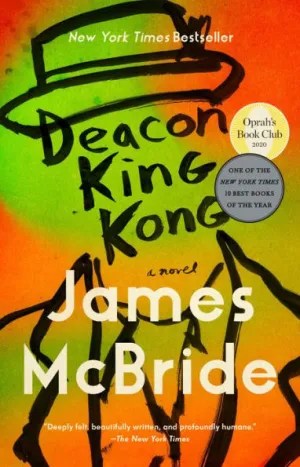
Deacon King Kong, by James McBride

Why this book: Selected by my Literature reading group after the strong recommendation of Patsy, who has yet to let us down with a book she strongly recommends! 

Summary in 3 Sentences: Deacon King Kong is the nickname for an old black man in Brooklyn in the late 1960s when the neighborhood is in the middle of a drug war between several different gangs cashing in on the very lucrative heroin trade.  The story includes colorful characters from the poor urban underworld of that era – the poor Italians, the poor blacks, the Irish cops, and the places and manner where those three cultures clash and cooperate.  It’s a fascinating story, with fascinating characters which shines a light on a time and place in NYC culture when it was in transition.

My Impressions: I enjoyed and learned a lot more from this book than I expected.  I listened to it, which served me well, as Dominic Hoffman, the reader, did well in performing the various roles and voices that arose in the story. He helped make the characters real and believable and the story had enough drama and even a bit of fairy tale in it to keep me engaged.  I’ve already recommended it to several friends. The book has been widely recognized, won several awards, and is an Oprah pick. 

The story begins with the book’s unlikely protagonist known in the neighborhood as “Sportcoat” drunk and trying to kill “Deems,” a young man who is plying his trade selling drugs to other young people on a corner in the neighborhood – the projects in Brooklyn.  Everyone sees the attempt but Sportcoat only woulds Deems,  as Deems turns his head at just the right time.  Sportcoat was so drunk he doesn’t even recall trying to kill Deems, and his drinking buddy “Hot Sausage” is astonished at the stupidity of the act and tries to convince Sportcoat that he needs to leave town, in order to avoid being killed in revenge, either by Deems or Deems’ drug bosses or friends.  At this point in the book I’m not so sure what i’ve gotten myself into – maybe  “Amos ‘n Andy” in ‘the hood.

‘But the story rapidly evolves and gets better and better.

Sportcoat’s attempted murder incites a mini-drug war between Deems’ boss, and another drug lord who wants that territory.  Then, into that drama comes “the Elephant,” an Italian smuggler who works in the neighborhood but on the fringes of the Italian Malia, but is not in the drug business.  We get to know all of these criminals as human beings, doing what they can to survive and play by whatever rules will keep them alive in the battle for illicit gains in the underworld of Brooklyn.

We then get to know the Irish cop who is assigned to sort all this out, who after a long career policing in New York and Brooklyn is only months away from retirement, and doesn’t want to get in too deep and put his retirement in jeopardy.   One of his main connections in the hood is the wife of the pastor of the church where Sportcoat is “the Deacon” and their friendship adds a different human dimension to the story. 

McBride brings so many fasicnating characters into this story that it truly was a joy to listen to it.  He takes us back to a simpler time – when most of the blacks in Brooklyn had grown up in the world of racism and limited opportunity in the rural South, and then migrate north to NYC in hope of a better life.  These former farm workers, sharecroppers, laborers and household help from the South form a tight community where people look out after and take care of each other, and yet squabble like family.  We get insights into the charm and pettiness of church life in a poor section of Brooklyn and the many eccentric characters who gave that neighborhood its character and personality.

Our protagonist “Sportcoat” is hard to take seriously at first, but the more we get to know him, the more we see that there is to admire. He has an ongoing relationship with his wife Hettie, who is a constant in his life, and their relationship evolves throughout the book, even though she’s no longer living.  Sportcoat talks to her and she answers him, chastises him, gives him advice, and he argues with her – until she gets mad and leaves him alone.  Until she comes back.  Sportcoat’s relationship with Hettie adds color, depth and humanity to how we understand him, and how he deals with the challenges that he brings on to himself. 

And as we get to know each of the colorful characters in this book we come to admire them in spite of their eccentricities and failings.  McBride is sympathetic and compassionate toward the characters in the book – each doing what they can in a difficult and often ugly environment.   Whereaas we might laugh at or look down on the eccentricities, the naivete, sometimes poor judgment of the characters in this book, I couldn’t help but see McBride’s approach as celebrating these eccentricities and differences in perspective and lifestyle.  This is what made this book so much fun to read/listen to.   McBride brings out the ridiculous and the sublime in each of his characters. 

The second half of the book includes a mystery and a treasure that bring a number of these chareacters together in unanticipated ways, and adds more fun and drama to this story. 

Deacon King Kong is an entertaining and insightful way to get in a culture and lifestyle that was a key part of American when the rest of the country was watching the moon landing, the War in Vietnam and the disfunction of Washington Politics. 

Highly recommended and deserving of its many accolades.  

Posted in Uncategorized | Tagged , , , , | Leave a comment

Matrix, by Lauren Groff

Why this book:  Suggested by a good friend. I listened to it on audible.

Summary in 4 sentences. Setting is 12th century England where a young teenage girl related to the Queen is not legitimate, born after her mother is raped, and also not considered attractive enough for a politically advantageous marriage  – consequently she is exiled to a poor and struggling abbey in Northern England.  The story is of her life, as she matures into adulthood and her spiritual growth in that very austere setting of the poor abbey, where she eventually rises to  become the Abess of the Abbey and develops it into one of the wealthiest and most highly renowned Abbeys in England. It is a book about a women leading women nuns in the primitive world of medieval England, with few advantages except their wits and their sense of community. It is also about spiritual growth and resourcefulness for women leaders in the face of adversity.

My Impressions: This is very different from my normal reading fare – in that in Matrix, men are only peripherally mentioned and play little role in the book, except as foils to the ambitions of the lead character.  Also the setting was new to me, as I was unfamiliar with much of the terminology that describes life in a convent in the middle ages.   The English accent of the reader took me to England, though in fact, at that time and place, educated people spoke Latin and/or French and the uneducated spoke a form of English that would be unrecognizable to us today (think Chaucer).  The title Matrix refers to the late Middle English word for “womb” which comes from the Latin root “matri..” meaning mother. 

The protagonist Marie is loosely modeled after what little is known of  Marie de France, a remarkable female poet who lived in the same period.  The character of Eleanor of Aquitaine, once Queen of France AND Queen of England, and imprisoned for 16 yrs by her husband then King Henry of England and mother of Richard the Lion hearted,  is a much better known historical figure and her character in the book fits with what is known of her,  (Katherine Hepburn plays her in the movie “Lion in Winter”)

Matrix the book starts out pretty bleak – the main character Marie felt abandoned and banished against her will to an impoverished abbey several days travel from anything she knew. When she arrived at the abbey, she she faced many challenged in adapting and was miserable for the first year or so, dealing with the poverty, rigid discipline, and privations.   But as the story progresses, Marie adapts to the physical discomfort, becomes stronger, assumes more responsibility and grows into her role as sub-prioress.  She brings her strength of will and intelligence to bear in improving the circumstance in the Abbey. 

Indeed much of what I found most interesting was how these women lived together,  cooperated, squabbled, were resourceful and clever and survived without men in a hostile world, while devoted to poverty and chastity and each other  After many years, Marie was eventually selected to become the Abess to lead the abbey, and continued to  help them to thrive, in part in spite of her many challenges,  in part because of them.  They lived  apart from but in cooperation with the secular world in a nearby village.  The abbey included oblates (young people sent there by their parents to be educated), novice nuns, nuns and nuns of various positions and responsibilities within the hierarchy of the abbey, such as the cook, the gardeners, the veterinarian, and some who had specific practical skill in bookkeeping, construction and maintenance.

Marie is the central figure of the book and her character, her growth and ambition – both worldly and speiritually – are the main themes of Matrix.  Initially she is angry at being exiled to what she regarded as an impoverished stinking mud hole of an abbey.  Then she decided to make it better, and became engaged in projects to improve her own life and the lives of the other nuns there.  Her intelligence and ambition in this regard earned her more responsibility and more avenues for her ambition to excel and lead, and to not be a victim.  After she became abbess of the abbey she was clearly the strongest figure in person and in position in the abbey, and eventually very prominent in the region, as her ambiton and initiatves earned the abbey more and more wealth, resources and respect.  Under her leadership the once hungry and even emaciated nuns became among the best fed people in the region.

Marie claimed to get her wisdom and power from messages given to her in her visions and messages from the Virgin Mary. These visions inspired projects which enhanced the wealth, power, and reputation of the abbey, but were also controversial within the community of nuns as well as within the Catholic Diocese. Her initiatives were unorthodox and some considered even heretical, and were resisted by many within the abbey, but she always prevailed.

Groff’s novel also addresses the sexuality of the nuns including Marie, who found outlets for their physical desires through regular erotic experiences with each other, considering natural and not sinful, but a gift of God, as it was not fornicating.  Sex between men and women appeared to be regarded as a necessary evil necessary to bear children in the secular world,  but sinful and an abomination outside of marriage. In fact I almost got the impression that for Maria and the nuns in the Abbey, men in general were considered to be among the primary sources of sin and temptation, and except for their necessity for child bearing, not  particularly useful or appreciated.

At the end of her life Marie realizes the limitations of her power, and that all of her earthly achievements and all that she had built would change and eventually crumble, and there was nothing she can do about it.  She reaches a point of acceptance and resignation.  The nuns in the abbey were awed and intimidated by her, and divided as to whether she had been a saint or a witch.  The prioress who succeeds her was also intimidated by Marie and as abbess, would be more conservative and obedient to the male-dominated church hierarchy, and intended to put the abbey back on a more traditional path.

Marie’s strong will, power and achievements will appeal to 21st century Western readers who have become comfortable with female leadership and power, and their resistance to the limitations of male-dominated hierarchies. 

Did I enjoy Matrix?  I found  the set, setting and characters interesting and provocative, and Marie in particular, impressive and in fact, inspiring.  Matrix provides a fascinating look at the culture inside of a 12th century Abbey, a world of all women.  And Marie is a fascinating character – a strong, wise, compassionate and courageous woman, with a deft political sense, and a dash of rebellious bubris.  

Posted in Uncategorized | Tagged , , | Leave a comment

The Adventures of Huckleberry Finn, by Mark Twain

Version 1.0.0

Why this Book I’ve been wanting to read this again for quite a while. Read it in Jr HS and didn’t care for it. Also all the fuss about the new book James about this adventure from Jim’s perspective reanimated my interest. 

Summary in 4 Sentences. In order to escape his abusive father, Huck fakes his death and takes a raft down the Mississippi river, and in the process runs into a runaway slave Jim, who Huck knew pretty well as he had been the slave of Ms Watson his fomer guardian.  Jim ran away after hearing that Ms Watson had planned to sell him in New Orleans which would take him away from his family for good.  As they go down the river they have a number of adventures, most notably after linking up with a couple of fraudsters who are preying on isolated communities along the river. One thing leads to another and eventually Tom Sawyer shows back up after Jim is captured and being prepared to to be sold,  and Huck and Tom scheme to help him escape. 

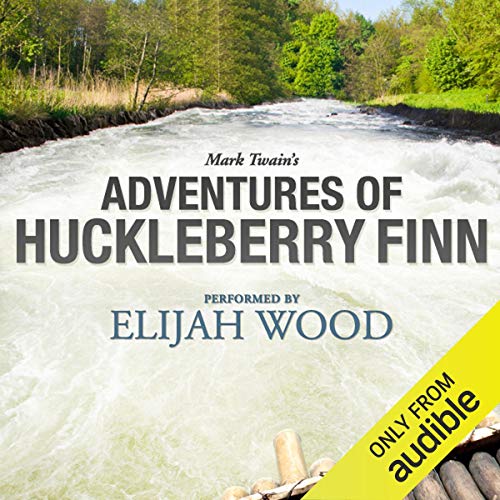
My Impressions: I enjoyed this book immensely – and am glad I chose to listen to it – and would recommend the Elijah Woods performance on Audible as part of  Audible’s Signature Classics (pictured)   Wood reads it in a what seemed to me to be a convincing rendition of the accents of the time, both for Huck, Jim and the many characters they come across in their adventures.  His reading and accents bring the characters and the story to life, and made for a compelling re-experience of this story.  I finished it in about a wee, just commuting and a bit on my bicycle.  

It was  uncomfortable hearing the N word used so regularly and comfortably in the book – apparently 200+ times.  That was the one word used in that time and place to refer to black people.  Racism was simply an accepted part of the culture those people were born into in that part of the South.  Huck was morally confused about what he’d been taught was the wrongness – illegality – of helping a fugitive slave.  He felt guilty about breaking the law, and that guilt was at odds with his sense that Jim was a good man who deserved his freedom.  Helping runaway slaves was an egregious offense at the time and he had to hide or make other excuses for being with a black man on his journey down the Mississippi.

Twain used this book to satirize a number of common practices in the book including slavery and the dehumanization of blacks.  He used Huck’s basic goodness, common sense and practical approach to problem solving to poke fun at people and practices that don’t hold up under scrutiny.  Twain’s wit is particularly vicous against arrogant and pretentious people – and especially against the “Duke” and the King of France that Huck and Jim encounter on their trip down the river. Twain is also unsparing in his satire of the gullibility of the hard working simple folk in the small towns along the river, but he gives them their dignity back when they respond viciously, when the realized they’d been had.

Late in the book, when Tom Sawyer  rejoins Huck and Jim, Tom’s romantic idealism provides more fodder for Twain’s humor, as Tom constantly comes up with absurd plans to fulfill his romantic fantasies about ‘the right way’ plan and conduct an escape, or an adventure or what have you.  His proposals make no sense to the reader, nor to Huck, nor to Jim, but Tom is so persuasive and claims to have a much more sophisticated view of life, that Huck and Jim acceded to most of his crazy plans. 

This is the announcement of this version of Huck Finn on Audible, and I strongly recommend it as an enjoyable way to re–experience this classic. “Audible is pleased to announce the premiere of an exciting new series, Audible Signature Classics, featuring literature’s greatest stories, performed by accomplished stars handpicked for their ability to interpret each work in a new and refreshing way. The first book in the series is Mark Twain’s Adventures of Huckleberry Finn, performed by Elijah Wood.”


Posted in Uncategorized | Leave a comment

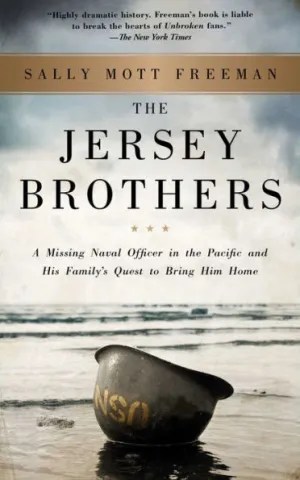
The Jersey Brothers – a Missing Officer in the Pacific and His Family’s Quest to Bring Him Home, by Sally Mott Freeman

Why this book:  My wife read this and was really impressed – she rarely gushes about a book,  but she gushed about this one, and when she gushes, I listen and try to read the book. She bought copies for many of her friends. So I put it in my cue and listened to it. Glad I did. 

Summary in 3 Sentences:  This is the story of three brothers, all in the Navy and at different places working for different organizations during WW2 in the Pacific.  One brother was working in FDR’s White House, one was on the Enterprise and a third was in the Philippines  and became a Prisoner of War. The author is the daughter of one of these brothers,had acces to all their correspondence, and creates a unique lens through which to view the war in the Pacific through these three individuals – who were like the Forest Gumps of the Pacific War – it seems one of them was wherever many of the most important events took place, and we experience those events through their eyes.  Much of the story is about the efforts of two of the brothers to find their youngest brother who was a prisoner of the Japanese, while we also experience the brutal conditions of his captivity – as bad or worse than concentration camp victims in the Holocaust. 

My Impressions: Loved this book. It was a great ride through an important and tumultuous time in American History.  The author gives us a well researched history of certain aspects of the War in the Pacific through the eyes of three brothers, each a naval officer but participating in, experiencing and contributing to our victory from very different positions. Through their eyes I learned about important aspects of the war with which I’d been previously unfamiliar. 

It begins with the story of a well-to-do family in New Jersey with two brothers from their mother’s first marriage, and one from her second, all three attending the Naval Academy, two of them graduating with commissions – the third leaving, beginning a second career, but getting commissioned at the outset of the War.   One brother Bill is involved with intelligence in Washington DC and gets called upon to create and run FDR’s famous Map Room which kept track of what US military forces were doing around the world.  The other brother Benny became a weapons officer stationed on the USS Enterprise Aircraft Carrier which happened to be outside of but approaching Pearl Harbor when the Japanese attacked on 7 December 1941  The third and youngest brother Bart was a supply officer stationed in the Philippines when the Japanese attacked Manila right after they hit Pearl Harbor. . 

This third brother Bart is wounded in the Japanese attack on Manila and was in the hospital and eventually taken prisoner by the Japanese when they occupied Manila.   With his capture, the trajectories of the lives of these three brothers during the war take off – and Sally Mott Freeman’s story bounces from one to the other, providing different but complimentary perspectives on how the war affected differnt people in the Navy, supporting the war effort in different but unique roles.  She was able to use her extensive access to family letters and  diaries and her research into naval archives to create a fascinating, you-are-there narrative.

Bill and Benny are very engaged in playing their key roles in the war, and the author describes their persspectives and experiences with depth and feeling.   Bill sees the war from the macro strategic perspective in FDR’s white house,  and from his key position, interacts with key leaders in the US government and our allies.  We get Benny’s perspective on board the USS Enterprise as a weapons/gunnery officer returning the day after Japan’s attack to a burning and devastated Pearl Harbor, and then we are with him in the Navy’s reaction to that attack with Enterprise involved in the launching of the Doolittle raid on Tokyo, then the Battle of Midway and eventually Guadalcanal, Iwo Jima, and Okinawa.  

Eventually after several years, the two brothers essentially trade places.  Benny is burned out from being in constant battle in the Pacific and requests shore duty to recover, and so is sent back to the East Coast.  Bill requests a break from the 80-90 hour weeks of staff work in Washington, and his request is granted to join the naval war at the front.  Soon after Bill arrives, Admiral Kelly Turner, one of the key admirals in the Pacific Fleet requested Bill as an Aide de Camp where he serves out the remainder of the war.  From Bill’s perspective with Adm Turner,  again we see the war from a unique and strategic perspective. Bill was the author’s father and so she personally heard many of the perspectives he shared about the Pacific war from that perspective. Her father remained in the Navy after the war and eventually became head of the Navy’s JAG corps. 

But much of the book was about younger brother Bart and the experience and plight of the Japanese held PoWs in the Philippines. The Japanese were notoriously cruel to allied prisoners, in part due to their belief based on the code of Bushido for which it is the height of dishonor to surrender or to be captured alive. Accordingly the Japanese treated allied PoWs as  dishonored and less than human. Bart was moved to several different Pow camps, while Bill and Benny constantly  sought to find out first, if he was alive, and  second where he might be, in case a rescue may have been possible. 

Important players  in the book were the mother and father of the three brothers -especialy their mother Helen.   Bill and Benny were her sons by her first marriage; Bart was her son by her then current husband, was her youngest and favorite. In her constant efforts to learn the fate of her son, she represented the many thousands of mothers who helplessly waited for news of their sons at war. But Helen did not passively wait for word – she constantly wrote letters to congressmen, imploring them to do more, including President Roosevelt and senior Navy staff.  She was involved in whatever efforts she could to provide support to soldiers and sailors on the front. Her pressure on Bill and Benny to do more to find and perhaps help their younger brother added to their own war stress as well as their anxiety for the well being of younger brother Bart. 

This is the story of a unique family, written by the daughter of one of the principle players in the family drama. But it is also a very human look at the Naval war in the Pacific through the lives of Benny, Bill, Bart and Helen Mott.   Sally Mott Freeman has not written a dispassionate history of the naval war in the Pacific, but in writing about her family’s participation in that war, has put a very human face and dimension to this war that is slowly fading  from memory, as those who fought it are rapidly passing away. 

I have thanked my wife for so strongly urging me to read this book. I highly  recommend it. 

Posted in Uncategorized | 2 Comments

Tom Lake, by Ann Patchett

Why this book: I’d read and really enjoyed Ann Patchett’s Bel Canto and had read a couple of good reviews of this book. I listened to it on audible.

Summary in 4 Sentences: Told in first person from a mature woman in her late 50s spending time with all three of her grown daughters who had to leave school/work during the pandemic to return home to the cherry farm in Michigan where they’d grown up.    As they all work together on the farm, the daughters are eager to learn about their mother’s (our protagonist) past when she had had an affair with a man who’d become an A-list  famous movie star.  In Tom Lake, she shares with the reader what she shares with her daughters, as well as what she doesn’t share with her daughters, and her perspectives on life looking back on that exciting and romantic period, how she views her daughters and her life now – her marriage to a man who she loves and is solid but not nearly as exciting as her former lover.  It is a meditation on life from a wise woman looking back on her decisions, her life, and her very different relationships with her daughters.

My Impressions: Not my normal fare, and some would call this a “chick” book,  given that the protagonist and most of the key characters are women, and it deals largely with a woman’s life and perspectives – men play a supporting role in the book.  But I not only thoroughly enjoyed Tom Lake,  but also  very much appreciated the perspectives this book gave me on women, their wisdom, priorities and values, coming  from this very admirable main character.   

This is Lara Wilson’s story, about her growing up and becoming a young actress in her 20s playing Emily in a performance of Thornton Wilder’s Our Town, in a fictional theater in Michigan known as Tom Lake.  During this period she has a passionate romantic tryst with the male lead in the play. The story goes back-and-forth between her youthful experiences in Tom Lake to the “present” day, when she is a married empty-nester in her late 50s, living with her husband on their farm in Michigan, telling her story to her grown daughters who are eager to hear about their mothers romantic adventures.   The audible is read by Meryl Streep who does a remarkable job, convincingly embodying in her voice the woman she is representing.  

The Our Town story is a constant sub-theme in the book – Patchett writes it almost assuming her readers are familiar with the story.  And Tom Lake has it’s analagous themes to those in Our Town – the joys of family and community, the joys and pains of life and romantic love from the perspective of a young girl. Our Town won the Pulitzer Prize for drama in 1938. 

Tom Lake is also a coming of age novel, but later in life.  We learn how Lara gains maturity from the joys and trauma of  her romantic experiences as a budding young actress, to then choosing to leave that world behind and opt for a more stable and simpler life, living on and working a cherry farm in upstate Michigan with her husband, raising three girls. 

The setting of the novel is later Lara’s life, during the pandemic when her three daughters return home to spend the COVID shut-down on the cherry farm they grew up on with family, and the whole family is once again together, working the farm – because Covid restrictions don’t allow the normal seasonal laborers to be there.   During their work, the daughters begin inquiring about their mother’s earlier life and they want to know more about an affair she had had with another actor who subsequently became one of the top and most famous male actors in America. Think Brad Pitt or Tom Cruise. .  

In Tom Lake, Lara is her telling us her story, and we read what she tells her daughters, what she’s thinking as she tells her story and she shares with us what she doesn’t or won’t tell her daughters. She shares why she leaves some parts out,  and how each of her daughters reacts very differently to different parts of her story.  We are inside her head, and we come to see how she regards and relates differently to each of the daughters, who are indeed very different. And most importantly, we see how 30+ years of life and maturity change her perspective on what was so urgent to her as a young woman.

And just when I thought I’d figured out the story and it’s trajectory, Patchett throws in some surprises that catch me a bit off guard, even decades after the tumultuous passionate romance between Lara and Duke.

I really enjoyed the characters in the novel – all seemed legitimate and realistic:

  • Lara Nelson – She is the best developed of the characters; the entire story is told from her perspective and we see it all through her eyes.  An intelligent woman with a wisdom and maturity that has come through some tough lessons learned in her youth, some of which she relates to her daughters, and what she doesn’t tell them, she tells us. 
  • Peter Duke – the extremely charming, gifted, talented, narcissistic and self-serving male heart throb of Lara’s youth.  I couldn’t help but like him – nor could Lara resist, nor could most women – but he was a slave to his charm and talent, and his seeming ability to get whatever he wanted.
  • The three daughters: Emily Maisie, Nel who loved and bickered with each other and played off of each other in getting their mother to tell her story. Emily is hard-core and pragmatic, but has some baggage with her mother, and will take over the farm; Maize is on her way to becoming a veterinarian, and Nel wants to be an actress and can’t believer her mother walked away from the opportunities she had in Hollywood. .  
  • Sebastian Duke:  Peter’s brother who protected Peter (from himself and his sometimes excessive exuberance, also talented and good looking, but a truly nice guy, selflessly helping others – the counterpoint to Peter’s self-absorption. 
  • Joe Nelson: Lara’s husband, who during Lara’s tryst with Peter Duke, had been the director of the play Our Town, and then had the role of stage manager in the play.   Joe was a quiet, solid, mature, admirable, and ultimately stabilizing presence in the novel.  

Some key themes that I saw. 

Love – the fiery passion of youthful, hormone-driven infatuation contrasts with the steady flame of a more “mature”  persistent love, companionship and partnership of long term marriage – to include paternal love for children. This book also touches on the regrets and painful residue of a broken heart – how the wounds of disappointed love can heal over time, as we get older,  but not completely.

All that glitters is not gold – especially in Hollywood.  Lara spent some time in the limelight in Hollywood as a supporting actress in a movie which did pretty well.  She ultimately didn’t like the Hollywood scene, and was able to see through the hype, manipulation and marketing behind much of tinseltown.  We see in Duke and a couple of others in the book,  that the glamour of Hollywood can draw people driven by a yearning need for the power and attention that comes with stardom.  Through Lara we get insights into the pathology behind much of the pursuit of fame and celebrity that drives Hollywood.

The joys and challenges of living on a farm, and the attachment that farmers and their families have to the land that their forefathers cleared and worked. And to small communities where people take care of each other.  Lara’s exciting and romantic past is regularly contrasted with her love of the simple stability and peacefulness of life in a rural community, with close connections to and inter-dependency with people in that small community. 

The simple beauty of nature is juxtaposed against the fast paced urban, impersonal and anonymous life in the cities where Lara has works – LA and New York.  She often returns to the theme of the simple and therapeutic beauty of nature. 

This book won’t appeal to everyone – it is a quiet book without a lot of excitement or drama.  But I thought it was a great story, very well told which shares wisdom and insights from an admirable mature woman.   I recommend it to thoughtful readers who don’t necessarily need a Bourne Identity type of drama in their reading. 

I”d recommend a couple of other reviews of Ann Patchett’s  Tom Lake:  The New Yorker  review.   New York Times review,  The Washington Examiner  review  

Posted in Uncategorized | Leave a comment

Demon Copperhead, by Barbara Kingslover

Why this book: Selected by my literature reading group. Pulitzer prize winner for literature for 2023. Also we had read (I twice)  Kingslover’s book The Poisonwood Bible and loved it.

Summary in 3 Sentences: A novel written in the first person  retrospective from a young man who has grown up among the rural poor of Appalachia in western Virginia, looking back on his  life from his boyhood living in a trailer with his drug addicted mother through teenag years and young adulthood.  He shares with us the abuse he’d taken from his mother’s boyfriend then husband, then uncertainty and emotional trauma as a foster child, then as a runaway, and finally as a teenager in High School, who’s fallen into the same pattern of drug addiction and self-defeating behavior that is the norm in his community.  All the while, we see that he has a good heart, and a maturity of perspective that belies his bad decisions and the bad luck he’s experienced,  and there is always an undercurrent of hope and the possibility of redemption throughout the novel.  

My Impressions:    Not only a good read, it is also powerful and (at least to me) authentic exposure of  a part of life in America that I have never personally seen nor experienced.  It is a “bildungs roman” – a coming of age novel taking place in the 1990s and early 2000s in economically disadvantaged and backward part of western Virginia (Jonesville in Lee County – a real place).  From the perspective of this one rather precocious young man, we learn about life in a part of America that is largely forgotten or ignored by mainstream media and the state and federal bureaucracy.  

Demon Copperhead is the nickname given to Damon Fields who has had few positive adult role models  – most adults he knows have little money, little faith in the future or in the state, many are alcoholic and making a living in the gray or shadowy parts of the economy.   They fieel dismissed and disenfranchised by the more well-to-do parts of American society, and feel left on their own to get by and find whatever fun or satisfaction they can.  Demon loses his mother and is put into a series of foster homes, of people who accept foster children simply for the money the state gives them.  Demon is exploited, made to do excruciating work on a tobacco farm, is emotionally and physically abused, and given very little of what a child needs to grow and flourish. But he learns to survive and learns a lot of resilience.  

We learn about how ineffective the DSS (Departmetn of Social Services) can be in under resources parts of our country to monitor and support foster children and others who are adrift in society – underpaid, overworked social workers are not held accountable by their underpaid, under qualified and overworked supervisors, who are also not held accountable in a system which is more focused on meeting minimum standards, less on effective action, and does not reward success or creative solutions. Even those individuals who try hard are stymied by too much work, too little pay, few incentives to work hard, an initiative-stifling bureaucracy, poor leadership, and an extremely difficult job.

Demon does have some adult supporters and mentors,  but they are not family or parents  – his adult supporters can only encourage him, but there is no one who he trusts or who has authority to hold him accountable. So he falls prey to the connivers and exploiters and low-lifes that look for vulnerable youth to support their own self-serving and corrupt agendas.

Eventually Demon becomes a teenager, gets involved with girls, sex, alcohol and drugs, high school shenanigans – all of which divert him from a path that would take him out of this cycle of failure and despair, and away from opportunities to grow and prosper.  An important factor in his bad behavior is that he doesn’t believe he can break out of the cycle that most of the youth he knows is in  – no one he knows has, and it is so easy to fall prey to all the incentives and opportunities he experiences take him the other way.  All along the way, he sees and becomes familiar with sexual exploitation, violence, suicide, drug overdoses – and the many tragedies that are commonplace in the world he inhabits,  but are much less common in the schools and upbringings of the middle and upper classes of society.

But there is redemption.  Demon does experience love from his neigbbors and two of his teachers who are there for him when he begins to realize that he is going over a cliff. He has a few close friends who retain faith in him, in spite of his  bad judgment and series of bad decisions.    Eventually the light begins to come on and when he is at one of his lowest points, he makes a fateful and difficult decision to try to take a step in a new direction.  

One of the important themes of the book is how the medical establishment encouraged use of and ultimately addiction to oxycontin, calling it a wonder drug against pain, and not addictive.  Demon becomes addicted after a football injury and then slides into the underworld and blackmarket of oxy-junkies bargaining and trading and dealing in illicit oxycontin and fentanyl.  As hard as he tries to free himself, his physicl pain, the addictive qualities of the drug,  and his environment conspire against him.

Another important theme of the book is how the rural poor, the people of the so called “red neck” culture of the Appalachians are disrespected,  disregarded and disenfranchised by much of America.  Demon sees how the poverty and underachievement of today is the result of decades of coal barons readily exploiting local miners, how they bought up property at fire-sale prices, undercut safety and social services and any other obligations to support the miners that might detract from their exorbitant profits.  Demon has a gift for drawing and has some success creating a syndicated cartoon which satirizes the way the wealthy exploit the poor and how the rest of America looks down upon rural and poor Appalachian culture.

There is also a tribute to rural living, the connection with nature, the simple joy and pleasures of the quiet and serenity of the outdoors, in contrast to the hectic urban environment of Nashville and Chattanooga where Demon also spends some time. and even Atlanta, where he went to rescue a friend who’d been seduced there with drugs and other threats.  These urban centers of activity and ambition are contrasted with the comfort and peace that Demon feels in the outdoors in nature. 

The trajectory of the book is explicitly modeled on Dickens’ David Copperfield. In reading a review of that book, I realize that Kingsolver unashamedly uses names for some of the characters in David Copperfield in Demon Copperhead. And given that David Copperfield had a hopeful ending, I knew that somehow Copperhead would too.   Though not a classic “happy ending” it is hopeful and I liked the way she concluded the book.

One of he things that impressed me about the book is the language that she used – sexual, profane, politically incorrect – representing the way I would imagine young people in that part of rural Virginia actually speak.  We read language somewhat different from how young people in urban environments speak,  and very clever expressions and metaphors which I hadn’t heard before. Kingsolver also does a good job of being the voice of a rowdy and randy young man – which surprised me from a middle aged woman.  She certainly got help from young men to create that credible voice.  

Posted in Uncategorized | Leave a comment