
 Why this book: I lead a volunteer reading group for young men early in the pipeline to become SEALs or SWCCs (Special Warfare Combatant-craft Crewmen). We pick relatively short books related to the profession they are entering, and we meet and discuss them. I had read several of Steven Pressfield’s books, and followed a couple of his blogs and assumed correctly that this short book would fit well in the “curriculum” I am creating for these young men.
Summary in 3 Sentences: Pressfield uses the extensive research he had done for his historical novels set in ancient Greece as a source for much of the wisdom in this book – especially the culture and values of ancient Sparta. It is less an examination of the Warrior Ethos, and more of an unstructured discussion broken up into 30 short chapters (in a 90 page book!) in which he addresses a variety of aspects of what he considers to be perennial and universal warrior values. He concludes by making the point in the final chapter that warrior virtues should be internalized into the warrior’s heart to serve the warrior not just in battle, but in a broad range of contexts where virtues such as courage, patience, loyalty, perseverance, and love also define the great and successful.
My impressions: This book is a short meditation that Pressfield says naturally arose out of writing his most recent novel about future “warriors” unconstrained by a national purpose. He had been grappling with the question, What is a warrior, beyond a tool of the state? This book is a loosely structured compilation of his thoughts.
It is not a complete, well-researched exploration of the subject. Nor does it pretend to be. But he makes some interesting and occasionally controversial claims, and it is worth reading for anyone in or considering joining the military profession, especially combat arms.
This book is his effort to define and describe universal warrior virtues, that apply to warrior cultures across time and space. I am reminded of Joseph Campbell’s similar but much more exhaustive and more thoroughly researched effort, The Hero with a Thousand Faces, and Shannon French’s examination of various warrior cultures in history and around the world in her book Code of the Warrior. These are actually much better books for students of warrior values and cultures, but are also much more demanding to read.
Pressfield begins with reference to the role of mothers, spouses and families supporting the men of Sparta who went to fight and die in Thermopylae – the subject of his highly acclaimed novel, Gates of Fire. The warrior virtues in Sparta he claims, were upheld and reinforced by the strength of the women.
He devotes a couple of chapters to distinguishing between guilt and shame – that guilt is an internal sense of having sinned, whereas shame is based on how one is perceived by others. He argues that though Western cultures value meeting obligations, following norms and avoiding guilt, warriors are driven to seek honor and avoid shame – especially in the eyes of fellow warriors.
He devotes a whole chapter to the differences between warrior cultures and the civilian world. He notes the disparity between warrior values – the warrior ethos – which demands that the warrior seek adversity and put him/herself at risk for honor and higher purpose, and the values of most civilians to seek comfort and avoid danger or risk. He asks the question: “What is the place of the Warrior Ethos within the greater civilian society?…The greatness of American society is that our citizens are still debating it.”
I liked his point about the value of warriors dining together – amongst themselves as a bonding mechanism. The Naval Special Warfare community is seeking to create dining facilities for their warriors and staff, for that very reason.
He includes numerous references to the Bhagavad-Gita and the metaphor of fighting enemies on the battlefield and enemies inside oneself.
The Warrior Ethos is a short, enjoyable and provocative read. It is not a deep look at warrior cultures, nor does he examine nuances or alternative views. It catalogues his own musings based on his research into (mostly) ancient Greek warrior cultures and to a lesser degree Asian – Bushido and the Bhagavad-Gita, and of course brings in his own experience as a US Marine in the 1960s.
I found a book of similar length entitled Steven Pressfield’s The Warrior Ethos: One Marine Officer’s Critique and Counterpoint, by Edward Carpenter. This book roundly criticizes Pressfield’s book as superficial and not accounting for significant differences between the needs of warriors in today’s world and those of earlier times. He pulls the string on the implications of many of Pressfield’s claims and argues that some are based on an overly romantic understanding of history, and many of his values are not completely valid in today’s world, or are completely invalid. He argues against using Sparta as a model, that Alexander is no hero by today’s standards, that there are misogynistic overtones in his book, and that the tribal ethic Pressfield seems to advocate is inappropriate to today’s warriors. He concludes with a rough outline for a warrior ethos for the 21st century.
While I agreed with most of the specific points of Col Carpenter’s criticisms, I disagreed with his overall point – that Pressfield’s ideal is not valid today. The Colonel it seems to me, doth protest too much. In his critique, Carpenter actively seeks possible negative implications of Pressfield’s points, rather than considering broader and possible positive interpretations. For example he argues that Pressfield’s claim that warriors seek adversity is not true – they prefer comfort like everyone else, and indeed most military personnel deployed overseas are indeed living in what in previous eras would be considered the lap of luxury. He also points out that Pressfield does not explore the meaning of the word or concept “warrior” noting that the vast majority of our military forces are not engaged in combat, nor in any real danger.
That said, I think he misses a point – the warrior “ideal” is of men and women who harden themselves by seeking demanding and adverse conditions and are not undone by difficulty. And perhaps “warrior” doesn’t refer to a profession or a title, but rather to a mindset – that clerks and mess-stewards might have a greater warrior ethos (mindset) than a-less-than-committed infantry soldier. I didn’t like the self-righteous tone of his critique – though again, he made points that in their specificity, were accurate. In his rejection of Pressfield’s book, I believe he throws the baby out with the bathwater – but it is worthwhile to read his counterpoints. I would recommend reading the two books together – and then reading Shannon French’s Code of the Warrior.
Attention getting quotes from The Warrior Ethos (page numbers from the paper back edition):
“the Warrior Ethos evolved as a counterpoint to fear” 10
“…an ideal of manly virtue – andreia in Greek – that praised valor and honor as highly as victory.”
Greek poet and Mercenary: “Be brave my heart. Plant y our feet and square your shoulders to the enemy. Meet him a among the man-killing spears. Hold your ground. In victory, do not brag; in defeat, do not weep.” 10
The warrior ethos evolved to counter the instinct of self-preservation `12
Against the natural impulse to flee from danger, the warrior Ethos enlists three other equally innate and powerful human impulses: Shame, Honor, And Love. 12
The Spartan king Agesilaus was once asked what was the supreme warrior virtue, from which all other virtues derived. He replied “Contempt for death.” 13
The dictionary defines ethos as: The moral character, nature, disposition and customs of a people or culture. 14
Warrior cultures enlist shame, not only as a counter to fear, but as goad to honor. 25
But Cyrus knew as the proverb declares that ‘Soft lands make soft people.’ His answer became famous throughout the world: ‘Better to live in a rugged land and rule, than to cultivate rich plains and be a slave.’ …The idea of a rugged land can be applied psychologically as well. 34
The Soldier’s prayer today on the eve of battle is not ‘Lord spare me.’ But ‘Lord let me not prove unworthy of my brothers.’ 40
Courage is inseparable from love and leads to what may arguably be the noblest of all warrior virtues: Selflessness. 41
There is another key element of the Warrior Ethos: The willing and eager embracing of adversity. 50
The payoff for a life of adversity is freedom. 51
In Warrior cultures – from the Sioux and the Comanche to the Zulu and the mountain Pashtun – honor is a man’s most prized possession. Without it, life is not worth living. 53
Honor connects to many things, but one thing it’s not connect to is happiness. In honor cultures, happiness as we think of it – “life, liberty and the pursuit of happiness” is not a recognized good. Happiness in honor cultures is the possession of unsullied honor. Everything else is secondary. 52
The will to fight, the passion to be great, is an indispensable element of the Warrior Ethos. 58
The warrior sense of humor is terse, dry – and dark. Its purpose is to deflect fear and to reinforce unity and cohesion. 61
The returning warrior may not know it but he has acquired an MBA in enduring adversity and a PhD in resourcefulness, tenacity and the capacity for hard work….The returning warrior possesses the Warrior Ethos, and this is a mighty ally in all spheres of endeavor. 76
But the Warrior Ethos commands that brute aggression be tempered by self-restraint and guided by moral principle. 77
The capacity for empathy and self-restraint will serve us powerfully, not only in our external wars but in the conflicts within our own hearts. 79
The Bhagavad-Gita takes the Warrior Ethos and elevates it to a loftier and nobler plane – the plane of the individual’s inner life, to his struggle to align himself with his own higher nature. 80
Here (in the Bhagavad-Gita) is the Warrior Ethos directed inward, employing the same virtues used to overcome external enemies – but enlisting these qualities now in the cause of the inner struggle for integrity, maturity and the honorable life. 81
FINAL PARAGRAPH- Let us be, then, warriors of the heart, and enlist in our inner cause the virtues we have acquired through blood and sweat in the sphere of conflict – courage, patience selflessness, loyalty, fidelity, self-command, respect for elders, love of our comrades (and of the enemy), perseverance, cheerfulness in adversity and a sense of humor, however terse or dark. 90
 Why this book: Selected by my literature reading group, because it had been selected as the NPR 2017 One Book, One San Diego selection. Over the years we have tried to read the One Book, One San Diego selections and have never been disappointed.
 Why this book: I was selecting books for a reading group of young men preparing to enter SEAL Basic Training. This is required reading for Marines. I had read it about 20 years ago and thought it had some good lessons learned for aspiring SEALs as well as good for them to know what the Marines are reading.
 Why this book: I had heard Tim Ferriss strongly endorsing Neil Gaiman’s Graveyard Book. I was away from home unexpectedly without my current reading, so visited a book store and found this one. It looked interesting and not too long. So I thought I’d give Neil Gaiman a try.
 Why this book: Given to me as a gift from my brother who had read it and thought I would like it.
 Why this Book: I went to a Wim Hof half-day seminar in LA with a couple of crusty old SEAL master chiefs who had been following and practicing the Wim Hof method for a while. I went along out of curiosity, did the half day session, and was amazed and impressed. While there, I overheard someone mention a book by an investigative reporter who sought to discredit Wim Hof, but who became a convert. So I bought and read it to give me some background on this seemingly simple program to augment what I was already doing for my physical, mental, spiritual well-being.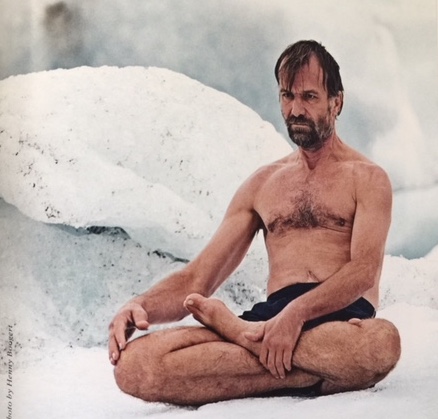
 Why this book: Selected by my literature reading group. Patsy – you have lobbied hard for a couple of real winners, and this is another one! I understand why you were willing to read it for the 3rd time!
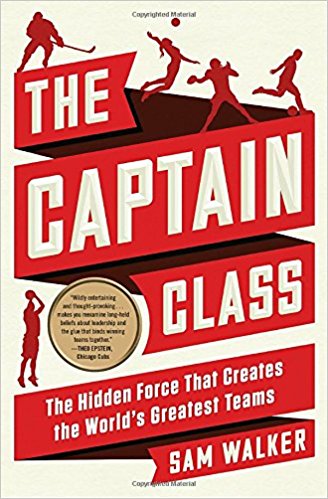 Why this book: Selected by the All American Leadership Reading group to read and discuss. Several other friends had already recommended the book to me.
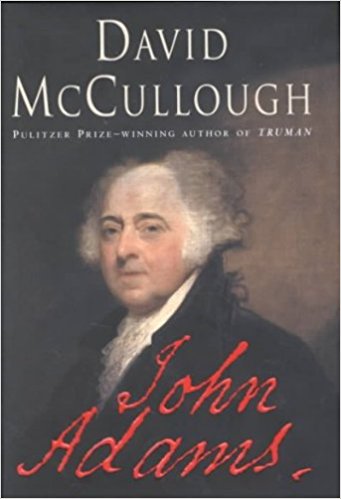 Why this book: My literature reading group decided to select a topic rather than a book, and the topic for this session was John Adams. We selected him in part because we were approaching the 4th of July, and in part because several of the women in our group wanted to read more about Abigail Adams. McCullough’s bio of John Adams has a great (well deserved) reputation and had been on my shelf un-read for years. So I finally decided to read it. So glad I did.
 Why this Book: I was scheduled to travel to Tanzania to climb Mt Kilimanjaro and then afterward participate in a follow-on safari tour of the Serengeti and other wild animal parks in northern Tanzania. Though this book takes place mostly in Kenya, it was suggested by the tour operator as providing good insights into the culture, wildlife, and environment we would encounter in Tanzania.

