
 Why This Book: Chosen by my literature reading group because 1. we have been on a great run of Pulitzer Prize winners, 2. it’s relatively short, and we were looking for something good AND short.
Summary in 3 sentences: Reverend John Ames is in his mid seventies and has a severe heart condition which he knows will kill him soon. He knows he won’t be there to see his young son grow into maturity, so this book is the journal he writes as a letter to his son to share his thoughts about his own life and life in general for him to read when he is an adult. In this letter/journal, we learn of Ames struggles to be a good man and live up to his and his community’s expectations of him, of his struggles with his faith, family and values, and of the wisdom of a life well lived which has helped him to appreciate life’s small pleasures and to accept what comes his way.
My impressions: A very powerful book. Reverend John Ames is a thoughtful, well-read, and very self-aware man in his mid 70s who knows that his heart is very weak, he hasn’t much time left. He intends for his son to read the words he is writing when he matures into adulthood many years later.
John Ames is a congregationalist minister and his letter to his son reflects his struggles to understand and reconcile his very liberal and non-traditional theology with the world he lives in. While he is very devoted to his faith and Christianity, he is also very willing to question and challenge his own views and he does in his letter to his son. Throughout his life he preached and sought to live as a spiritual example to his congregation, and he shares with his son that he never quite lived up to his own standards.
Ames is writing this letter in the 1950s, in Gilead, Iowa, where he grew up and lived his whole life. The town is small and not very affluent, was founded as a place for abolitionists to aid runaway slaves on the underground railroad. Ames’ grandfather was a zealous abolitionist, supported John Brown in his Kansas campaign prior to the Harper’s Ferry disaster. The abolitionist background of his family and the town of Gilead is a recurring theme in the book. Ames’ very religious and righteous grandfather was a central figure in his upbringing.
Three characters appear regularly in Ames’s letter to his son: Lila, Ames’ wife and his son’s mother; Reverend Robert Boughton, Ames best friend and a minister in the Presbyterian church in Gilead; and Reverend Boughton’s son named for Ames himself, John Ames Boughton, known as Jack. They are only mentioned in Ames’ journal-letter to his son and he shares brief vignettes about each of them, but we don’t get to know them very well. Marilynn Robinson resolves this shortcoming by writing separate novels that fill in the gaps: Her novel Home is about the Boughton family, and was named by the Washington Post as one of the best books of the year for 2008. Her novel Lila is about the life of John Ames wife prior to and during her marriage to John Ames and won the 2014 National Book Critics Award.
One theme that Ames returns to throughout his narrative is his preoccupation with his relationship to his namesake John Ames Boughton, the troubled adult son of his best friend. There are unresolved tensions between the two, that both of them awkwardly seek to resolve. Throughout the book we get more background on Jack Boughton and Ames’ relationship with him.
At the end of the book we are brought back to Ames special relationship to the town of Gilead, its people and and the life he has lived and savored there. The joy he has found in the simple town of Gilead is part of the joy he has learned to find in so many small and on first blush, insignificant activities. And we get a sense for why “Gilead” is indeed a fitting title for this book.
I’ll finish wth what my friend Gary wrote after finishing the book:
“It was difficult for me to read the last few pages of “Gilead” because of my farewell tears to a good and wise friend. The book brings to mind Ecclesiates, the parables of the prodigal son, the lost coin, and the lost sheep; Henri Nouwen’s essay about Rembrandt’s Prodigal Son, and a bit of Oedipus Rex.
Above all else this is a love story–God’s love for his creation, people’s refection of God’s love by loving and forgiving each other, and the centrality of the commandment for children to honor their parents as the connecting tissue between God and man. (A corollary must be for parents to honor their children.)
“Gilead” is an essay on many of the ineffable and eternal topics such as the existence of God, the nature of sin, the power of loneliness, the need for sound relationships with people and God, the vast range of emotions brought on by love, our power to hurt and heal people we love; the efficacy and justice of wars between the Civil War and WW II, and our never ending sin of slavery.
What I missed: Reverend John Ames never mentions in all his narrative about his life, any struggles with his sexuality. This strikes me as odd, from a man whose first wife died when he was in his early 20s and who doesn’t marry again, nor apparently have any lovers, until he meets and marries Lila in his late 60s. John Ames makes no references, discretely nor obliquely, to missing physical intimacy with women, nor to that as part of his relationship with his own wife – the mother of his son – apart from the obvious implication of what led to the conception and birth of his son. This is either a misunderstanding by Marilynne Robinson of men, or a deliberate omission by a woman author writing from a man’s perspective. While I found the spiritual and intellectual dimensions of this book inspiring, thought provoking, and powerful, I did feel that Ames’ story deserved a bit more testosterone.
For another interesting perspective on growing old, I recommend an article from the New Yorker Magazine written by a 93 year old man (he’s now 96 as of November 2016, and is still alive and writing!) The article is entitled This Old Man.
A few quotes:
<referring to his grandfather> When someone remarked in his hearing that he had lost an eye in the Civil War, he said, “I prefer to remember that I have kept one.”
He was just afire with old certainties, and he couldn’t bear all the patience that was required of him by the peace and by the aging of his body and by the forgetfulness that had settled over everything. He thought we should all be living at a dead run. I don’t say he was wrong. That would be like contradicting John the Baptist. 32
<after an unexpected hardship, his mother>…closed one eye and looked at me and said, “I know there is blessing in this somewhere.” 35
To be useful was the best thing the old men ever hoped for themselves, and to be aimless was their worst fear. 49
It was the most natural think in the world that my grandfather’s grave would look like a place where someone had tried to smother a fire. 50
Calvin says somewhere that each of us is an actor on a stage and God is the audience. That metaphor has always interested me, because it makes us artists of our behavior, and the reaction of God to us might be thought of as aesthetic rather than morally judgmental in the ordinary sense. 124
If you think how a thing we call a stone differs from a thing we call a dream – the degrees of unlikeness within the reality we know are very extreme…143
Your mother wanted to name the cat Feuerbach, but you insisted on Soapy. 143
I would advise you against defensiveness on principle. It precludes the best eventualities along with the worst. 154
To say a thief is a brother man and beloved of God is true. To say therefore a thief is not a thief is an error. 156
Sinners are not all dishonorable people, not by any means. 156
I wish I could leave you certain of the images in my mind, because they are so beautiful that I hate to think they will be extinguished when I am. Well, but again, this life has its own mortal loveliness…A moment is such slight thing, I mean, that its abiding is almost a gracious reprieve. 162
Don’t look for proofs .. because they claim for God a place within our conceptual grasp….It was Coleridge who said Christianity is a life, not a doctrine….179
He could knock me down the stairs and I would have worked out the theology for forgiving him before I reached the bottom. But if he harmed you in the slightest way, I’m afraid theology would fail me. 190
We fly forgotten as a dream, certainly, leaving the forgetful world behind us to trample and mar and misplace everything we have ever cared for. That is just the way of it, and it is remarkable. 191
Every single one of us is a little civilization built on the runs of any number of preceding civilizations…197
You can spend forty years teaching people to be awake to the fact of mystery and then some fellow with no more theological sense than a jackrabbit gets himself a radio ministry and all your work is forgotten. 208
The Lord absolutely transcends any understanding I have of Him, which makes loyalty to Him a different thing from loyalty to whatever customs and doctrines and memories I happen to associate with Him. 235
There are a thousand thousand reasons to live this life, every one of them sufficient. 243
It has seemed to me sometimes as though the Lord breathes on this poor gray ember of Creation and it turns to radiance – for a moment or a year or the span of a life. And then it sinks back into itself again and to look at it no one would know it had anything to do with fire, or light. 245
Wherever you turn your eyes the world can shine like transfiguration. You don’t have to bring a thing to it except a little willingness to see. Only, who could have the courage to see it? 245
 Why this Book: It was selected by my All American Leadership reading group for our bi-monthly reading group.
 Why this book: This is the 4th Ivan Doig book I’ve read – loved them all and so I decided to take on his Montana Trilogy. English Creek is the first book in the trilogy, but chronologically, the second. I chose to read Dancing at the Rascal Fair ( the second book ) first – what was actual the pre-quel to English Creek, since a couple of my Doig loving friends suggested that it was the next Doig book I should read. Read it, loved it, and wanted to read the whole trilogy – even if not in the order written. English Creek won the Western Heritage Award as the best novel of 1984, and is widely regarded as a classic of modern Western literature.
 elt very, very real. Doig did a masterful job creating and bringing to life a fictional world of rural Montana, that felt so very real.
 Why this book: Selected by my Literature Reading Group. We are on a run with Pulitzer Prize winning Novels and this won the Pulitzer Prize in 2015.
 Why this book: Selected by my literature reading group and also by my family to read and discuss at a family reunion. It won the Pulitzer Prize for drama in the 1930s – continues to be a classic and is a very short read. Also, I have read and been moved several times by Thornton Wilder’s other Pulitzer Prize winning work, The Bridge of San Luis Rey.
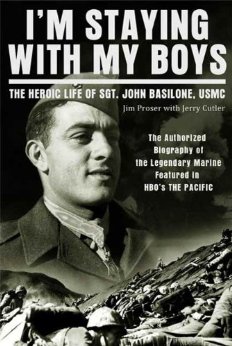 Why this book: A good friend of mine was reading it and I decided to read it as well. I had heard of Basilone – there is a statue of him in Little Italy in San Diego, and part of Highway 5 going thru Camp Pendleton is named for him. And I was aware that he was featured in the HBO series The Pacific, but knew very little about him.
 Why this book: Selected by the All American Leadership reading group for our bi-monthly discussion for July-August 2016.
 Why this Book: My son suggested that everyone in the family read this book before our family reunion, and discuss it when we get together.
 Why this book: I had read this book about two years ago, but needed to re-read it prior to presenting to a company that is seeking to change its culture.
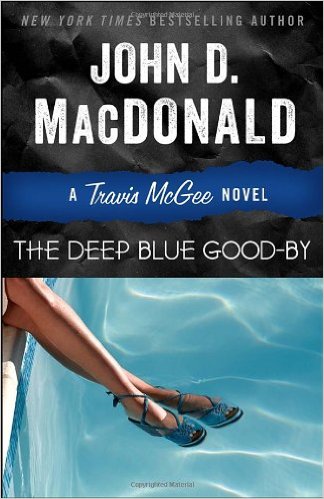 Why this book: Mike Rowe (of Dirty Jobs fame) strongly recommended the entire John D. MacDonald Travis McGee series in his podcast interview with Tim Ferriss. This recommendation was subsequently reinforced by my friend David Johnson who has read all of MacDonald’s Travis McGee novels (and so much more) and who said he envied me the opportunity to read these for the first time. This particular one is short, fascinating, gripping, and a fun read – I’m a slow reader and I read it in two days. A page turner.

