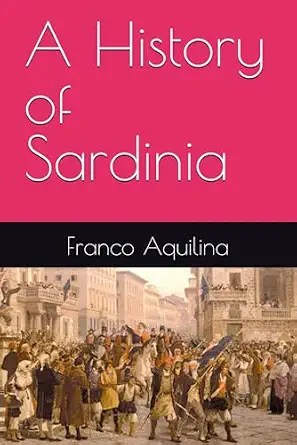
Why this book: I was getting ready to travle to Sardinia for a cultural and hiking trip and had heard this was an excellent short summary of the key events and issues in the history and current situation in Sardinia
Summary in 3 Sentences: The book is written in chronological order, briefly covers the little known very early pre-history but begins largely with the Nuragic Age going back 4 thousand years ago. It then walks us through the complicated and multiple stages of Sardinian history when the island was conquered many times by multiple European entities, to include the Carthaginians, Romans, Vandals in the middle ages, Spanish, Genoese, French, and finally the Italian’s. It concludes with the more recent years under Italian rule and concludes with the political, cultural, environmental challenges Sardinia is dealing with in the 21st century.
My Impressions: A great concise history of Sardinia, from the stone age to the 21st century. Only 143 pages, with short chapters, all of us who went to Sardinia and read this book swear by it as, not only a concise but also an educated overview of key elements in the history of Sardinia.
A few things I didn’t know before, but that I learned from this book.
- The Phoenicians were based in the Eastern Mediterranean what is now Turkey and Lebanon area, and were primarily traders with good trading relations with cultures and peoples throughout the Mediterranean including those in Sardinia. They had people living in Cagliari to facilitate trading.
- Carthage was originally a Phoenician settlement in North Africa which rebelled and essentially took over the Phoenician empire. Whereas the Phoenicians were a trading culture, Carthage was imperialist and conquered and ruled Sardinia for several centuries, but were replaced by the Romans when the Romans defeated Carthage in the Punic wars. The Romans ruled Sardinia as a colony and breadbasket for several centuries.
- After the Roman empire fell, the ships from the Vandals from northern Europe pillaged coastal towns in the Mediterranean with impunity, including and especially Sardinia, forcing many settlements on the coast to move inland where they would be less vulnerable.
- Genoa and Pisa in what is now Italy had a long standing rivalry and control of Sardinia was a key point of contention.
- The Sardinian brigade was the most effective and courageous of the Italian forces fighting the Austrians in Northern Italy in WW1.
- Though there were no allied ground forces or ground battles on Sardinia in WW2, Cagliari was bombed nearly to rubble by the allies as part of the Operation Mincemeat the remarkably successful deception plan to make the Axis believe they would be launching their assault on Italy and Southern Europe by landing in Sardinia, rather than Sicily where indeed they did land.
- Malaria was a huge problem in Sardinia for centuries until after WW2, when extensive use of DDT and draining of swampland virtually (but not completely) eliminated the Anopheles mosquito population in Sardinia.
- Tourism has brought in much wealth and employment to Sardinia but also created a number of environmental concerns and other challenges. There is a strong movement in Sardinia to protect and preserve the natural environment, while also supporting sustainable tourism
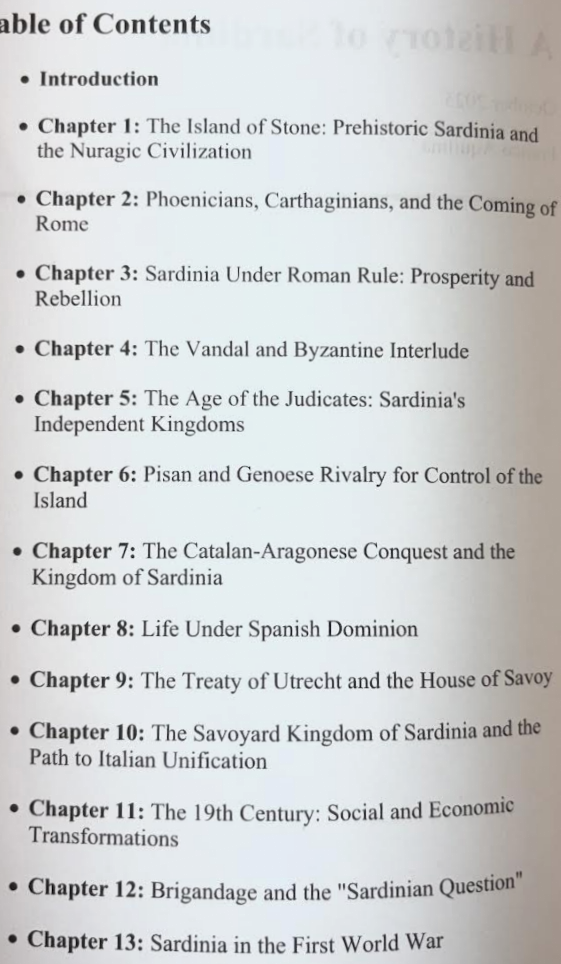
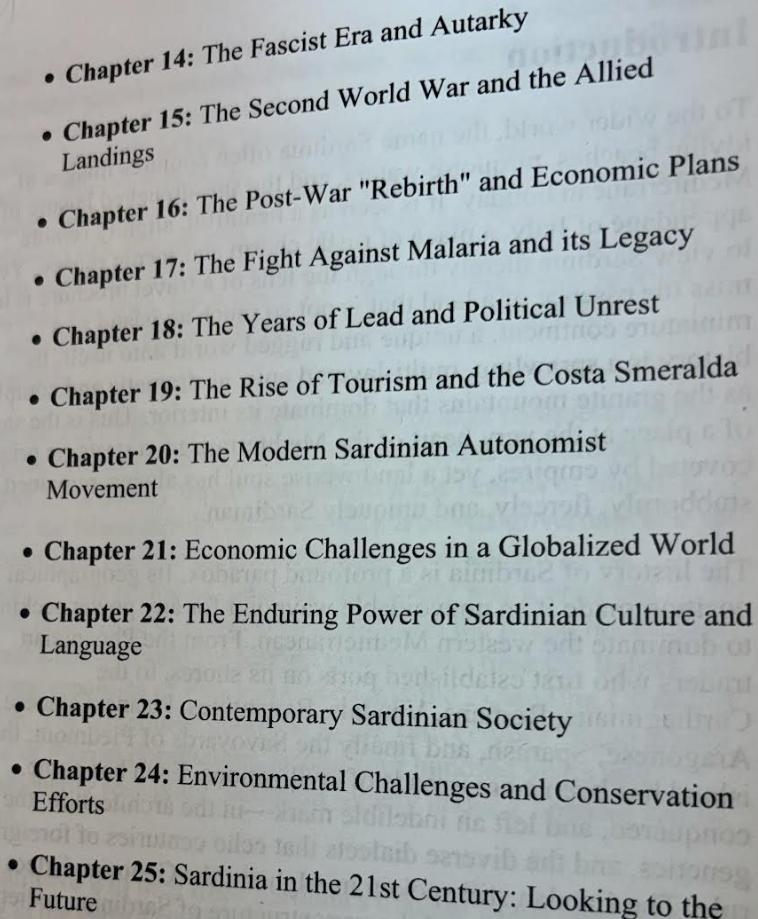
Below is the table of contents which gives you an idea of the structure of the book. If you are interested in Sardinia, and may be planning a visit ( which I highly recommend) then this book is a must read.